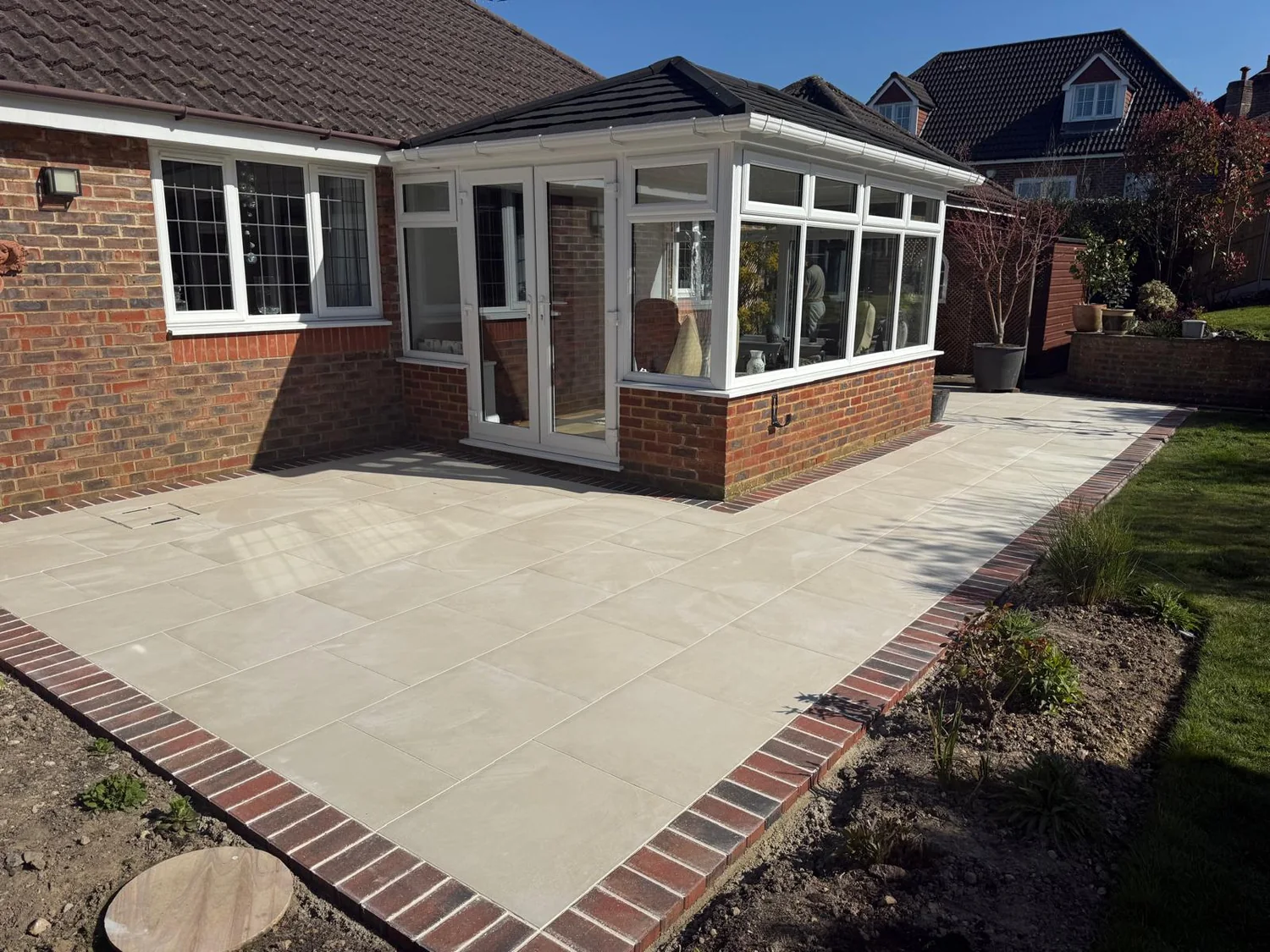
Close Board and Panel Fencing
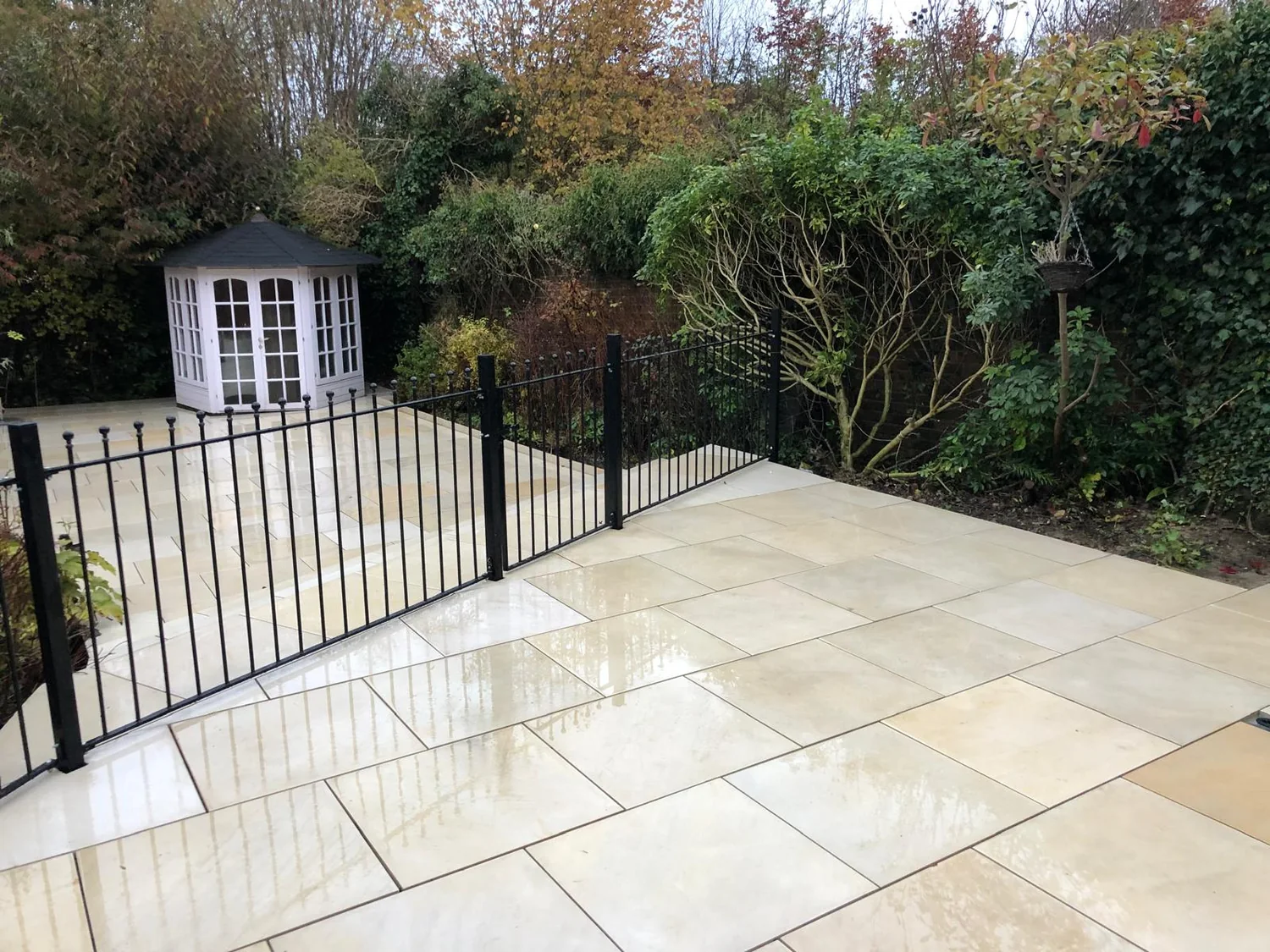
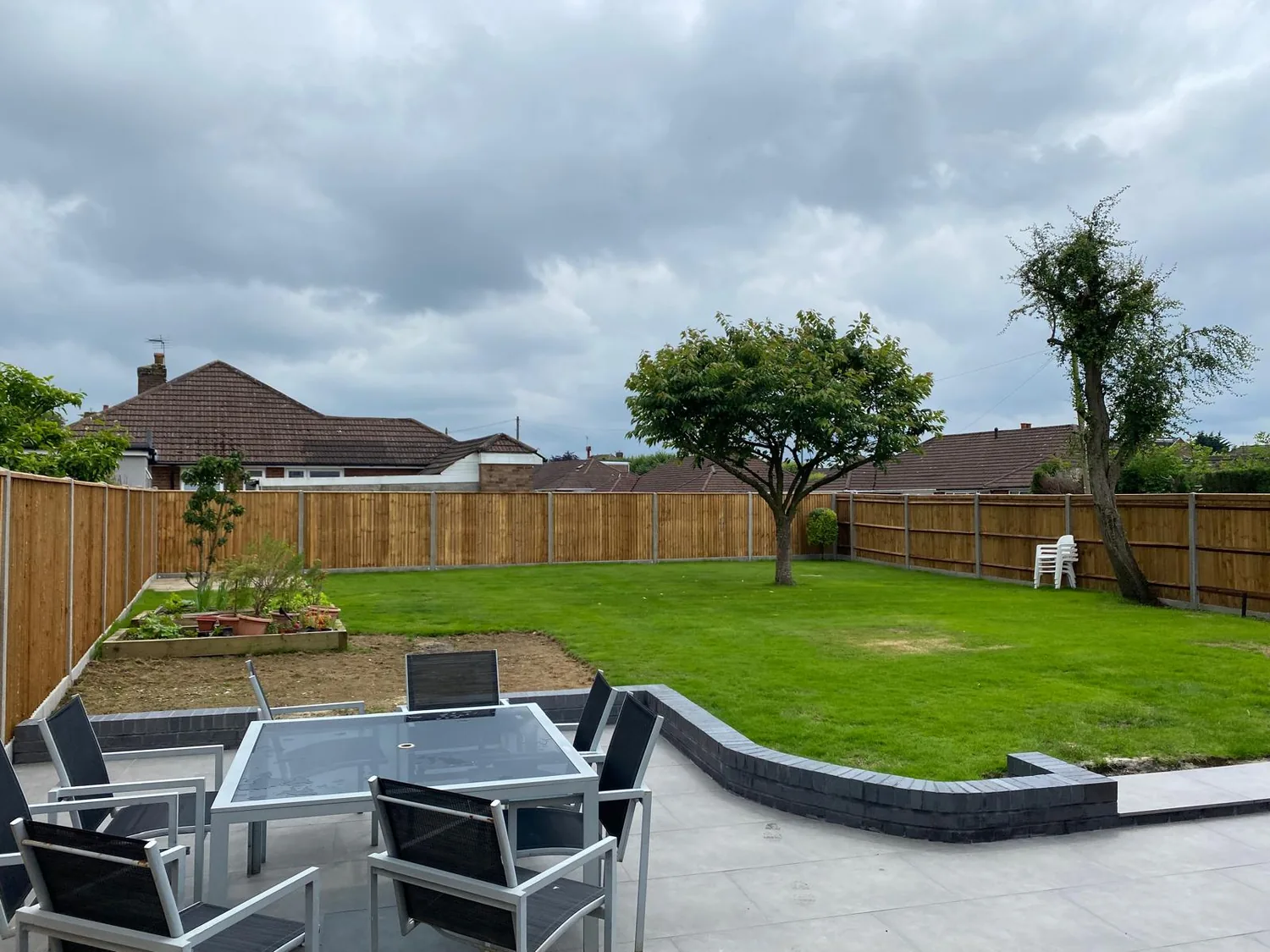
New fence lines, replacement panels and gates. Concrete or timber posts, gravel boards, and every post set to a string line so the run is straight and the tops sit level.

 CROCKETT & CROCKETTPAVING LTD
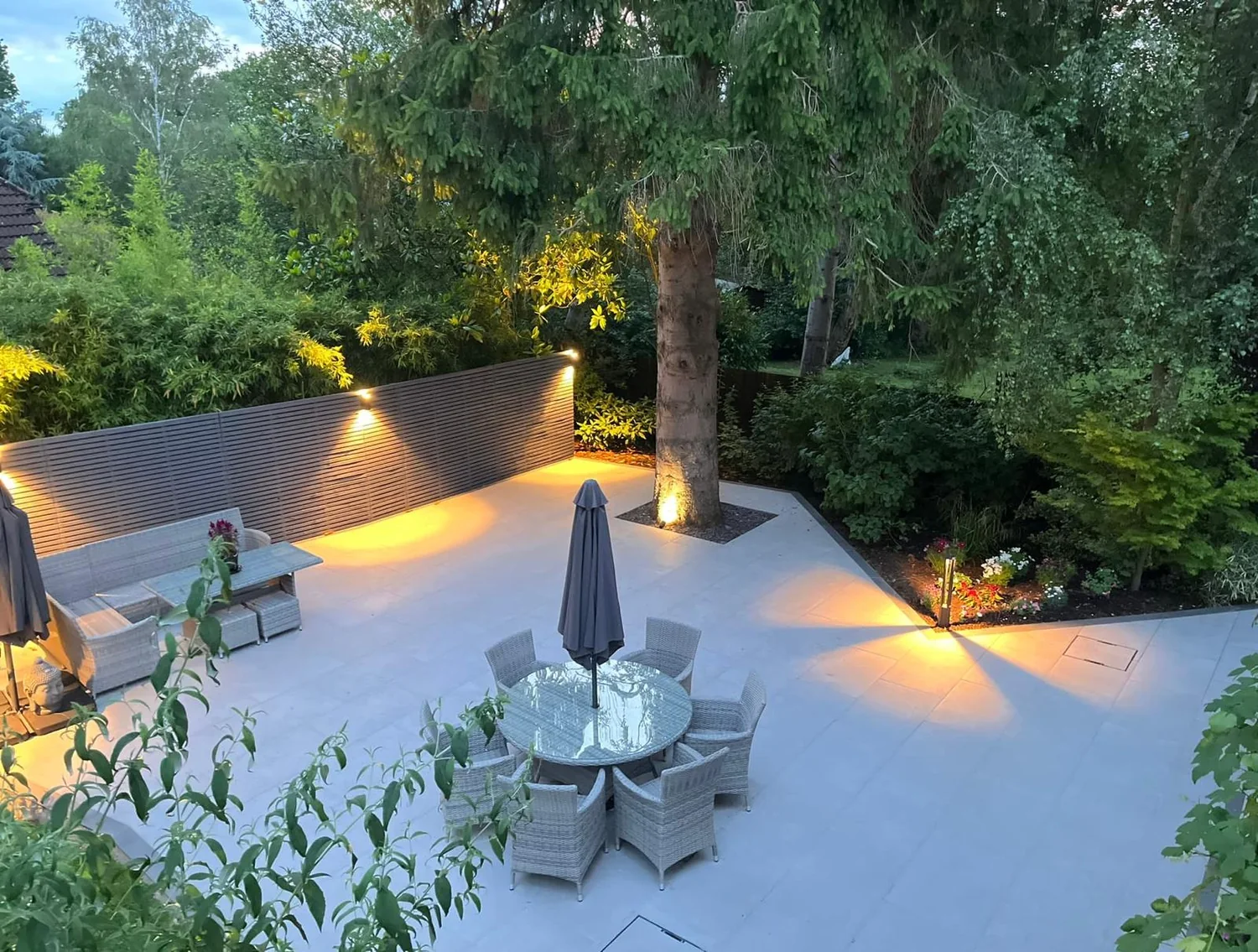
Outdoor living & garden features
The right finishing elements can transform how an outdoor space looks and how it is used.
Our approach
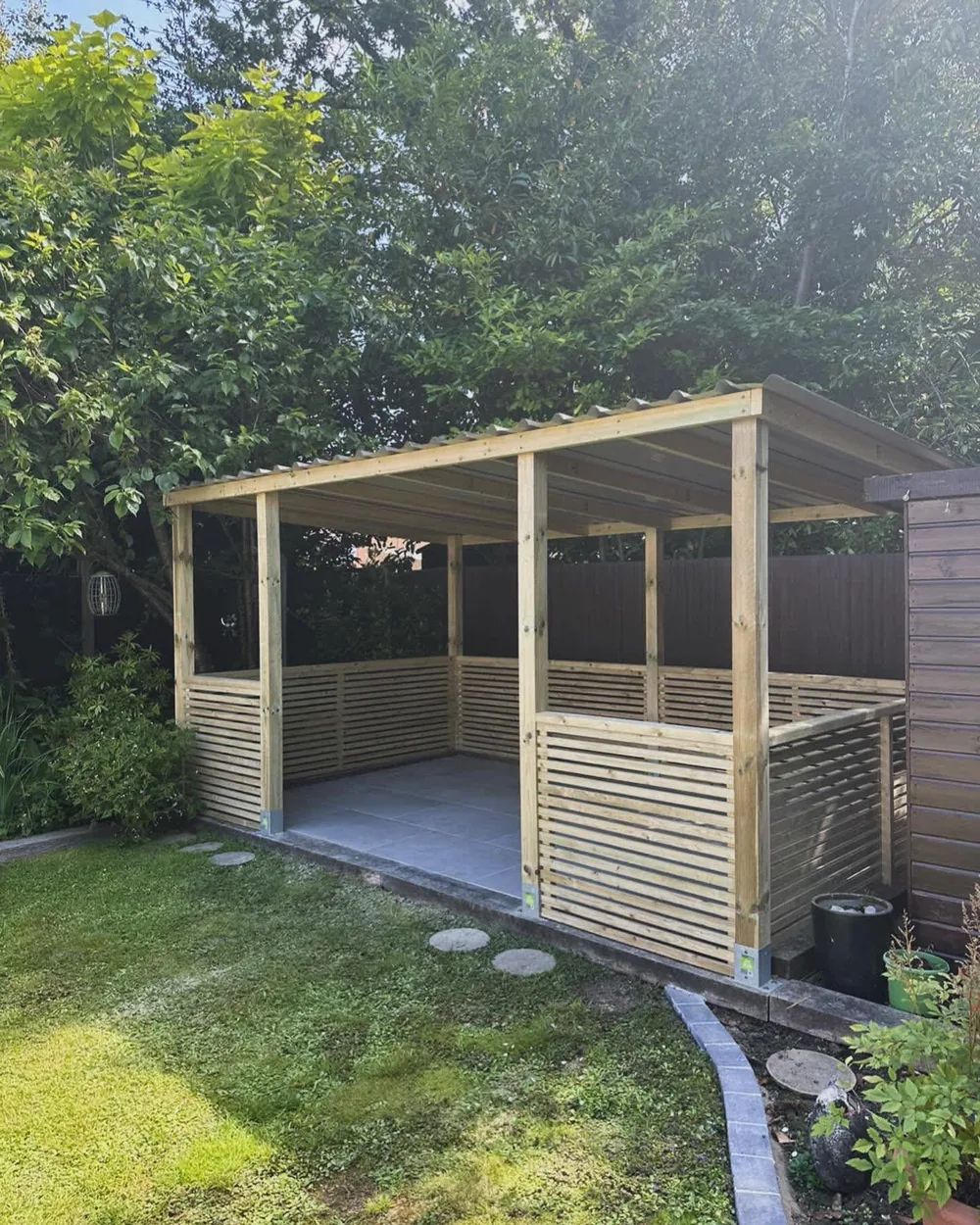
We install decking, fencing, pergolas, lawns, raised beds, steps and other garden features as individual projects or as part of a complete landscape transformation.
Materials, levels and detailing are considered alongside the wider garden so that each feature feels integrated rather than added as an afterthought.
Six things
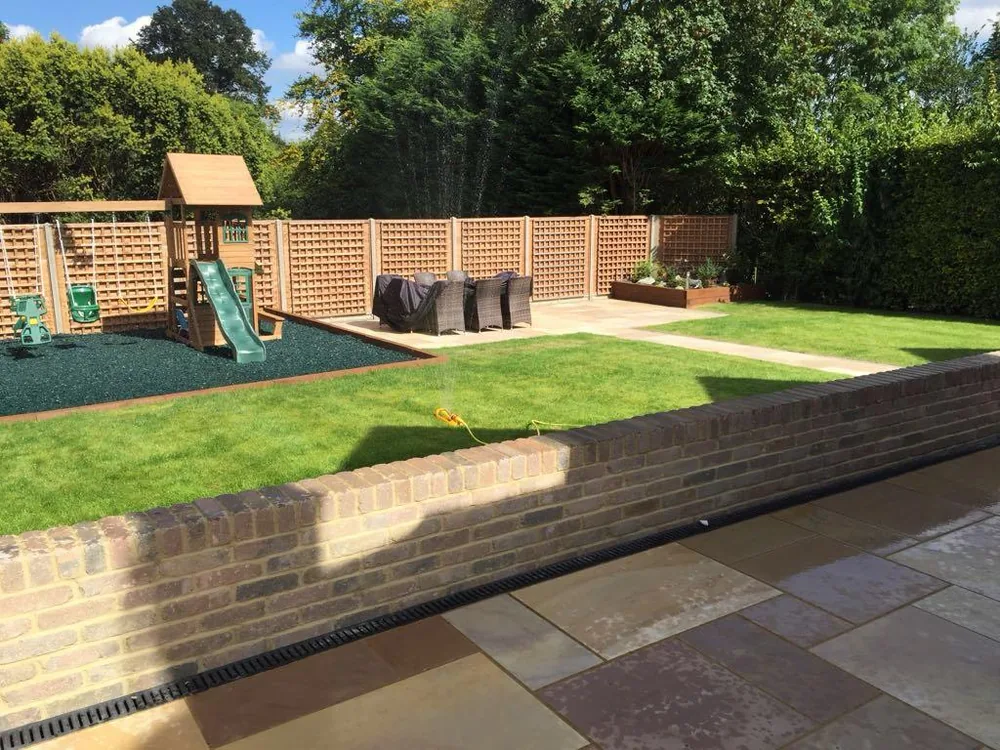
Close board, featheredge or slatted, on concrete posts or timber set in postcrete. Panels level, tops in line, and a gravel board so the timber never sits in wet soil.
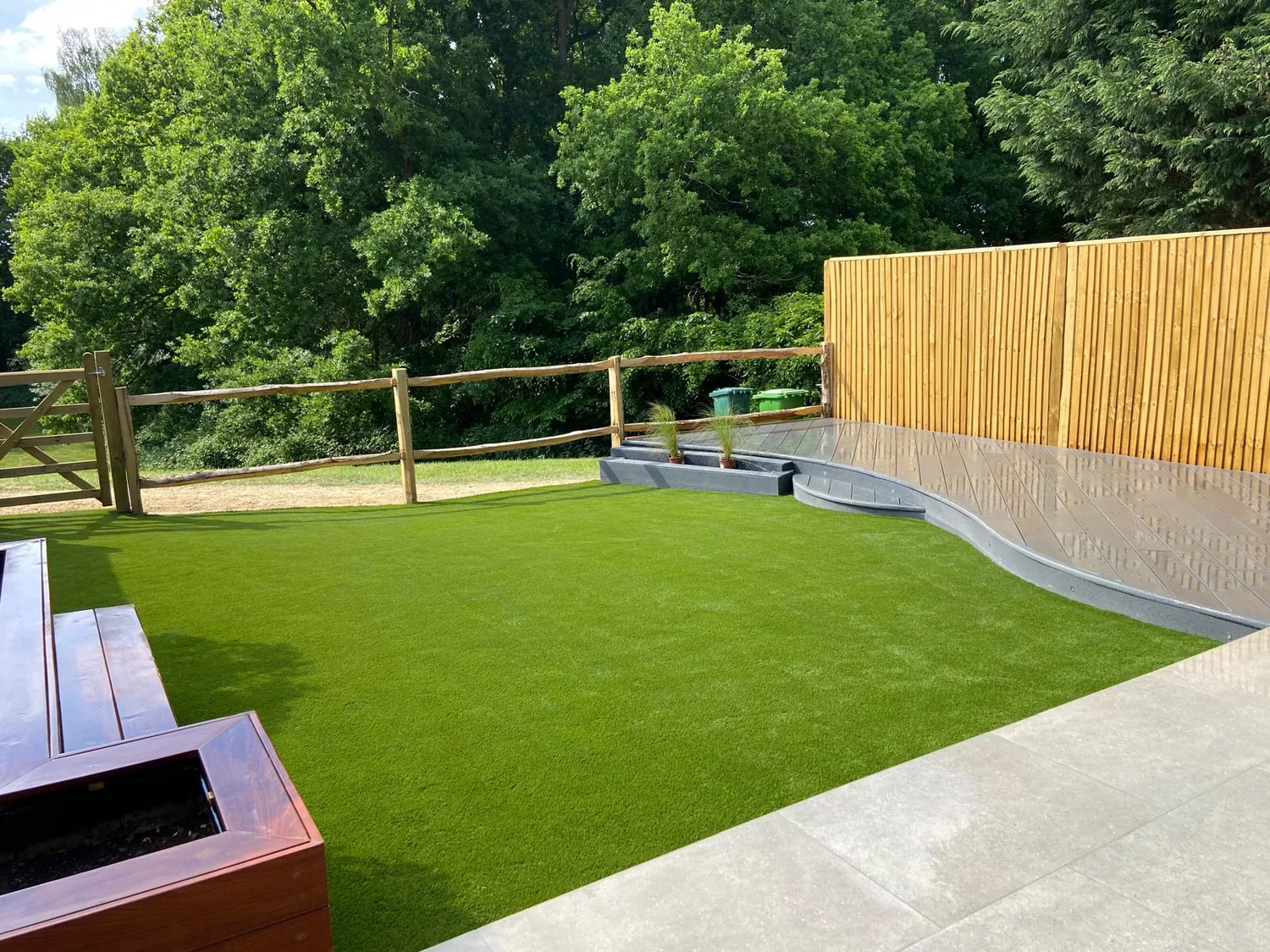
Only as good as the base. We dig out, lay and compact Type 1 and grit, then the grass on top, joined with tape and pinned at the edges.
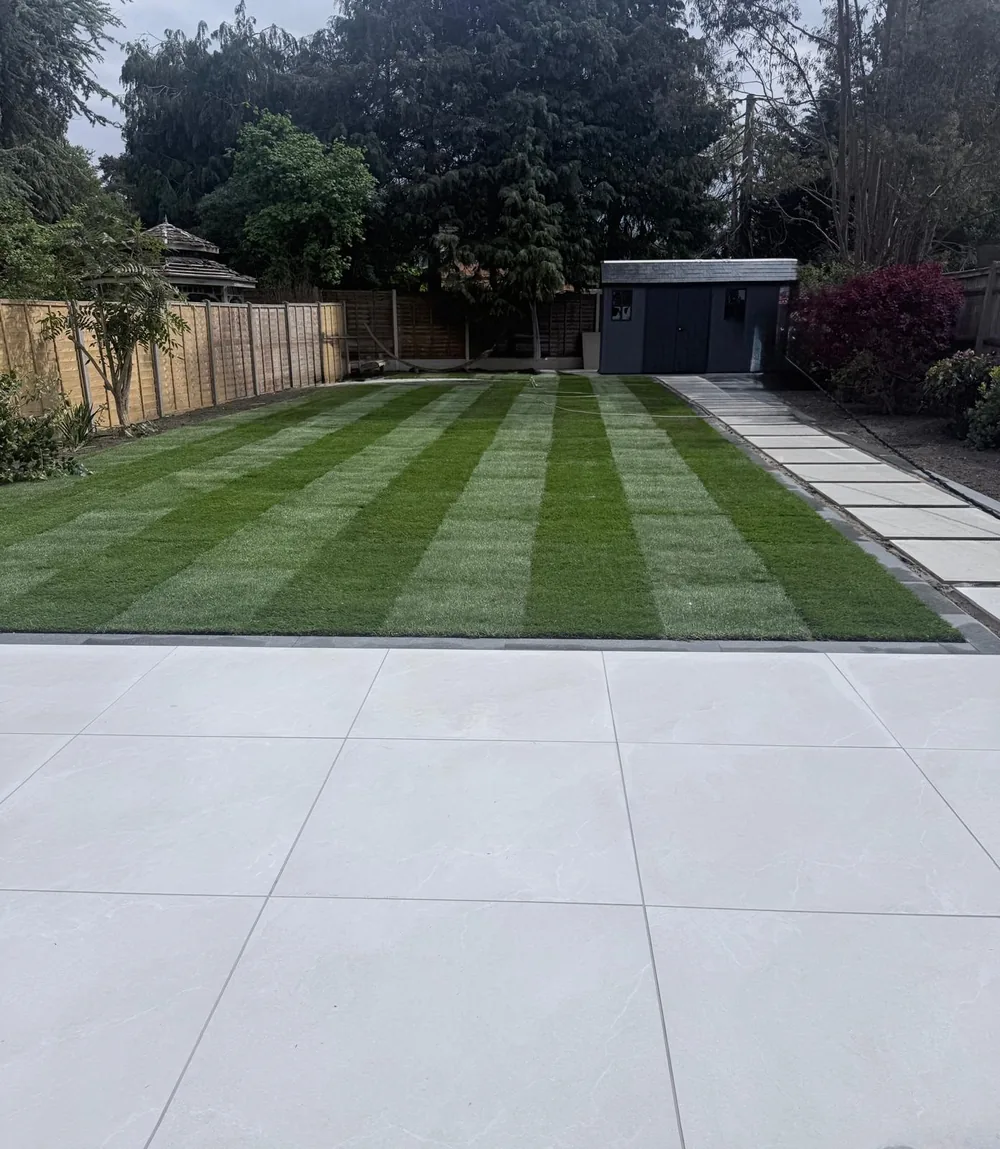
Ground broken, levelled, firmed and raked before a roll goes down, then laid tight with staggered joints and watered in.
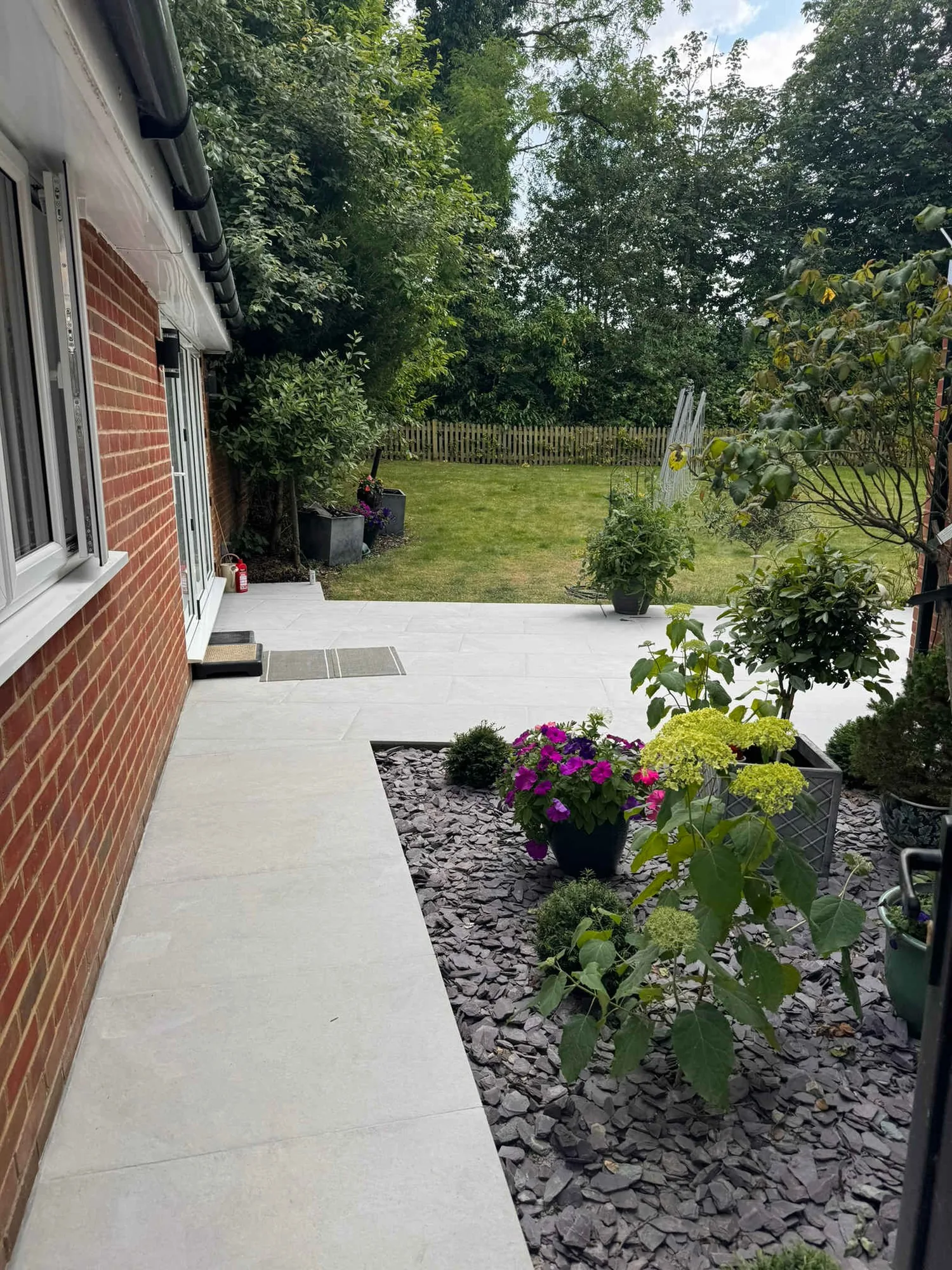
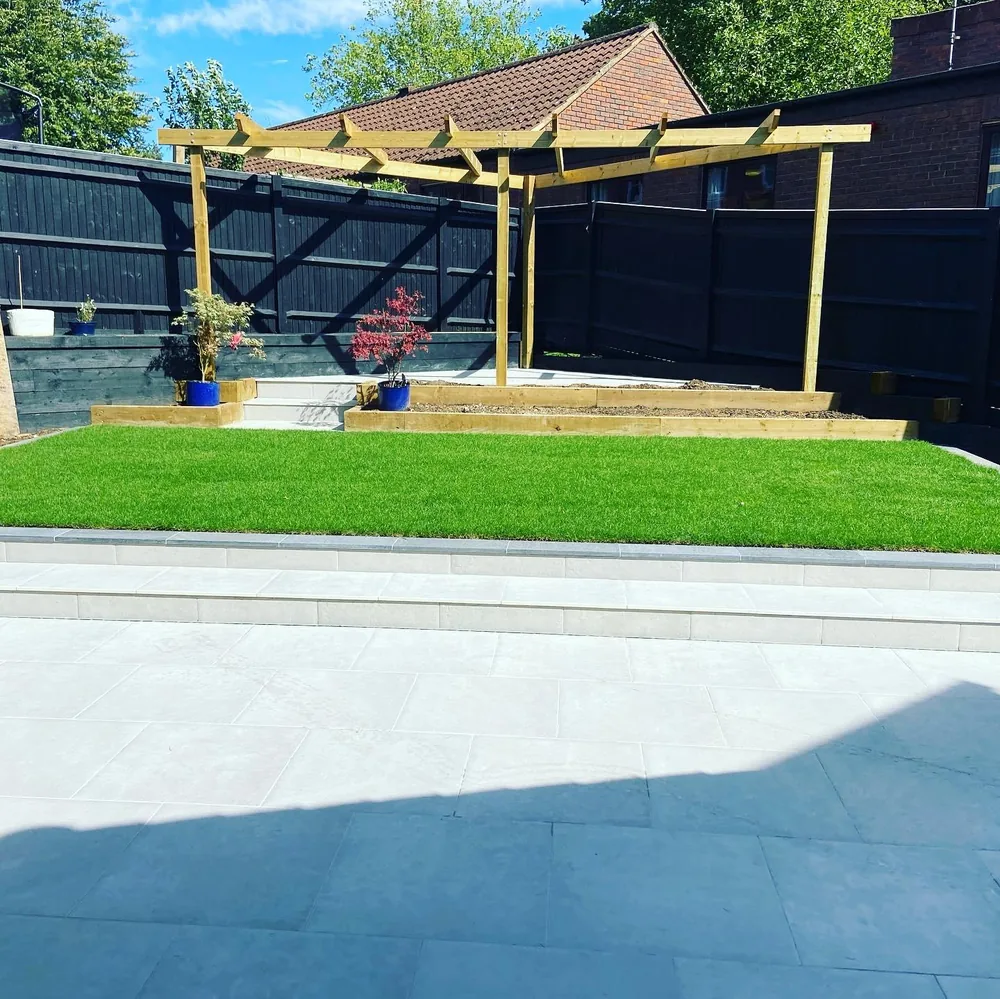
Raised in sleeper, brick or stone, filled with proper topsoil, mulched and planted if you want us to.
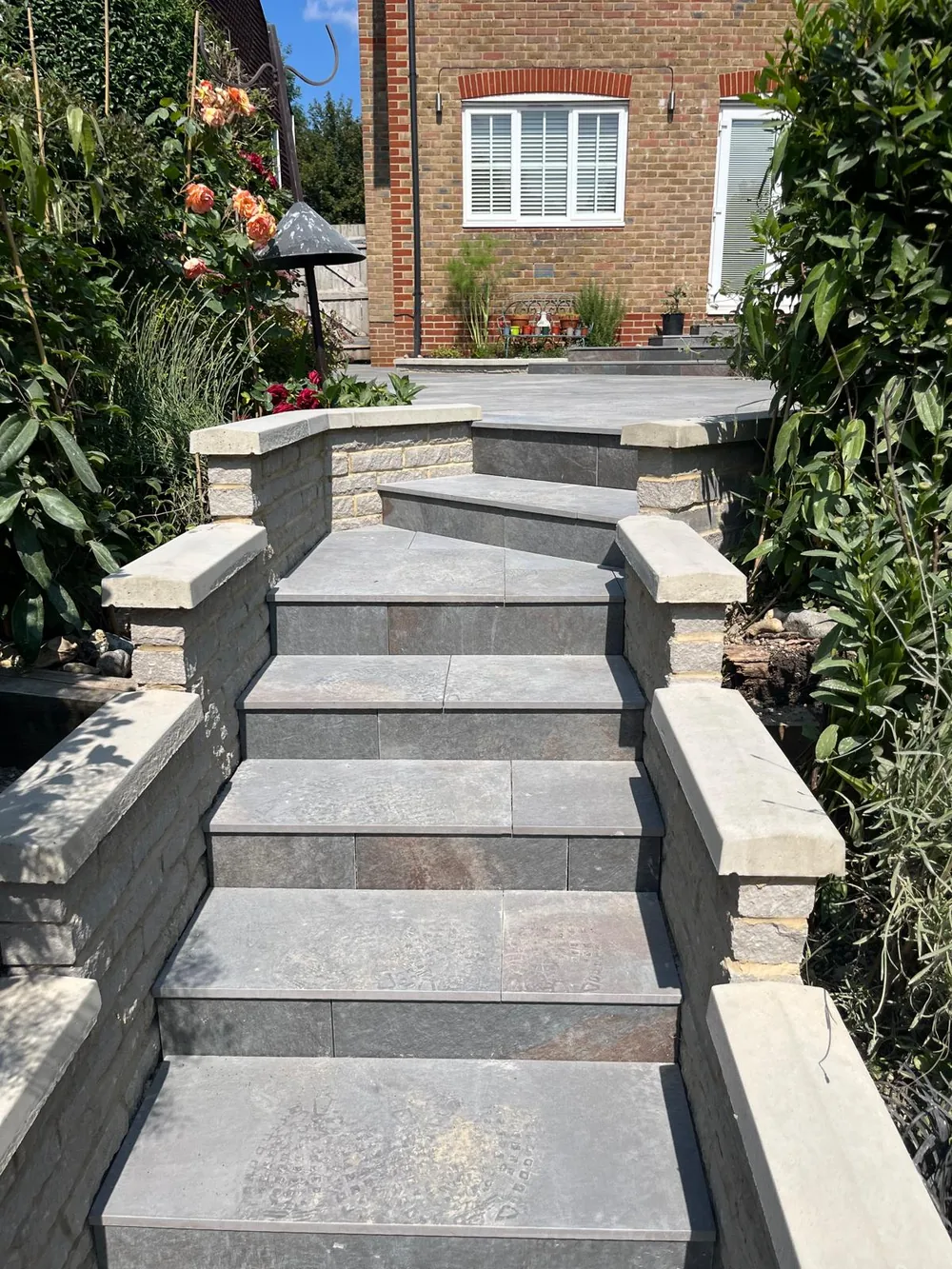
Set out so every riser is the same height and every tread the same depth, on a concrete core, faced to match the paving.
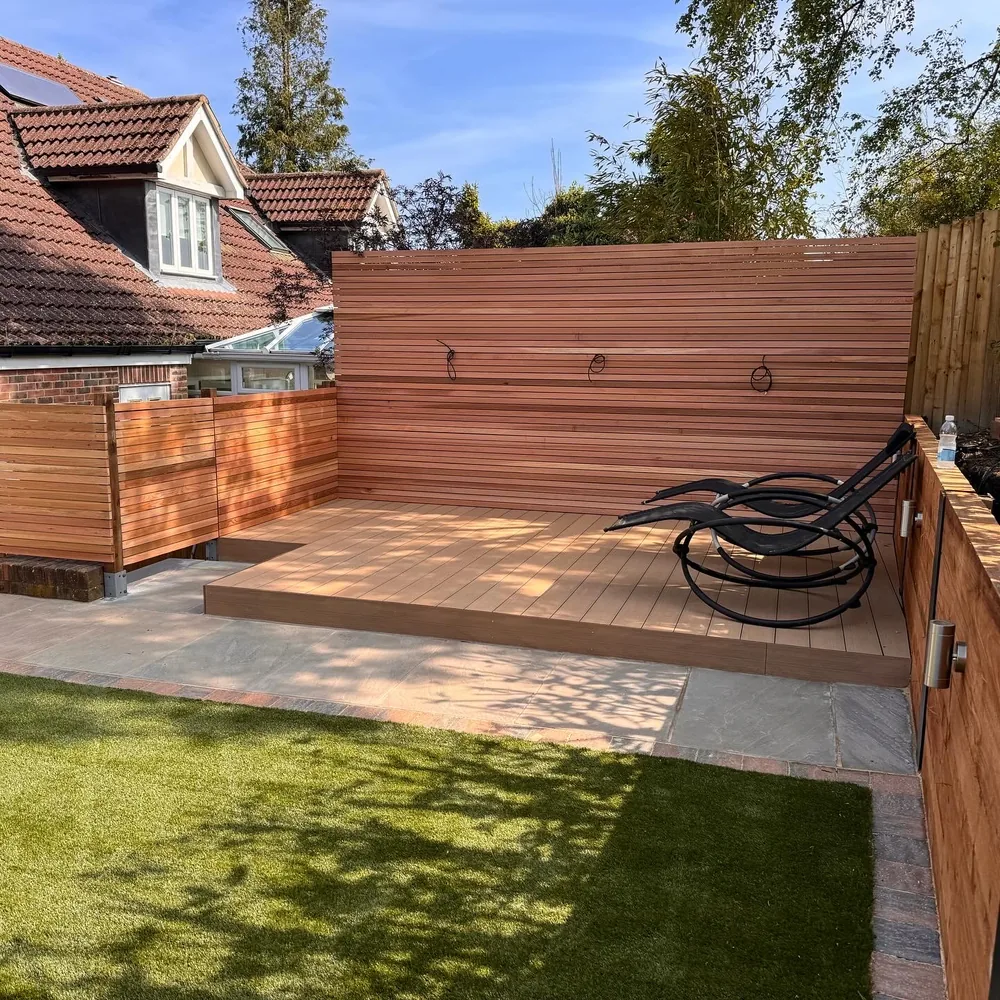
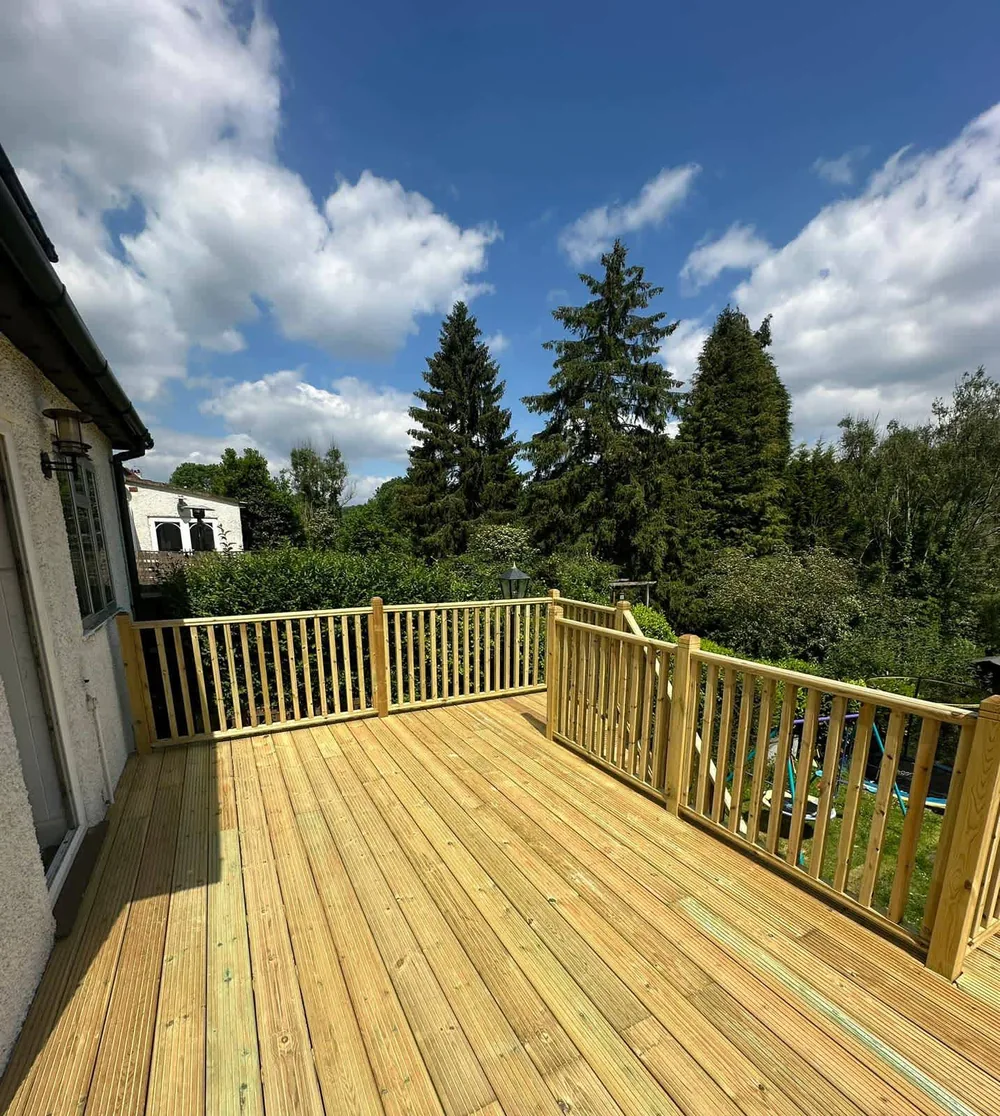
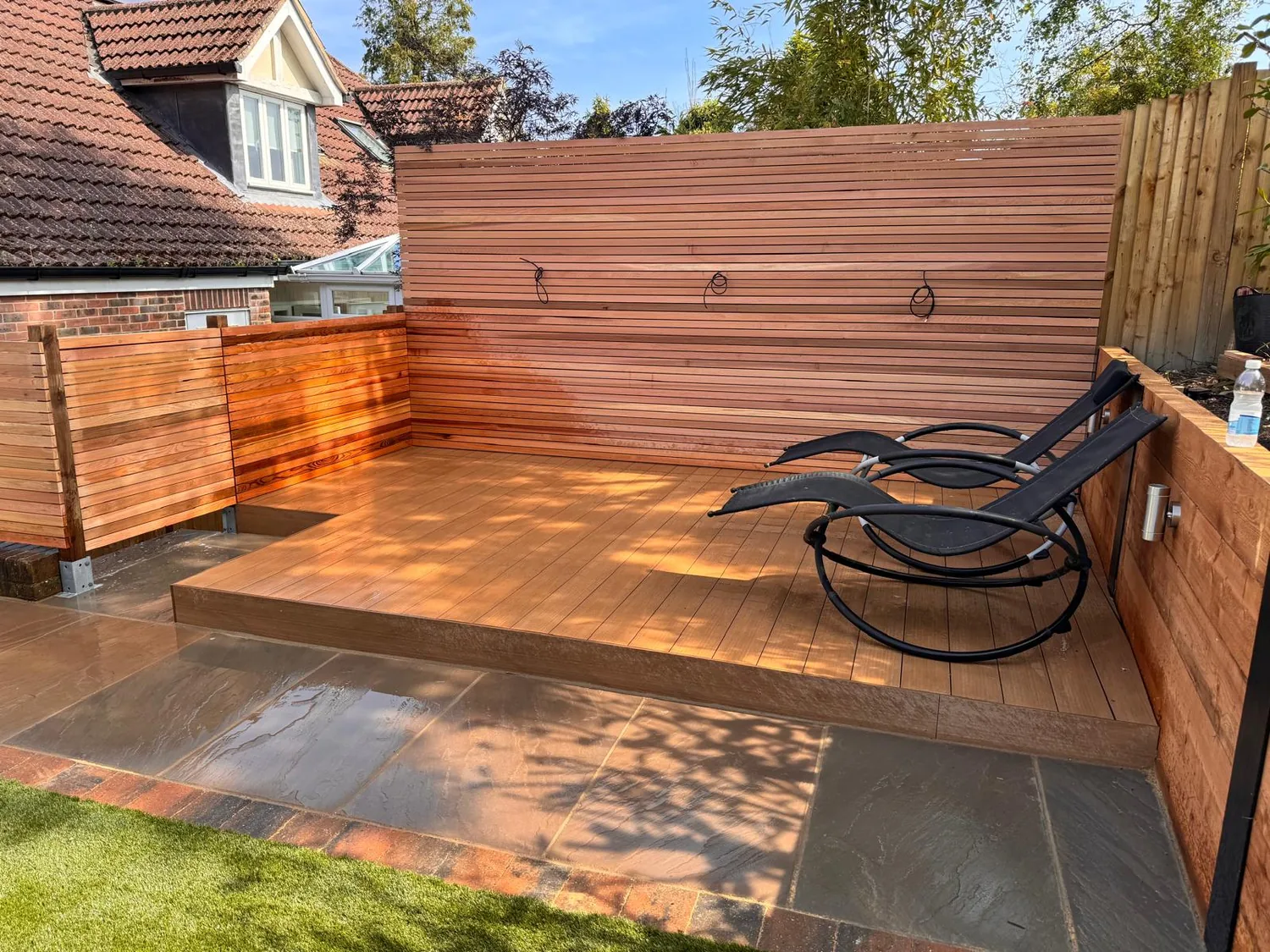
Hardwood, cedar or composite on a joist frame with a fall, so water clears and the boards do not cup.
Fencing
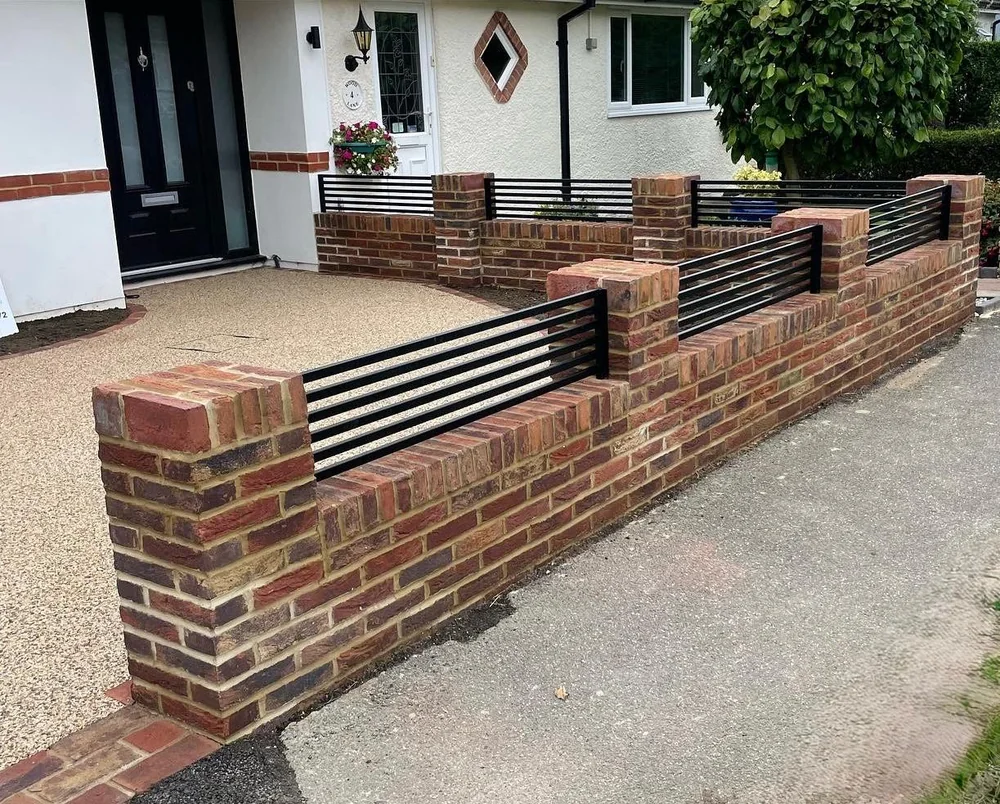
Panels are the visible part of a fence, but not the part that matters most. The posts decide whether it is still upright in ten years. We set posts at 1.8 metre centres for standard panels, in a hole around 300mm across, and bury at least a third of the post height, so a 1.8 metre fence gets roughly 600mm in the ground. Exposed sites get more.
The hole gets hardcore in the bottom so the post is not standing in water, then a concrete or postcrete fill brought above ground level and sloped away from the timber so rain runs off instead of pooling. On a run of any length we string a line and set every post to it, because a fence 20mm out at each post is obvious by the far end.
Artificial grass
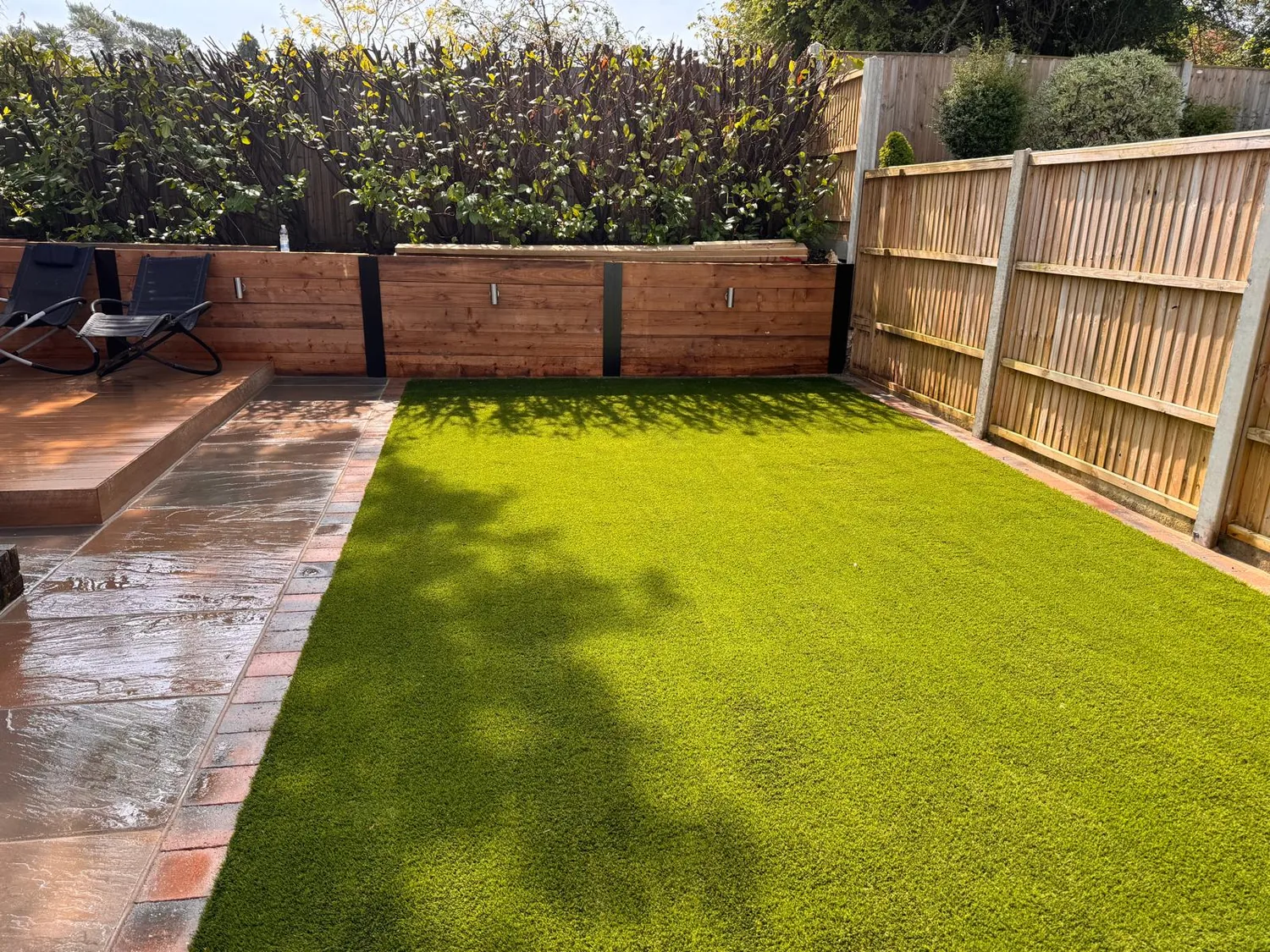
The job we get called out to put right is grass rolled straight over an old lawn. Soil is soft, it moves and it holds water, so within a season you have dips, humps and a wet lawn that smells. We take the ground out to around 75mm, lay a weed membrane, then a compacted MOT type one base with a granite dust or sharp sand blinding screeded flat.
The grass is laid, left to relax so the creases drop out, and joined with jointing tape and adhesive rather than tape on its own, with the pile running the same way on every piece so the joins do not show in low sun. Edges are fixed to a timber or paving edge, then the lawn is brushed up with a kiln dried sand infill.
Turf, beds, steps and decking
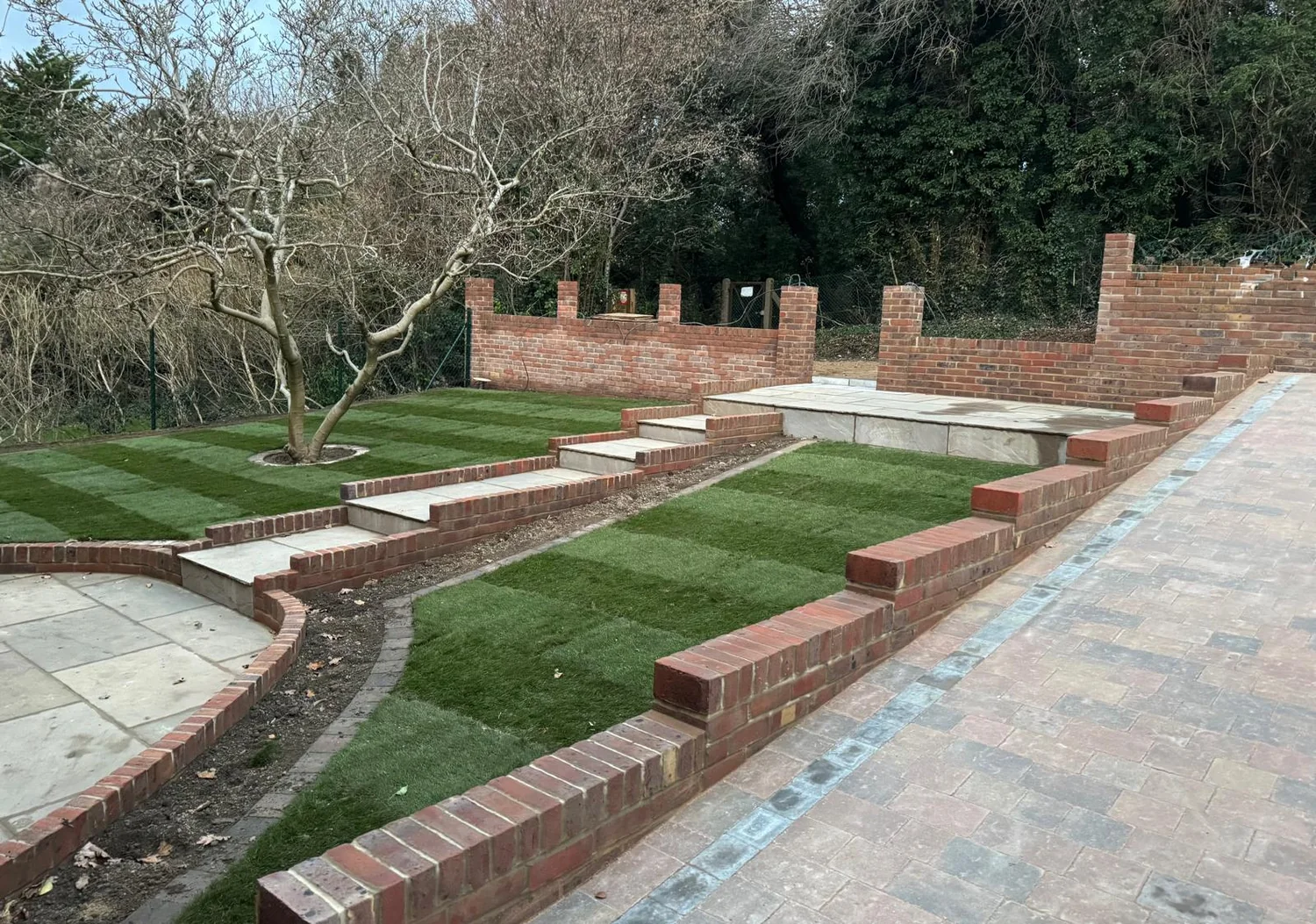
Turf is the one people rush. New turf wants the ground rotavated or dug over, cleared of builders' rubble, levelled and raked to a fine tilth with a pre turf feed worked in. Laid on compacted ground the roots cannot get down, and it browns off in the first dry fortnight. We lay it in a stretcher pattern, butted tight and rolled in.
Beds are usually retained in sleepers or brick. Sleepers go on a compacted base, screwed together and pinned into the ground with steel bar so they cannot shift, and lined behind where they hold wet soil. Steps we build to one consistent rise across the flight, because an odd riser is where people trip. Decking sits on a treated joist frame, with a slight fall and a gap between the boards.
What you can have
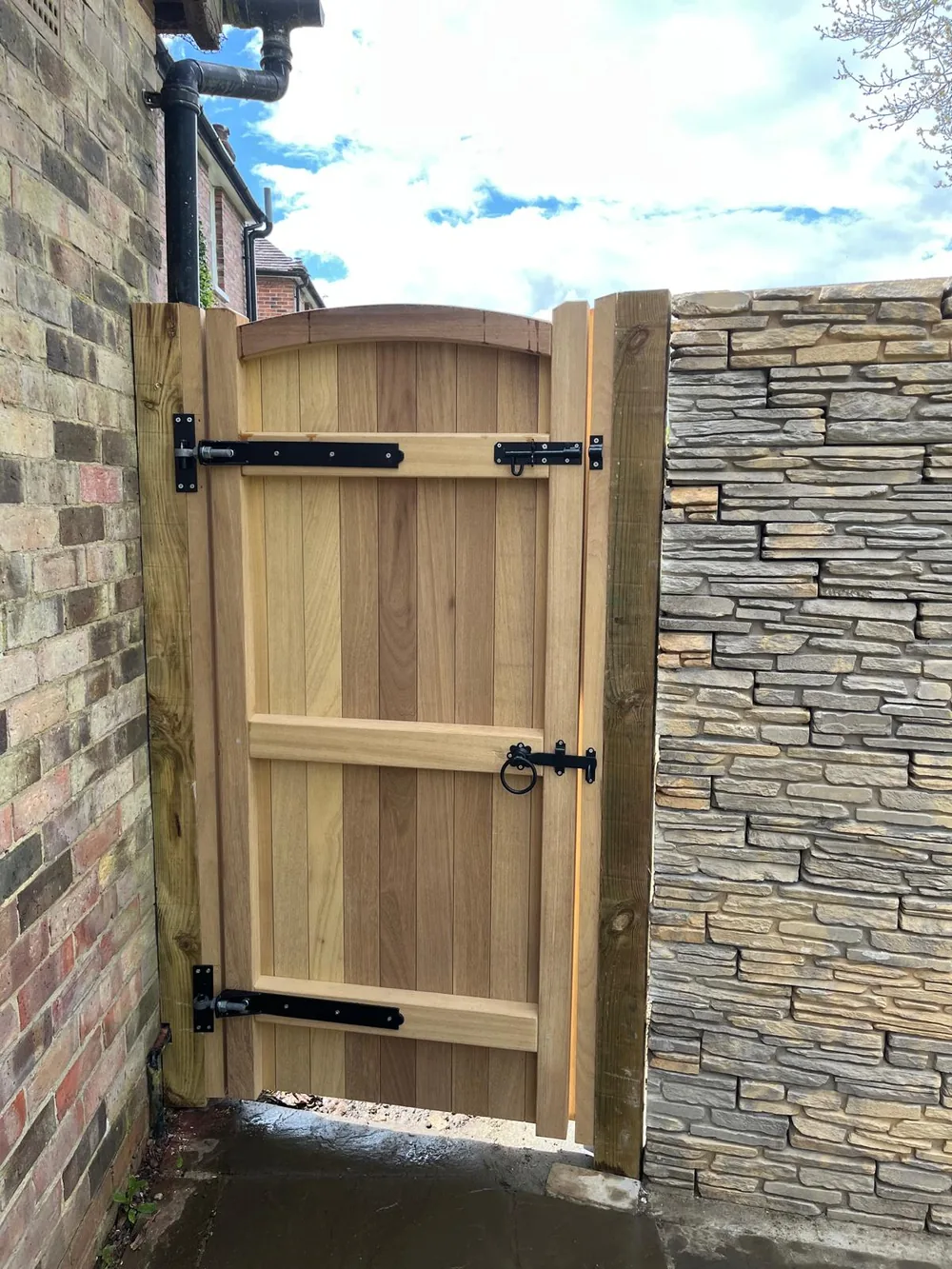
New fence lines, replacement panels and gates. Concrete or timber posts, gravel boards, and every post set to a string line so the run is straight and the tops sit level.
Laid on a drained stone base with a membrane and a screeded blinding. Good for shaded gardens where grass will not grow, for dog runs, and for anywhere the mower has become a chore.
Ground prepared, levelled and fed, then fresh turf laid tight and rolled in. We also lift and relay tired lawns where the ground underneath has been compacted by building works.
Beds shaped and retained in sleepers or brick, lined where they hold wet soil, and filled with decent topsoil rather than the spoil that came out of the hole next to them.
Garden steps in stone, porcelain or brick, built to one rise the whole way up. We also build disabled ramps and level access where somebody needs to get in and out without a step.
Treated frames on posts or pads, boards laid with a fall and a drainage gap, and pergolas over a seating area. Set out to suit the paving rather than fight with it.
Questions
Fencing, artificial grass, turfing, flower beds, sleeper and brick edging, garden steps, decking and pergolas, plus the groundworks and drainage under all of it. We are a paving and landscaping company rather than a maintenance business, so we build and install rather than mow and prune. We cover Caterham, Warlingham, Oxted, Godstone, Redhill, Purley and the rest of Surrey.
The rule of thumb we work to is a third of the post height buried below ground. A 1.8 metre high fence gets around 600mm of post in the ground, in a hole about 300mm across, with hardcore in the bottom and the concrete brought above ground level and sloped away. Exposed sites and taller fences get more depth.
It drains, provided the base underneath drains. The grass itself is perforated, so water goes straight through into the stone base and away into the ground. Laid on soil or over an old lawn there is nowhere for it to go, which is when people get puddles and a smell. The base is the whole job.
Autumn and spring are kindest, because the ground is warm and damp and the turf knits in quickly without constant watering. Summer turf is perfectly possible, it just needs watering properly for the first few weeks and somebody at home to do it. Winter is fine too, as long as the ground is not frozen or waterlogged.
Yes. Clearance and muck away is priced into the quote, so the figure you see includes taking the old panels, posts, concrete and spoil off site. If we are doing paving at the same time it usually goes in one grab lorry rather than several, which brings the cost of that part down.
That is most of our work. The dig, the drainage, the base, the edging and the laying are delivered and managed by Crockett & Crockett, front and back, so the drive, the patio, the fencing and the lawn are one job with one programme and one point of contact.
Longer than most people expect, provided the base is right. The pile itself is UV stabilised and the backing is perforated, so what usually ends a lawn early is not the grass wearing out but the base moving underneath it, or joins that were taped without adhesive opening up. Manufacturers put their own guarantee on the grass and the length varies by product, so we hand you the paperwork for whatever we lay. Brushing the pile up and keeping leaves off covers most of the upkeep.
We can, and it is usually worth a word with the neighbour first about who owns the boundary and who is paying for it. If it is a shared run we will quote it so both sides see the same figure. Where only your side is being replaced, we match the panel style and the height so the boundary reads as one fence.
Our work
Get a quote
Tell us what the garden needs and we will come out, walk it with you and provide a written quotation for the complete project.
Arrange a free site visit
Tell us a little about the project and we will come out, look at the ground and put a written quotation together.
Where we work
Based in Caterham, we undertake projects throughout Surrey and selected areas of Kent and West Sussex. For larger or more comprehensive projects, we are happy to consider work further afield.