

Caterham, CR3
Driveways and Paving in CaterhamThe Town Our Yard Sits In, From the Hill to the Valley Floor
We are based at 393 Stafford Road. Caterham is the town we know street by street, and it is the one place where the ground under the front garden is not the same at the top of the hill as it is at the bottom of the A22.
Our home town
Our Home Town and 27 Years of Digging It
Our yard is at 393 Stafford Road, and the Caterham, Chaldon and Whyteleafe design guidelines single that road out as one of the steepest in Caterham Valley. That tells you most of what you need to know about working here. Very little in this town is flat for long, and the ground changes as you climb.
Crockett & Crockett Paving is a family-run company led by Oli Crockett, with 27 years in the trade. The core work is delivered and managed by our own team: the dig, the drainage, the sub-base, the edging and the laying.
We work right across the town: Caterham on the Hill, Caterham Valley, Harestone Valley, Queen's Park, the Barracks and out to Chaldon. Driveways in block paving, resin, concrete and shingle, patios and porcelain, garden rooms, retaining walls, brickwork, fencing and drainage.
We are on the Marshalls Register of Accredited Landscape Contractors and Driveway Installers, a London Stone registered installer and a Bradstone assured installer, with 10 out of 10 on Checkatrade. Fully insured, and every quote is free and in writing.
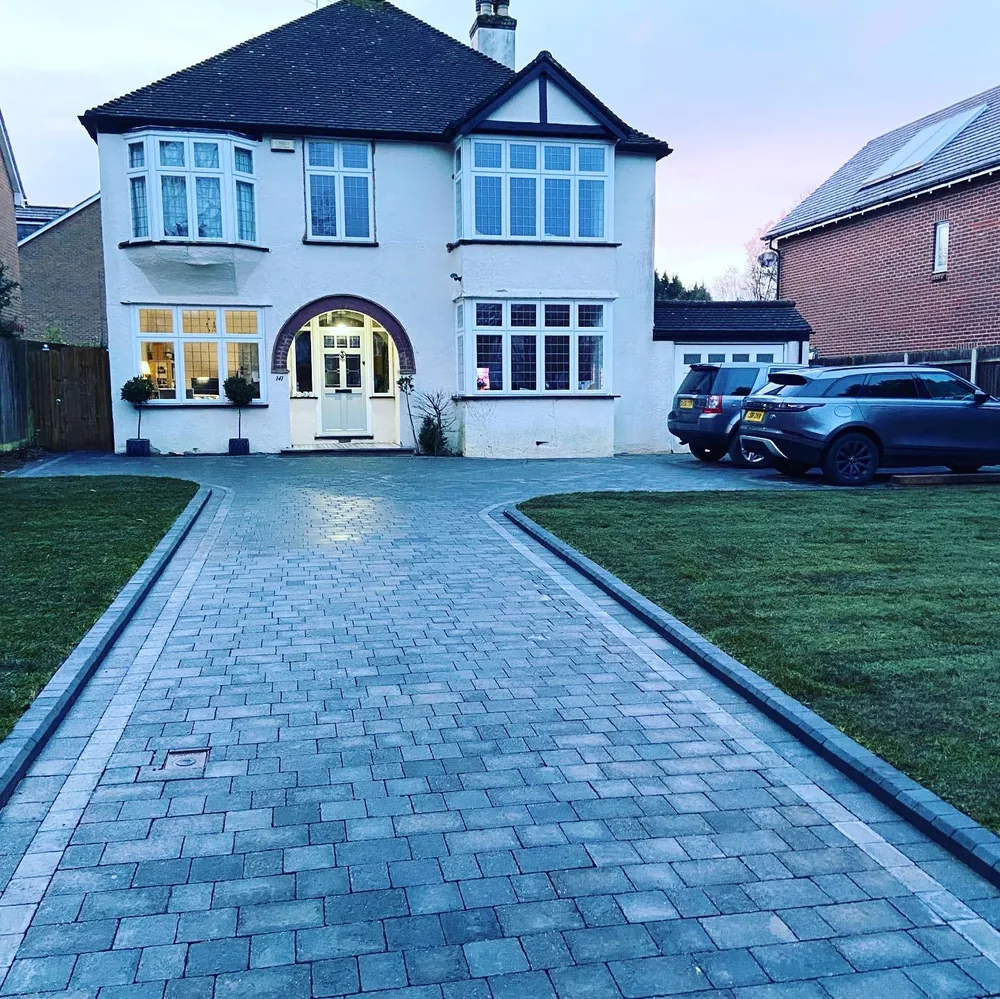
What is under the front garden
Two Different Digs in One Town
British Geological Survey mapping on the Reigate sheet puts the whole of Caterham on the Chalk Group, but it is not the same chalk at both ends of the town. Caterham on the Hill, from Chaldon Road across to the Barracks and Coulsdon Road, is White Chalk Subgroup under a superficial cap of the Clay-with-flints Formation, logged as clay, silt, sand and gravel. The valley floor along the A22 has no superficial cover at all and exposes the older Holywell Nodular and New Pit Chalk directly.
That is two jobs in one postcode. The hill is a flinty clay that holds water, so the sub-base goes in at full depth and the formation is protected rather than churned. The valley chalk cuts quickly and takes water, but goes to slurry if it is worked wet. The design guidelines describe the same split in soil terms: slightly acidic loam and clay with impeded drainage over most of the area, against shallow, lime rich, free draining soil over chalk within the valleys.
Drainage decides it either way. The Tandridge Level 1 Strategic Flood Risk Assessment records a major incident in February 2014 in the Caterham Bourne catchment, with 100 properties and 13 businesses affected in Tandridge and the A22 shut for four weeks. It then records surface water flooding in June 2016, when about one and a half times the mean June rainfall fell in two hours over Caterham and Chaldon, causing 86 internal and 63 external property floods. Those are the numbers we have in mind when we set the falls on a Caterham frontage.
- Clay-with-flints on the hill: full depth sub-base, geotextile at formation, no soakaway on trust.
- Clean chalk in the valley: fast digging and real infiltration, but never worked wet.
- Flint leaves a hill dig by the tonne, so muck away is measured, not guessed.
- Falls set away from the house and garage, running to a defined outfall.
The houses
A Hill of Semis, a Valley of Villas and a Steep Bank Between Them
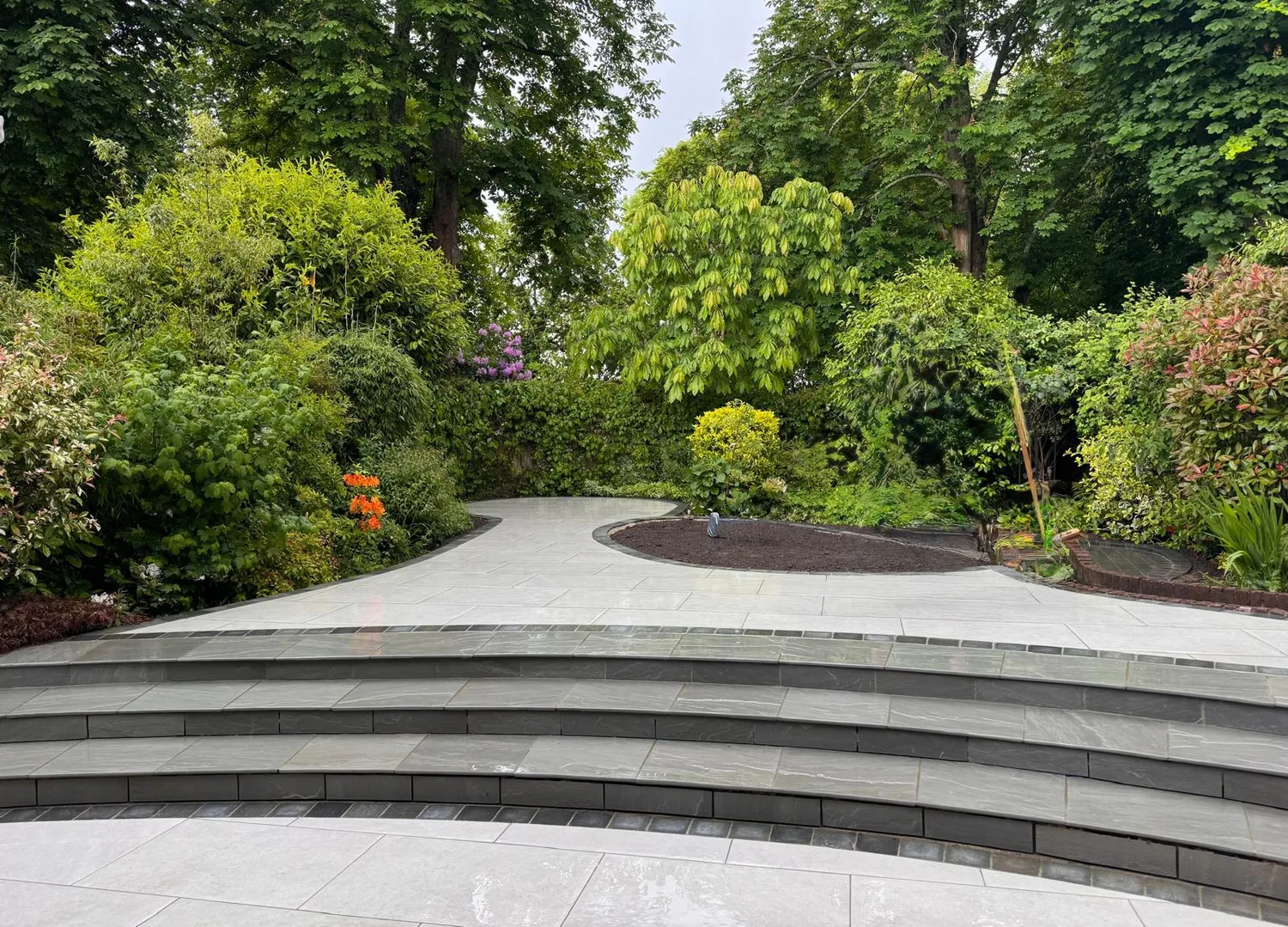
Caterham is administratively two places and the frontages follow suit. At the 2011 Census Caterham on the Hill had 1,185 detached homes, 1,666 semi-detached, 963 terraced and 1,208 flats, while Caterham Valley had 1,034 detached, 854 semi-detached, 229 terraced and 1,393 flats. The hill is a semi-detached and terraced town. The valley is much closer to a flatted one.
The design guidelines describe Caterham on the Hill West as high density, with narrow car lined streets, small front gardens and low wall boundaries, along with modern cul-de-sac schemes and the former Foot Guards barracks site redeveloped after its closure in 1995. Caterham on the Hill East is low to medium density detached, with generous curtilages, driveways and mature front gardens on relatively flat ground. Around Queen's Park the stock runs from low density detached to high density terraces, with large Edwardian villas facing the park and deeper front gardens on the wider streets.
Caterham Valley is a product of the 1856 railway and still carries Victorian, Edwardian and pre-war frontages on Station Avenue, Godstone Road, The Square and Croydon Road. Between the two centres along Croydon Road the houses sit set back above the road behind steep vegetated banks, with driveways or small garages cut into the hillside. Those are retaining and level jobs with a surface on top, not a lift and relay.
- Narrow hill frontages: two cars on without losing the whole front garden.
- Villas near Queen's Park: deeper gardens, so turning space and a planted edge both fit.
- Croydon Road banks: retaining walls, steps and a gradient that still works in February.
- Flatted blocks in the valley: parking bays, bin standings and access ramps.
What we do most here
Parking That Fits, Ground That Holds and Gardens That Drain
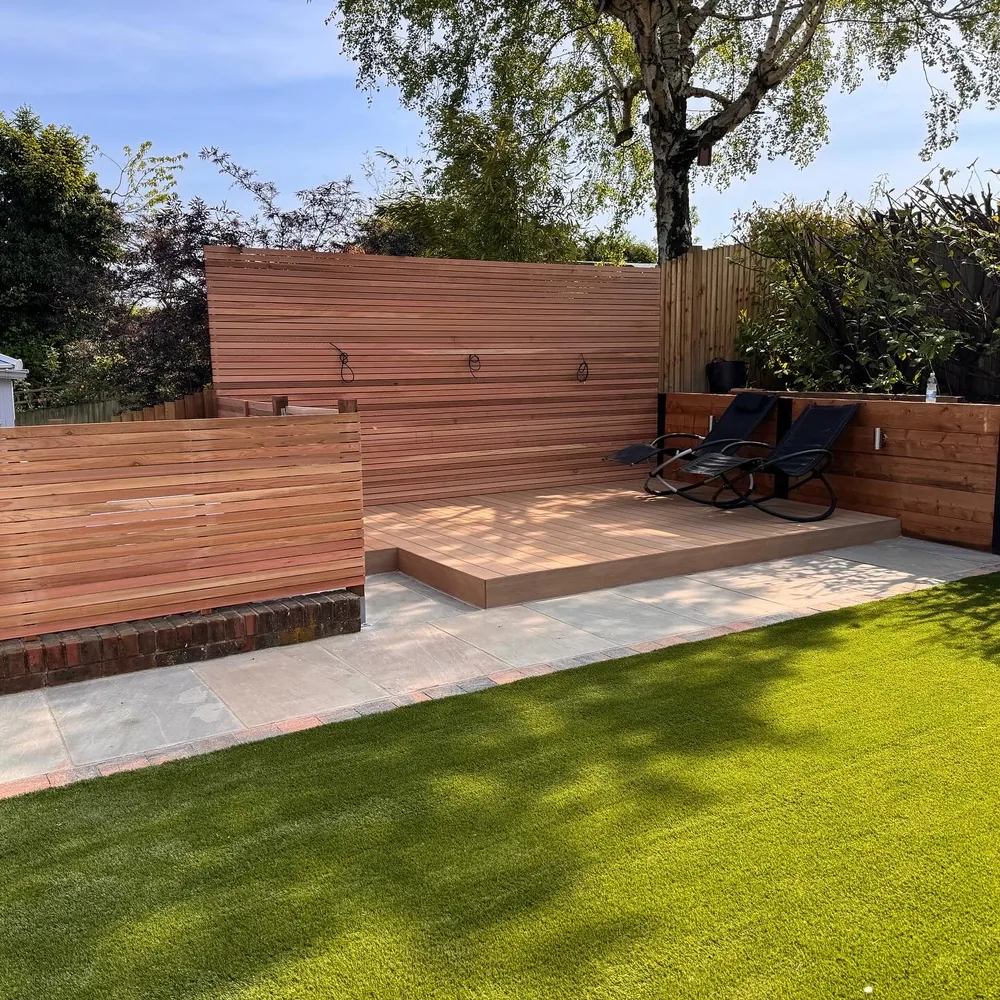
The most common Caterham job is a tired front garden on the hill turned into parking for two, with a low brick wall rebuilt across the front and the flint clay taken out to a depth that will carry a car. The second is a valley side terrace: retaining, steps and a level patio won back from a slope that had never been usable.
Garden rooms are a big part of what we do here. A flat hill plot and a sloping valley plot both need a proper base, a level slab and a drained apron, and we build all of that before the building goes up. The order of work never changes: dig to formation, deal with the water, build the sub-base in compacted layers, haunch the edges, then lay.
- Block paved, resin-bound, concrete and shingle driveways, plus repairs where the base is sound.
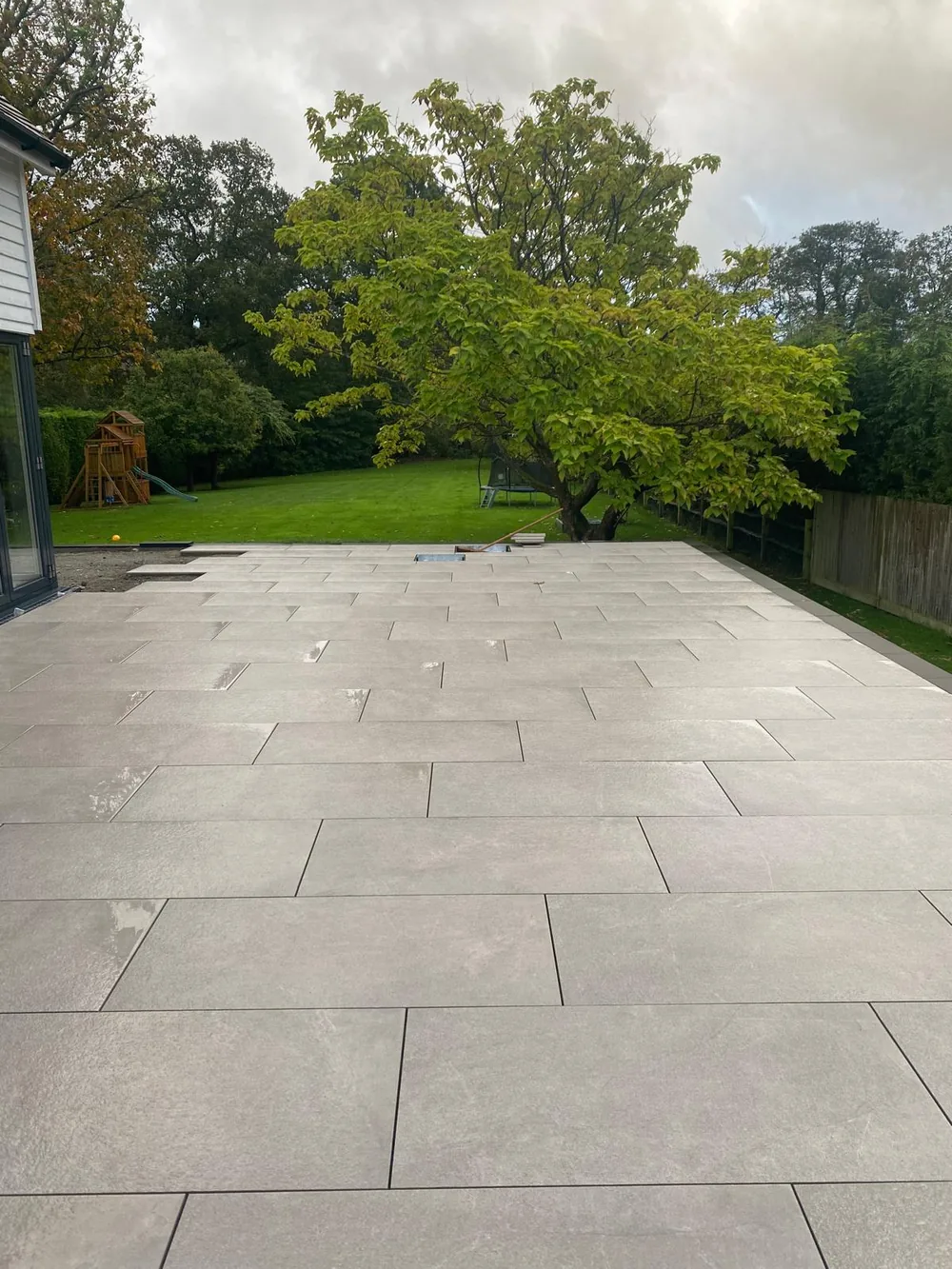
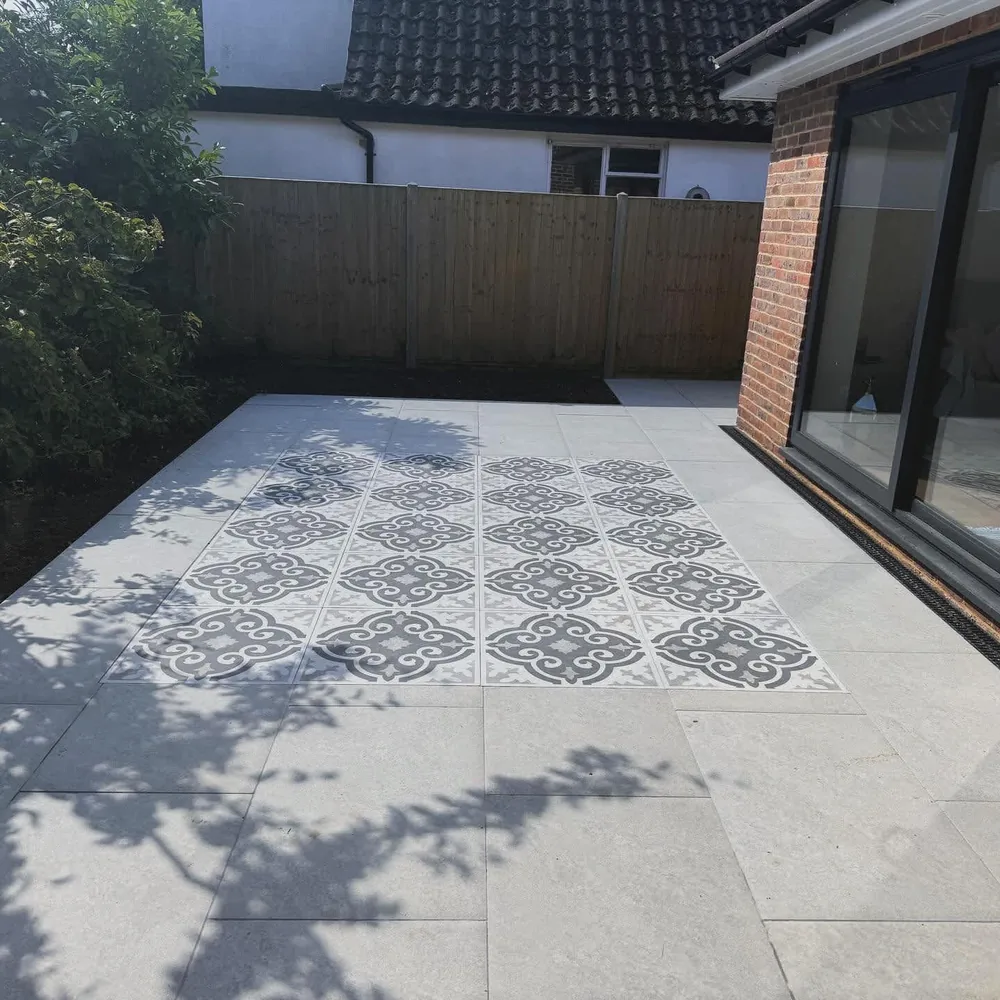
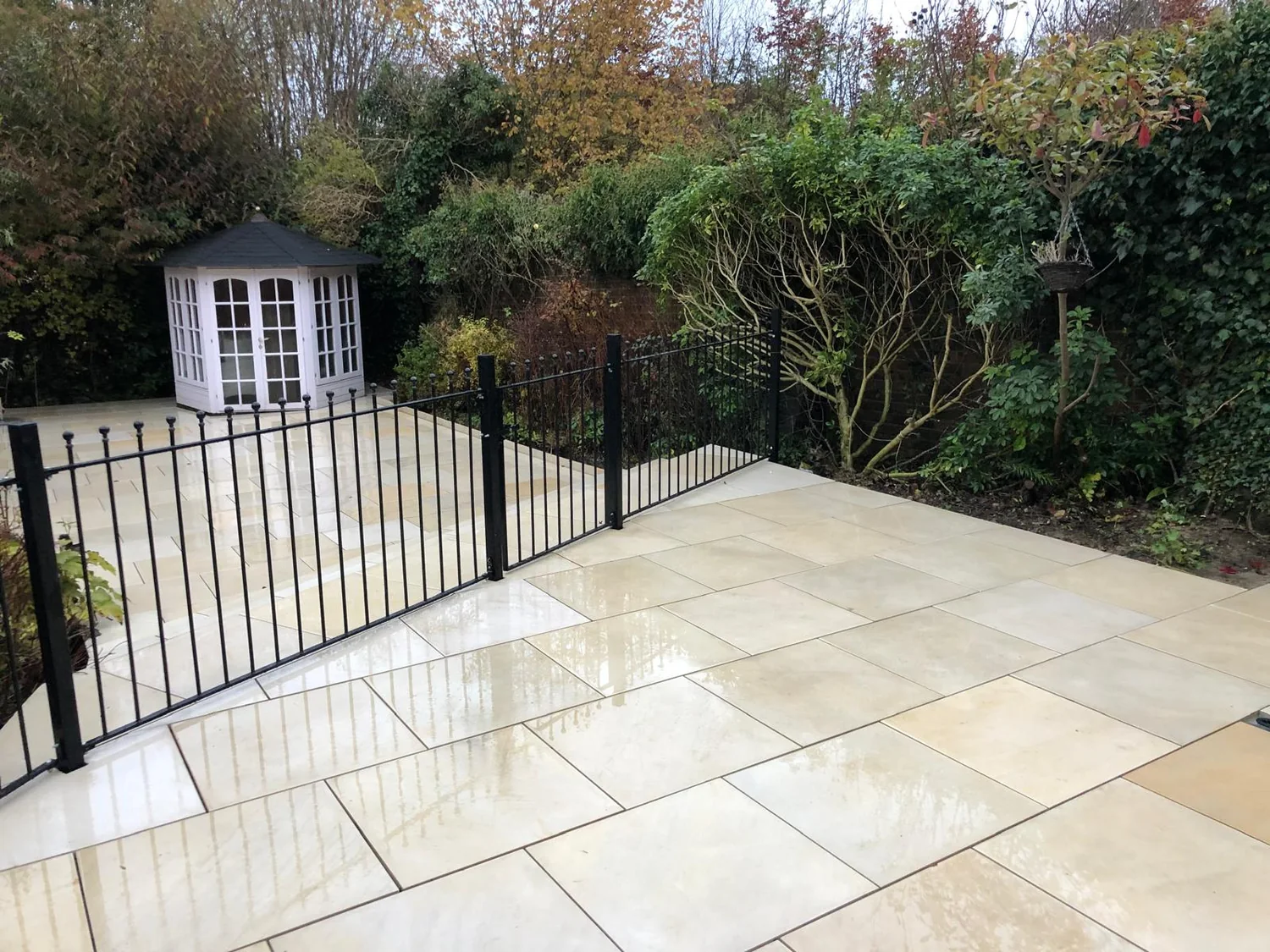
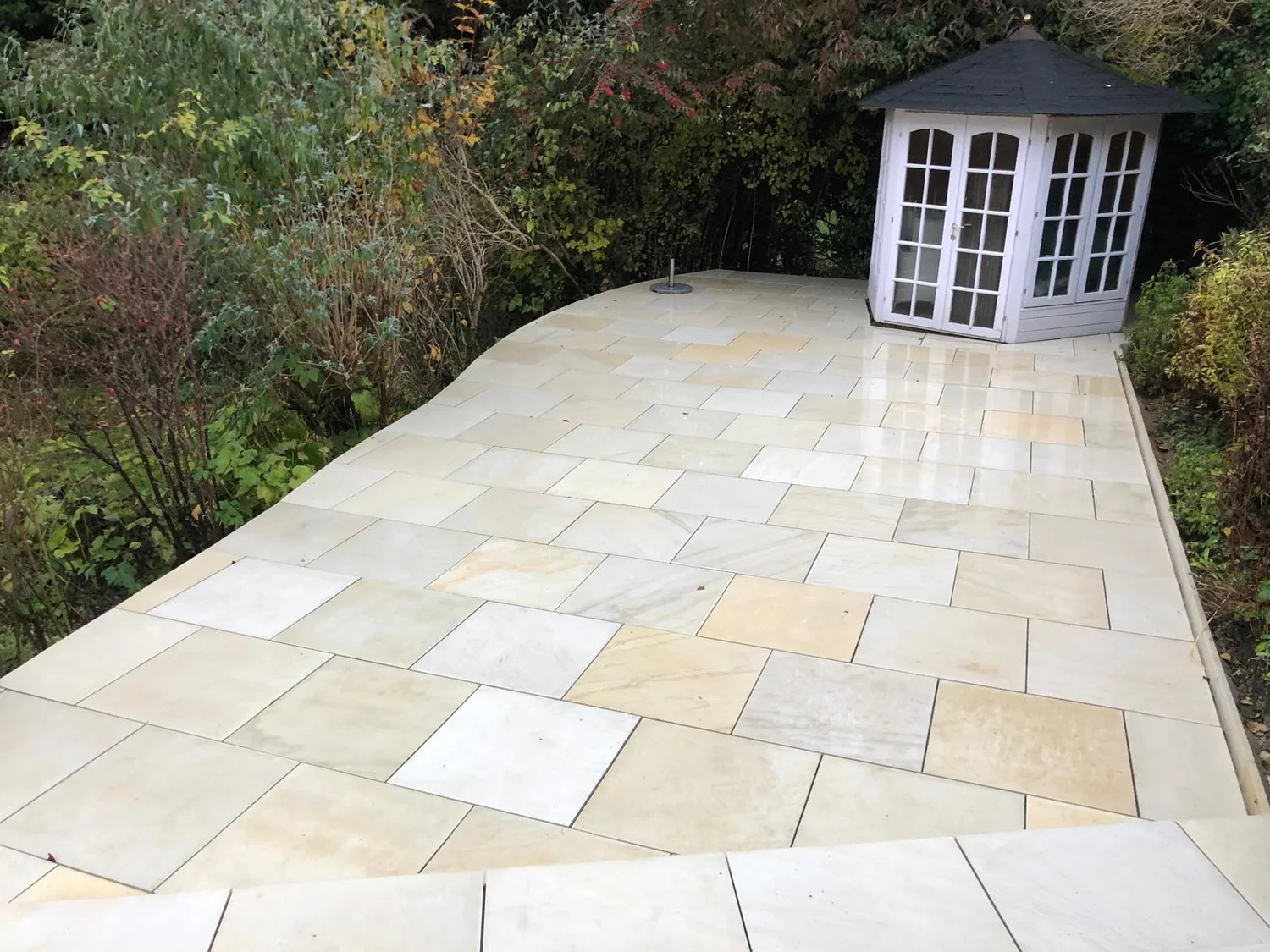
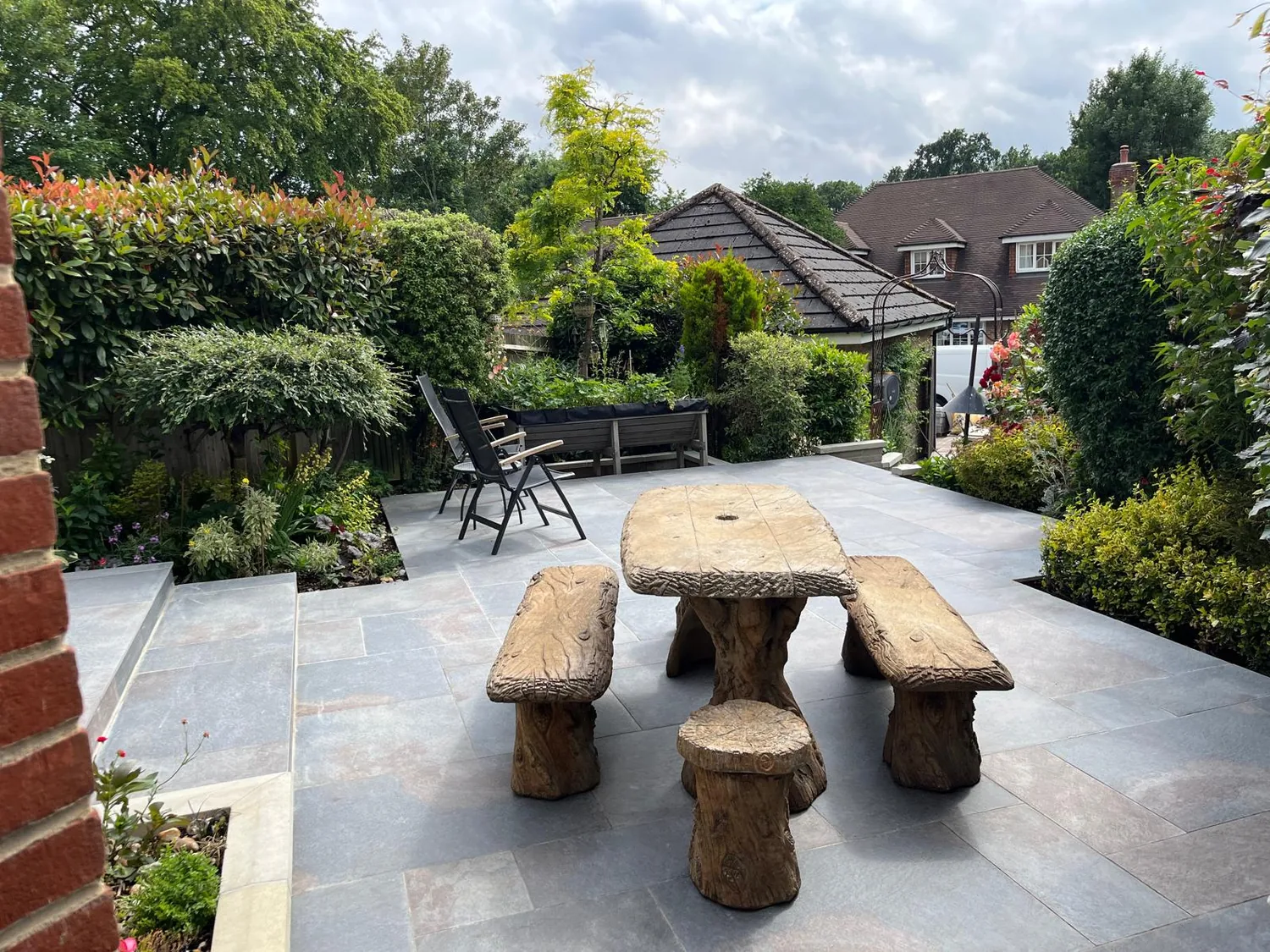
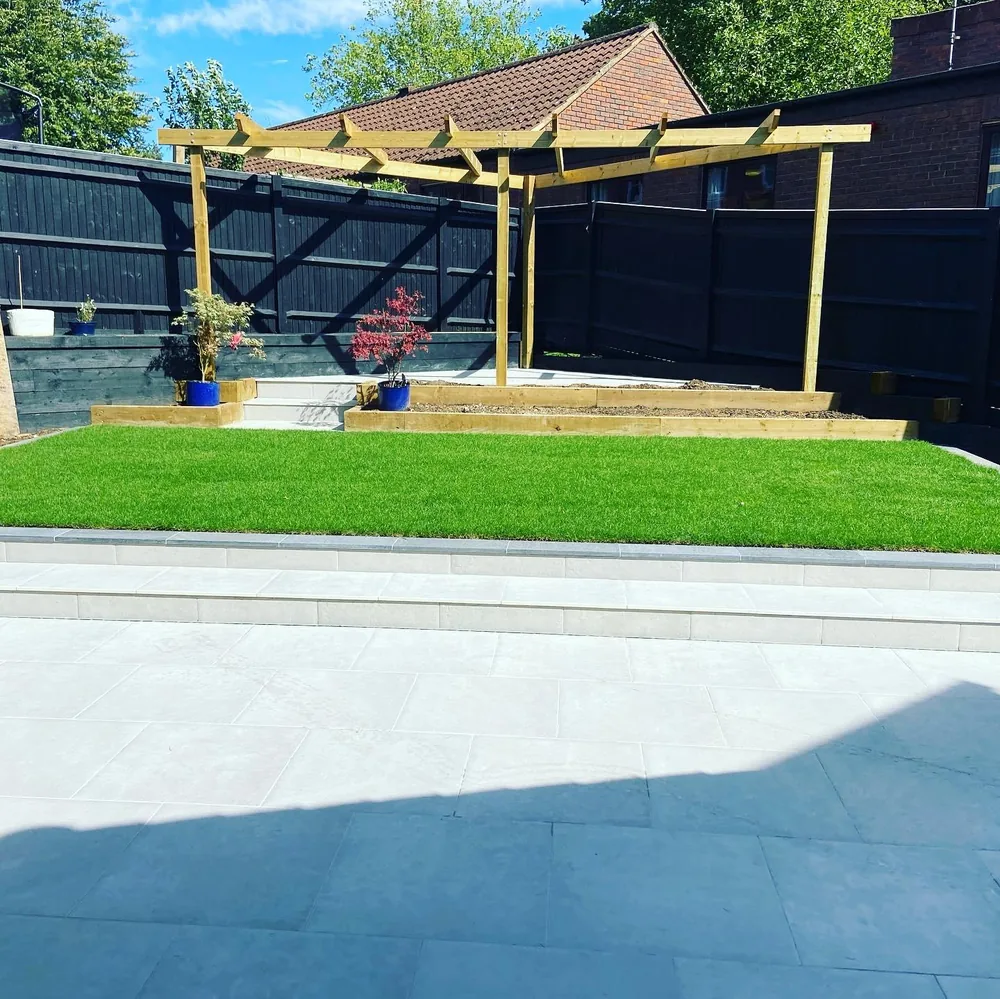
- Porcelain and natural stone patios, steps and terraces on valley side plots.
- Garden room bases, slabs, drained aprons and the path to the door.
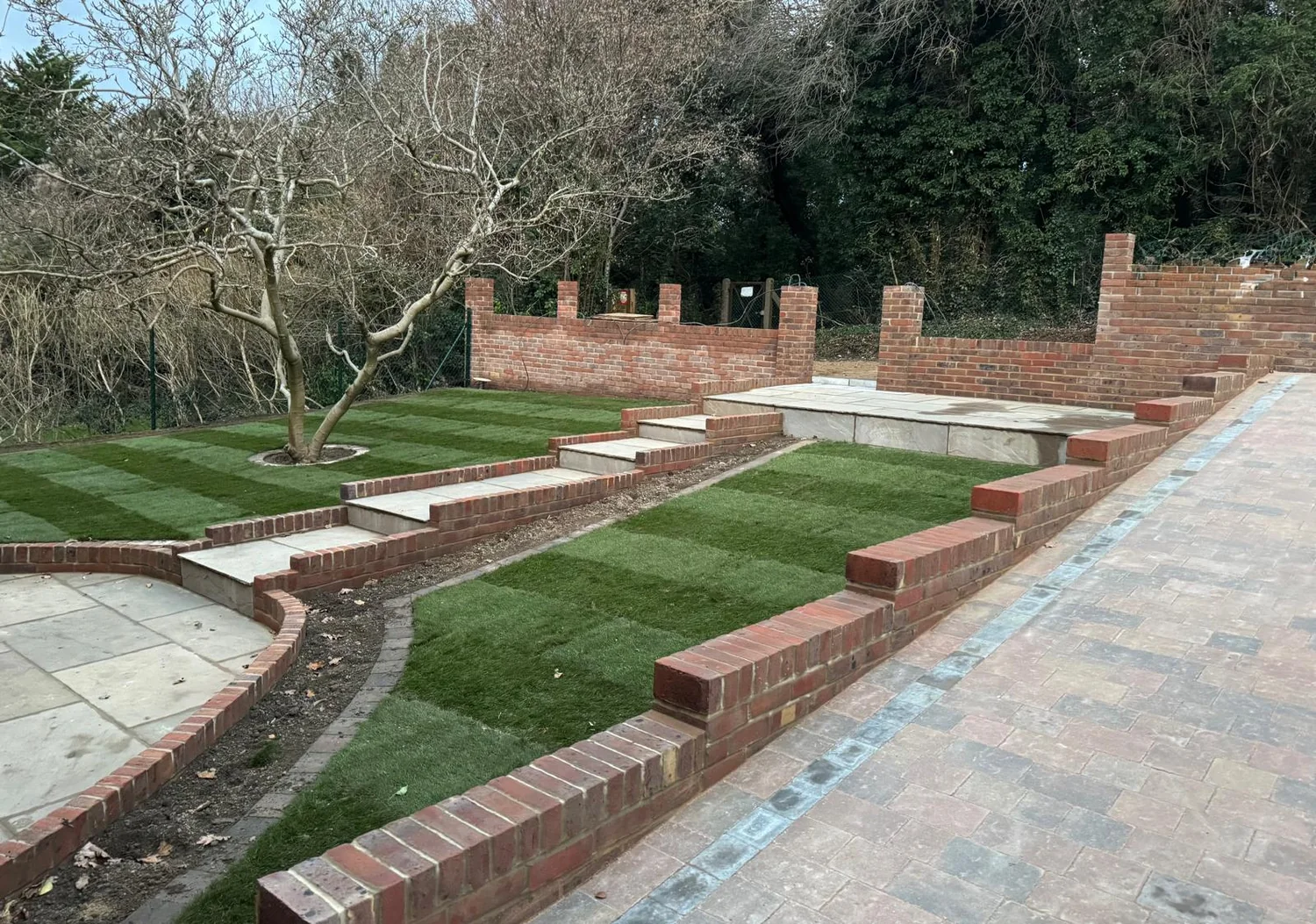
- Retaining walls, piers, garden walls and rendering by the men who did the dig.
- Fencing, turf, artificial grass and drainage as part of the same job.
Levels, access and permission
140 Metres of Height Between One End of the Town and the Other
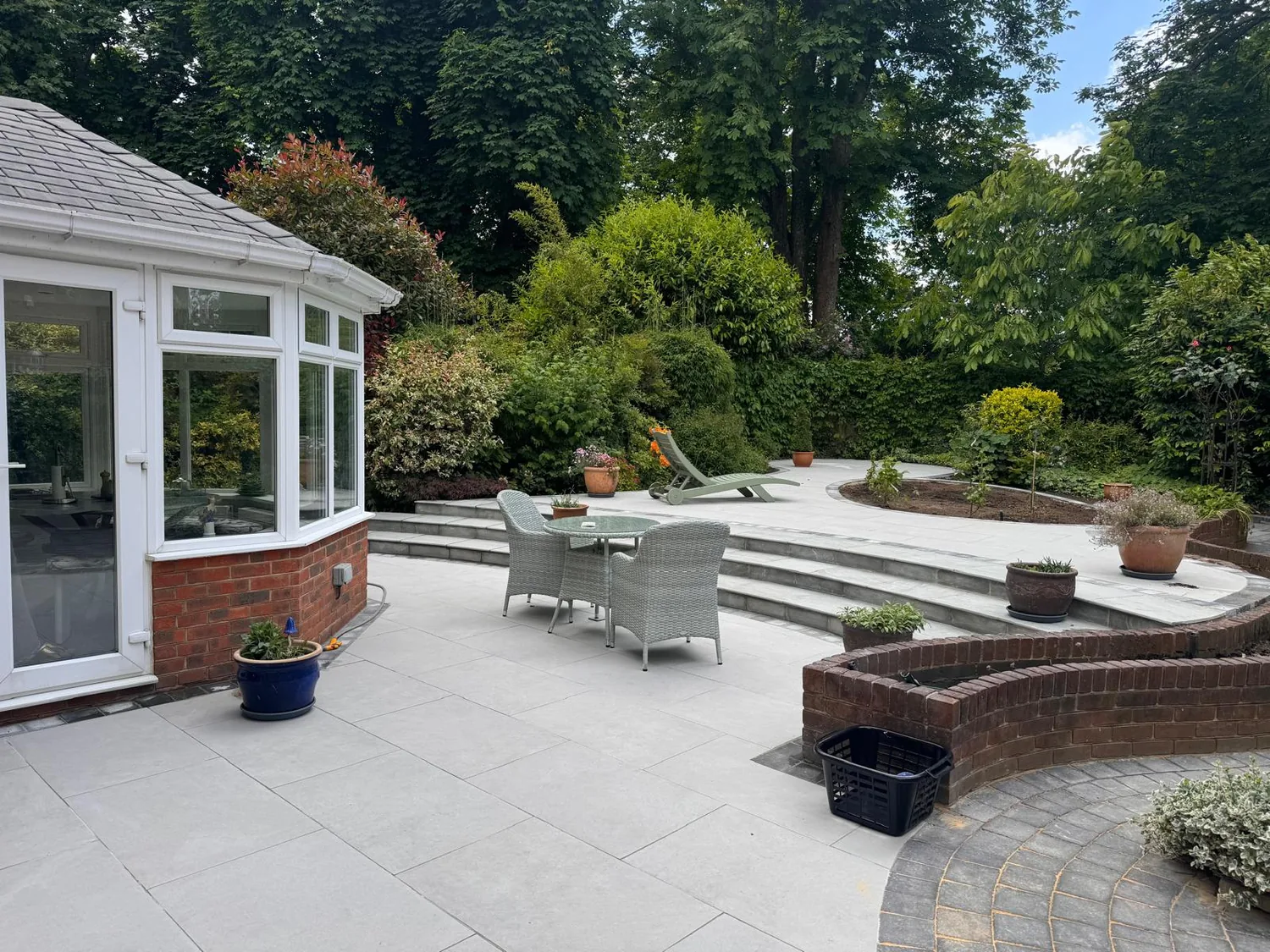
The design guidelines put roughly 140 metres between the high and low points of the Caterham area, from 238m AOD at the Pilgrim or Fosterdown Fort down to 92m AOD in the valley north of Whyteleafe, with the Caterham valley floor around 130m AOD at its southern end. Caterham on the Hill East sits relatively flat at about 175m to 190m AOD, so frontages there are straightforward. The adopted Harestone design guidance names Tupwood Lane and Dunedin Drive as so steep that parking is normally taken at road level with the house below.
Tandridge District Council is the planning authority and Surrey County Council is the highways authority you apply to for a vehicle crossover or dropped kerb. Surrey's guidance says roads classified A, B or C need planning permission for a crossover and D roads may do, and that the county needs written evidence from the district council either granting permission or confirming it is not needed.
Harestone Valley is an Area of Special Residential Character whose adopted guidance prefers gravel, bound gravel or porous paving, asks that large paved areas are avoided, and says access drives on the steepest sections should be at a practical gradient so they stay usable in ice. Caterham Barracks is the conservation area within the town, with Chaldon to the west and Kenley Aerodrome on the ridge to the north.
- Permeable surfaces, or one draining to a lawn or border, keep most driveways out of the planning system.
- Steep drives get a gradient we would happily walk down in ice, not one that only looks right on paper.
- Access checked before we quote: grab lorry room, machine access, and where the spoil goes.
- The Caterham, Chaldon and Whyteleafe Neighbourhood Plan, made June 2021, records that 94% of Tandridge is Green Belt.
Villages and neighbourhoods
Where We Work Around Caterham
We cover the whole of CR3 and the parishes either side of it. These are the parts of Caterham we are in most weeks, and each of them digs differently.
Our work
Caterham Work of This Kind
Questions
Caterham Questions We Get Asked
Do I need planning permission for a driveway in Caterham?
Usually not. The Planning Portal guidance is that a driveway of any size using permeable or porous surfacing, or one where rainwater is directed to a lawn or border to drain naturally, does not need planning permission. Permission is generally needed for impermeable surfacing over five square metres that does not drain to a permeable area. Tandridge District Council is the authority to confirm it with.
Who do I apply to for a dropped kerb in Caterham?
Surrey County Council, as the highways authority. Their guidance says roads classified A, B or C need planning permission for a crossover and D roads may do, and that the county needs written evidence from Tandridge District Council either granting permission or confirming none is needed. Godstone Road is the A22, so a frontage there is a classified road job.
The soil on Caterham on the Hill is full of flint. Does that make the job harder?
It makes the dig heavier and the muck away bigger, and we price both clearly. The clay-with-flints cap over the White Chalk holds water, so on the hill we go to a full sub-base depth, lay a separation geotextile at formation and design a positive outfall rather than assuming a soakaway will cope. The valley chalk behaves completely differently.
Our house on Croydon Road sits above the road behind a bank. Can you still get a driveway in?
That is one of the most common jobs we do here. Between the hill and the valley, houses sit set back above the road behind steep vegetated banks, with driveways and small garages cut into the hillside. The answer is retaining first, then levels, then surface. We build the walls, steps and drainage as part of the same project, so responsibility stays clear from start to finish.
What does the Harestone Valley guidance mean for my driveway?
Harestone Valley is an Area of Special Residential Character with adopted design guidance from Tandridge. It says driveways should preferably be surfaced with gravel, bound gravel or porous paving, that large areas of paving should be avoided, and that on the steepest sections access drives should be at a practical gradient so they stay usable in icy conditions.
Water runs off our drive and into the garage. Can that be fixed?
Nearly always, and it is usually a falls problem rather than a surface problem. We reset the levels so water runs away from the building, add a channel drain across the threshold where one is needed, and take the water to a proper outfall within the property. Given what the 2014 and 2016 events did in this catchment, it is worth doing properly.
Do you build garden rooms in Caterham?
Yes, and we do the groundwork as well as the building: the dig, the drainage, the base or slab, the drained apron around it and the path leading to it. On a sloping valley side plot the base is most of the job, and getting it level and dry is what stops a garden room feeling like a shed in five years.
Get a quote
Planning an Outdoor Project in Caterham?
The yard is in the town already, so a look at your frontage is easy to arrange. Call 01883 340429, or send a couple of photos and we will tell you what the ground is likely to be doing before we come out.
- Free, no-obligation quotationsIn writing, with the build-up and the drainage set out.
- 27 years in the tradeMarshalls Register accredited, Bradstone Assured.
- Fully insuredDomestic and commercial work across Surrey.
Arrange a free site visit
Tell us a little about the project and we will come out, look at the ground and put a written quotation together.
Where we work
Paving, Landscaping & Outdoor Construction Across Surrey
Based in Caterham, we undertake projects throughout Surrey and selected areas of Kent and West Sussex. For larger or more comprehensive projects, we are happy to consider work further afield.