

Coulsdon, CR5
Driveways and Patios in CoulsdonBuilt for a Chalk Valley With Steep Sides
Coulsdon runs along a chalk valley and the ground changes as you climb it. We build to suit what is under your front garden, from Smitham Bottom up to the Old Coulsdon plateau.
Coulsdon, CR5
One Town, Three Different Digs and Your Frontage Decides Which One You Get
Coulsdon is a valley town. The built area follows the chalk valley that used to be called Smitham Bottom, with Brighton Road along the floor of it and the ground climbing away on both sides towards Farthing Downs, the Dutch Village and Old Coulsdon. Two houses a few streets apart can need a completely different drive.
Where you sit on that valley also decides what comes out of the hole. The bedrock is chalk right across the town, but what sits on the chalk changes three times, and that cover is what your sub-base bears on. We would rather find that out with a machine than guess at it in a quote.
We are a family-run company based on Stafford Road in Caterham, a few minutes from you, with our own team. The excavation, the drainage, the base, the edges and the surface are delivered and managed by Crockett & Crockett, so there is clear responsibility for the finished job from start to finish.
27 years in the trade. We are on the Marshalls Register of Accredited Landscape Contractors and Driveway Installers, a London Stone registered installer and a Bradstone assured installer, 10 out of 10 on Checkatrade, and fully insured. Domestic and commercial, and we take on insurance work.
Under the front garden
Chalk Underneath, and Three Different Things Sitting on It Head in the Valley, Bare Chalk on the Sides, Clay and Flint up Top
BGS 1:50,000 mapping returns the Lewes Nodular, Seaford and Newhaven Chalk formations, undifferentiated, as the bedrock at every point checked in Coulsdon, from Chipstead Valley Road across the town centre to Old Coulsdon and Coulsdon Common. What sits on the chalk is where the work changes.
Along the valley floor by Brighton Road there is Head, a wash of mixed gravel, sand, silt and clay that varies within a few metres, so we dig until we reach something a roller cannot move rather than down to a figure written before we arrived. The valley sides have no superficial cover mapped at all, so there the dig goes straight into weathered chalk. Clean chalk drains fast and will usually take a soakaway, but it softens and pumps the moment it is worked wet.
Up on the Old Coulsdon plateau and around Coulsdon Common the chalk is capped by Clay with Flints, an orange brown sandy clay packed with flint nodules. The BGS records it filling dissolution pipes and hollows in the chalk anywhere from one to fifty metres across, which is why a dig up there can change completely inside one frontage. On that ground the spoil comes out heavier and wetter, it does not dry out between showers the way chalk does, and the sub-base has to be built up in thinner layers so each one can be rolled properly instead of riding on soft material underneath.
- Chalk formation blinded and covered the same day it is opened
- Sub-base built up in layers and rolled until it stops moving underfoot
- Soakaways only where the chalk is clean and will genuinely take the water
- Dig depth settled on site by what we find, not by a number set beforehand
The houses
Railway Cottages at the Bottom, Tudorbethan Estates at the Top and Six Hundred New Frontages at Cane Hill
The Croydon Local Plan gives Coulsdon's predominant residential character as detached houses on relatively large plots to the north and east, an estate of compact houses on small plots to the east, planned estates of semi-detached houses with garages, and low density scattered houses on large plots in the south. Four different driveway problems inside one postcode district.
Around the station the grain is much tighter. The Station Approach Local Heritage Area is a run of small two storey Victorian railway cottages from the 1900s at 1 to 21 Station Approach and 1 to 4 Railway Terrace, with narrow street widths and pedestrian passageways to the side and rear. Access there is genuinely constrained, so materials come in broken down and most of the muck goes out by barrow.
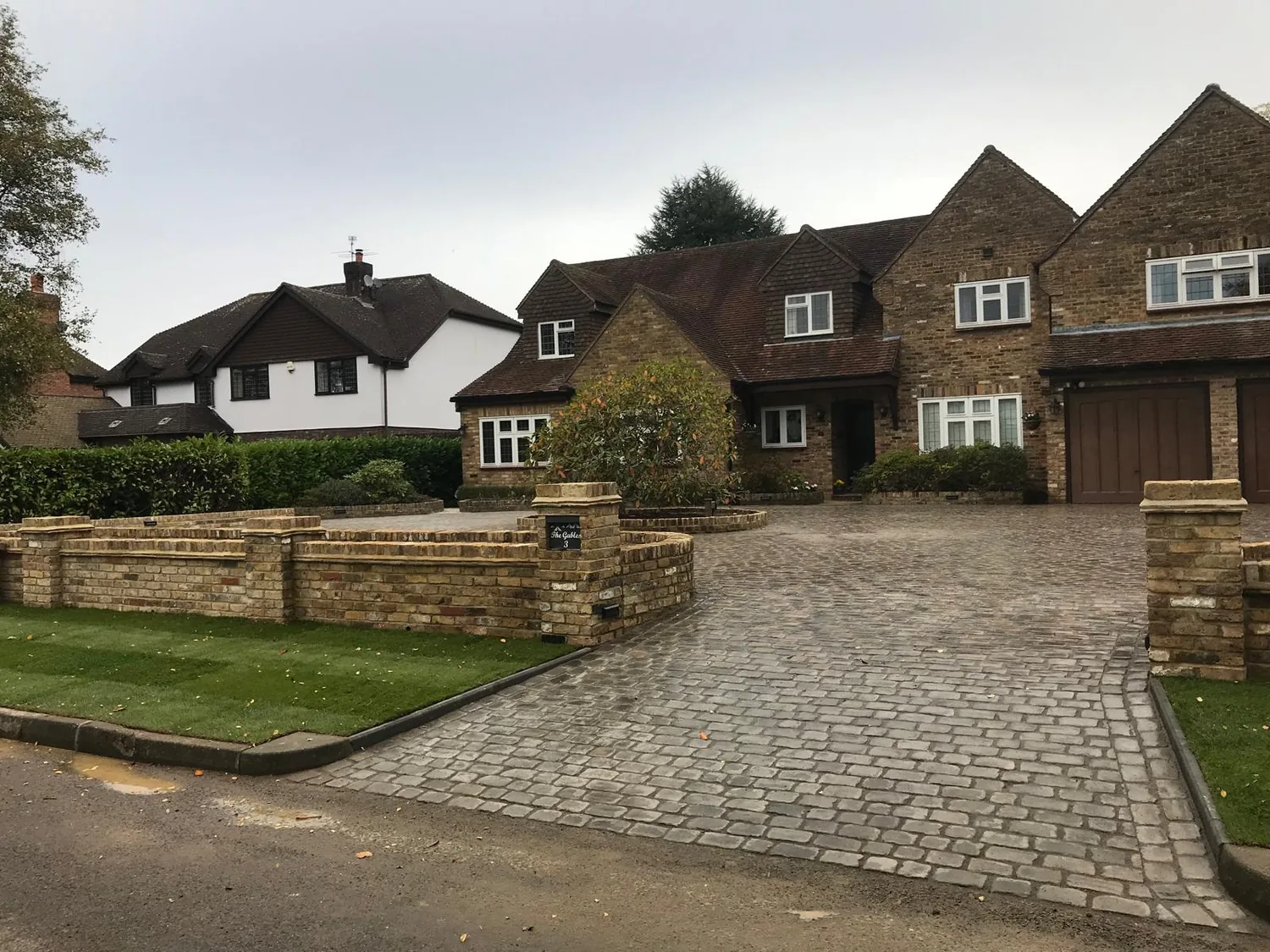
Old Coulsdon is dominated by 1930s Tudorbethan estates such as Court Avenue and Tudor Close, and the council's own heritage review lists opening up front gardens and stripping them of planting to make driveways as a negative change. We lay drives there that keep a planted margin and a proper edge. Stoats Nest Village is different again, a planned estate of semi-detached houses around a central green, the first Homes fit for Heroes in the area after a compulsory purchase confirmed at the end of 1919, so the frontages are shallow and the building line matters. At the other end of the range is Cane Hill Park, the Barratt redevelopment of the 210 acre former hospital site, over six hundred homes and completed in November 2021, where the frontages are new, small and already surfaced.
- Narrow Station Approach frontages worked by barrow with the road kept clear
- Drives on the 1930s estates laid with the front garden planting kept, not stripped
- Cane Hill rear gardens levelled and terraced where the plot is small and new
- Dutch Village hillside plots stepped rather than ramped
What we do most in Coulsdon
Drives That Hold Their Fall and Gardens That Hold Their Level With the Retaining Designed in at the Start
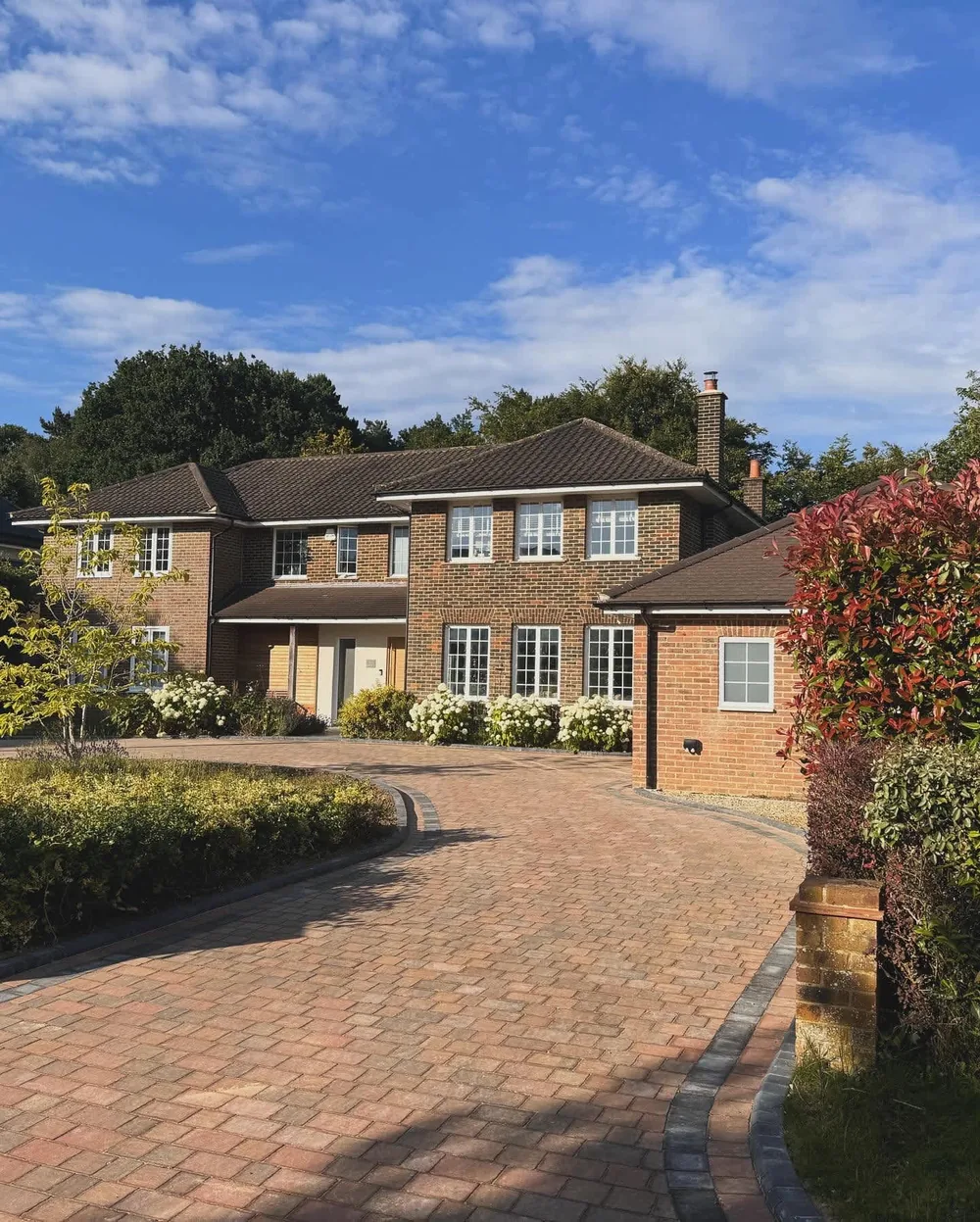
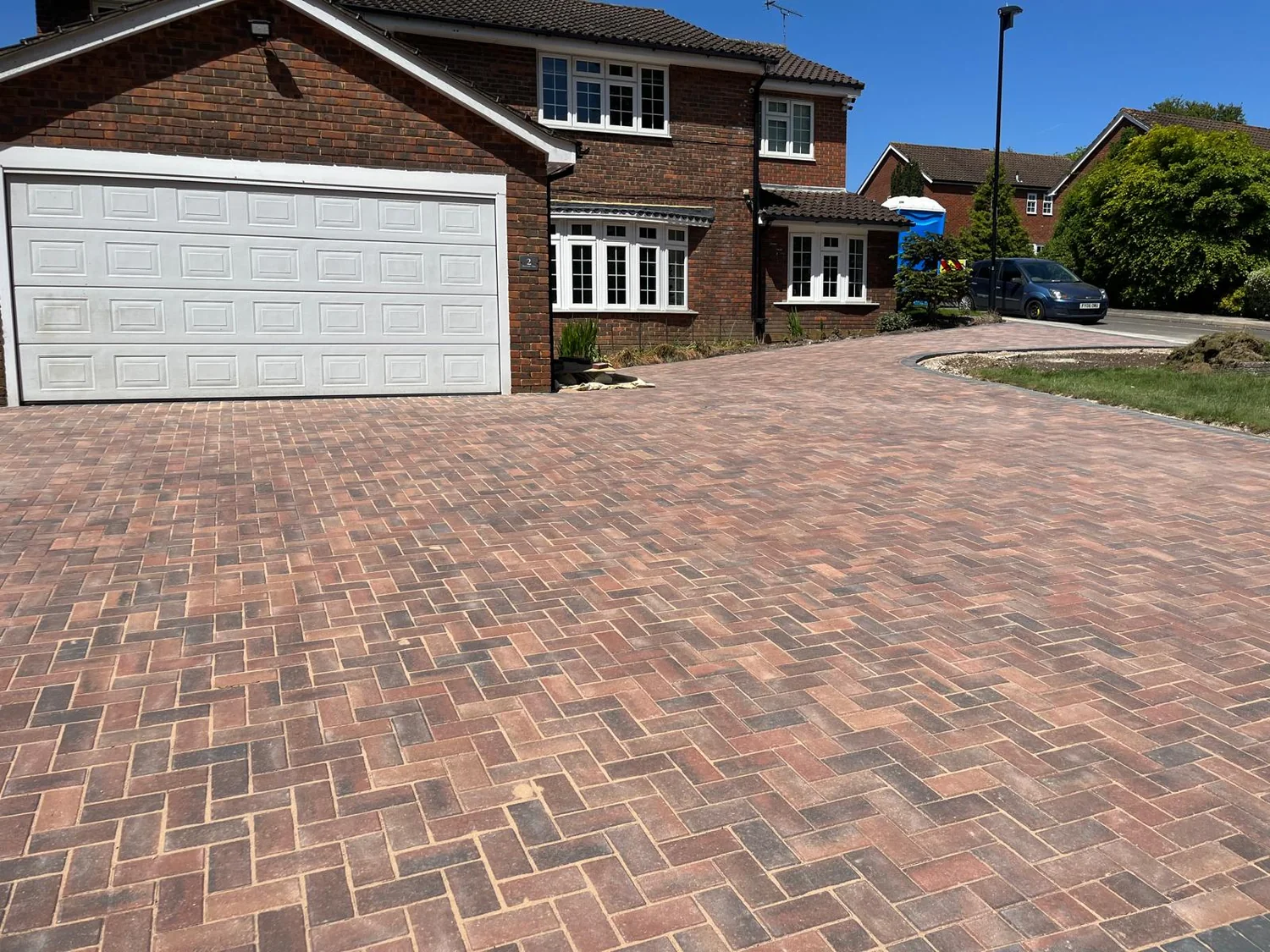
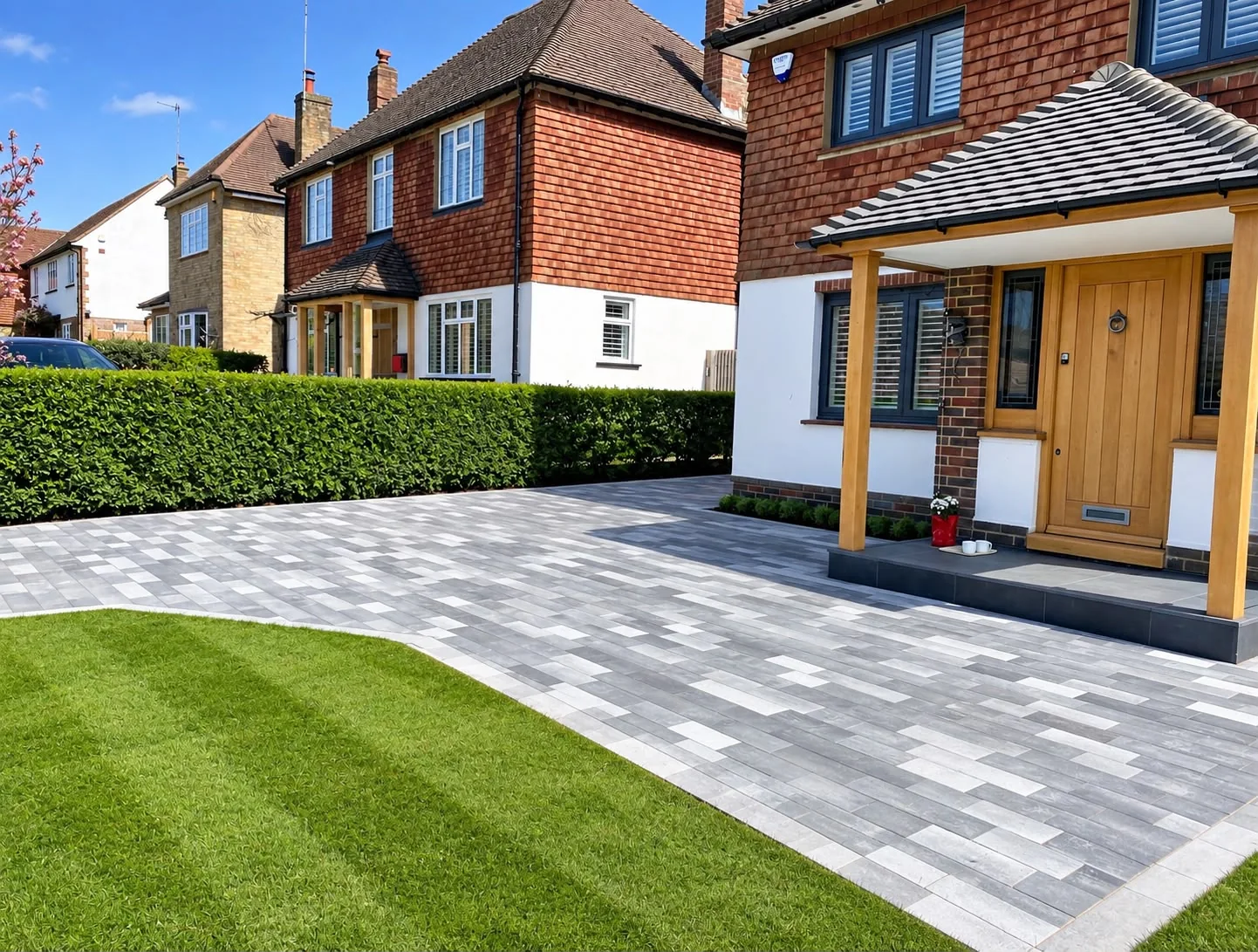
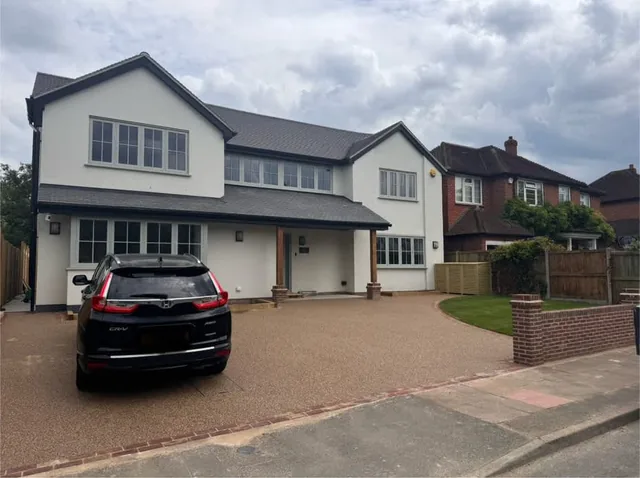
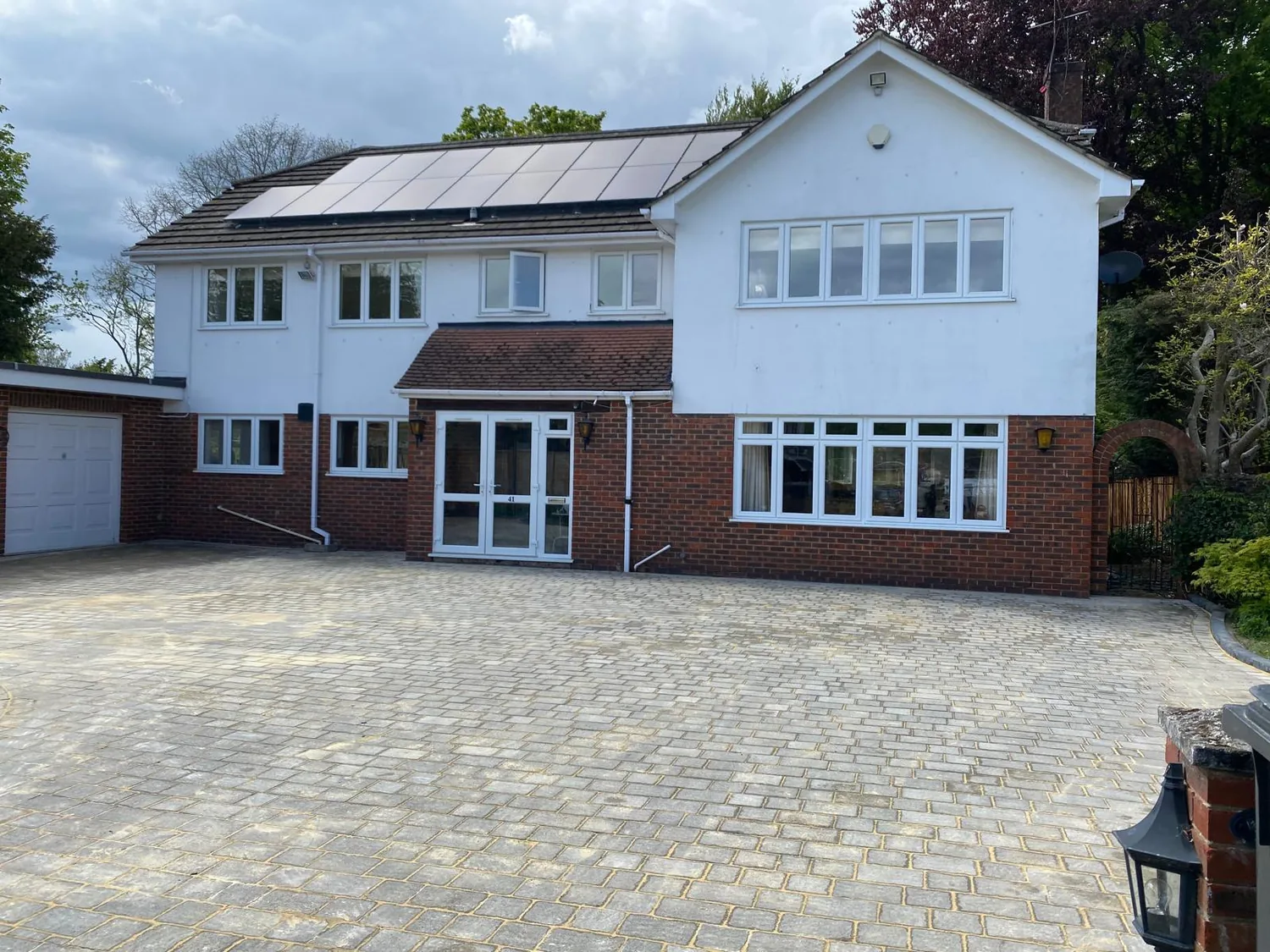
Most of our Coulsdon work is block paving over a full depth base, because it copes with the variable Head along the valley floor and because a single block can be lifted and reset if a service ever has to come up. Resin goes down where the customer wants a quieter, continuous finish, and it is only ever as good as the base under it.
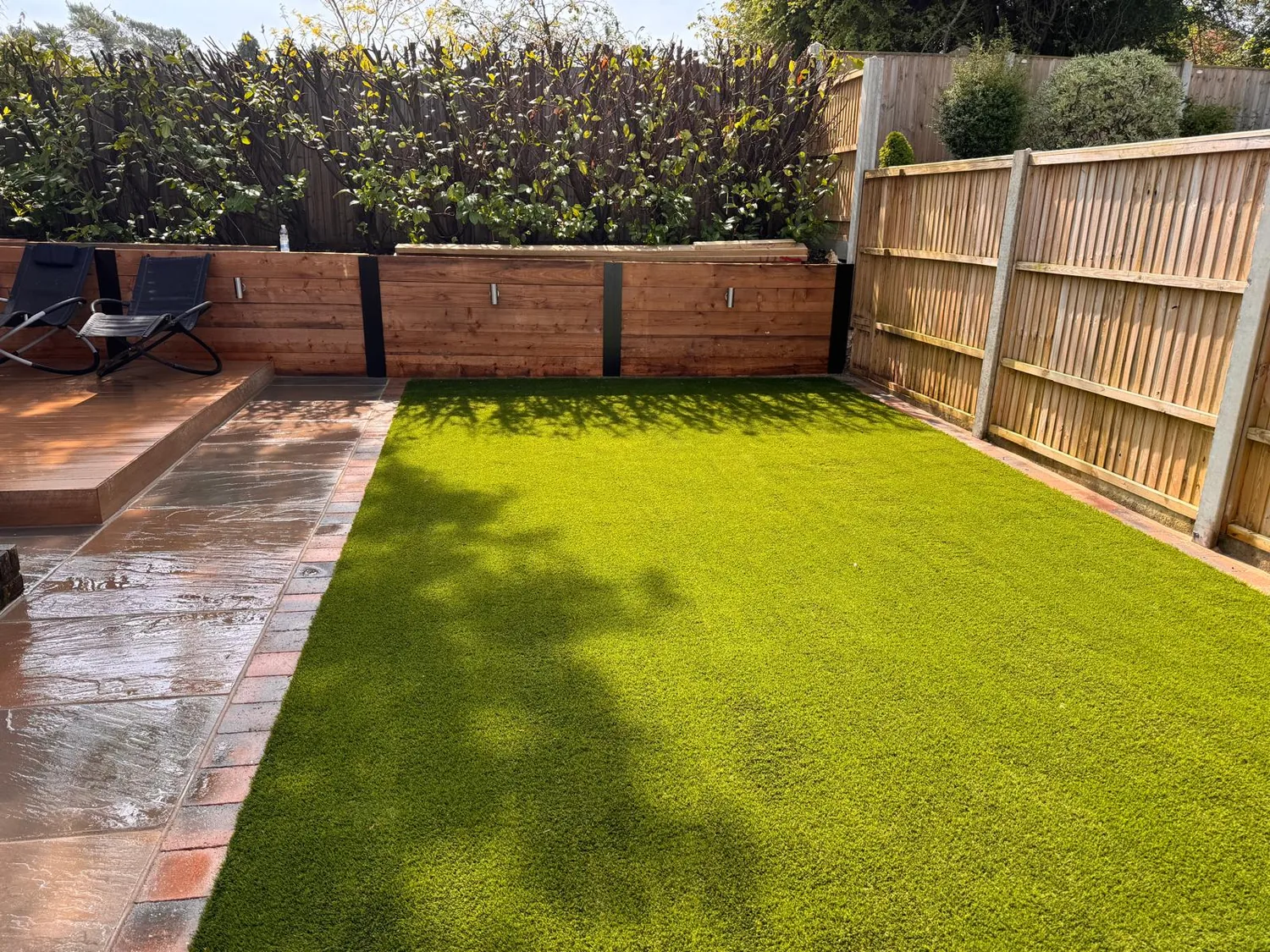
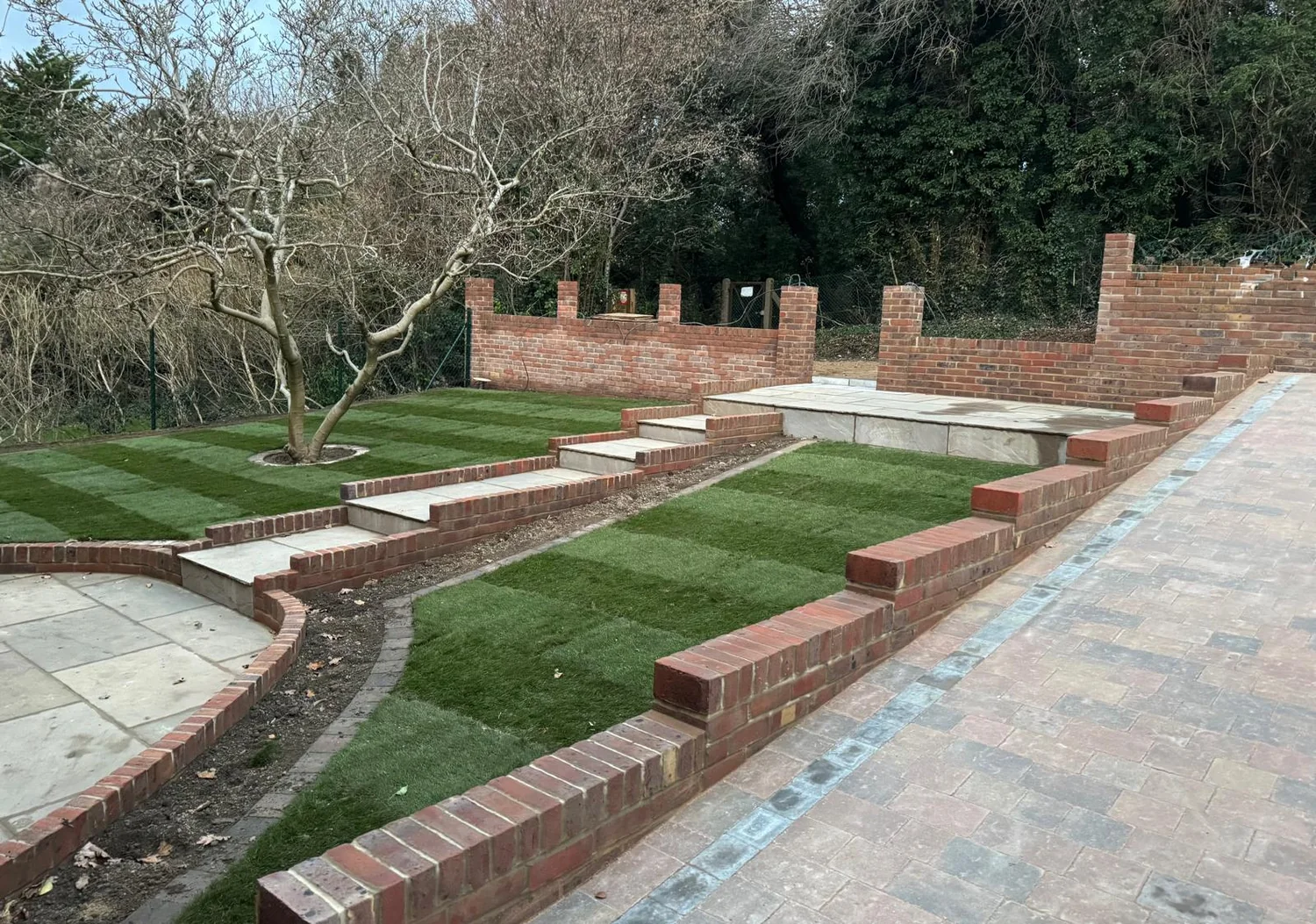
The other half of the work is levels. On the Dutch Village hillside, where Wouter Hamdorff's Dutch style houses sit on Wilhelmina Avenue, The Netherlands and Woodplace Lane, on the Portnalls Road side and along the plateau edge above Farthing Downs, a drive has to be stepped and retained rather than ramped. We set that out at quote stage: where the wall goes, how tall it is, what holds it back and where the water behind it comes out.
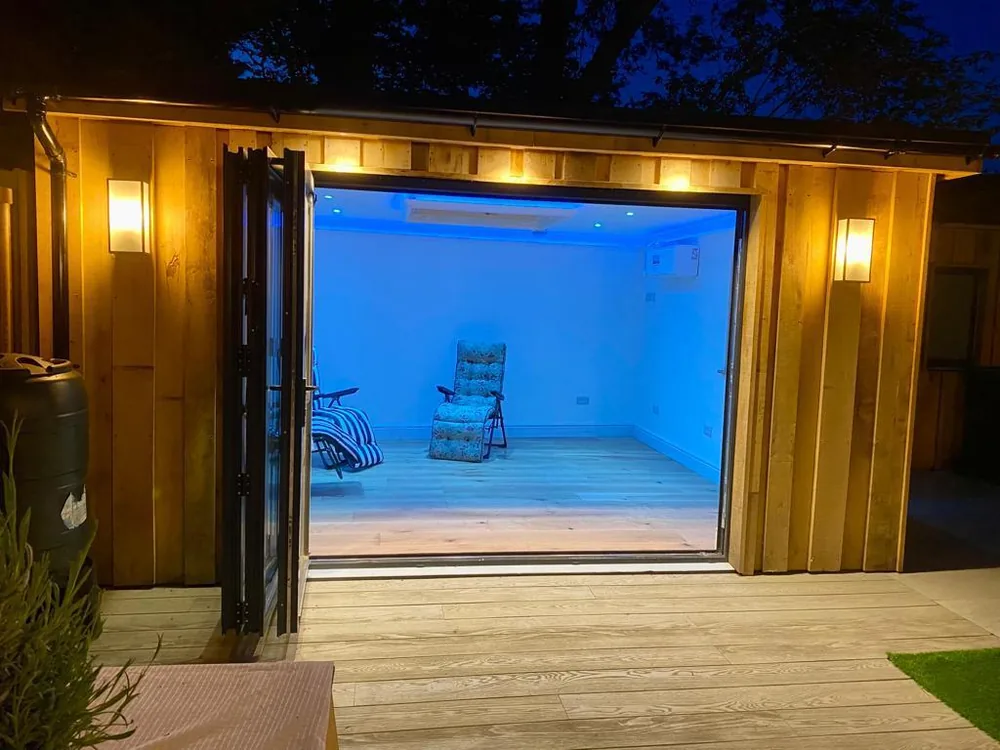
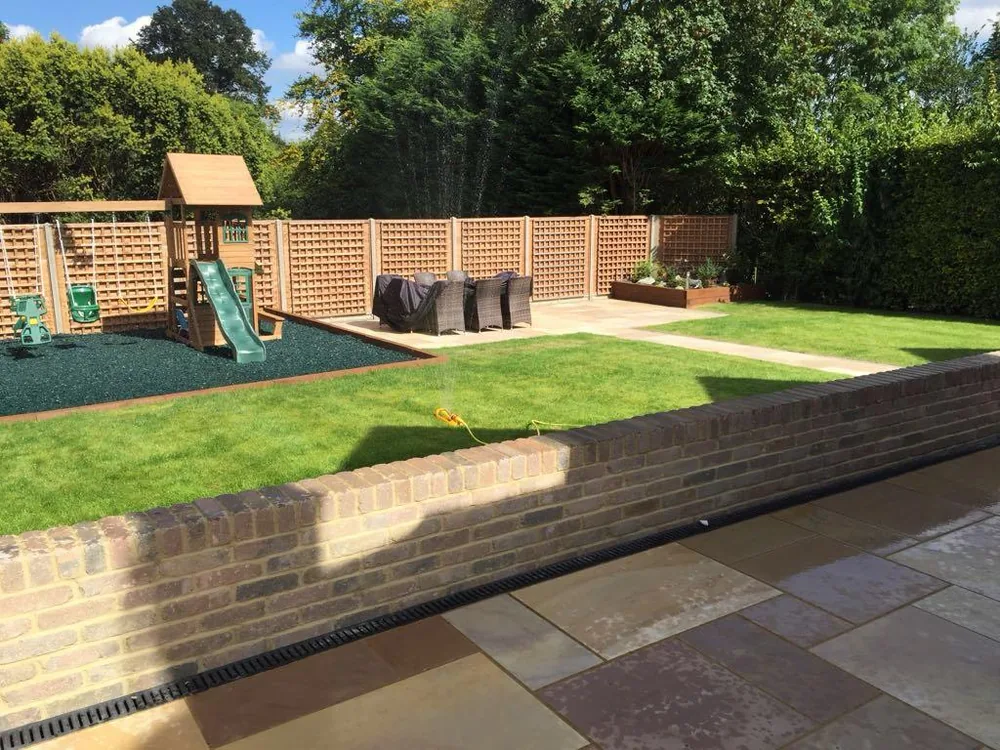
Garden rooms are a large part of what we do now, and on a Coulsdon slope the base is the whole job. A level, drained, screeded slab with the ground water routed past it is what stops a timber building sitting in a puddle two winters later.
- Block paving drives on Brighton Road, Marlpit Lane and Woodmansterne Road frontages
- Resin drives laid over a base built for the car, not for the look
- Brick and sleeper retaining on the Dutch Village and Portnalls Road slopes
- Garden room bases dug, drained, levelled and screeded before a panel goes up
- Steps and handrails on the plateau edge where a ramp would be too steep to use in ice
Levels, access and permission
79 Metres in the Centre, 162 up at Old Coulsdon and Croydon Is the Planning Authority for All of It
The height difference is what people underestimate. Spot heights put Brighton Road in the centre at about 79 m and Coulsdon South station at about 88 m, while Chipstead Valley Road climbs west to roughly 139 m, the Farthing Downs slope reaches about 113 m on the town side and Old Coulsdon sits at about 162 m. The centre, the Marlpit Lane side and the Cane Hill approaches are workable. Anything on the plateau edge or the Farthing Downs slopes needs level changes designed in from the start.
The planning authority is the London Borough of Croydon. Bradmore Green in Old Coulsdon is the conservation area, designated in July 1968, and Metropolitan Green Belt applies across the Coulsdon Place. Netherne on the Hill, Hooley and Chipstead all carry CR5 addresses but sit in Reigate and Banstead, so a job a short way down the road can go to a different council. Worth knowing as well: Croydon revoked its Suburban Design Guide in July 2022, so if anyone quotes it at you it is no longer current.
Dropped kerb applications go to Croydon Council through its online residential crossover process, and the council is clear that it is the owner who applies. Planning permission is needed as well as crossover approval where the crossover is formed within a classified road or a conservation area, which takes in the A23 Brighton Road, a Transport for London red route through the town. On the surfacing itself, the Planning Portal guidance is that a driveway of any size does not need permission if it is permeable or porous, or if rainwater is directed to a lawn or border to drain naturally, with permission needed above five square metres of traditional impermeable surface that does not drain away.
- Grab lorry and machine access checked before we quote, not on the first morning
- All spoil goes off site, it does not get spread behind the shed
- Dropped kerb applications go to Croydon Council online with the owner as applicant
- The Surrey Iron Railway embankment near Lion Green Road is a scheduled monument, so we check before anything is dug close to it
Villages and neighbourhoods
Where We Work Around Coulsdon
We cover the whole of CR5 and the villages on either side of the valley. Some of these are in Croydon and some are just over the boundary in Reigate and Banstead, which changes who your application goes to.
Our work
Work of This Kind
Questions
Coulsdon Questions We Get Asked
Will a new driveway in Coulsdon need planning permission?
Usually not. The Planning Portal guidance is that a driveway of any size is permitted development if the surface is permeable or porous, or if the rainwater runs off to a lawn or border and drains naturally. Permission is needed above five square metres of impermeable surface that does not drain away, and Croydon asks for it where a crossover is formed on a classified road such as the A23.
What is under my front garden in Old Coulsdon?
Chalk, with a cap of Clay with Flints over it. That cap is an orange brown sandy clay full of flint nodules, and the BGS records it filling dissolution pipes and hollows in the chalk from one metre to fifty metres across. The dig can change completely between one side of a frontage and the other, so we price the ground on what we find.
Can I have a soakaway in Coulsdon?
Often, but not everywhere. Clean chalk on the valley sides takes water well and a soakaway is usually the sensible answer there. Up on the Old Coulsdon plateau, where Clay with Flints caps the chalk, it frequently is not, and along the Brighton Road valley floor the Head deposits are too variable to promise anything before we have dug and looked.
My drive is on a slope. Can it be made usable in winter?
Yes, and that is about gradient, grip and drainage rather than surface choice. On the steeper Coulsdon frontages we break the run with steps or a landing instead of one long ramp, set cross falls that push water off the drive before it reaches the house, and add a drainage line at the low point.
Do you work on the narrow streets around Station Approach?
Yes. The Victorian cottages around Station Approach and Railway Terrace have narrow street widths and side passageways, so there is no room for a machine in front of the house. Materials come in broken down, the spoil goes out by barrow, and a lorry only comes in where the road genuinely allows it. It is slower work and we quote it as slower work.
Is my Coulsdon address definitely in Croydon?
Not always. Coulsdon itself is in the London Borough of Croydon, but Netherne on the Hill, Hooley and Chipstead all carry CR5 addresses and sit in Reigate and Banstead, a different planning and highways authority. It is worth confirming which side of the boundary you are on before anyone applies for a crossover, because the process and the contact are different.
Is the Marshalls guarantee a guarantee on your workmanship?
No, and the two get confused often. The Marshalls ten year guarantee covers the materials. It is separate from our own responsibility for how the job is built, which is what being on the Marshalls Register of Accredited Landscape Contractors and Driveway Installers is about. We would rather explain the difference at quote stage.
Get a quote
Planning an Outdoor Project in Coulsdon?
Send a photo of the frontage and rough measurements and we will tell you what the ground is likely to be and what it will take. Free written quote, specification next to the figure, no obligation.
- Free, no-obligation quotationsIn writing, with the build-up and the drainage set out.
- 27 years in the tradeMarshalls Register accredited, Bradstone Assured.
- Fully insuredDomestic and commercial work across Surrey.
Arrange a free site visit
Tell us a little about the project and we will come out, look at the ground and put a written quotation together.
Where we work
Paving, Landscaping & Outdoor Construction Across Surrey
Based in Caterham, we undertake projects throughout Surrey and selected areas of Kent and West Sussex. For larger or more comprehensive projects, we are happy to consider work further afield.