

Redhill, RH1
Driveways and Patios in RedhillSandy Commons, a Wet Valley Floor, Clay on the Northern Edge
Redhill exists because the Greensand Ridge is cut by a natural water gap. That one fact gives the town three different kinds of ground, and it is why a drive that works at Watercolour would be built differently at Merstham.
Working in RH1
A Town in a Gap in the Ridge, With Hillsides on Both Sides of It.
Redhill sits in the east to west Vale of Holmesdale with greensand hillsides either side, Redstone Hill to the east and Redhill Common to the south west. The Surrey landscape assessment records Redhill Common as underlain by greensand and rising to a high point of 144 metres with steep wooded slopes. The valley itself is greensand with alluvium, diamicton and sand and gravel drift, and the land immediately north at Gatton is Upper Greensand with areas of Gault Clay at the foot of the chalk scarp.
For paving that is three jobs in one town. Free draining sand on and around the commons and at Holmethorpe, where sand was quarried for years. Wetter mixed drift on the valley floor, where the Redhill Brook is now mainly culverted through the centre. And heavy Gault Clay on the northern fringe. The joint flood risk assessment names north Redhill and South Merstham among the areas with increased susceptibility to groundwater flooding, and the Environment Agency's Redhill Brook flood zone takes in parts of the town.
Crockett & Crockett Paving is a family-run company based at 393 Stafford Road, Caterham. Oli Crockett runs the jobs, our own team is all trained in health and safety, and the digging, the drainage, the base and the laying are our own. 27 years in the trade. We are accredited on the Marshalls Register of Accredited Landscape Contractors and Driveway Installers, we are a London Stone registered installer and a Bradstone assured installer, and we are 10 out of 10 on Checkatrade. Quotes are free, written, and priced with the drainage in them.
What is under the front garden
Sand on the Commons, Drift on the Valley Floor, Clay to the North.
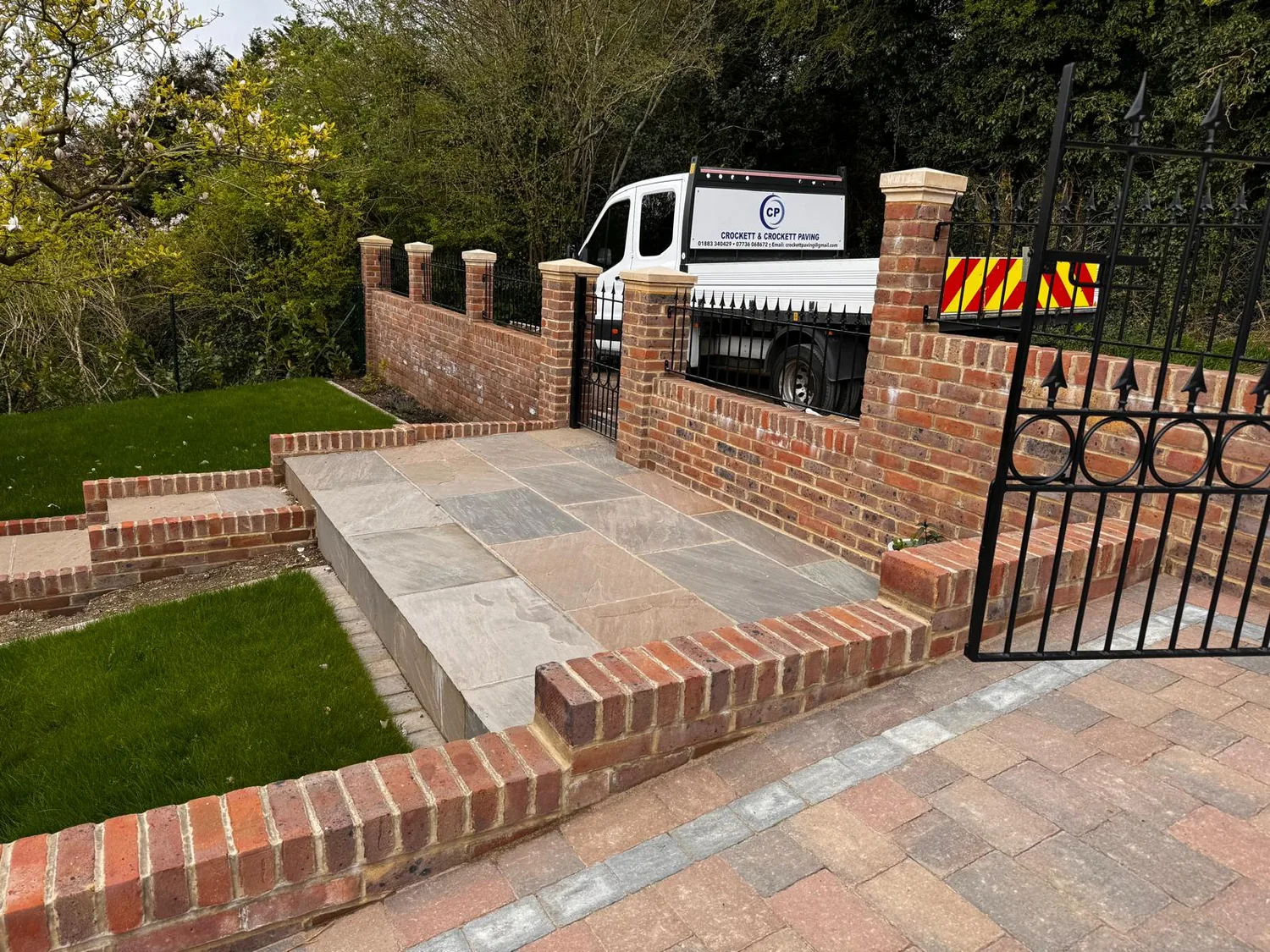
The sandy ground is the easiest to work and the easiest to get wrong. Around Redhill Common, Earlswood Common and at Holmethorpe, where sand and gravel was quarried before Watercolour was built over it, the digging is quick and infiltration is usually good, so a soakaway is often the sensible answer. But open sand will not hold a face. It slumps into the trench and moves under a machine, and a surface laid without a haunched edge spreads sideways over a few winters.
Down on the valley floor the drift is mixed: alluvium, diamicton, sand and gravel in bands that change across one front garden. The Redhill Brook runs culverted through the middle of the town, and parts of Redhill sit in the Environment Agency's flood zone for it, so we find the outfall before anyone prices a soakaway. A soakaway in ground that is already wet is a puddle with a lid on it. North towards Merstham and Gatton the ground turns to Gault Clay at the foot of the chalk scarp, which wants deeper stone, no wet working, and a positive outfall.
- Redhill Common, Earlswood and Holmethorpe: free draining sand, quick digging, usually a soakaway, supported trenches.
- Valley floor: mixed alluvium and gravel drift over a culverted brook, so the outfall is checked first.
- North Redhill, South Merstham and Gatton: Gault Clay, deeper sub-base, positive outfall, no wet working.
- Clay moves between summer and winter, so edge restraints and terrace beds are detailed for it.
The houses
A Railway Town, So the Frontages Come in Two Extremes.
Redhill is a young town by Surrey standards. The settlement formed after a turnpike road was built in 1818, it was originally called Warwick Town, and it only took the name Redhill in 1856. A station opened in 1841, a second in 1842, and the combined junction station opened on 15 April 1844. The housing followed, which is why there is such a large stock of Victorian and Edwardian terraces and villas near the centre, along with some of the borough's earliest council housing built between the wars at Colesmead.
The borough's design guide puts the front gardens on those older streets at roughly two to five metres, with on street parking, few street trees and boundaries no higher than about 1.2 metres, so a driveway there usually means giving up the whole front garden and taking a crossover off a busy road. The other extreme is the estate housing. The most extensive 1960s and 1970s estate development in the borough happened on the outskirts of Redhill, followed by 1980s and 1990s estates such as the Birds estate, then Watercolour on the former Holmethorpe sand and gravel quarry and the residential conversion of the Royal Earlswood Hospital site.
- Victorian and Edwardian terraces near the centre: narrow frontages, low boundaries, heavy on street parking.
- 1960s to 1990s estates including the Birds estate: existing paving, usually a relay and a drainage correction.
- Watercolour and Royal Earlswood Park: newer, near level frontages on made and sandy ground.
- Merstham: a linear low density conservation area village, with 1950s London County Council overspill housing around it.
What we do most in Redhill
New Drives, Honest Relays, and Drainage That Goes Somewhere.
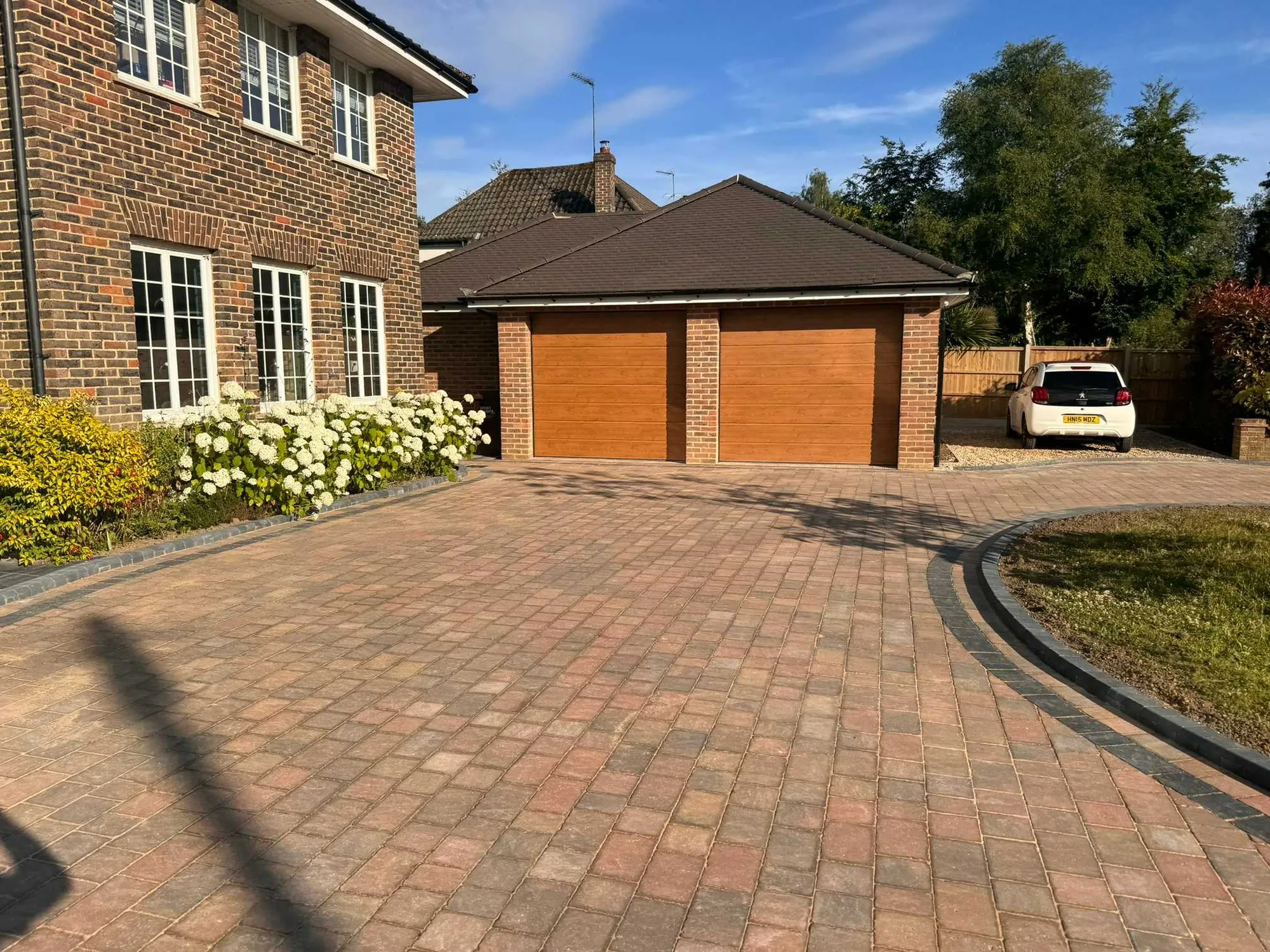
Much of our Redhill work starts with water. Drives laid to fall towards the house, terraces with no fall at all, soakaways that were never going to work in valley drift, gullies connected to nothing. All of that is fixable at the base, not with a new surface over the top. When we relay an estate drive we take it back to formation, check the depth of stone, put the drainage in properly and then lay the blocks or the resin.
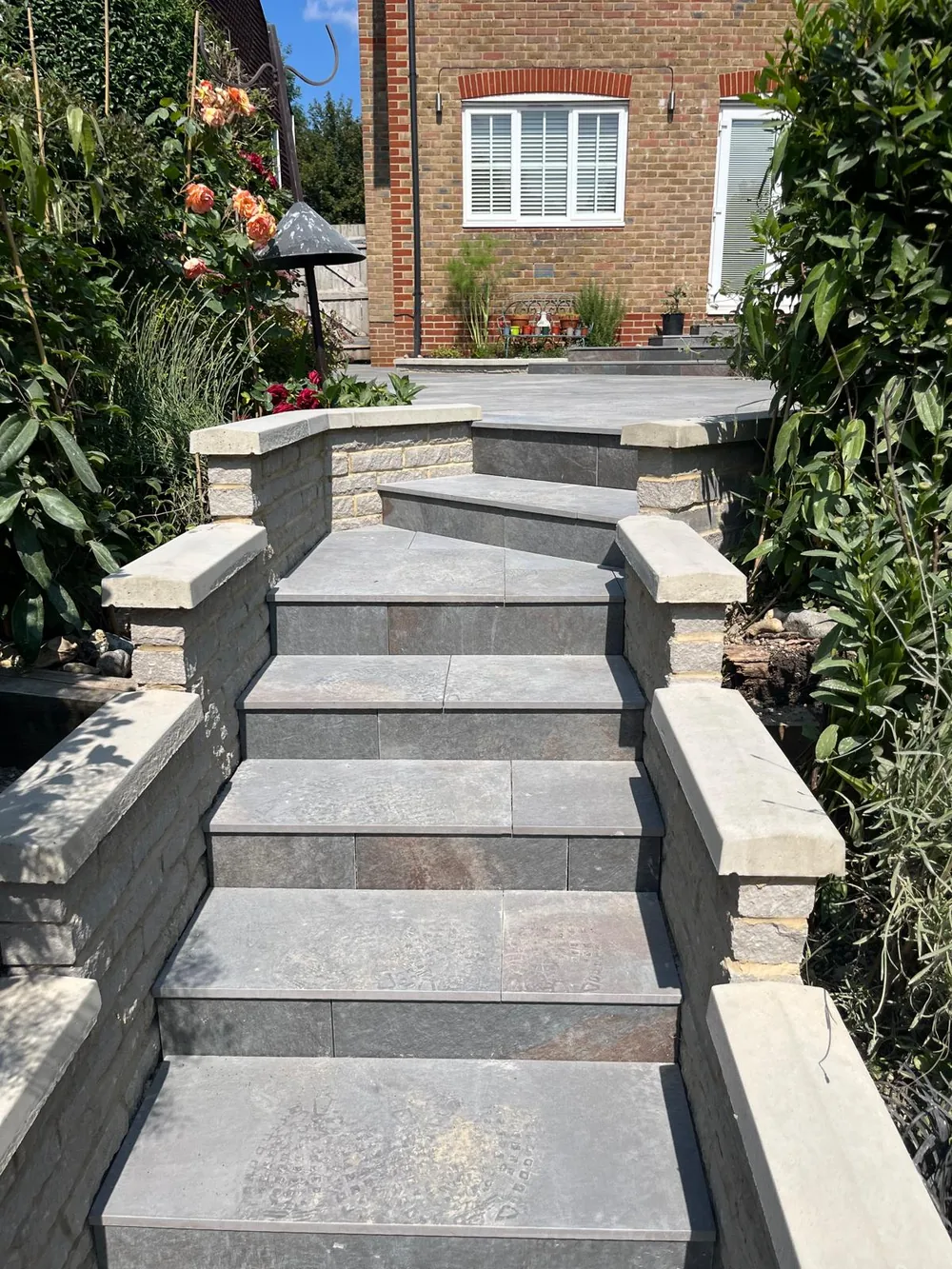
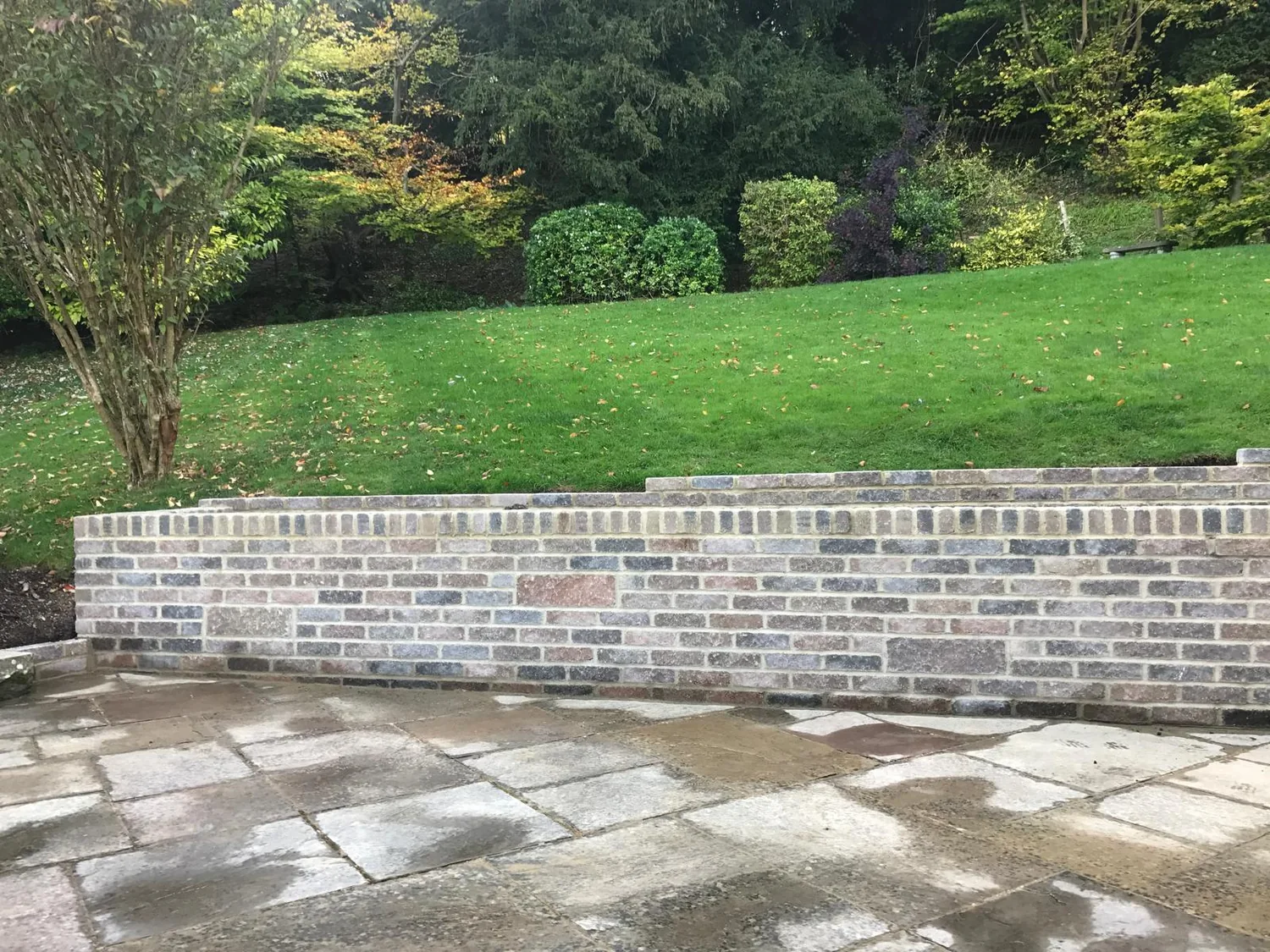
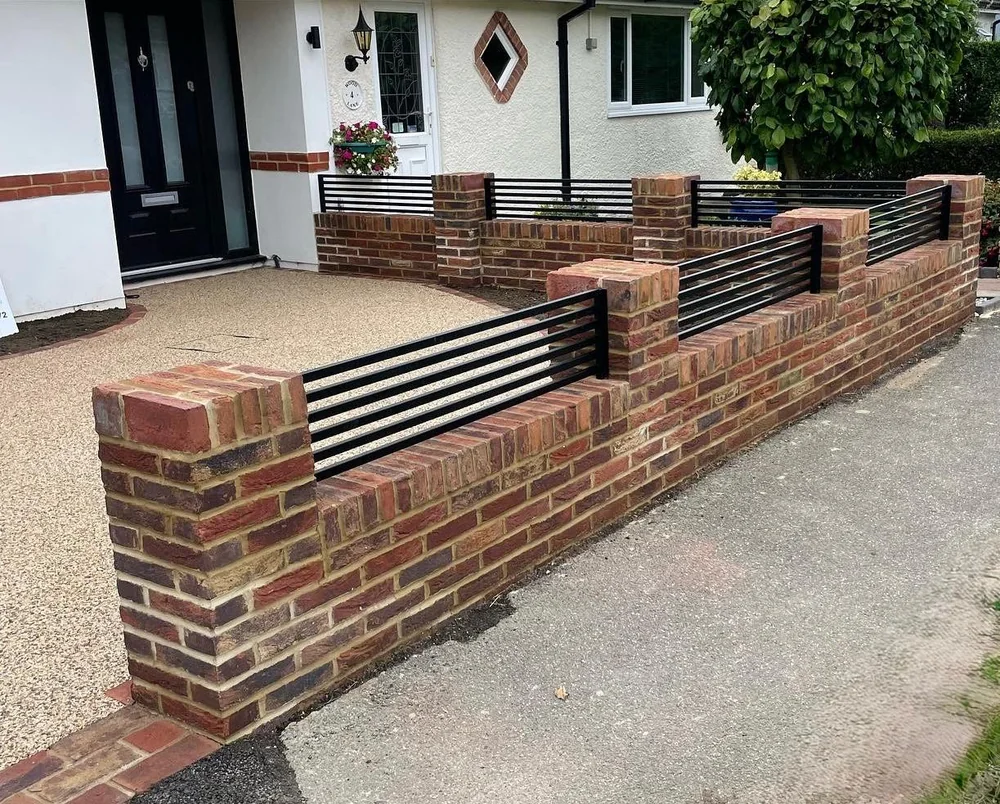
On the Victorian streets we do block paving, because small units work round a bay, an inspection cover and a front path with far fewer cuts, and a permeable build keeps the run off on your own plot. On the newer estates it is often resin over a sound base, or porcelain terraces and decking behind the house. Redstone Hill and the roads climbing towards Redhill Common bring in steps and retaining. We also build the brick piers, gates and garden walls that a frontage opening onto a busy road needs.
- Block paving on Victorian and Edwardian frontages, with permeable build ups where the ground suits.
- Full relays of 1970s to 1990s estate drives, taken back to formation rather than surfaced over.
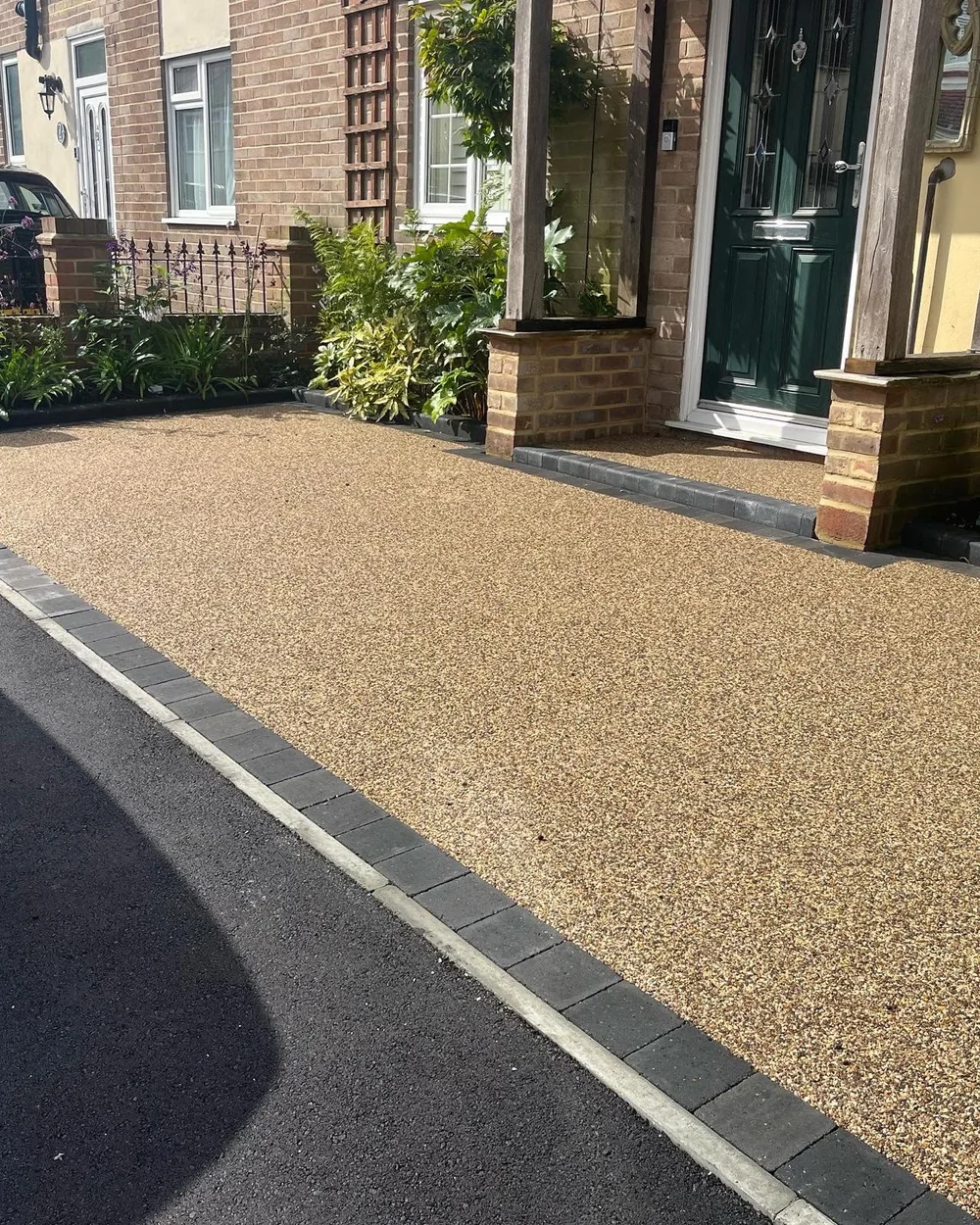
- Resin surfaces on sound, correctly drained bases at Watercolour, Whitebushes and the newer estates.
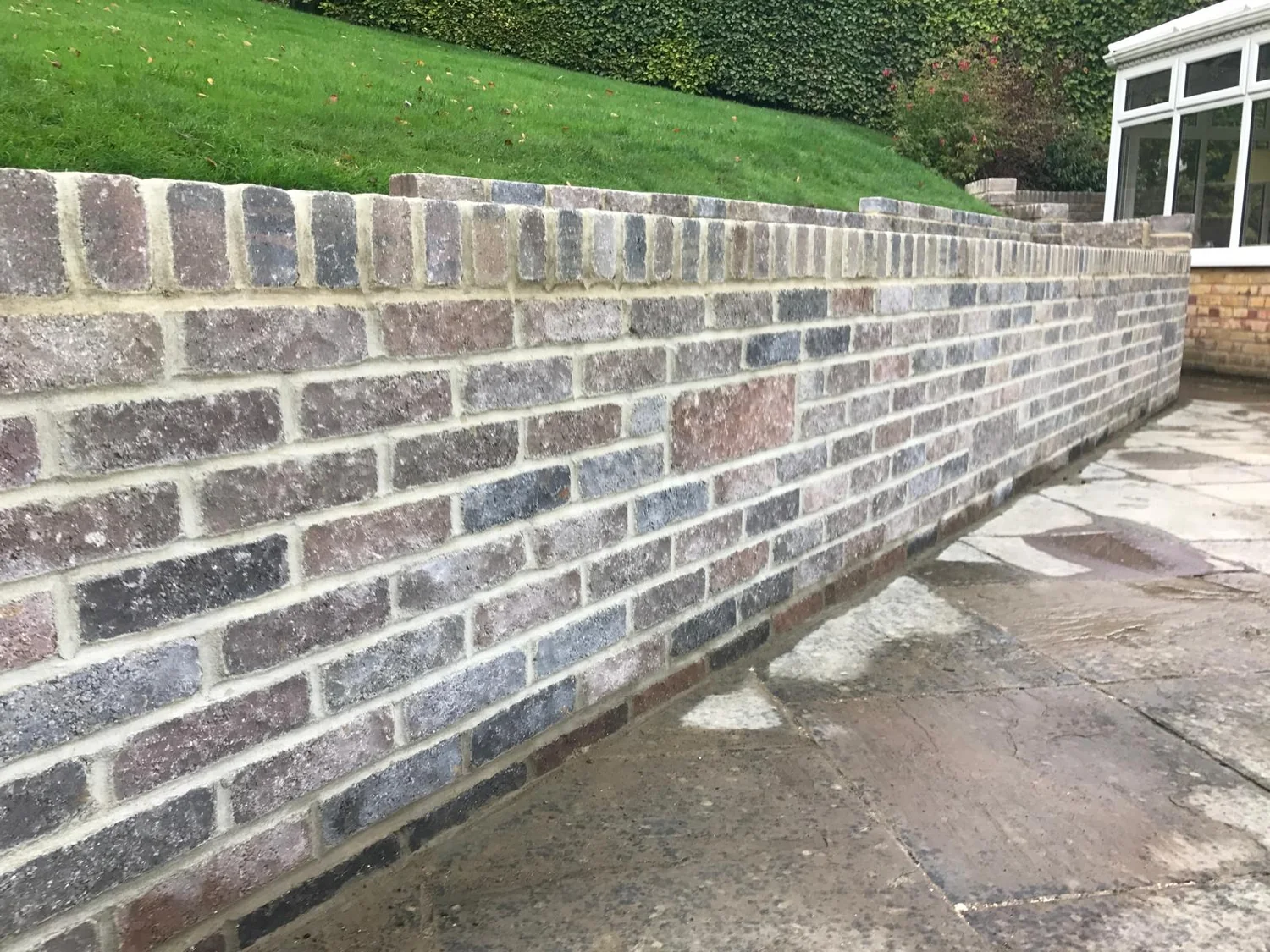
- Brick piers, gates and garden walls on frontages that open onto the A23 and A25.
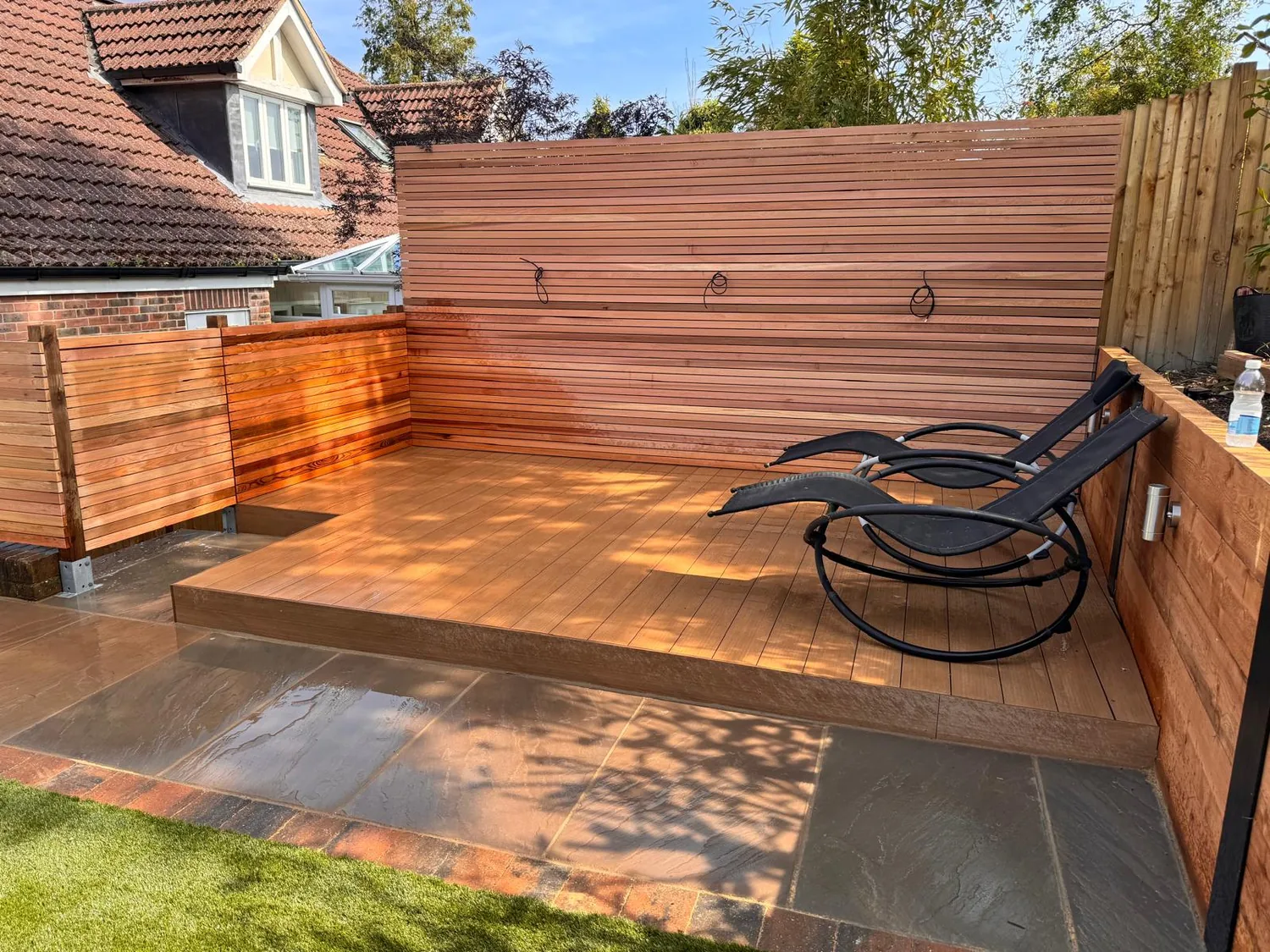
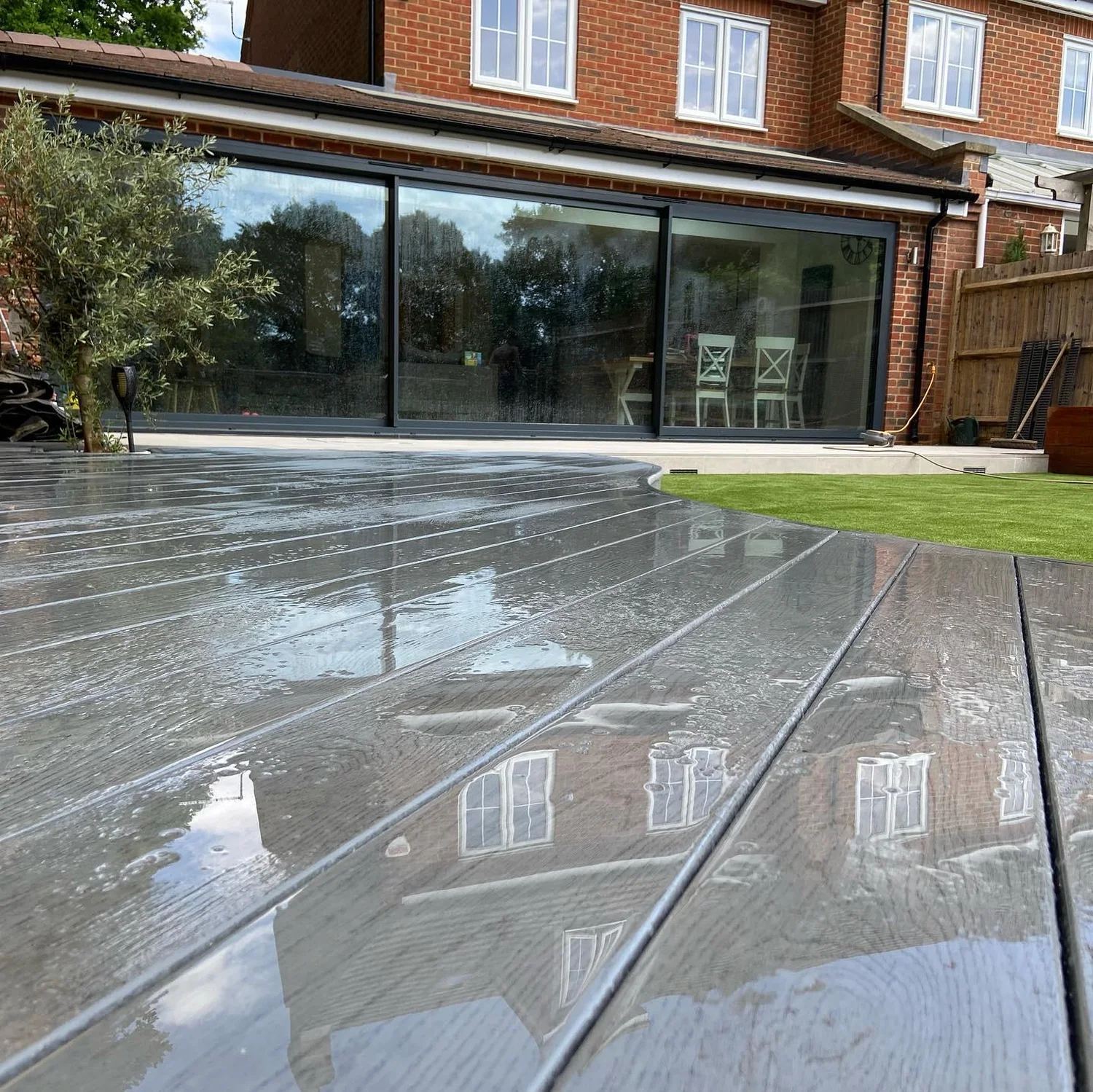
- Porcelain terraces, decking, garden room bases and the drainage that serves them.
Access, levels and permissions
Two Main Roads Through the Middle, and Hills on Both Sides of Them.
The centre and the Brighton Road corridor sit low in the vale, and the ground climbs steeply on both sides: Redstone Hill to the east, and Redhill Common reaching about 144 metres to the south west, where the landscape assessment records steep wooded slopes and notes Sandpit Road running along the contours. Earlswood, Whitebushes and Salfords to the south are gently undulating low weald ground and much flatter.
Access is what we plan hardest here. The A23 runs through as London Road and Brighton Road and the A25 as Reigate Road, and Surrey County Council warns that lane rental charges of up to 1,500 pounds a day can apply on certain busy roads, worth checking before booking a crossover on those frontages. The crossover licence comes from the county, the work in the road can only be done by a contractor on their approved list, and they want to see either the approved planning application or written confirmation from Reigate and Banstead that permission is not needed.
- Crossovers: Surrey County Council licence, their approved contractors only, and lane rental worth checking on the A23 and A25.
- Conservation areas: Redhill, Redstone Hill, Linkfield Street, Shaws Corner and St John's, most with Article 4 Directions on external changes.
- Steep frontages on Redstone Hill and around Redhill Common; flat ground at Earlswood, Whitebushes and Salfords.
- Roughly 70 per cent of the borough is Metropolitan Green Belt, and the Surrey Hills National Landscape begins immediately north of the town, with the Gatton greensand valley almost entirely inside it.
Villages and neighbourhoods
Where We Work Around Redhill
We cover RH1 and the villages around it, from Merstham and Holmethorpe in the north to Earlswood, Whitebushes and Salfords in the south.
Our work
Drives and Gardens of This Kind
Questions
Redhill Questions We Get Asked
Can I have a soakaway if I live near the Redhill Brook?
Probably not, and it should be tested rather than assumed. The brook is mainly culverted through the centre, the Environment Agency's flood zone takes in parts of the town, and north Redhill and South Merstham are listed as susceptible to groundwater flooding. On low ground we look for a positive outfall.
Our house fronts the A23. Is a dropped kerb still possible?
Often yes, but plan the timing. The crossover licence comes from Surrey County Council, and the work in the road can only be done by a contractor on their approved list. Surrey warns that lane rental charges of up to 1,500 pounds a day can apply on certain busy roads, so a main road frontage is worth checking before anything is booked in.
The ground at Watercolour was a sand quarry. Does that change the build?
It changes what we check. Holmethorpe was worked for sand and gravel before Watercolour went in, so the ground is free draining but it can also be made ground of varying depth. We dig to see what the formation is doing, compact in thin layers, and put a proper haunched edge in.
We are on Redstone Hill and the front garden drops away. What can be done?
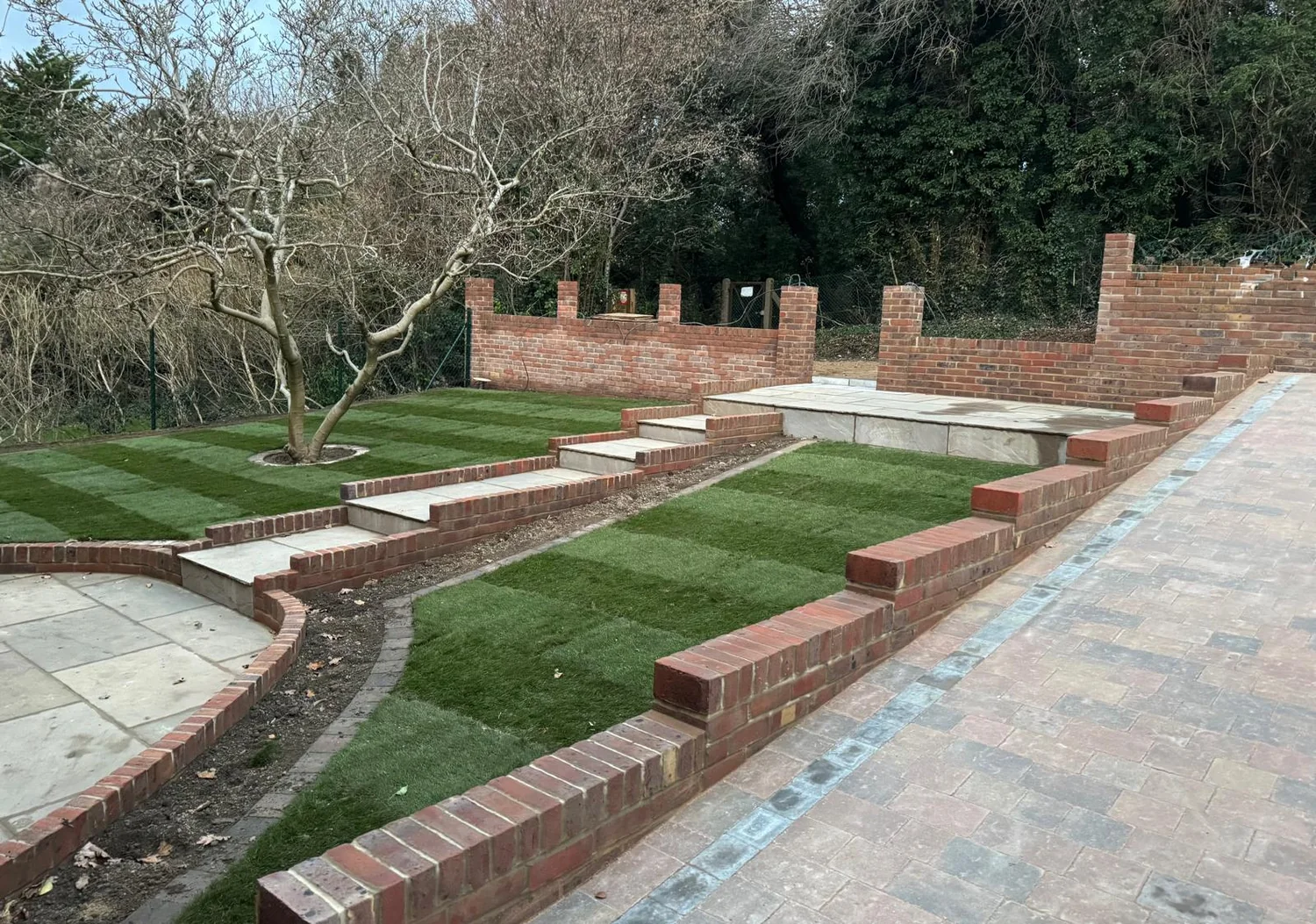
That side of town is greensand hillside and the frontages fall quickly, so it becomes a levels job: a cut platform for the car, a retaining wall with drainage behind it, and steps with a gradient that stays safe in frost. Redstone Hill is also a conservation area.
Is it worth paving the whole front garden of a Victorian terrace?
Not always. The borough's design guide puts those front gardens at roughly two to five metres, so a full width drive usually swallows the garden and the low boundary with it. A parking bay sized to the car, with planting kept to one side, often gives a better result.
Can you just resurface our 1980s estate drive?
We can, but only if the base under it is sound, and on drives of that age it often is not. We dig a trial hole, check the depth of the sub-base and see where the water goes. If the stone is thin, a new surface just buys a few years.
Which planning rules apply to paving a Redhill front garden?
Two separate ones. National guidance covers the surface: permeable materials such as gravel or permeable block paving are fine at any size, while an impermeable drive over five square metres draining to the road needs permission. Separately, Article 4 Directions apply in most of the borough's conservation areas.
Get a quote
Planning an Outdoor Project in Redhill?
We will look at the ground, the levels and where the water goes, then provide a free written quotation covering all of it.
- Free, no-obligation quotationsIn writing, with the build-up and the drainage set out.
- 27 years in the tradeMarshalls Register accredited, Bradstone Assured.
- Fully insuredDomestic and commercial work across Surrey.
Arrange a free site visit
Tell us a little about the project and we will come out, look at the ground and put a written quotation together.
Where we work
Paving, Landscaping & Outdoor Construction Across Surrey
Based in Caterham, we undertake projects throughout Surrey and selected areas of Kent and West Sussex. For larger or more comprehensive projects, we are happy to consider work further afield.