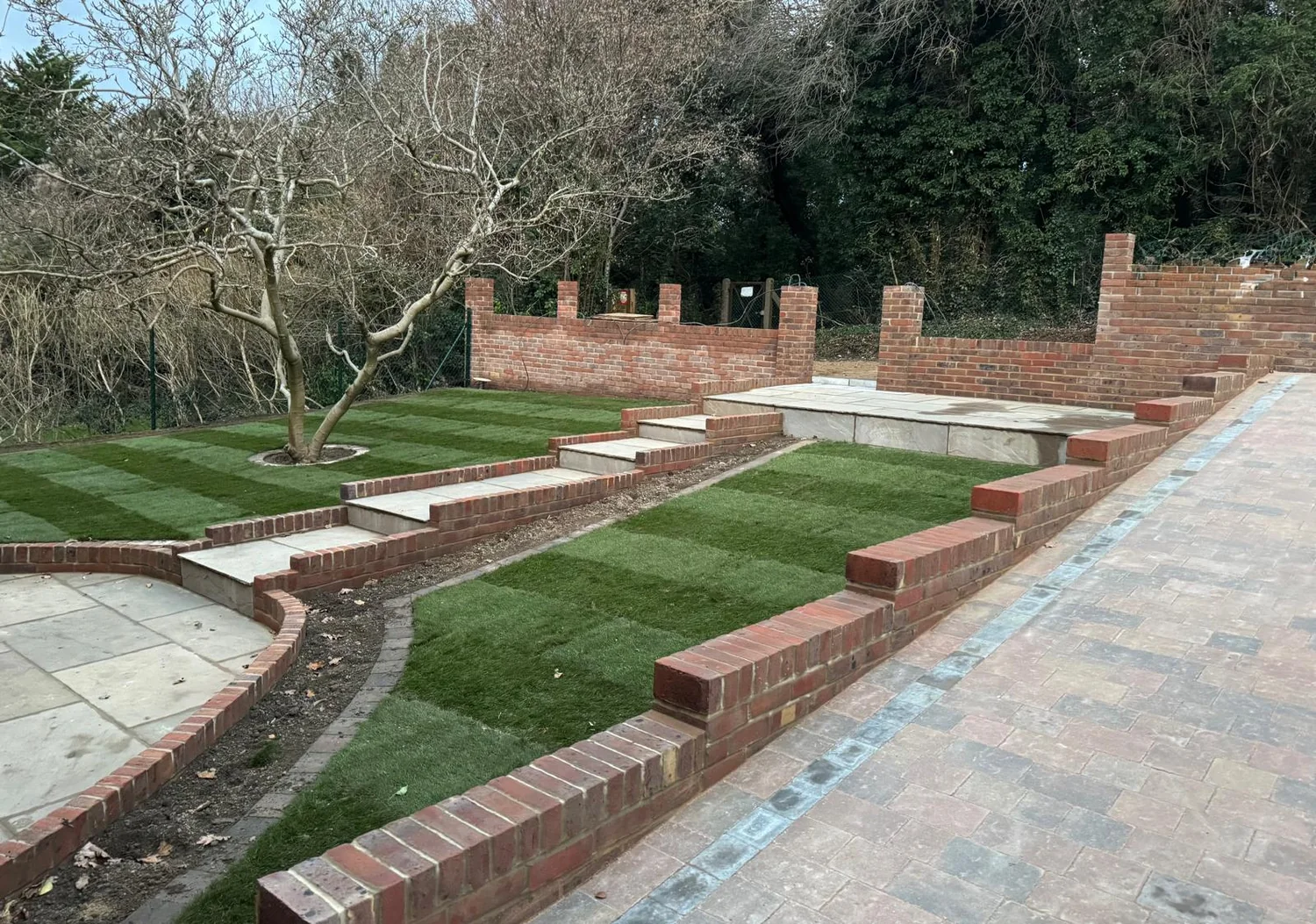
Block Paving
Concrete or clay blocks bedded on sand and locked together by their own pattern and the edges around them. The most repairable surface there is: lift a few, put right what is underneath, relay the same blocks.

 CROCKETT & CROCKETTPAVING LTD
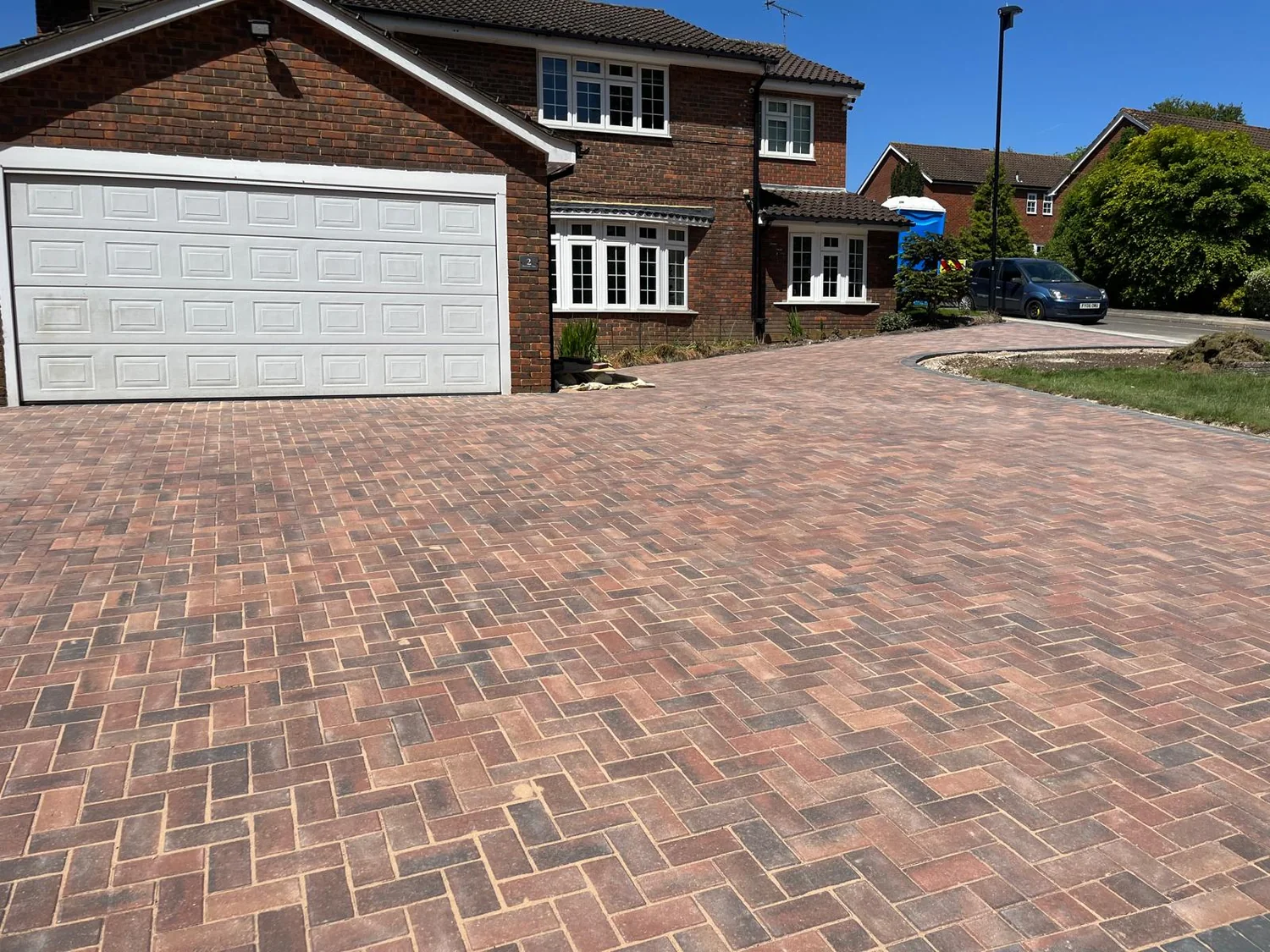
Driveways
A professionally constructed driveway should enhance the appearance of your property while delivering dependable performance for years to come.
Our approach
We design and install high-quality driveways throughout Surrey, managing the complete process from excavation, drainage and base construction through to edging and the finished surface.
Every driveway is considered individually, taking account of the property, ground conditions, vehicle use, drainage requirements and the style of the home.
The long-term performance of a driveway depends on far more than the surface you see. Correct excavation, suitable sub-base construction, effective drainage, accurate levels and secure edge restraints are fundamental to a durable installation.
We assess the requirements of each site and construct accordingly, rather than relying on a one-size-fits-all approach.
Construction depths and specifications are determined by the individual site, ground conditions, intended loading, drainage requirements and chosen paving system.
Take it apart
Scroll, and the drive opens up a layer at a time. Or press one.
SurfaceBlock, resin, concrete or shingle. The only part you will ever look at, and the part that decides least about how long the drive lasts.
Laying courseSharp sand screeded to an even 30 to 40mm under block paving, or a concrete slab under resin. Screeded, not tipped, so nothing beds in unevenly.
Sub-baseMOT Type 1 crushed stone, graded from 40mm down to dust, laid in 75mm layers and rolled each time. 150mm under a car, 200mm or more on clay. This is what carries the weight.
Geotextile membraneA woven sheet between the stone and the ground, so the two never mix and the sub-base stays the thickness it was built at.
FormationThe ground we dig down to. Rolled and checked for soft spots before a barrow of stone goes back. On chalk it is shallow. On Wealden clay it is not.
The dig
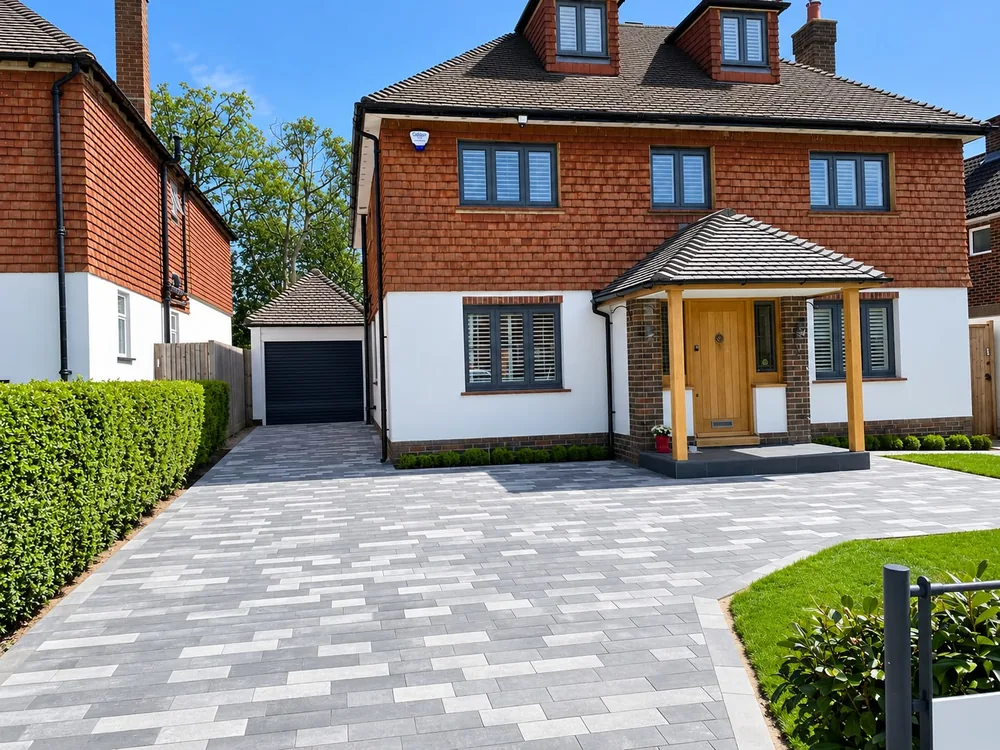
Excavation is the least interesting day on site and the one that matters most. We take out the topsoil, the old surfacing and any soft ground until we reach something that will not move under a roller, then we check it. On the chalk and flint along the top of the North Downs that can be shallow. On the Wealden clay south of Godstone and Oxted it is usually deeper, because clay swells when it is wet and shrinks back when it dries.
Every barrow of spoil is removed from site rather than spread elsewhere on the property. The formation is then rolled so any soft spot shows itself before it gets buried under tonnes of stone, and a geotextile membrane goes down between the ground and the sub-base so the two never mix.
The sub-base
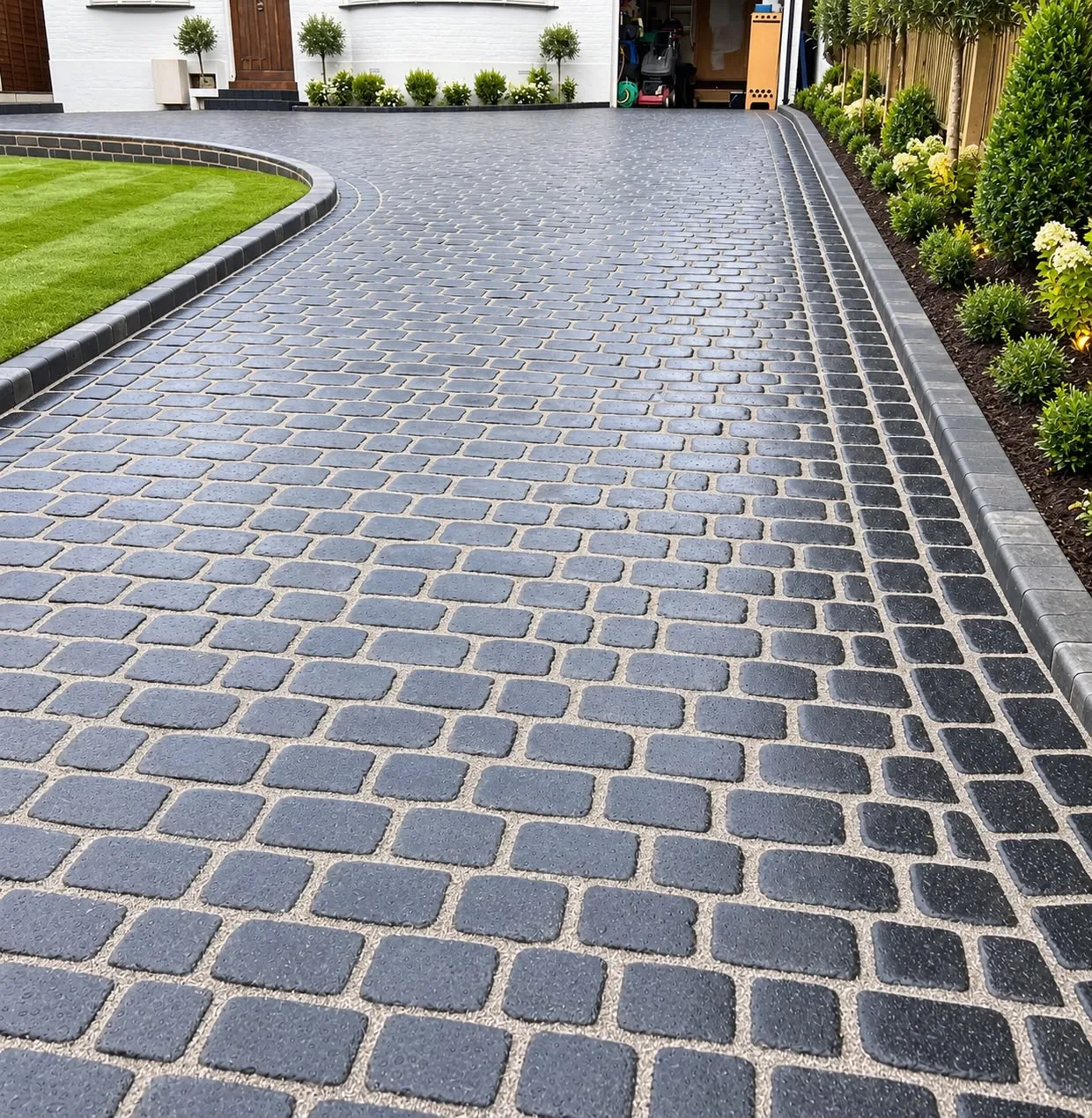
The sub-base is MOT Type 1 crushed stone. It works because the pieces are graded from around 40mm down to dust, so under a roller the fines pack into the gaps and the whole layer locks solid. Tip it in one go and only the top few inches ever compact properly. We put it in around 75mm layers and roll each one, and we damp it down in dry weather so the dust binds instead of blowing off.
For a car on firm ground, 150mm of compacted Type 1 is the usual starting point. On clay, on a slope, or where a van, motorhome or horsebox stands every night, we build to 200mm or more. Over the top goes the laying course, sharp sand under block paving or a concrete slab under resin, screeded to an even depth so nothing beds in unevenly. Construction depths and specifications are determined by the individual site, ground conditions, intended loading, drainage requirements and chosen paving system.
Falls and drainage
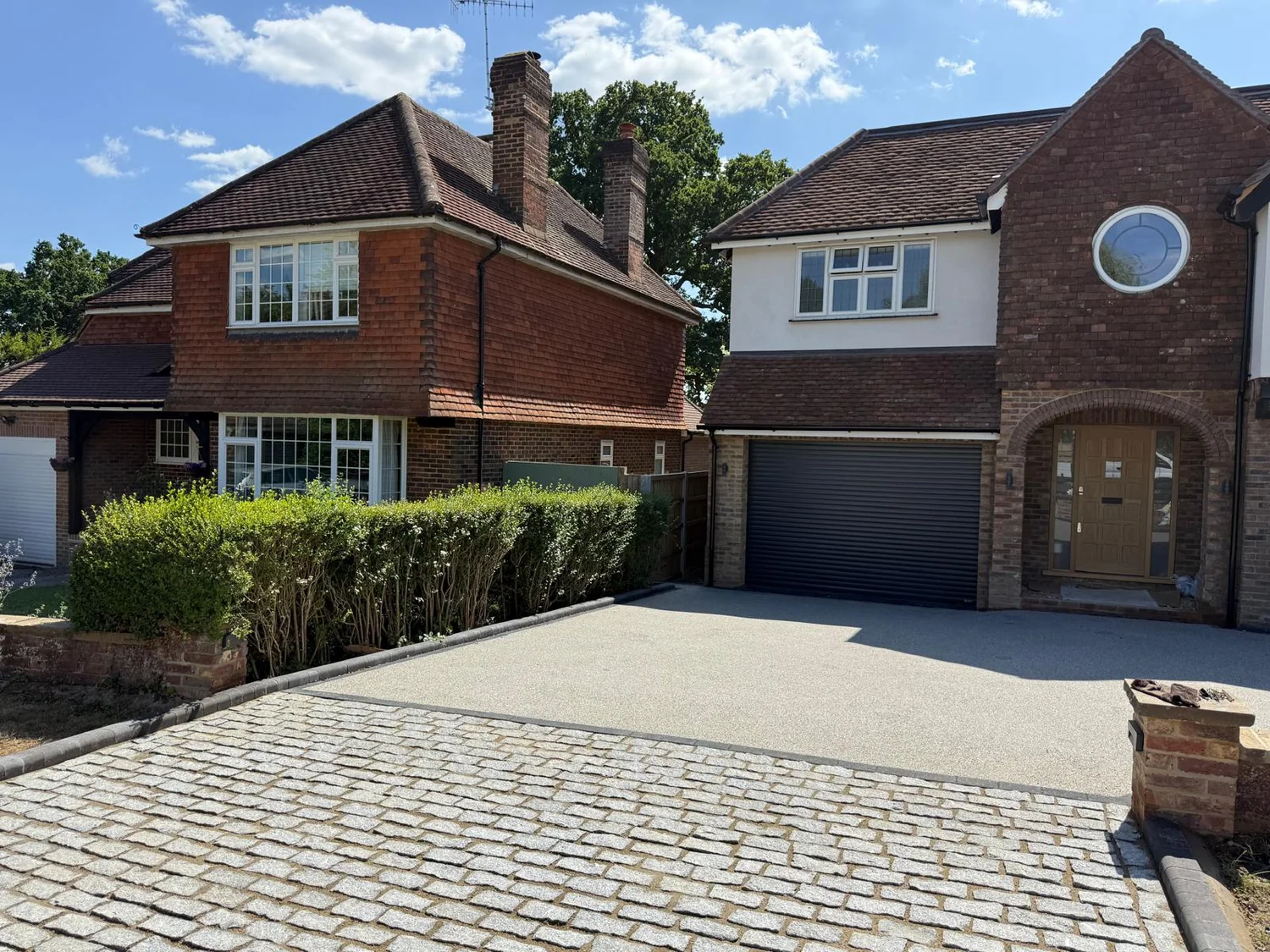
Water is what breaks a driveway. It gets into the base, it sits there, it freezes, and it lifts the surface a fraction of a millimetre at a time until the fraction is a dip. So every drive we lay has a fall on it, usually around 1 in 60 to 1 in 80, running away from the house to a channel drain, a soakaway or a permeable margin. An hour after the rain stops there should be no standing water on it.
Where the drive meets the house we keep the finished level well clear of the damp proof course, and we run a channel drain across the garage threshold or the front door. Government guidance is that planning permission is generally needed if you cover more than five square metres of front garden with a surface water cannot pass through and the run off has nowhere to soak away.
The surfaces we lay
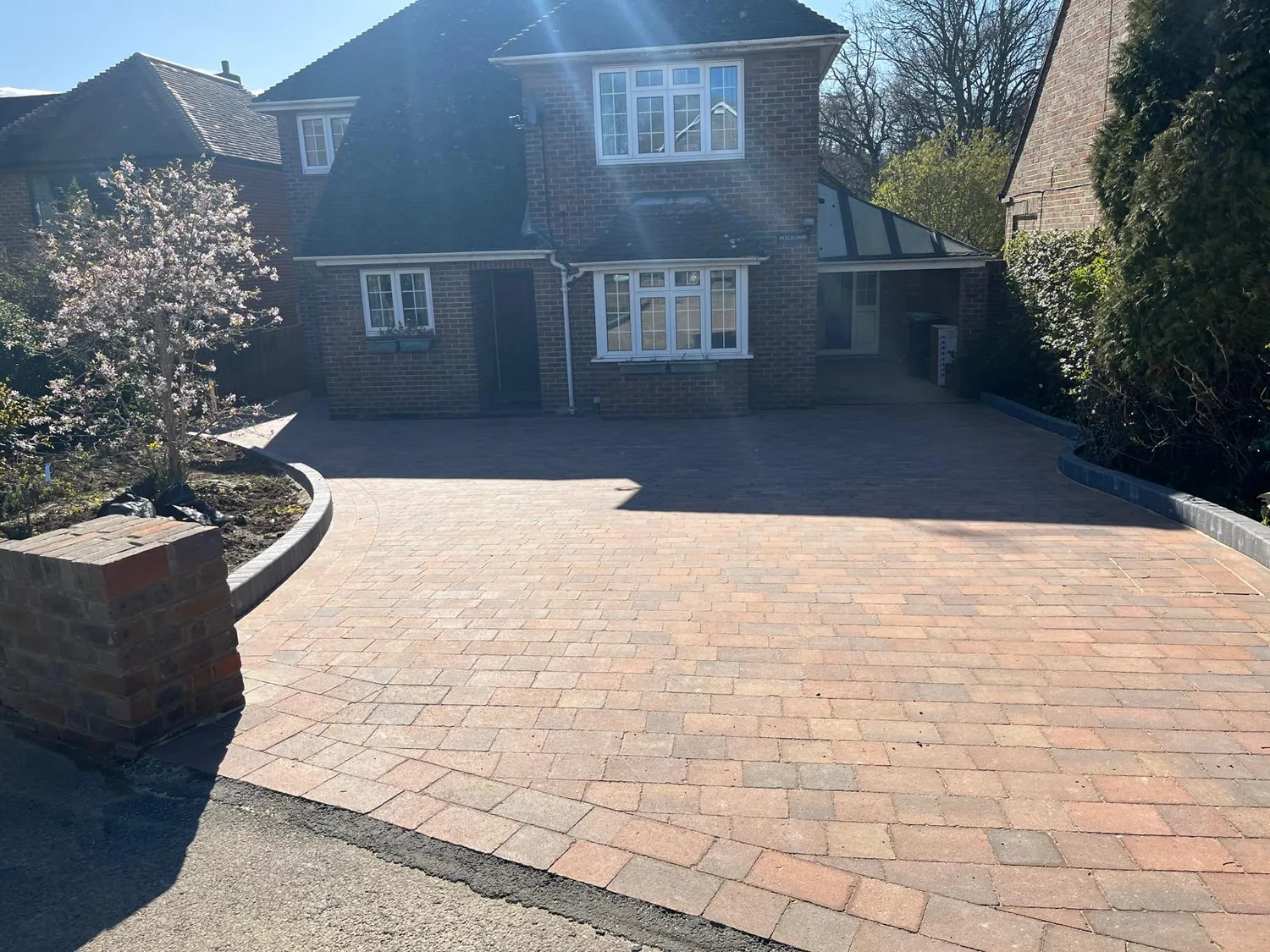
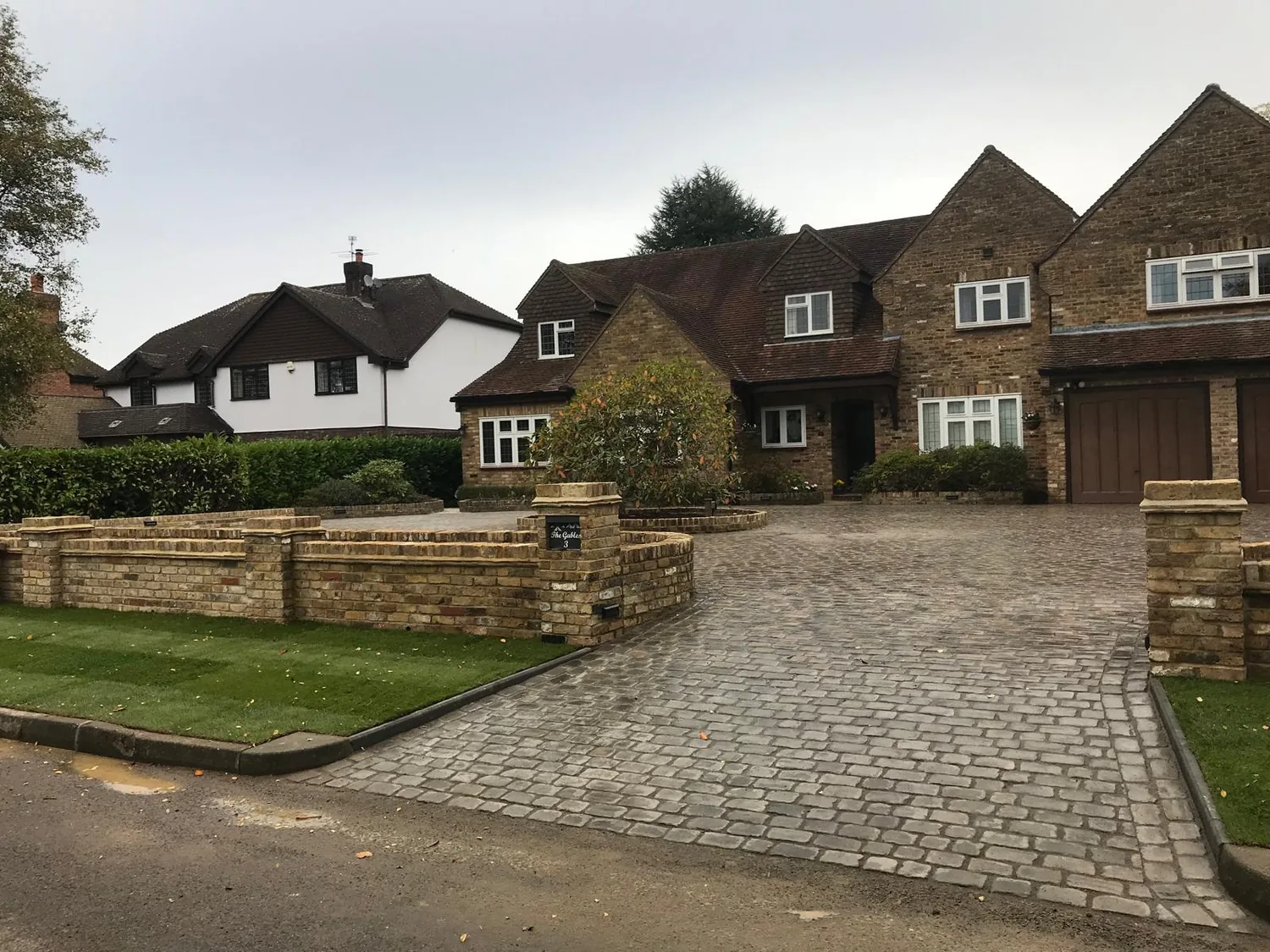
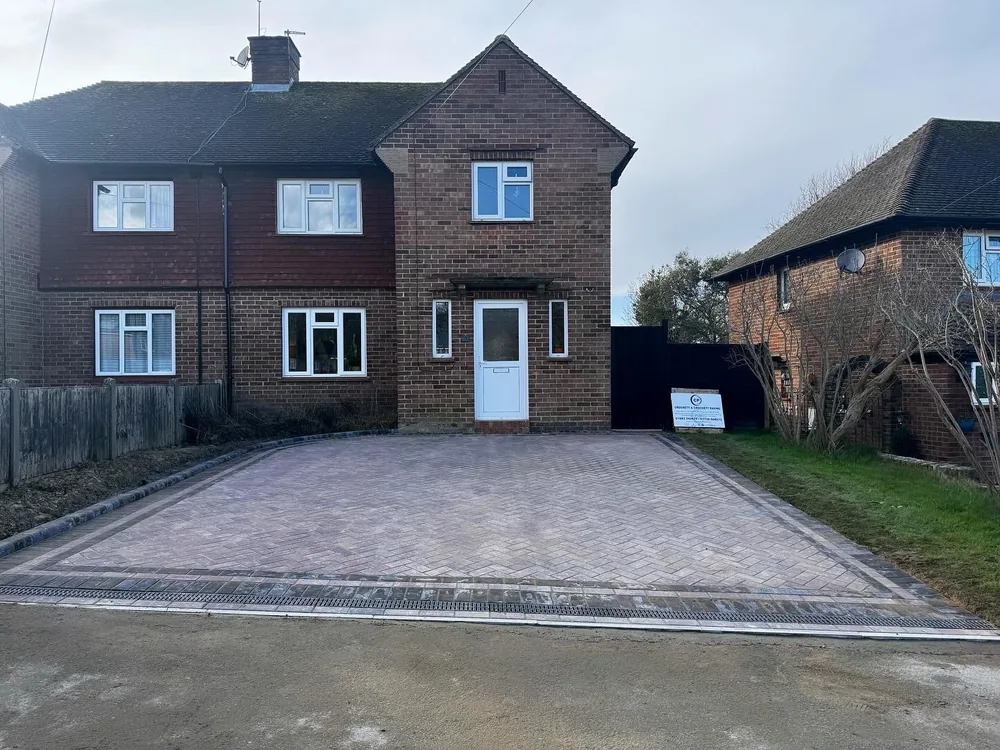
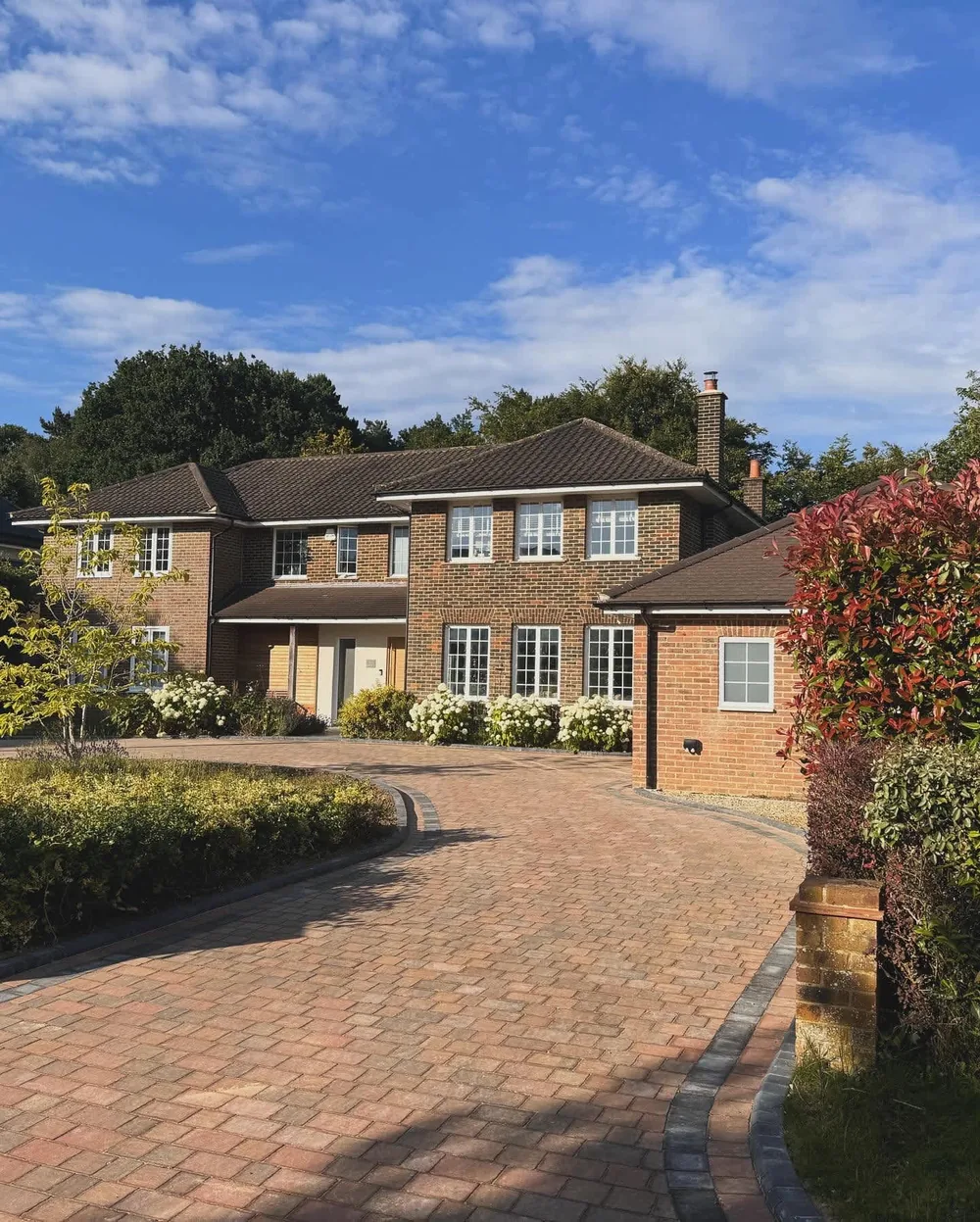
Concrete or clay blocks bedded on sand and locked together by their own pattern and the edges around them. The most repairable surface there is: lift a few, put right what is underneath, relay the same blocks.
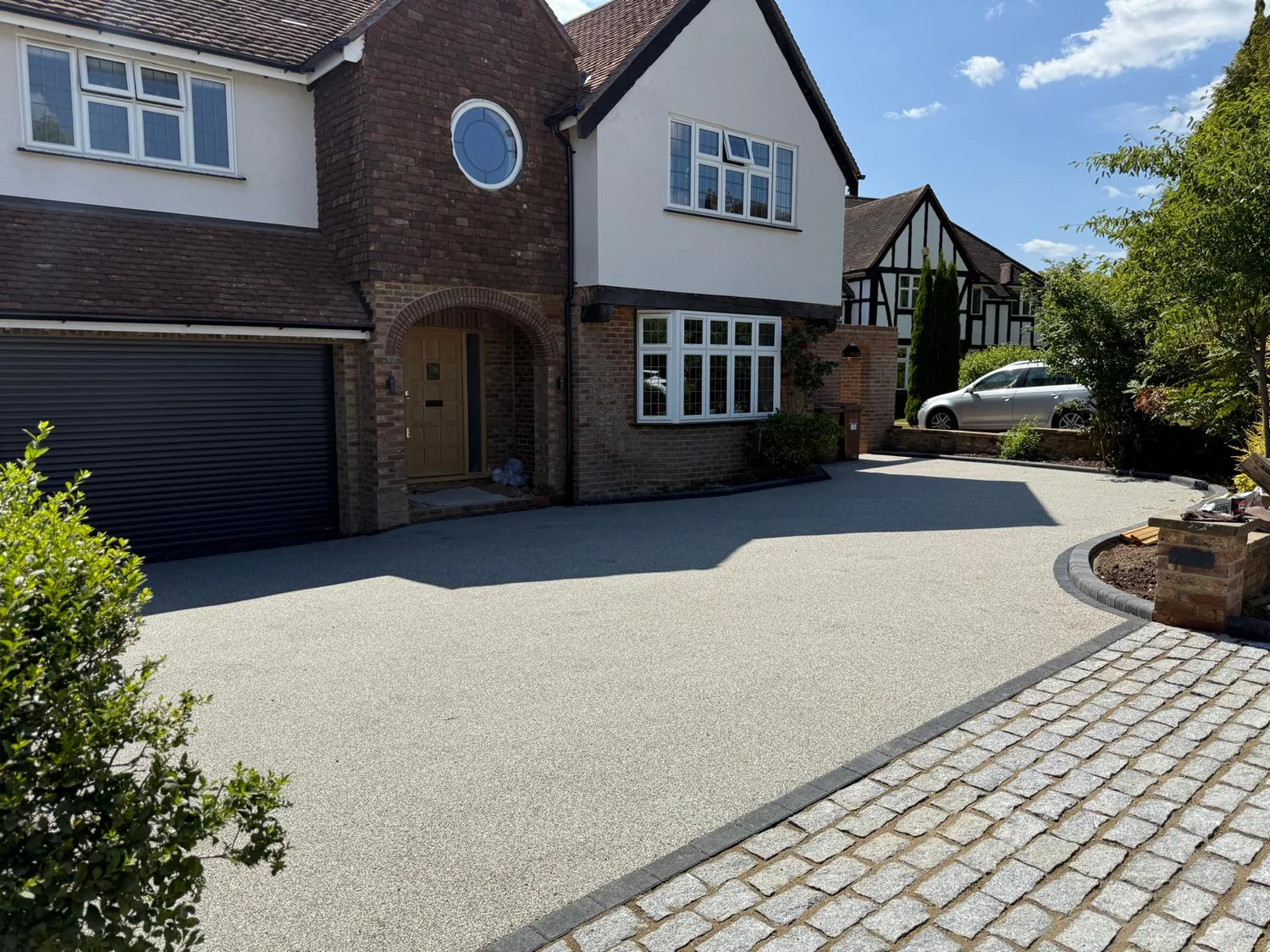
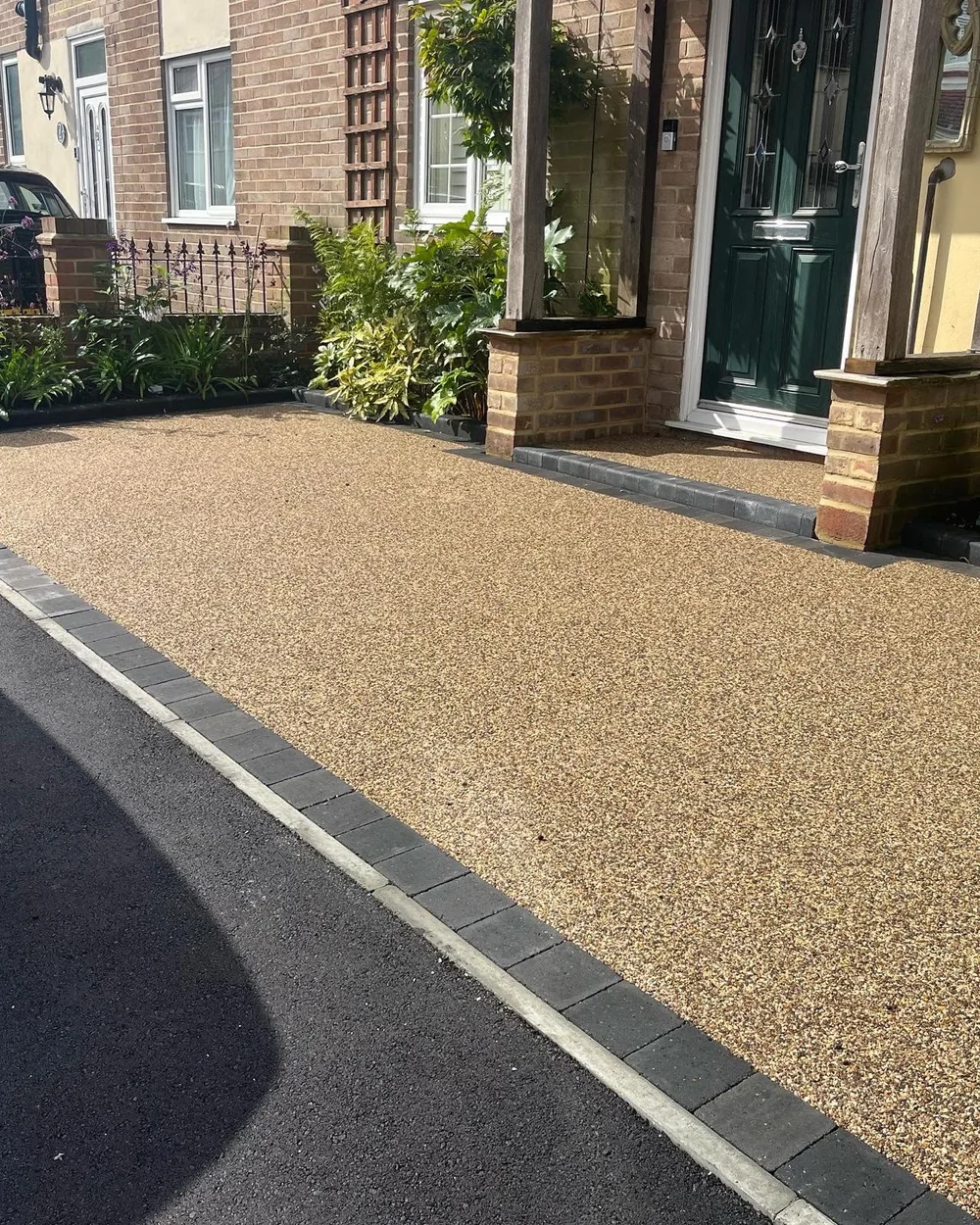
Natural stone mixed with a clear resin and trowelled out over a solid base. Smooth, permeable and quiet underfoot, with no loose stone. It needs sound concrete under it, so the base work is the whole job.
Poured, reinforced and finished plain, brushed or pattern imprinted. One continuous slab with no joints for weeds to find, and it takes heavy vehicles well. Best on drives with a simple shape and clear access for the pour.
Loose stone over a membrane and a compacted base, held by proper edging or a gravel grid so it stays where you put it. Quick to lay, easy to top up, and noisy underfoot, which some people like and some do not.
Not every drive needs replacing. Where the base is sound we lift and relay sunken areas, rebuild failed edges, re-sand tired joints, or extend what is already down and match it in.
Channel drains at the threshold, gullies at the low point and a soakaway sized for the area, so the water leaves the drive rather than sitting in the base of it.
Our work
Questions
A typical domestic drive is a week to ten working days from the first dig to the last block cut in. A small one can be four or five days. Extra drainage, retaining walls, or a resin surface that needs its concrete base to cure will add time. We give you the programme in writing, including the days you cannot park on it.
Usually not, as long as the water can get away. Government guidance is that permission is generally needed when you cover more than five square metres of front garden with a surface water cannot pass through and there is nowhere for the run off to soak in. Permeable paving, shingle, or a drain running to a soakaway normally keeps you inside permitted development. Conservation areas are a separate matter, so check with your council.
For a car on firm ground, 150mm of compacted MOT Type 1 under the laying course is the normal minimum. On clay, on soft made ground, on a slope, or where a van or motorhome will stand, we go to 200mm or more. Depth on its own is not enough either. Stone tipped in one lift and rolled once is far weaker than the same stone laid in layers. Construction depths and specifications are determined by the individual site, ground conditions, intended loading, drainage requirements and chosen paving system.
They fail differently, which is the honest way to choose between them. Block paving can be lifted and relaid, so a service trench or a sunken patch is a morning's work and the repair does not show. Resin is one continuous surface, smooth, permeable and free of joints, but a patch repair will always be visible. Block paving needs its joint sand topping up. Resin does not.
It depends on the size, the ground, how much spoil has to be carted away, the drainage, the edging and the surface you pick. A drive on clay needing a deeper dig and a new soakaway costs more than the same size drive on gravel with a gully already in the right place. We measure up and price it for free, in writing, with the specification alongside the figure.
A little settlement in the first few months is normal, and with block paving the joints are meant to be topped up as it beds in. What is not normal is a dip that keeps growing, a ridge where the car turns, or blocks creeping away from the edge. That is a base that was too shallow, ground that was never compacted, or an edge course that was never haunched in concrete.
Marshalls give a ten year guarantee on the materials they make, and that guarantee sits with the product. Our workmanship is a separate thing and it is ours to answer for. We are on the Marshalls Register of Accredited Landscape Contractors and Driveway Installers, a London Stone registered installer and a Bradstone assured installer, and we are fully insured. The build specification goes in the written quote before we start, so what you are getting is on paper.
Get a quote
A driveway is one of the largest single improvements made to a house, and it is seen every day of the year. Ours are built so that, years on, the only thing you notice is that nothing has moved.
Arrange a free site visit
Tell us a little about the project and we will come out, look at the ground and put a written quotation together.
Where we work
Based in Caterham, we undertake projects throughout Surrey and selected areas of Kent and West Sussex. For larger or more comprehensive projects, we are happy to consider work further afield.