

Whyteleafe, CR3
Driveways and Paving in WhyteleafeA Chalk Valley Where the Water Comes Up, Not Just Down
Whyteleafe runs along the floor of a dry valley with the ground climbing steeply on both sides. The chalk digs beautifully. The groundwater is what catches people out, and it is the reason we never assume a soakaway in this village.
Two miles down the A22
The Valley Village Where Drainage Is the Whole Argument
Whyteleafe is the next village down the A22 from our yard, and we are in it constantly. It is a narrow place: a flat strip of valley floor carrying shops, flats and older terraces, then houses stepping up the slopes on either side. Those two situations need completely different work.
Crockett & Crockett Paving is a family-run company. Oli Crockett runs it, with our own team, and there are 27 years in the trade behind the name. Groundwork, drainage, base, edgings and finish are all ours, which is what you want on a slope where the levels have to be right before anything is laid.
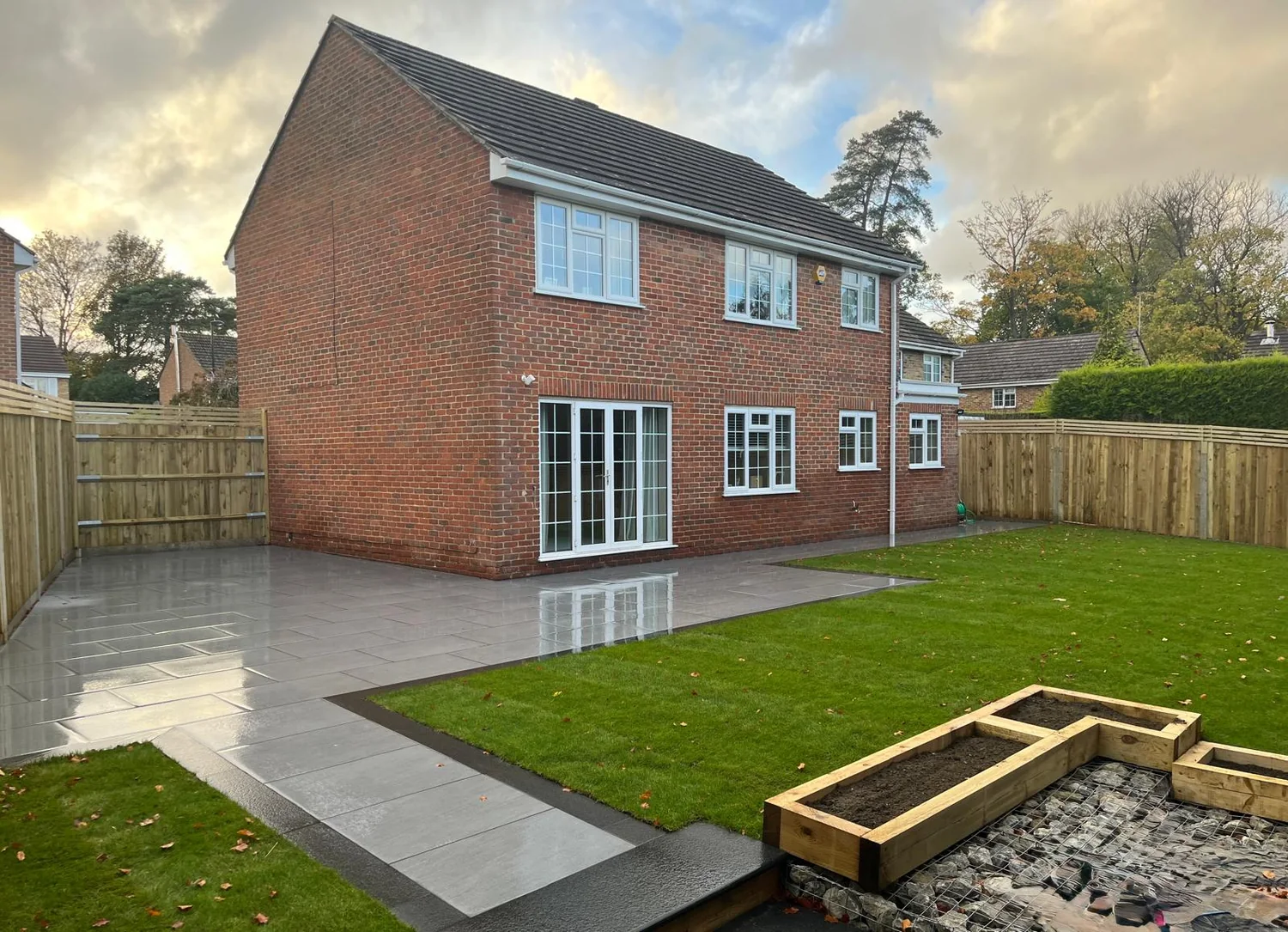
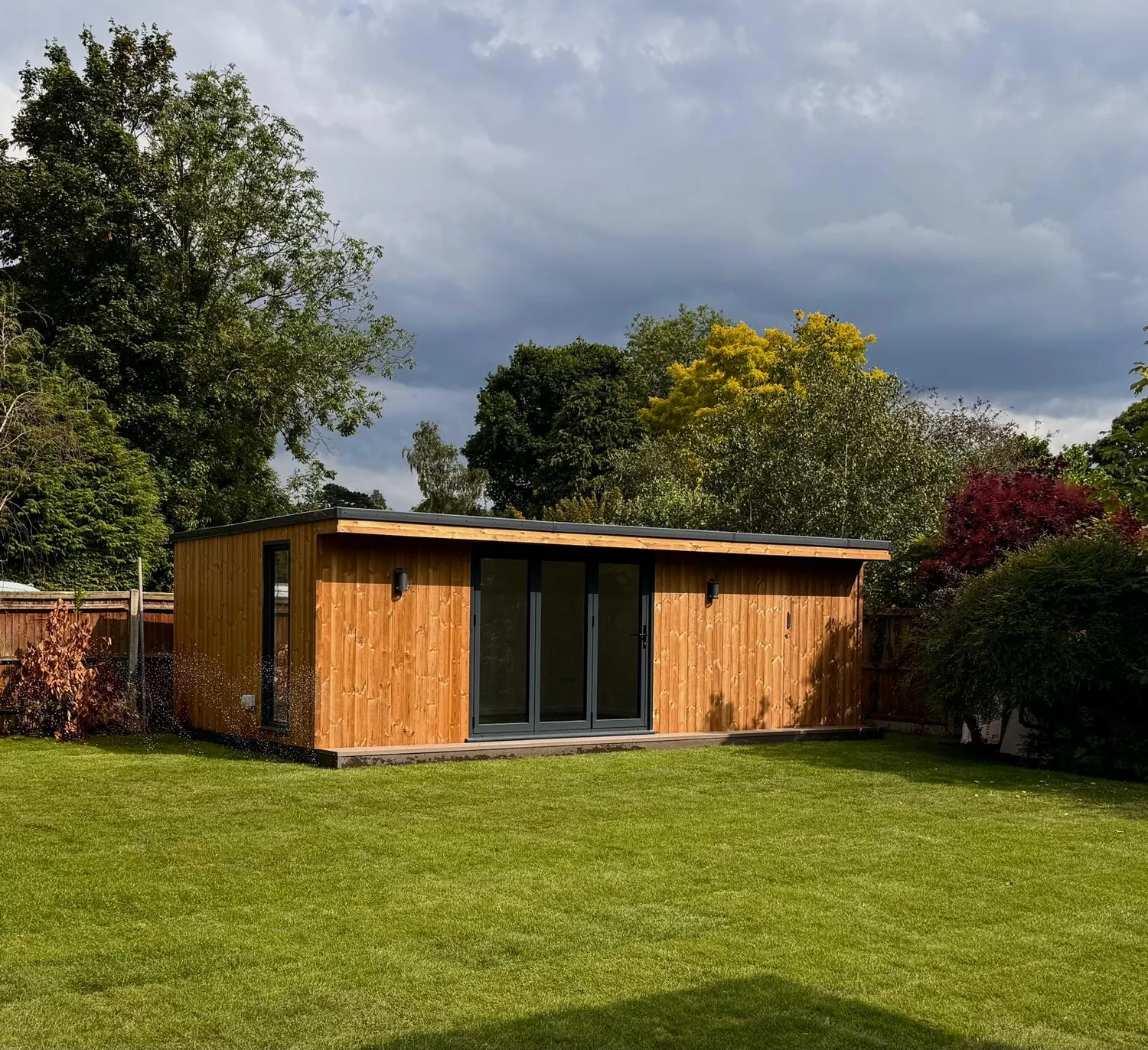
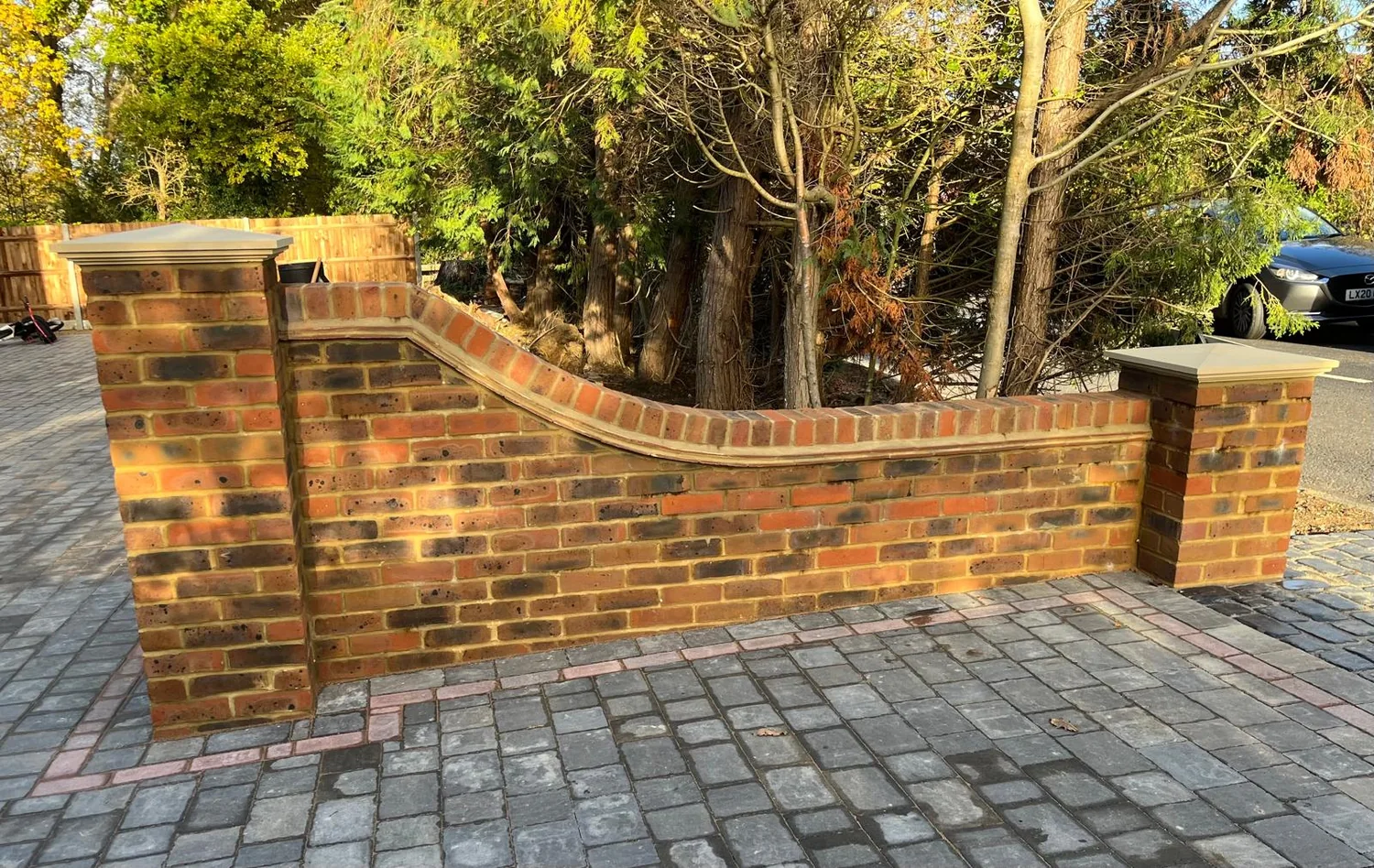
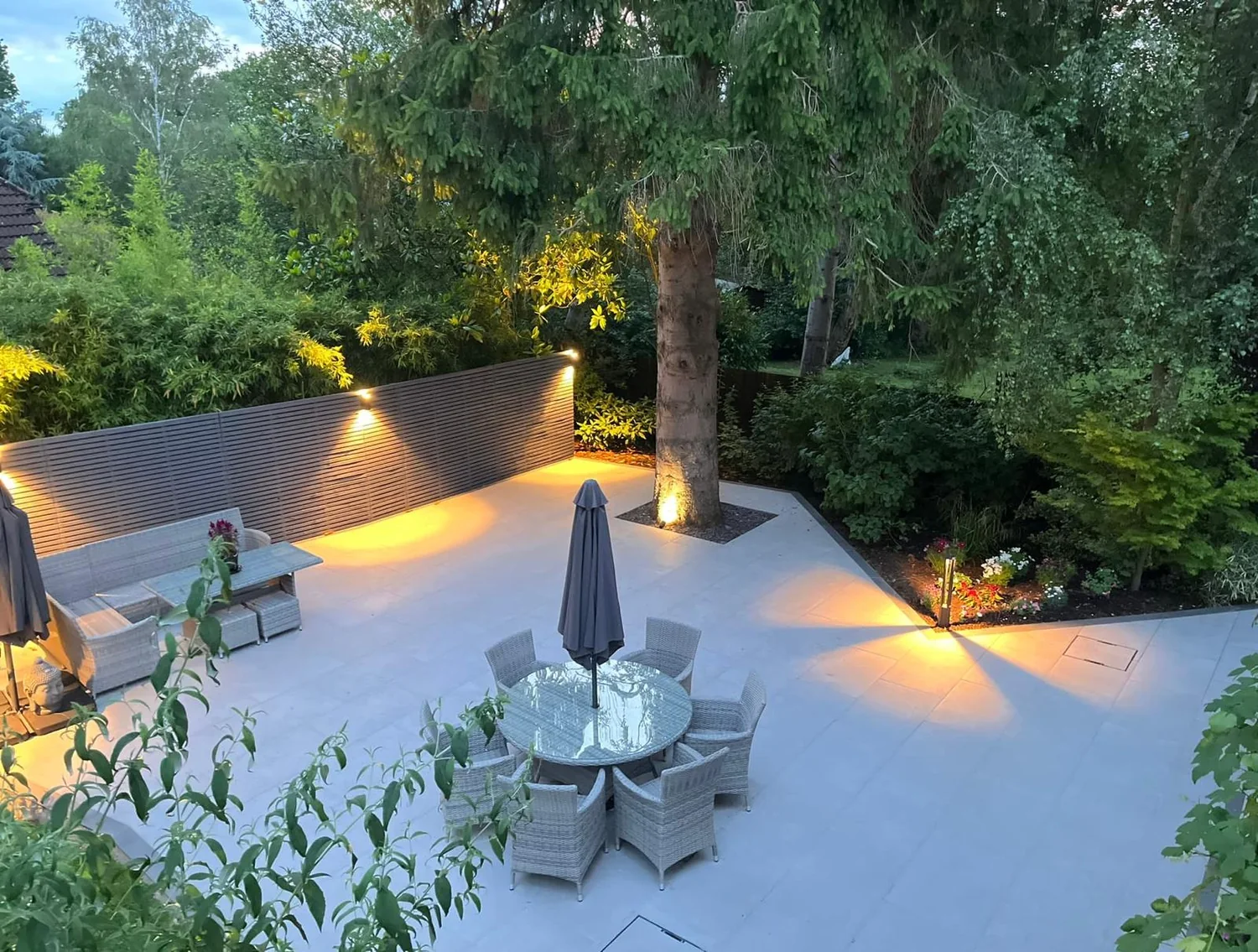
We work through Whyteleafe Centre, Whyteleafe South, Whyteleafe Hill, Salmons Lane, Greenhill Avenue, Station Road and Godstone Road, and up the shoulder towards Upper Warlingham. Levels and drainage come first here, then driveways in block paving, resin, concrete and shingle, patios, porcelain, steps and terraces, retaining walls and brickwork, garden rooms, decking, fencing, turf and drainage.
We hold the Marshalls Register of Accredited Landscape Contractors and Driveway Installers accreditation, we are a London Stone registered installer and a Bradstone assured installer, and we sit at 10 out of 10 on Checkatrade. Every member of the team is trained in health and safety, we are fully insured, and quotes are free and in writing.
What is under the front garden
Clean Chalk, Rising Water and a Bourne That Runs One Year in Seven
Whyteleafe sits in a dry valley of the North Downs. At Whyteleafe South and up Salmons Lane, British Geological Survey mapping shows Holywell Nodular and New Pit Chalk with no superficial cover at all, so the chalk is effectively straight under the topsoil. The Caterham, Chaldon and Whyteleafe Design Guidelines put it in soil terms: shallow, lime rich, free draining soil over chalk in the valleys, against slightly acidic loam and clay with impeded drainage on the higher ground.
That should make this easy ground, and for digging it is. The overriding local factor is not rainfall but groundwater. The Tandridge Level 1 Strategic Flood Risk Assessment records flooding in Caterham, Whyteleafe and Woldingham in February and March 2014 with high groundwater identified as the dominant source, springs emerging into gardens and basements, and the A22 closed for four weeks. The Caterham Bourne rose with it: an ephemeral chalk stream recorded as flowing about one year in seven, with only around 20% of its length still in open channel.
So the rule here is simple. Infiltration is never assumed, it is checked. A soakaway that swallows everything in August can be sitting in the water table in February, and a driveway designed on the August answer is the one that floods.
- Chalk cuts fast and takes water, but pumps and ruts if worked wet, so the formation stays covered.
- Soakaways checked rather than assumed, because groundwater is the recorded source of flooding here.
- Falls set away from thresholds, garages and basement lightwells before a single unit is laid.
- Channel drains and defined outfalls where the slope sends water straight at the house.
The houses
Flats on the Floor, Houses on the Sides and Victorian Villas Along Station Road
Whyteleafe is flat in both senses of the word. The 2021 Census accommodation figures give 50.8% of homes in purpose built blocks of flats, 1,083 of them, against 343 detached, 306 semi-detached and 261 terraced. The private driveway market is the minority of the stock here, and it sits on the valley sides rather than the floor.
The village grew after the railway reached Caterham in 1856, with the Oxted line following in 1884, and the older fabric shows it. Station Road still has Victorian and Edwardian villas with their front gardens intact under an avenue of mature trees. St Luke's Road holds flint and brick buildings from around 1866, the former butchers, blacksmiths and wheelwrights, along with the flint outbuildings of the Whyteleafe Tavern. Along Godstone Road the pattern changes again to terraced properties with narrow frontages, keeping a similar rhythm to the shops.
On the valley slopes the houses run parallel with the valley, with vegetated banks above and below the road. The Design Guidelines describe driveways or garages cut into the bank above road level, and development at the northern end of Stafford Road sitting above the road behind steep front gardens, steps and level driveways cut into the landform. Flatter side streets such as Greenhill Avenue have more room, with front gardens or paved driveways behind low brick walls or hedges.
- Station Road villas: mature trees to work around, so root protection and a hand dig where it matters.
- Godstone Road terraces: narrow frontages, where a front path, a bin standing and a wall are the job.
- Bank properties: a level driveway cut into the slope, with retaining and steps to the front door.
- Greenhill Avenue: room for a proper two car layout behind a rebuilt low wall.
- Flatted blocks: parking areas, bin standings, paths and level access ramps.
What we do most here
Cutting a Flat Drive out of a Slope and Keeping the Water off the House
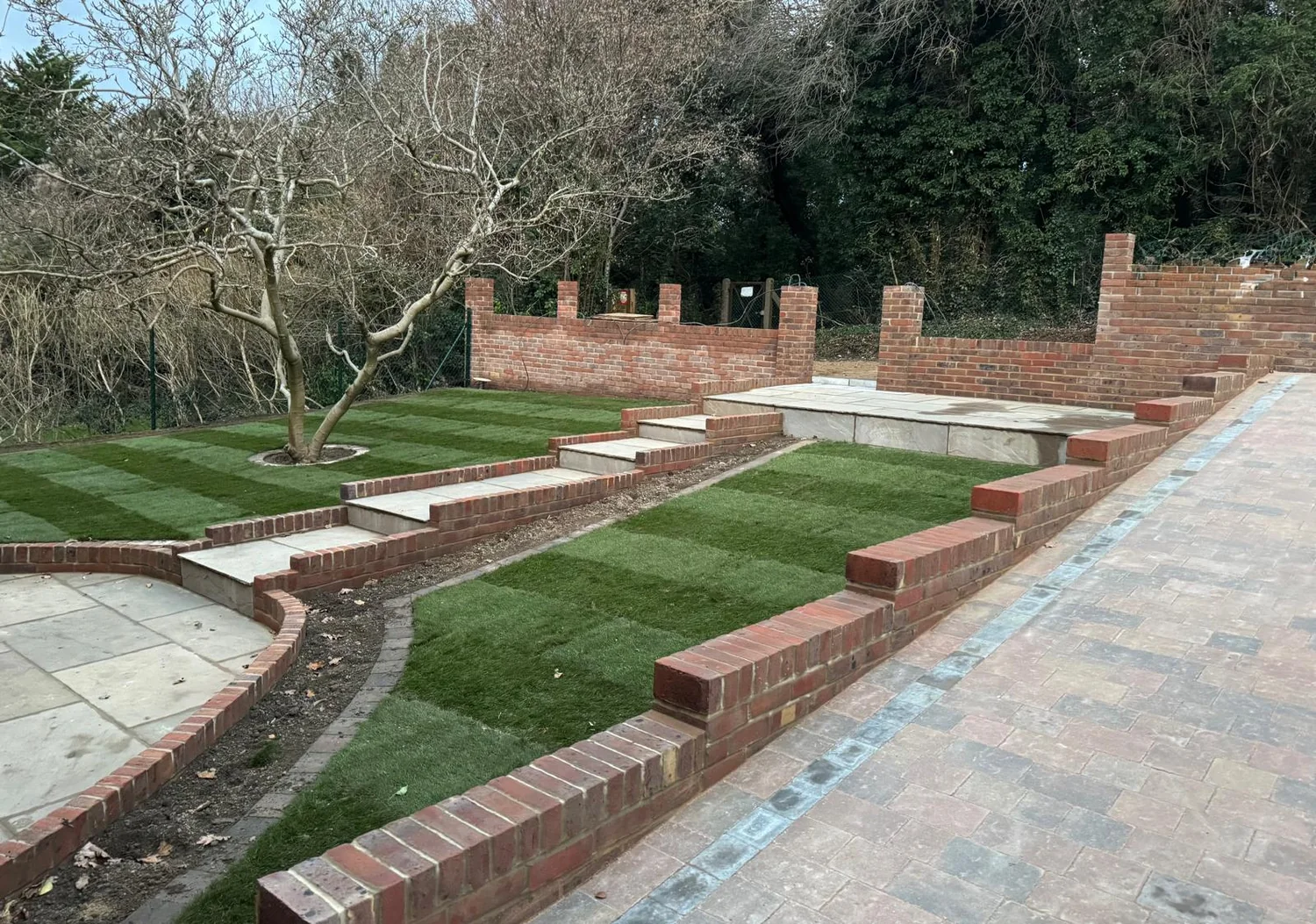
Most of our Whyteleafe work is level work with a surface on the end of it. A driveway cut into a bank so a car can sit flat above or below road level. Steps rebuilt so they are safe in ice. A retaining wall holding the front garden back instead of letting it creep onto the drive. We build the walls, form the steps and set the drainage before anything is laid.
The second big category is drainage put right. Houses on the slopes take everything the road and the bank above them send down, and plenty of older frontages were built to shed water towards the house rather than away from it. Resetting the falls, adding a threshold channel and running the water to a proper outfall is often a bigger improvement than the surface people came to us for.
- Level driveways cut into valley side banks, with retaining walls and haunched edge restraint.
- Steps set to a gradient that stays usable through a frosty week.
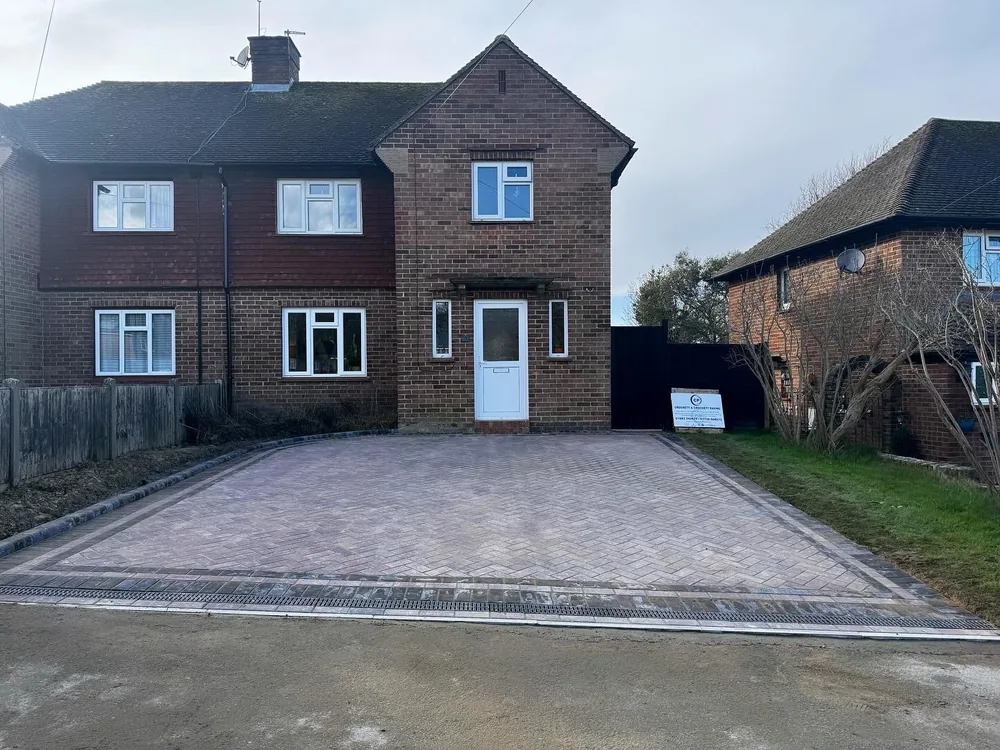
- Drainage put right: falls reset, channel drains at thresholds, outfalls within the property.
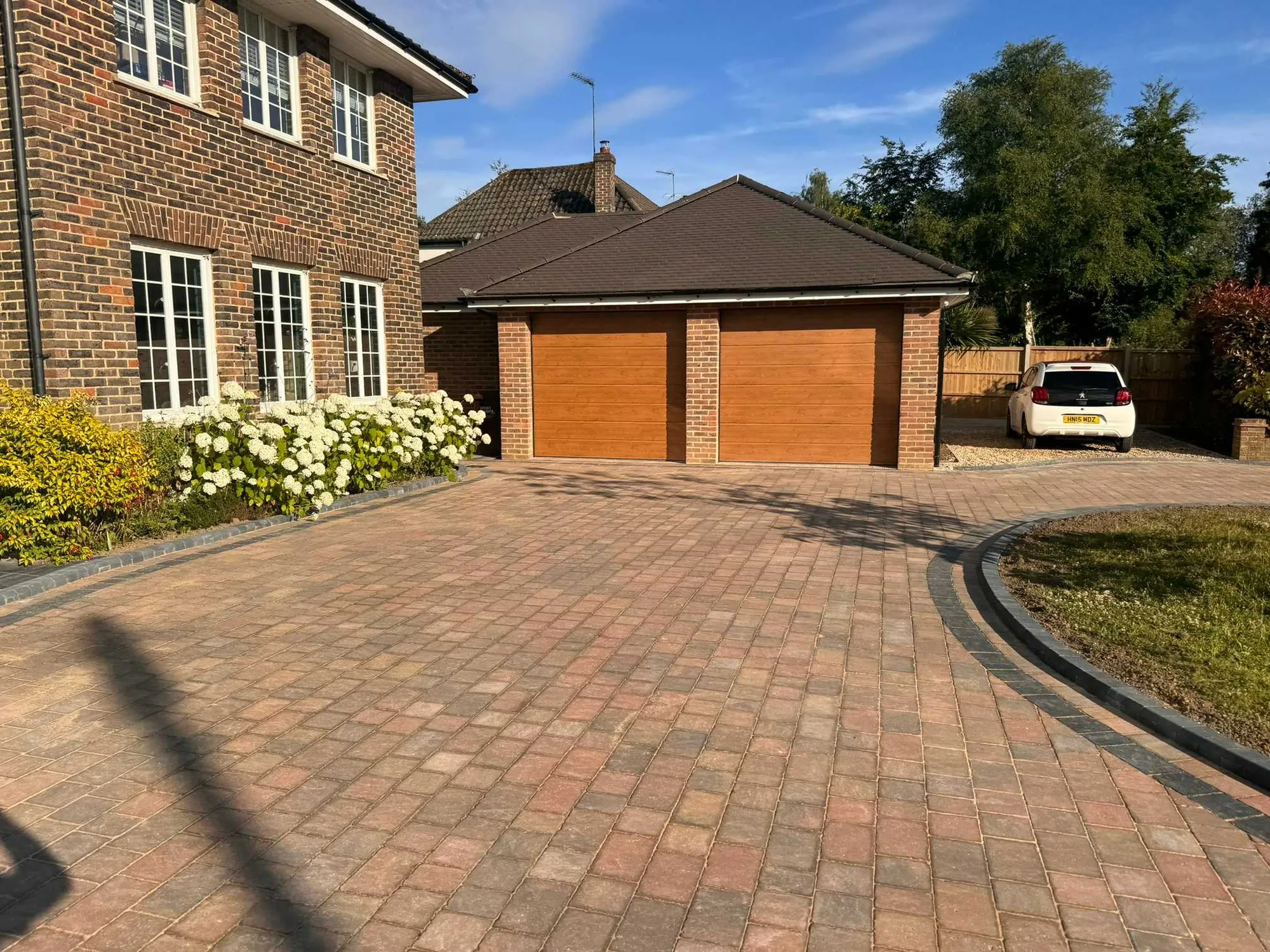
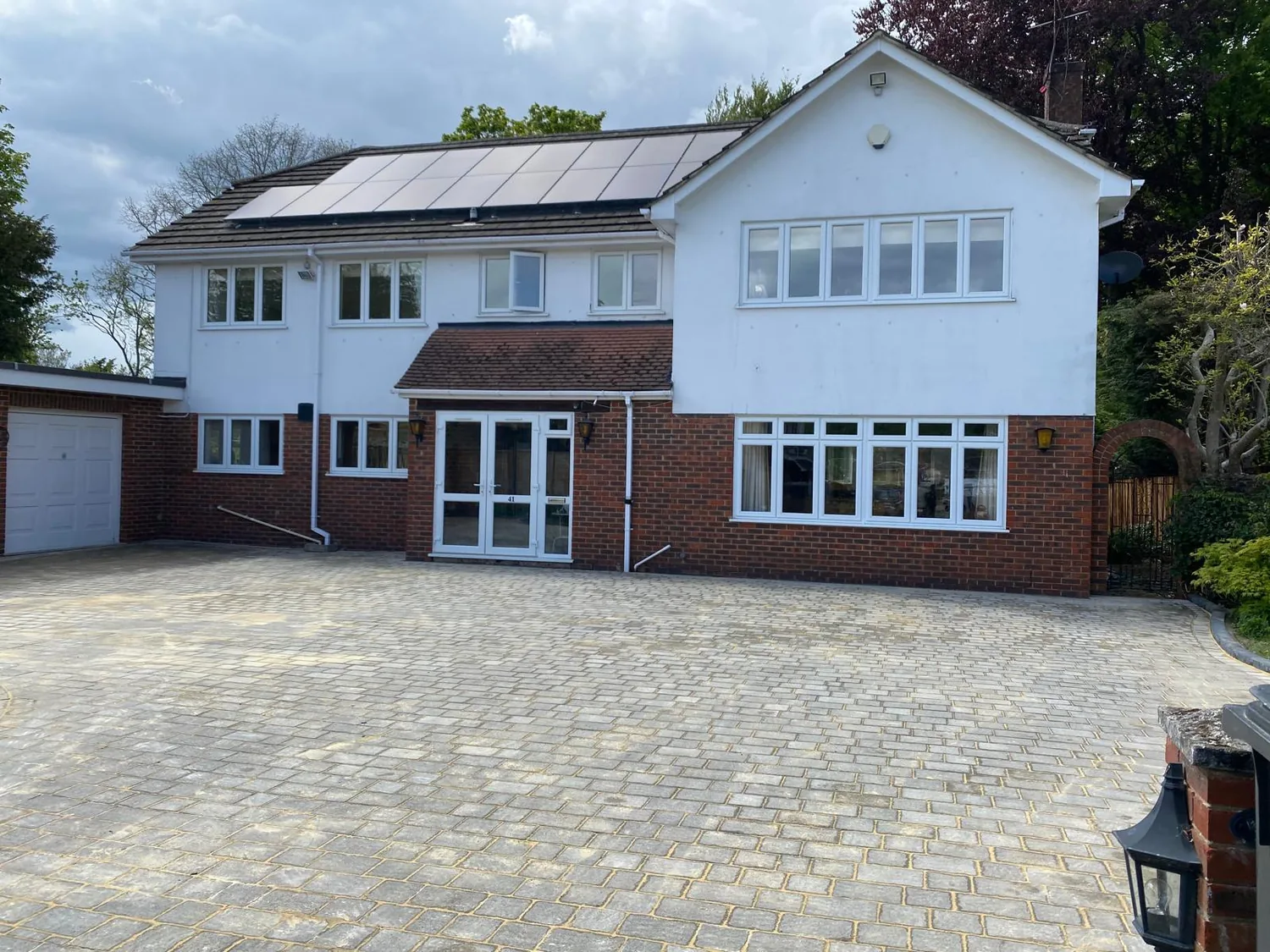
- New driveways in block paving, resin-bound, concrete or shingle, and repairs where the existing base has held.
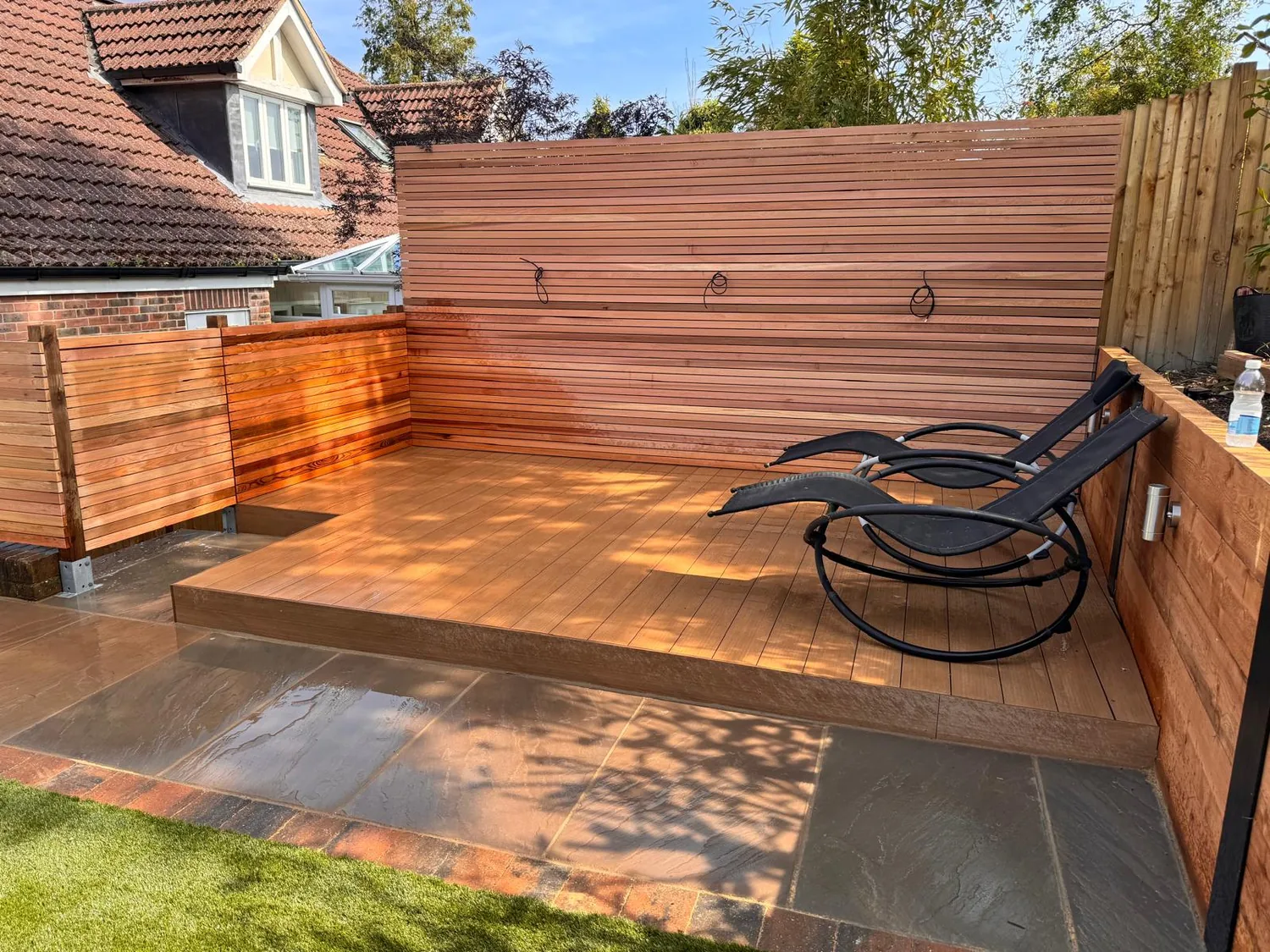
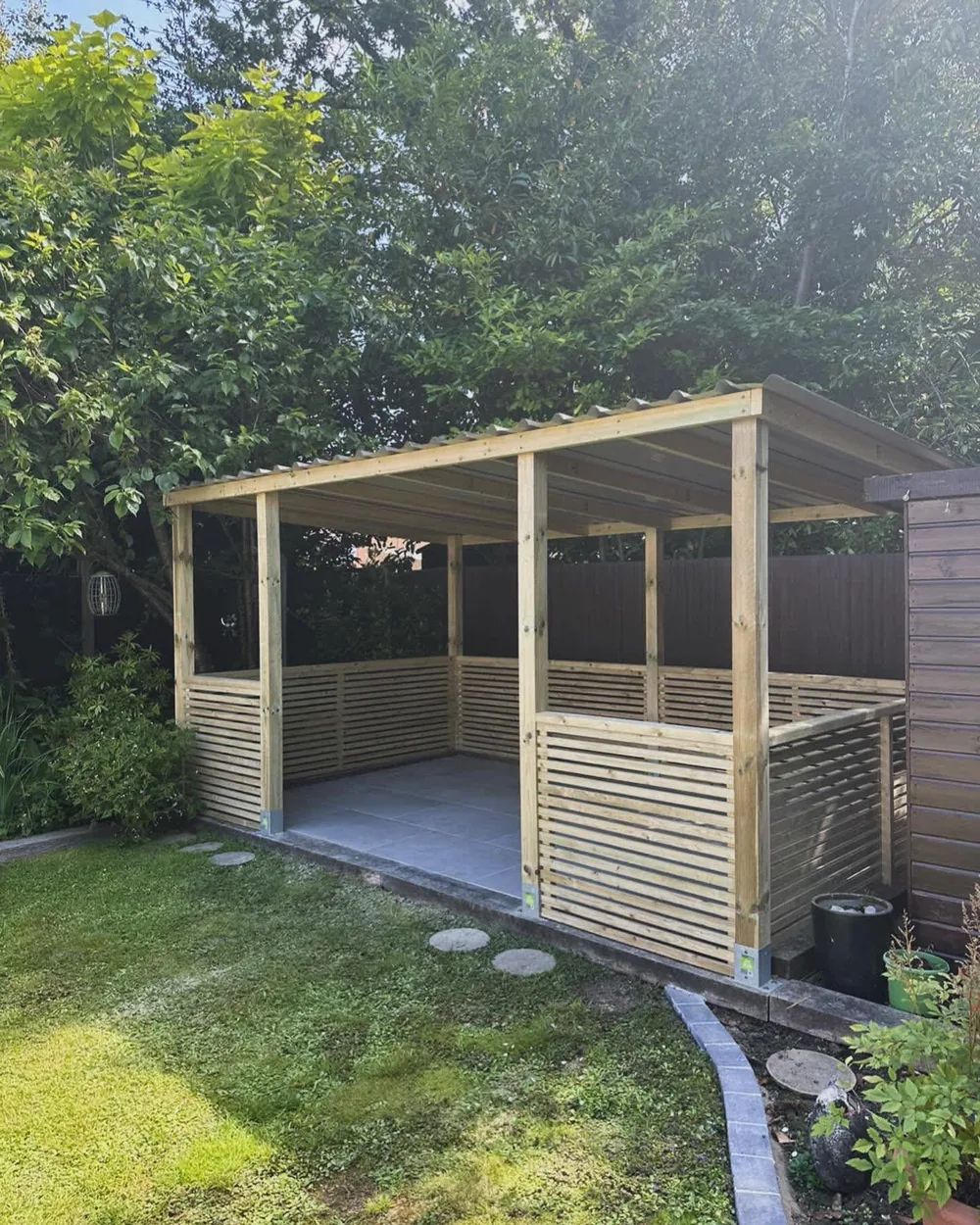
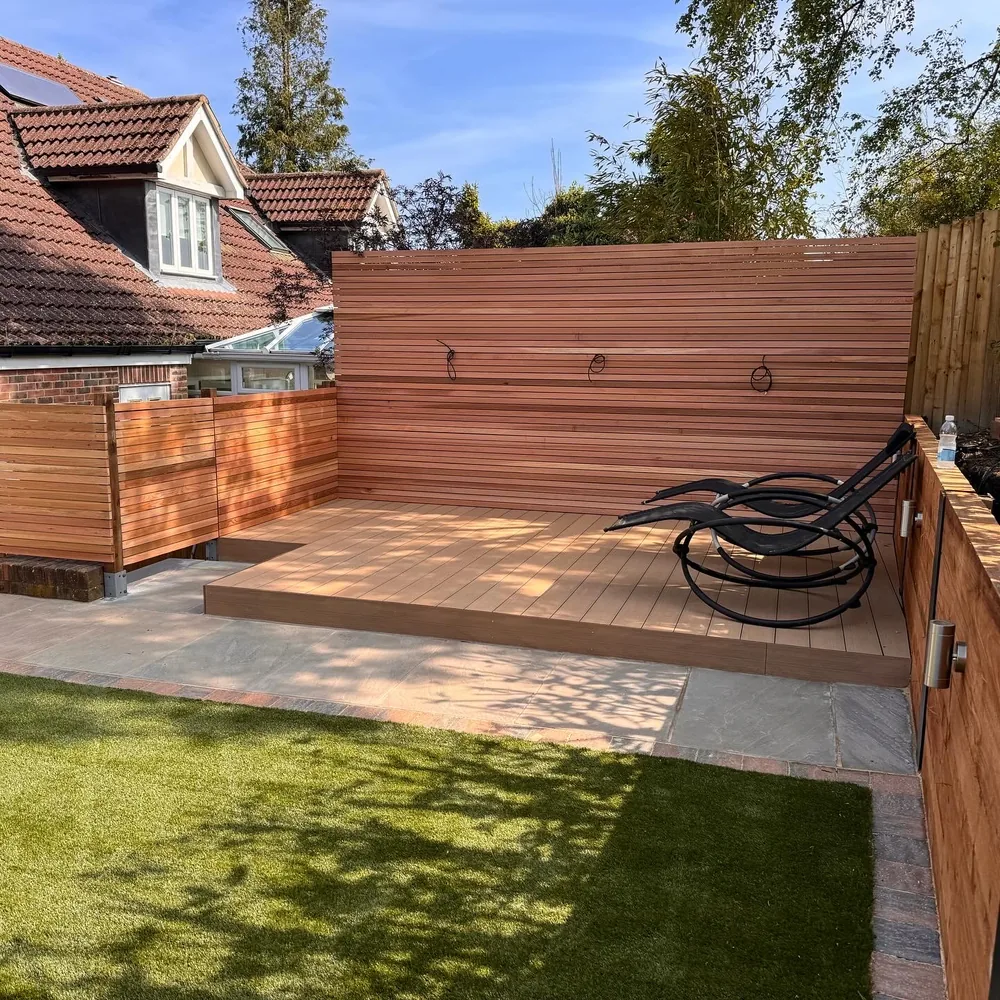
- Porcelain and sandstone terraces, decking, fencing and turf on stepped back gardens.
Levels, access and permission
Steep Both Sides, Two Councils and the A22 Through the Middle
The valley floor runs at about 100m AOD by the Whyteleafe roundabout, down to roughly 90m AOD at the northern edge, and the ground rises steeply on both sides. Whyteleafe Hill drops from about 170m AOD north of Salmons Lane Green to about 95m at the Church Road crossroads over 1.1km at a fairly uniform gradient. South of Burntwood Hill the fall is sharper still, from about 180m AOD to 135m in 160 metres. Residential streets running perpendicular to the valley step up the slope, so a driveway there means level changes, steps and retaining rather than a flat lay.
Tandridge District Council is the planning authority for the village and Surrey County Council is the highways authority for a vehicle crossover. A few streets on the western side of Whyteleafe fall inside the London Borough of Croydon, and for those the London borough is both planning and highways authority. Godstone Road is the A22, a classified road, and Surrey's guidance says A, B and C roads need planning permission for a crossover with written evidence supplied to the county.
Whyteleafe is covered by the Caterham, Chaldon and Whyteleafe Neighbourhood Plan, made in June 2021. Whyteleafe Centre is defined in its design guidelines as a Neighbourhood Character Area covering The Square, Station Road, St Luke's Road and Godstone Road as far as the roundabout. There is no conservation area within the village itself; the nearest is Kenley Aerodrome on the ridge above to the west.
- Access on Salmons Lane and the narrow upper lanes is checked first, because a grab lorry cannot get everywhere.
- Water off a non porous surface goes to a drain inside your own boundary, which is what Surrey's guidance expects.
- A porous surface, or one draining to a border, usually keeps the job out of the planning system altogether.
- Given the recorded groundwater flooding here, drainage design is evidenced rather than assumed.
Villages and neighbourhoods
Where We Work in and Around Whyteleafe
The village is small but it is not uniform, and the valley floor works nothing like the slopes above it. These are the parts of Whyteleafe we cover, with their postcode districts.
Our work
Whyteleafe Work of This Kind
Questions
Whyteleafe Questions We Get Asked
Can I put a soakaway in on a Whyteleafe driveway?
Not without checking. The chalk here looks like perfect soakaway ground, but the Tandridge Level 1 Strategic Flood Risk Assessment identifies high groundwater as the dominant flooding source in this valley, with springs emerging into gardens and basements in 2014. A soakaway that works in summer can sit in the water table in winter, so we check before we design.
What is the Caterham Bourne and does it affect my garden?
It is an ephemeral chalk stream running through the valley, recorded as flowing about one year in seven, with only around 20% of its length still in open channel. When it rises, groundwater comes up through the ground rather than running over it. That is why drainage design in Whyteleafe is about where water will emerge as much as where rain will land.
Our drive is cut into the bank above the road. Can it be replaced?
Yes, and it is one of the most common jobs we do here. The Design Guidelines describe exactly that pattern on the valley sides, with driveways and garages cut into the bank above road level. We rebuild the retaining, reset the levels so the parking area is flat and water runs away from the house, form the steps, then lay the surface.
Which council covers Whyteleafe?
Tandridge District Council is the planning authority for the village and Surrey County Council is the highways authority for a crossover or dropped kerb. A few streets on the western side of Whyteleafe fall inside the London Borough of Croydon, and for those the London borough handles both planning and highways. We confirm which one applies to your address before any application goes in.
I live on Godstone Road. Is a dropped kerb harder there?
It needs more paperwork. Godstone Road is the A22, a classified road, and Surrey County Council's guidance says roads classified A, B or C need planning permission for a crossover, with written evidence from the district council supplied to the county. Frontages there are also narrow, so the layout has to give a usable entry angle.
Can you work around the mature trees on Station Road?
Yes. The avenue of mature trees over the front gardens on Station Road is part of what the street looks like, and we would rather work around roots than through them. That means hand digging near the root plate, a shallower build up locally where it is needed, and a permeable surface so the tree still gets water.
Do you do work for flat blocks and managing agents here?
Regularly. Just over half of Whyteleafe's homes are in purpose built blocks of flats, so much of what we do here is communal: parking areas and bays, bin standings, footpaths, steps and level access ramps. We are fully insured, everyone on the team is trained in health and safety, and we quote commercial work in writing exactly as we do domestic.
Get a quote
Planning an Outdoor Project in Whyteleafe?
We are a couple of miles up the A22 in Caterham. Call 01883 340429 and we will come out, look at where your water is going, and provide a written quotation.
- Free, no-obligation quotationsIn writing, with the build-up and the drainage set out.
- 27 years in the tradeMarshalls Register accredited, Bradstone Assured.
- Fully insuredDomestic and commercial work across Surrey.
Arrange a free site visit
Tell us a little about the project and we will come out, look at the ground and put a written quotation together.
Where we work
Paving, Landscaping & Outdoor Construction Across Surrey
Based in Caterham, we undertake projects throughout Surrey and selected areas of Kent and West Sussex. For larger or more comprehensive projects, we are happy to consider work further afield.