

Godstone, RH9 and RH7
Driveways, Patios and Landscaping in GodstoneSand in the Village, Clay to the South, Workings Underneath
Godstone digs easily and drains well until you head south, where it turns to Weald Clay. And under the village itself there are old sand and stone workings.
Working in RH9 and RH7
The One Village Where We Ask What Is Underneath Before Anybody Puts a Machine on the Ground
Crockett & Crockett is a family-run company on Stafford Road in Caterham, run by Oli Crockett. 27 years in the trade, our own team, and every stage delivered and managed by us: the dig, the drainage, the sub-base, the edgings and the laying. We work across the whole parish.
Godstone is the one place in our area where we will not guess at the ground. The geology is straightforward enough once you know which side of the village you are on. The complication is what has been taken out of it. Silver sand and hearth stone were mined here by both open cast and underground working, and cave entrances still exist.
What we do covers the full range: block paving, resin, concrete and shingle driveways, patios and porcelain terraces, garden rooms, brickwork, drainage and groundworks, fencing, turfing, pergolas and decking. Domestic and commercial, fully insured, free written quotes. Accreditation wise we are on the Marshalls Register of Accredited Landscape Contractors and Driveway Installers, a London Stone registered installer, a Bradstone assured installer, and 10 out of 10 on Checkatrade.
The ground
Sharp Sand at the Green, Clay at Blindley Heath and a Mine Network Under the High Street
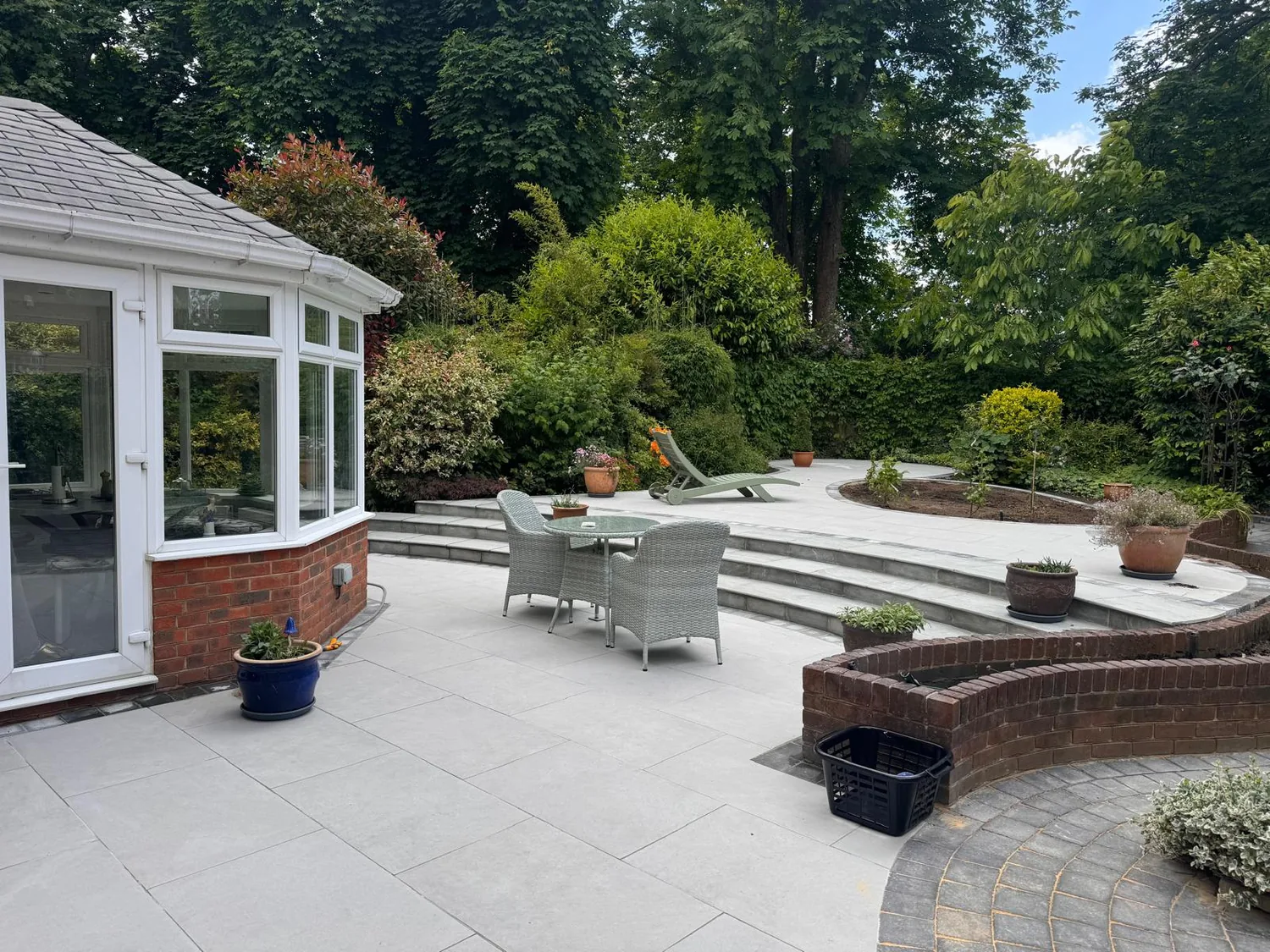
British Geological Survey mapping puts Folkestone Formation sandstone under both Godstone Green and Church Town. That is a sharp sand and weakly cemented sandstone. It digs easily and a soakaway will usually work, but trench sides will not stand on their own, and loose sand has to go back in compacted layers or the sub-base settles. South of the village the ground climbs onto harder Hythe Formation sandstone at Tilburstow Hill.
South Godstone and Blindley Heath sit on Weald Clay Formation mudstone instead. That is impermeable. It holds water, it goes greasy the moment it is worked wet, and it behaves nothing like the sand two miles north. A drive down there wants a deeper dig, a membrane between clay and stone, more sub-base and a drainage run with somewhere to discharge to.
Then there is the mining. After the High Street collapsed on 17 February 2025, Surrey County Council found a nineteenth century underground mine network in June 2025 and pumped over 667 tonnes of grout into 125 holes, to depths of up to 15 metres below ground level, with further tunnels still being found. Ground investigation before a significant excavation near the High Street is a sensible precaution.
- Free draining Folkestone sand at the Green and Church Town, so soakaways work
- Weald Clay at South Godstone and Blindley Heath: membrane, deeper build-up, piped drainage
- Hythe Formation sandstone on Tilburstow Hill, harder and slower to dig
- Documented mine workings, so ground investigation before a deep dig near the High Street
- Run-off planned to keep it off the protected ground at Blindley Heath
The houses
Two Old Cores, Then Fifty Years of Steady Growth and Two Quite Different Sorts of Frontage
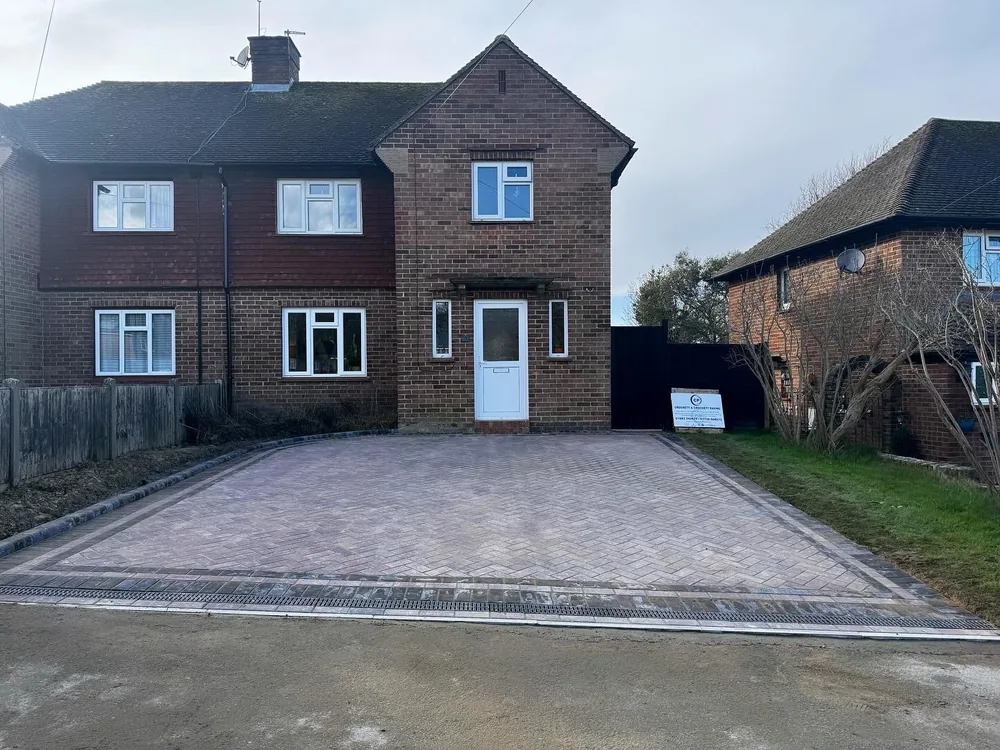
Godstone Green and Church Town are the two historic cores and both are conservation areas. The fabric is timber framed in places, including The Old Packhouse which dates from the fifteenth century, with St Nicholas Church restored by George Gilbert Scott. Around them the village mixes nineteenth century cottages, St Mary's Homes of 1872, and twentieth century infill and closes such as Clayton Mead.
That mix produces two types of job within half a mile. In the old cores the frontages are historic and the work is careful and small in scale: a path, a courtyard, steps, a rear terrace out of sight of the road. In the closes and infill the plots are ordinary and so is the work: levels that hold, edges that stay put, a patio that drains.
South Godstone is different again. It grew around the Redhill to Tonbridge railway, and the parish council says it has expanded organically over the last fifty years, so it is mostly twentieth century semis and detached houses with wider frontages and genuine room for off-street parking and turning. The 2011 census recorded 2,386 households in the parish, and by 2021 about 6,200 people in roughly 2,500 households.
- Conservation area frontages at the Green and Church Town, small in scale
- Nineteenth century cottages, St Mary's Homes and closes such as Clayton Mead
- South Godstone: wider frontages with room to turn a car round
- Blindley Heath split by the A22, so front gardens face a busy road
What we do most here
Driveways, Then Somewhere to Sit Away From the House and the Ground Decides Which of the Two Is Harder
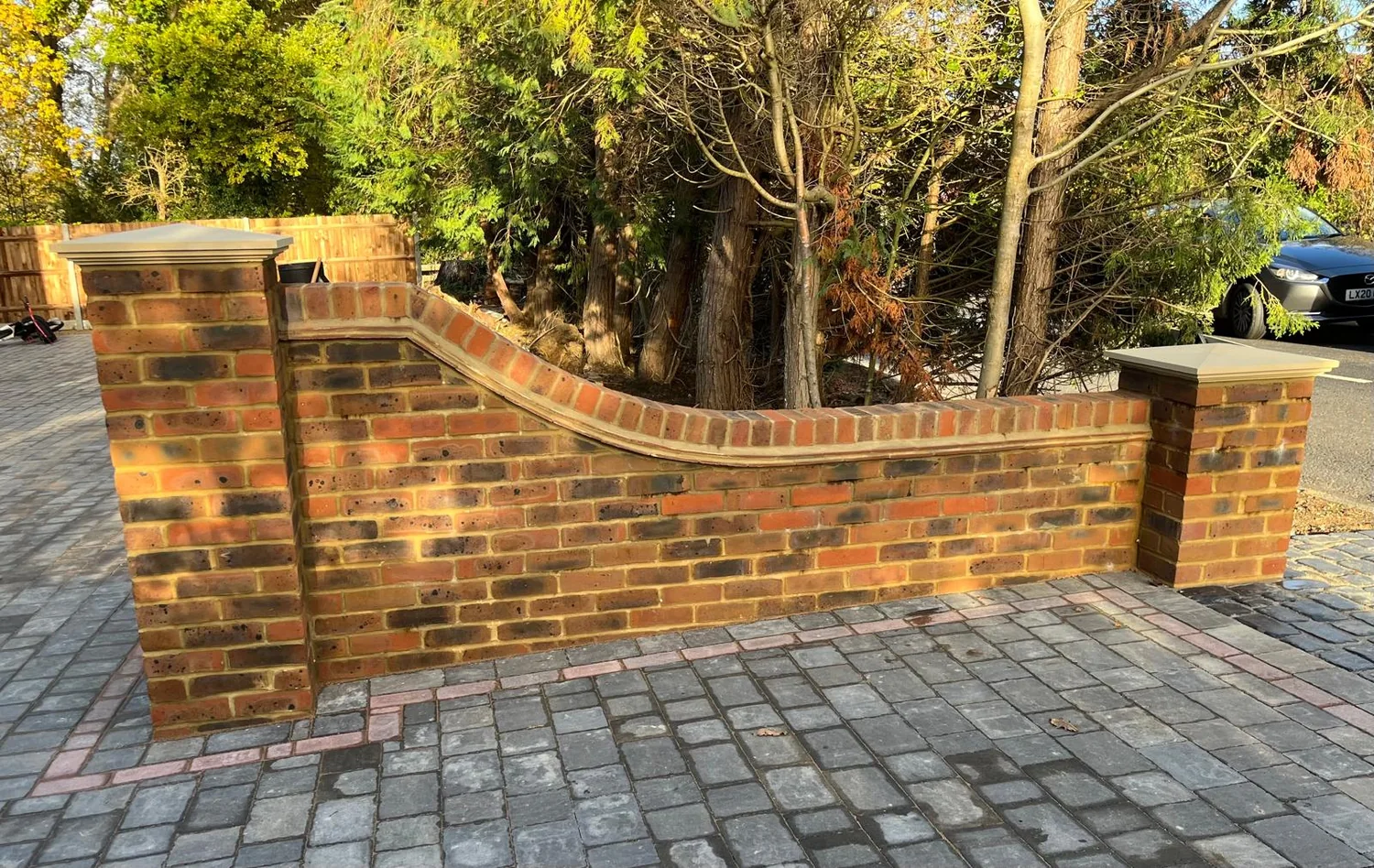
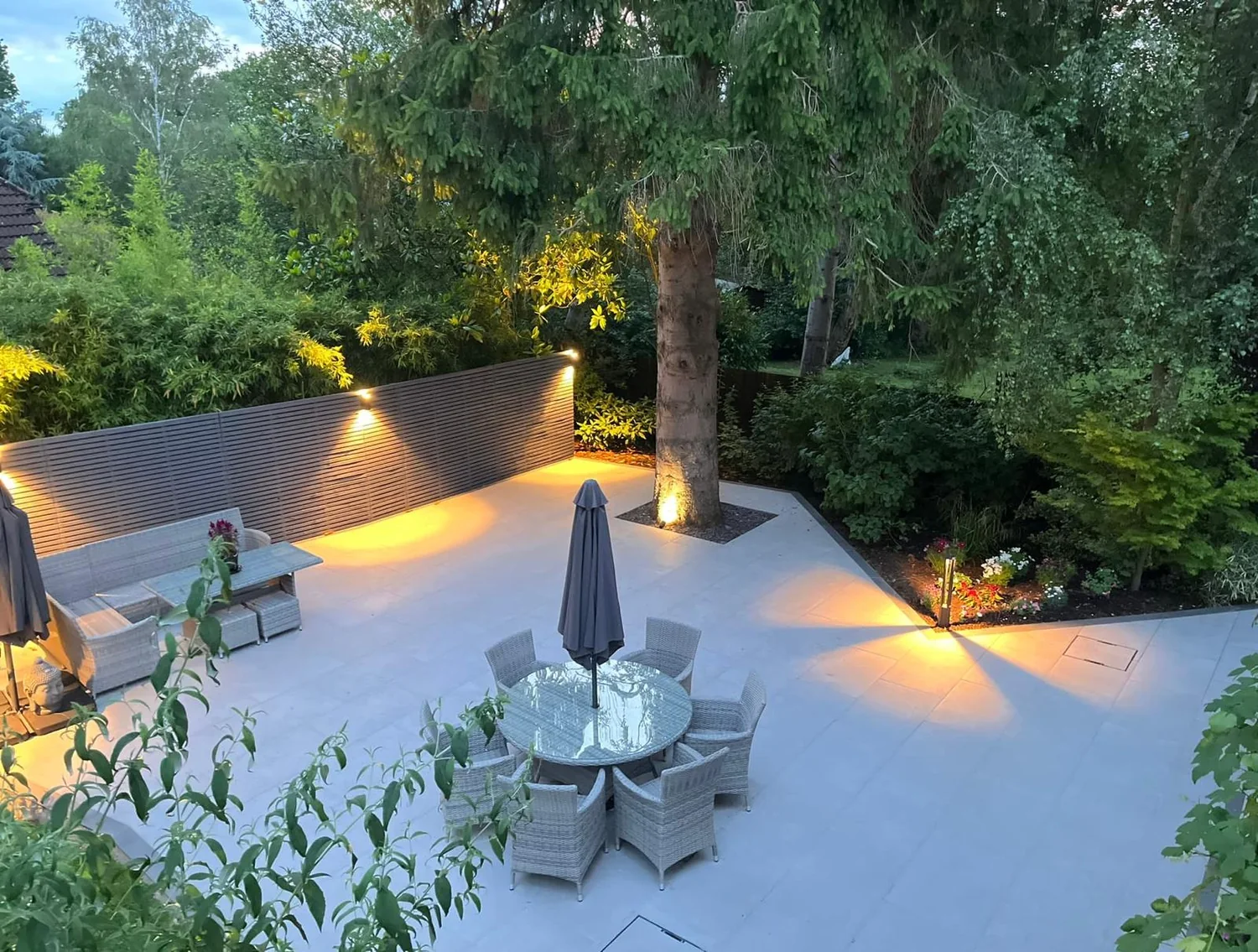
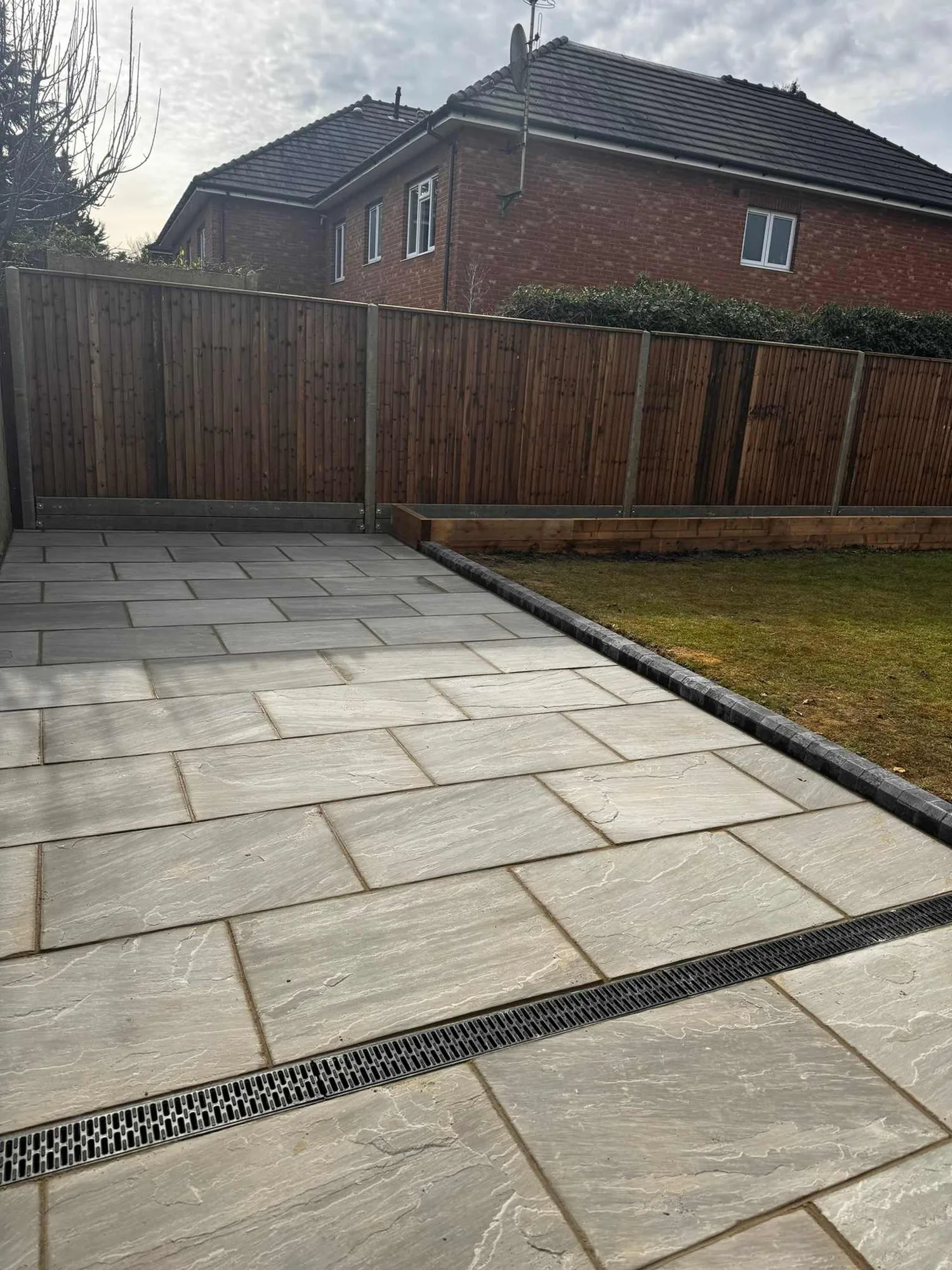
The commonest job in the village is a block paving driveway that has to look right in front of an older house without pretending to be older than it is. After that it is patios and porcelain terraces. In the South Godstone streets, where the plots are twentieth century and the frontages are wider, we get more front and back jobs: a drive with turning room at one end and a terrace at the other.
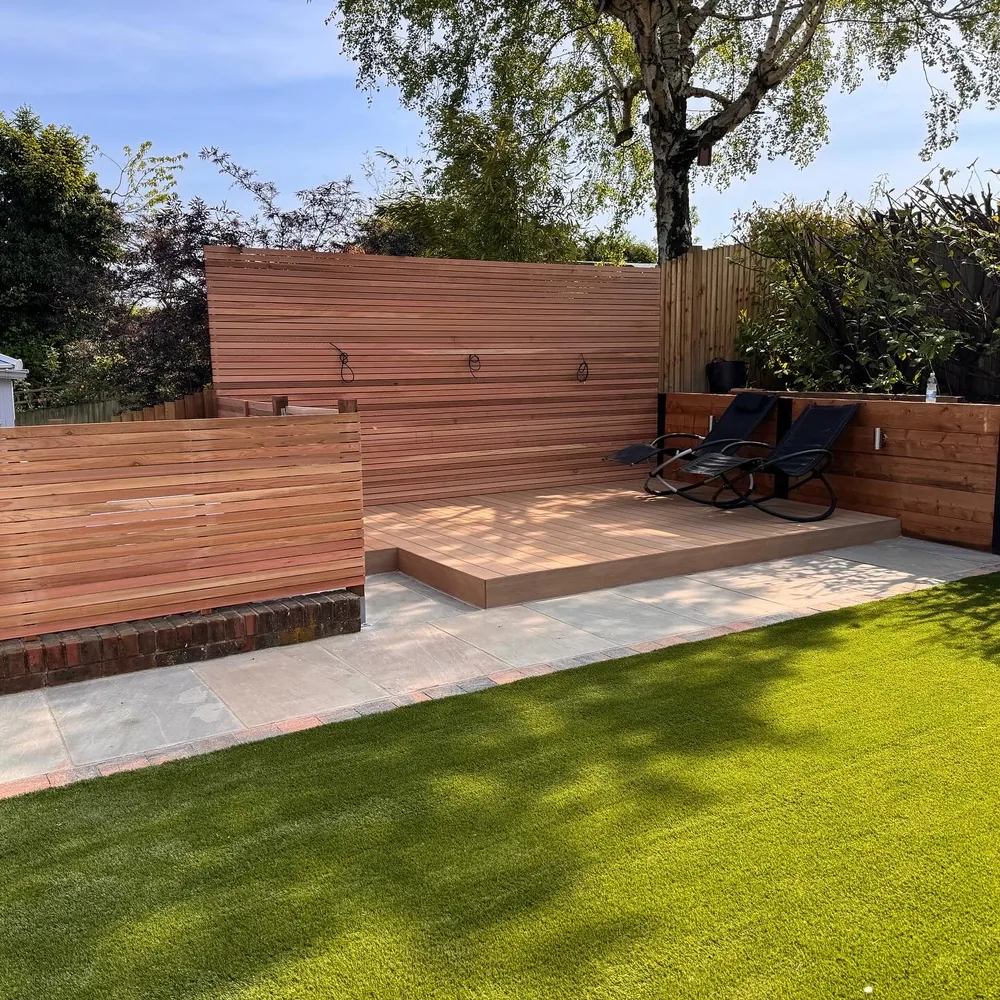
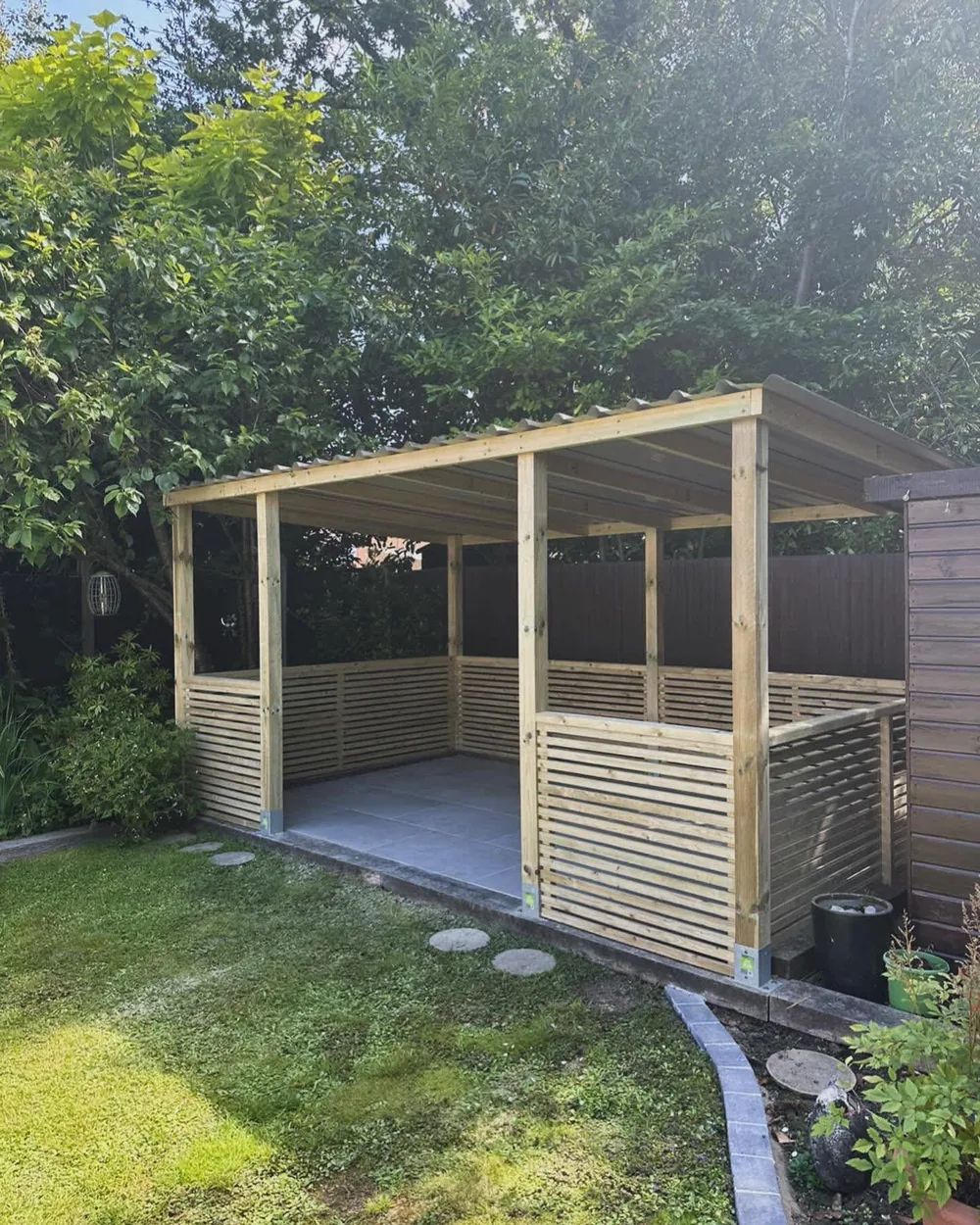
Pergolas and decking come up often as a way of getting a sitting area onto the clay in the south of the parish, where a mortared terrace wants a good deal of groundwork under it first. On the sand at the Green and Church Town the same job is mostly a question of compaction and edges, and the money goes into the surface rather than the base.
We also build steps, garden walls and retaining walls, lay turf and artificial grass, put in fencing and flower beds, and take on drainage and groundworks. Garden rooms are a growing part of the work, and we build the base and the ground works under them.
- Block paving, resin, concrete and shingle driveways
- Patios and porcelain terraces laid to a fall, drainage set out first
- Pergolas and decking for a sitting area on the heavier southern ground
- Garden rooms, including the base, the drainage and surrounding paving
- Steps, walls, turf, artificial grass and fencing to finish
Levels, access and planning
Low in the Vale, Steep at Both Ends and a Parish Entirely Washed Over by Green Belt
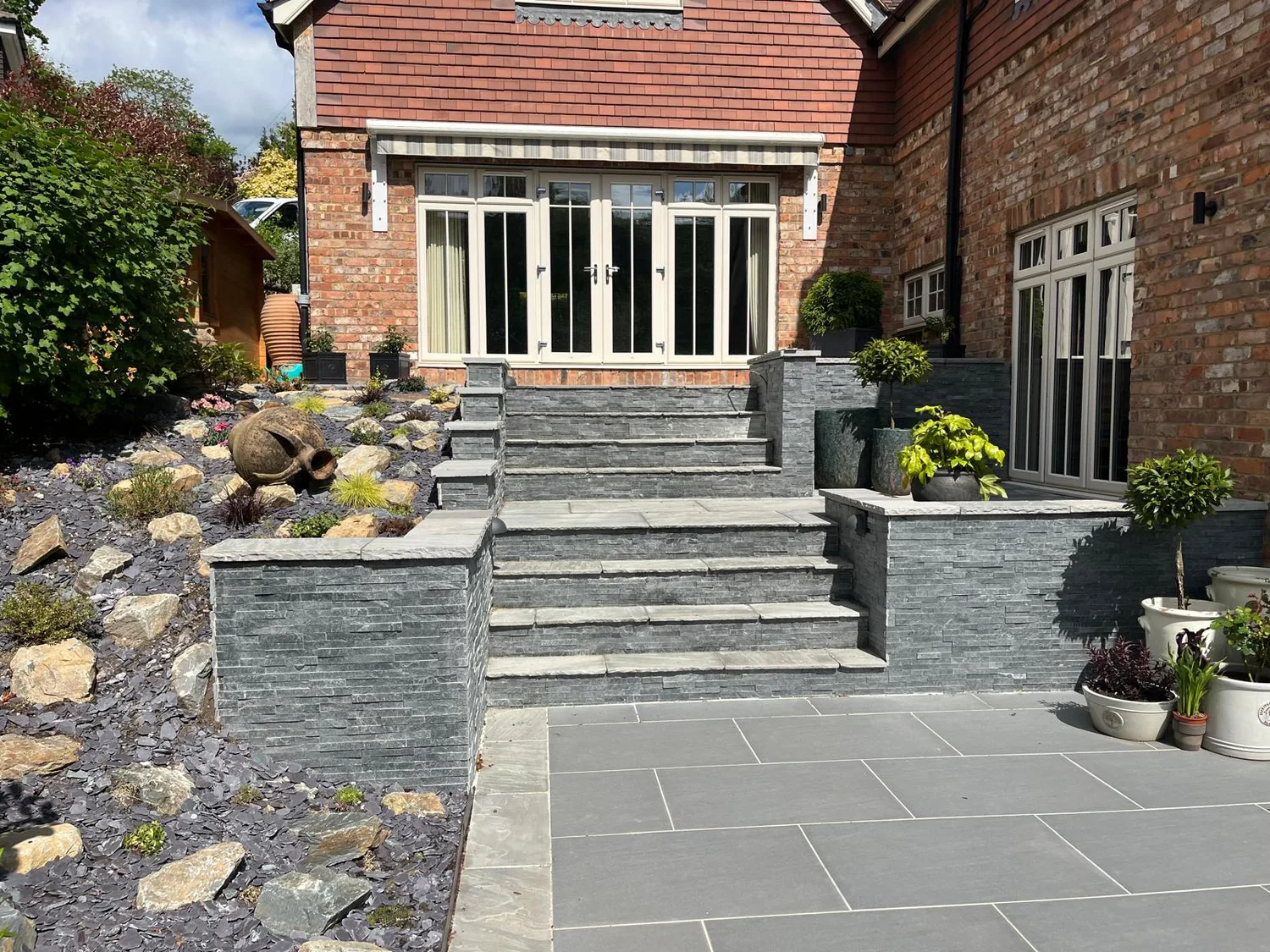
The village sits low in the Vale of Holmesdale on undulating ground that rises to the chalk ridge scarp north and the wooded greensand hills south. The climb up Godstone Hill towards M25 junction 6 is steep and gets onto the chalk. South of the village the ground rises onto Tilburstow Hill, then falls towards South Godstone and Blindley Heath, the lowest ground in the parish.
Access is generally good. The A22, the A25 and M25 junction 6 are all close, so grab lorries and deliveries are easy across most of the parish. Around the Green and Church Town it is tighter and we plan for it: smaller plant, timed deliveries, and spoil barrowed to a loading point rather than heaped on the road.
Tandridge District Council is the planning authority. The whole of Godstone parish lies within the Metropolitan Green Belt, and each village is washed over by the designation rather than inset, which the parish council says has prevented urban sprawl. The northern quarter of the parish is within the Surrey Hills National Landscape, and there are two conservation areas, Church Town and The Green.
A Godstone Neighbourhood Plan has been progressing, with a pre-submission draft published in December 2024 and a further consultation running from 11 February to 25 March 2026, so it is worth checking where it has got to. Draft policy G3 covers reflecting the character of Godstone's settlements through high quality design, G5 covers conserving heritage assets, and the draft says new routes between settlements should be of permeable material.
- Steep ground north up Godstone Hill onto the chalk, and south onto Tilburstow Hill
- Whole parish washed over by Green Belt, the north in the Surrey Hills National Landscape
- Two conservation areas: Church Town and The Green
- A22, A25 and M25 junction 6 close by, so deliveries are easy
- Permeable surfacing keeps most front gardens clear of the permission question
Villages and neighbourhoods
Where We Work Across Godstone Parish
Godstone parish covers a wide area and two postcode districts. These are the settlements we are in most often, and what is under them changes from one to the next.
Our work
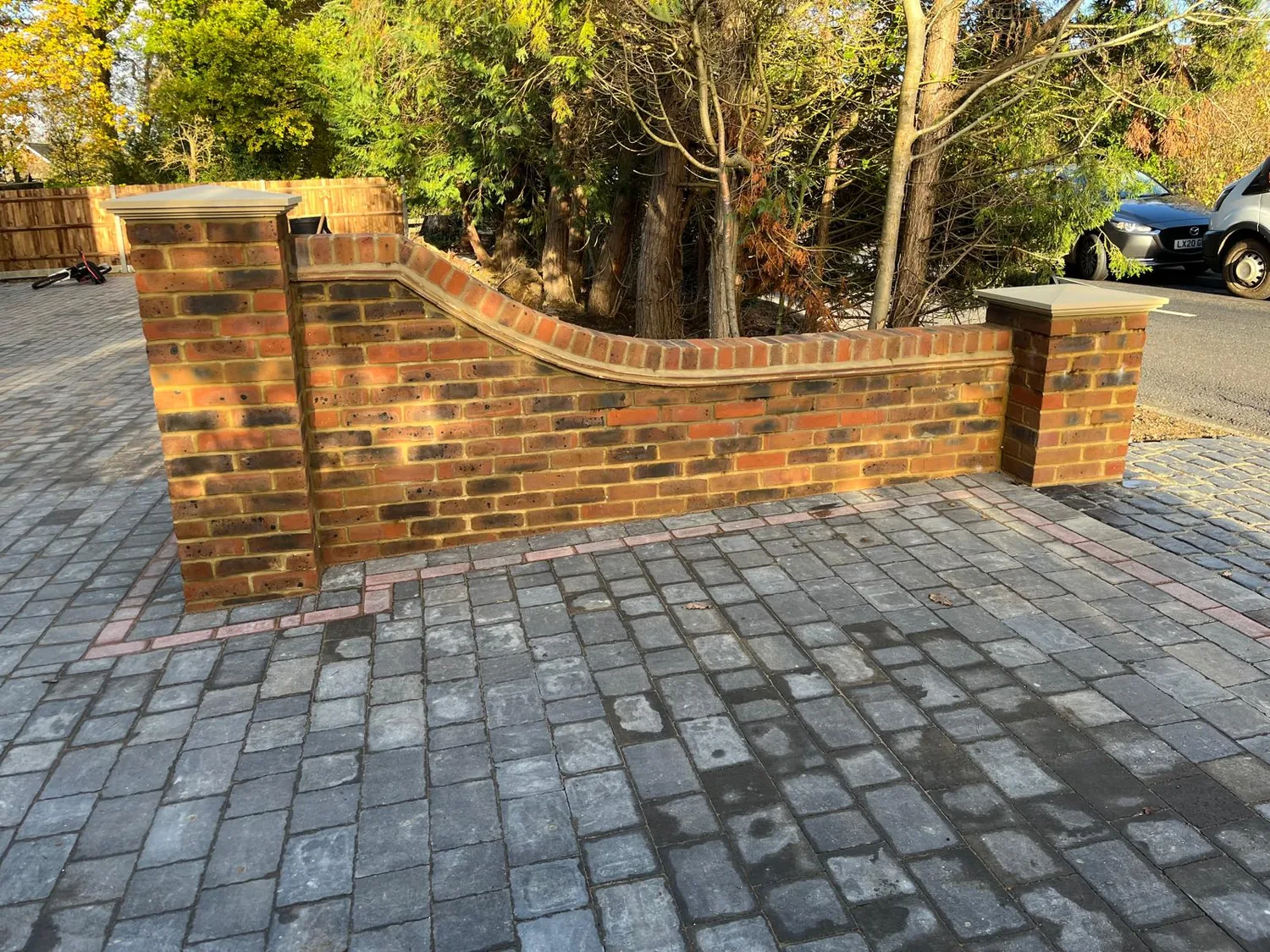
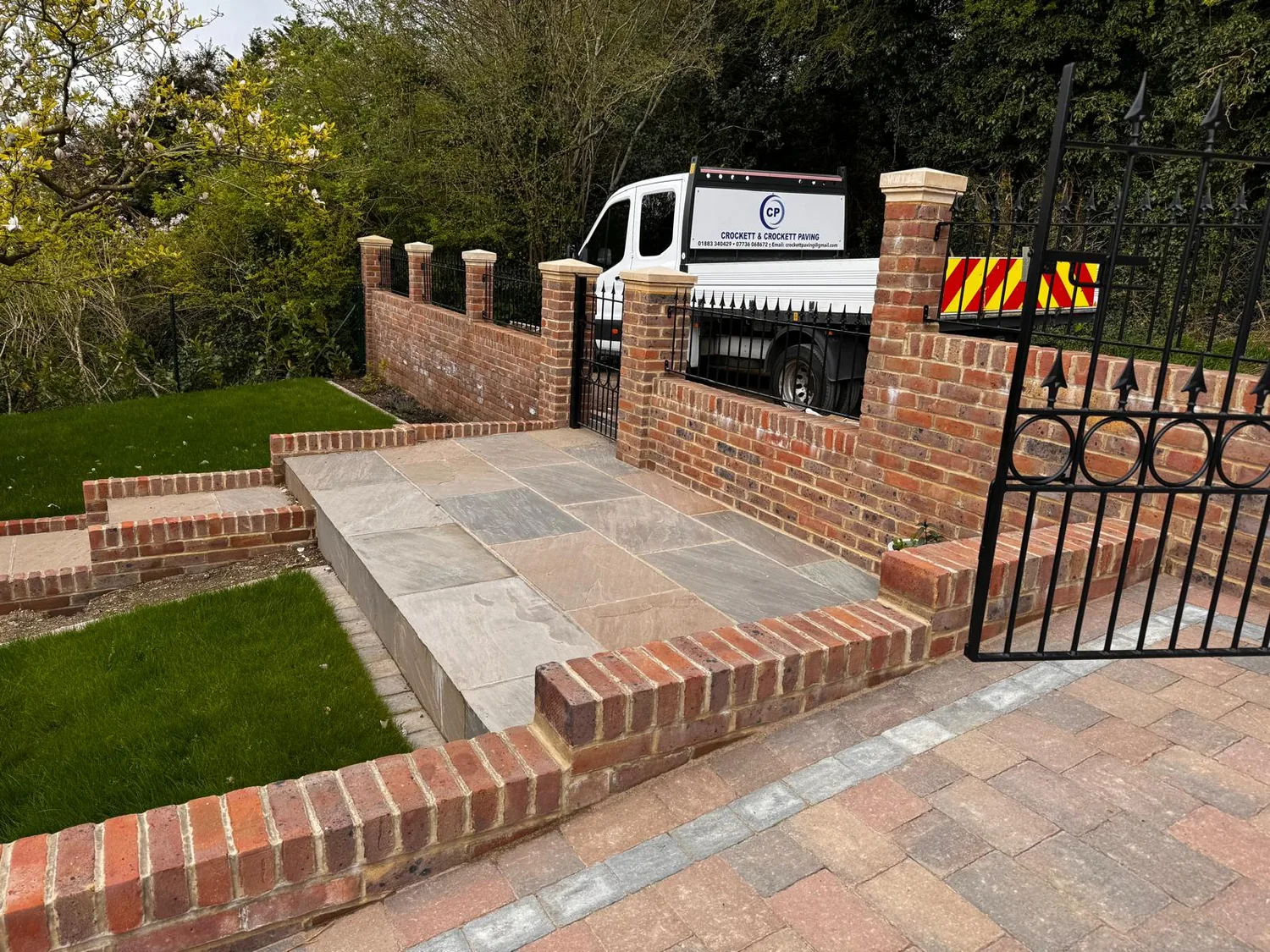
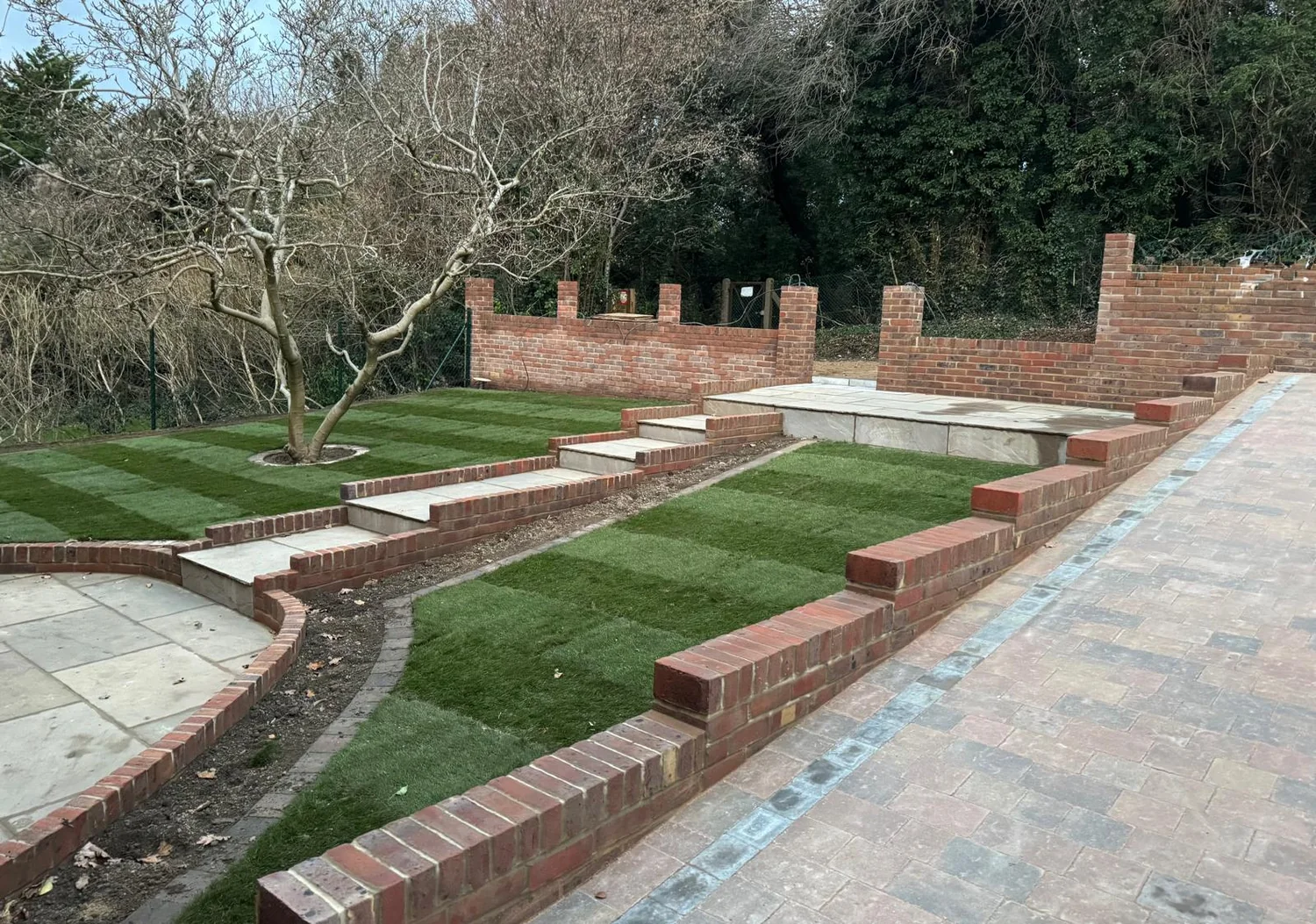
Driveways, Terraces and Garden Work
Questions
Godstone Questions We Get Asked
Is it safe to dig a driveway in Godstone with the old mine workings?
It is, provided somebody checks first. After the High Street collapsed in February 2025, Surrey County Council found a nineteenth century mine network and pumped over 667 tonnes of grout into 125 holes to depths of up to 15 metres. Ground investigation before a significant excavation near the High Street is a sensible precaution.
Will a soakaway work at South Godstone?
Almost certainly not. South Godstone and Blindley Heath sit on Weald Clay Formation mudstone, which is impermeable and holds water rather than passing it on, so a soakaway there fills up and stays full. Surface water has to be collected and piped to a point that will accept it.
Why is the same patio dearer at Blindley Heath than at Godstone Green?
Because of what is under it. Godstone Green is on free draining sand, so the dig is quick and the drainage is simple. Blindley Heath is on Weald Clay, which means a deeper dig, a separation membrane, more sub-base and a drainage run with somewhere to discharge to.
Does the nature reserve at Blindley Heath affect where my water goes?
It is worth taking seriously. Blindley Heath is an SSSI and a Local Nature Reserve, and on clay ground surface water has to go somewhere. We design the falls and drainage so run-off is controlled rather than pushed off the edge of the paving. Permeable surfacing often suits best.
Do I need planning permission to pave my front garden in Godstone?
Usually not, if the surface is permeable. The national guidance is that no permission is needed for permeable or porous surfacing at any size, or where rainwater is directed to a lawn or border to drain naturally, and that permission is needed for a traditional impermeable drive covering more than five square metres.
The whole parish is Green Belt. Can I still have a garden room?
The whole of Godstone parish lies within the Metropolitan Green Belt and each village is washed over by it rather than inset, so put the question to Tandridge District Council first. Green Belt designation does not automatically rule out a garden building, but it shapes what is acceptable.
Can you get a lorry into Church Town?
Not comfortably, and we do not try. Around Church Town and the Green the lanes are tight and the buildings are old, so we use smaller plant, book deliveries for set times, and barrow spoil out to a loading point. Elsewhere in the parish, with the A22, the A25 and M25 junction 6 close, access is straightforward.
How do I get a dropped kerb in Godstone?
Surrey County Council is the highways authority for vehicle crossovers. The guidance is to confirm with Tandridge District Council whether planning permission is needed, then apply to Surrey. We build the driveway up to the boundary and set our levels so they tie into the crossing without a step or a lip.
Get a quote
Planning an Outdoor Project in Godstone?
Call 01883 340429 or email info@crockettpaving.co.uk. We will come out to Godstone, look at what is under the front garden as well as on it, and give you a free written quote.
- Free, no-obligation quotationsIn writing, with the build-up and the drainage set out.
- 27 years in the tradeMarshalls Register accredited, Bradstone Assured.
- Fully insuredDomestic and commercial work across Surrey.
Arrange a free site visit
Tell us a little about the project and we will come out, look at the ground and put a written quotation together.
Where we work
Paving, Landscaping & Outdoor Construction Across Surrey
Based in Caterham, we undertake projects throughout Surrey and selected areas of Kent and West Sussex. For larger or more comprehensive projects, we are happy to consider work further afield.