

Banstead, SM7
Driveways and Patios in BansteadChalk, Flint, and an Interwar Grass Verge to Cross Before You Reach the Road
Banstead is up on the dip slope of the North Downs, not down in a valley. Chalk and flint under the front garden, a clay with flints cap on the higher plateau, and on the interwar streets a grass verge with a street tree between the front garden and the road.
Working in SM7
Chalk Country, and Interwar Streets Built to a Pattern.
Most of Banstead sits at about 125 metres falling to about 100 metres, and under a variable depth of humus topsoil most of the village is on flints or chalk. The Surrey landscape assessment describes the downland immediately east and south as underlain by the Lewes Nodular Chalk Formation, the Seaford Chalk Formation and the Newhaven Chalk Formation. The borough's design guidance adds that the top of the chalk plateau in the north of the borough is extensively covered with deposits of clay with flints, giving non calcareous soils.
In practical terms that is hard, abrasive digging that throws up cobble sized flint and blunts teeth, chalk that turns to slurry and loses its bearing if it is worked wet or trafficked in the rain, and a real chance that a clay with flints cap makes your plot behave like clay while the house next door drains freely. It is why we would rather dig a soakaway test pit in Banstead than price one off a map.
Crockett & Crockett Paving is family run from 393 Stafford Road, Caterham, with Oli Crockett on the jobs. Our own team, 27 years in the trade, and the core work delivered and managed by us: the excavation, the drainage, the sub-base, the edgings and the laying. The company is on the Marshalls Register of Accredited Landscape Contractors and Driveway Installers, is a London Stone registered installer and a Bradstone assured installer, and holds 10 out of 10 on Checkatrade. Free written quotes, fully insured, domestic and commercial.
What is under the front garden
Flint That Blunts a Bucket, Chalk That Will Not Be Worked Wet.
Digging in Banstead is slower than it looks. Under the topsoil you are usually into flint and chalk, and the flint comes out cobble sized, hard and abrasive. It wears teeth and it has to be carted rather than tucked back in as fill. That is not a problem when the price and the programme allow for it. It becomes one when a quote assumed soft digging and the job hits an extra day of muck away nobody costed.
Chalk is decent bearing ground when it is dry and intact. Worked wet, or trafficked in the rain, it goes to slurry and loses that bearing completely, and the only proper fix then is to dig deeper and replace it with stone. Then there is the clay with flints cap, which the borough's design guidance says covers the top of the chalk plateau extensively. Its edges do not follow street boundaries, which is why one Banstead drive soaks away happily and the next holds water on the formation after a night of rain.
- Flint in the dig: slower excavation, more wear on plant and more muck away, all costed up front.
- Chalk formation opened in manageable lengths, kept off in the wet, and capped the same day.
- Clay with flints on the plateau: infiltration can fail on one plot and work on the next, so a test pit comes first.
- Where infiltration fails, falls go to a positive outfall rather than a soakaway that will back up.
The houses
An Interwar Town Wrapped Round a Small Old Village.
Growth was slight until the late nineteenth century, and then the big estates were broken up. The Nork estate was sold to a development company in 1923, building went ahead rapidly, and the Nork Residents' Association was formed in 1925. The borough's design guide uses Tadworth, Nork and Banstead as its examples of 1930s to 1950s suburbia: street by street uniformity, regular road layouts with grass verges and remnant avenue trees, a uniform building line, and front gardens of roughly two to eight metres. It names Longcroft Avenue as a highly decorated example.
Nork is the part that surprises people. Its interwar houses are detached and semi detached with unusually large gardens, because planning authorities sometimes limited density to six houses per acre, and its streets typically have grass verges and trees between the road and the pavement. Later phases add the Rose Bushes estate in the 1960s and the High Beeches estate in the 1970s, and in recent decades a good deal of back garden infill, which is where much of the new access and drainage work comes from.
- Interwar Banstead, Nork and Tadworth: uniform building line, two to eight metre front gardens, verges and avenue trees.
- Nork in particular: large gardens, so garden rooms, terraces and full garden schemes rather than just a drive.
- Kingswood: plots of roughly 0.3 to 0.4 hectares on private roads with grass verges and no footways or kerbs.
- Back garden infill plots: new accesses, turning areas and drainage designed from scratch.
What we do most in Banstead
Big Gardens Behind, a Verge and a Street Tree in Front.
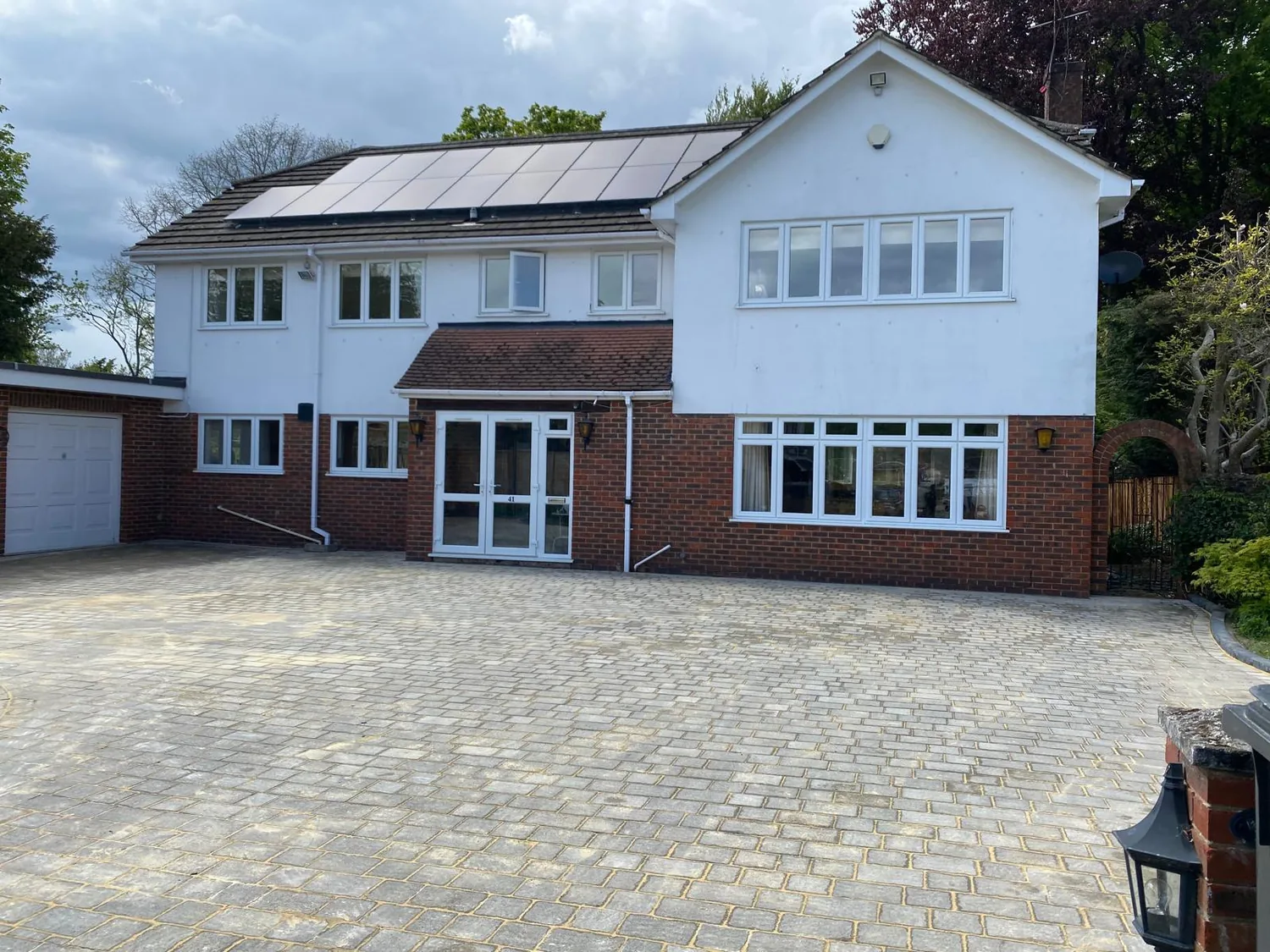
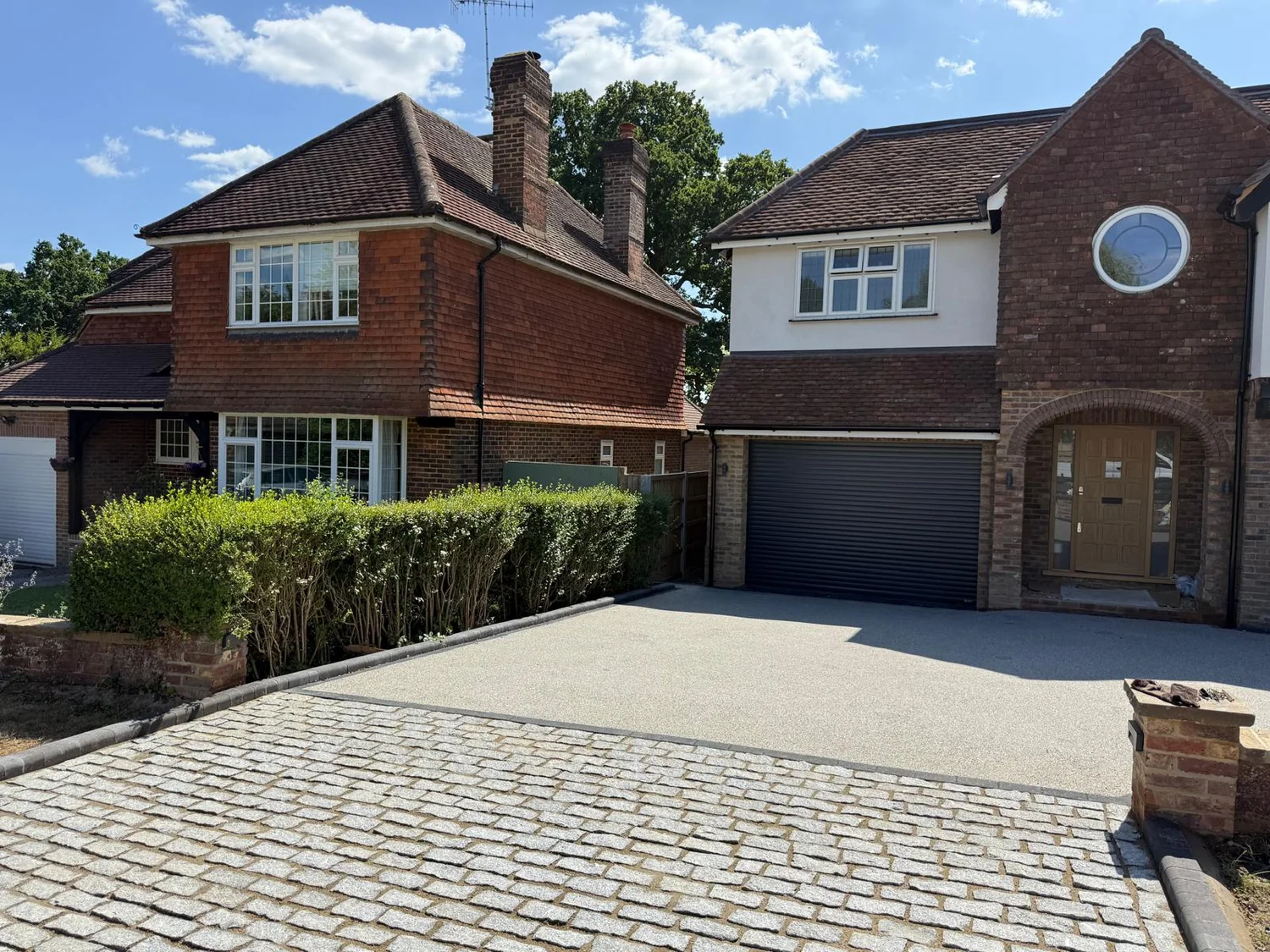
Out front the common job is a new or relaid driveway that has to cross a grass verge with trees in it. That means a crossover licence, a verge construction that will carry a car without rutting, and root protection worked out before anyone digs, because the design guide identifies those verges and trees as a defining feature of these streets. We would rather bridge or hand dig round roots than cut them, and we set the levels so the verge crossing is not a puddle every time it rains.
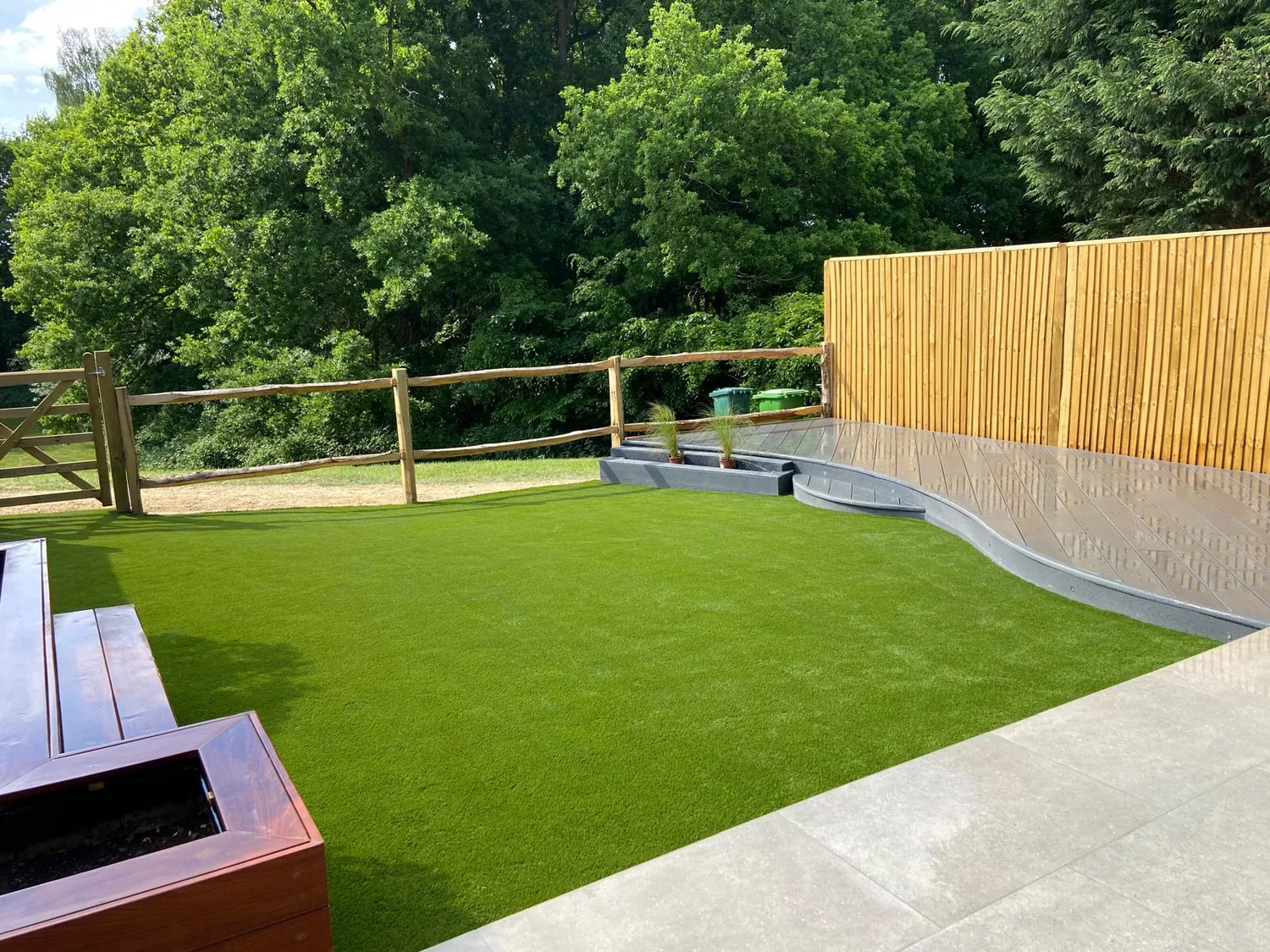
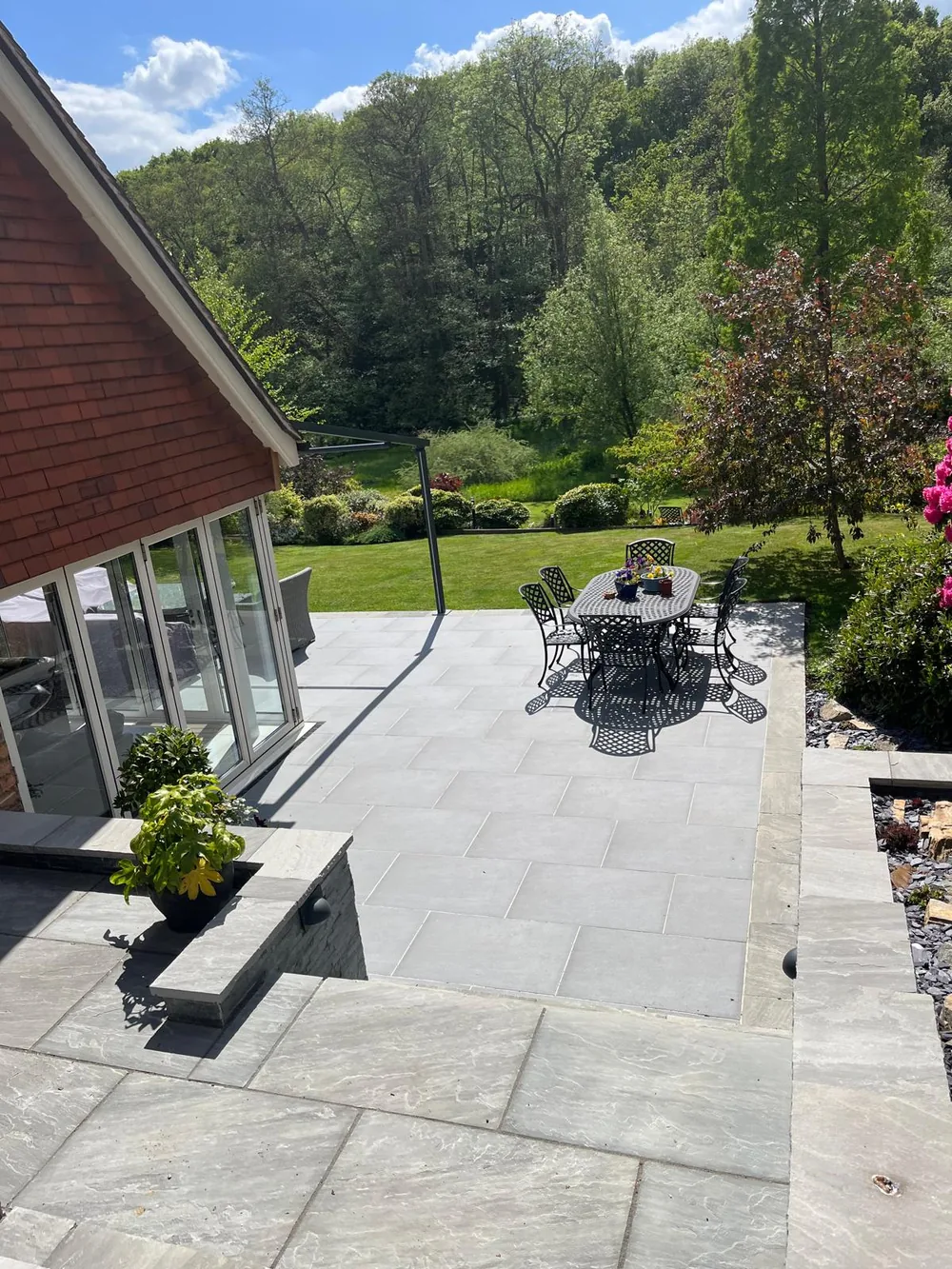
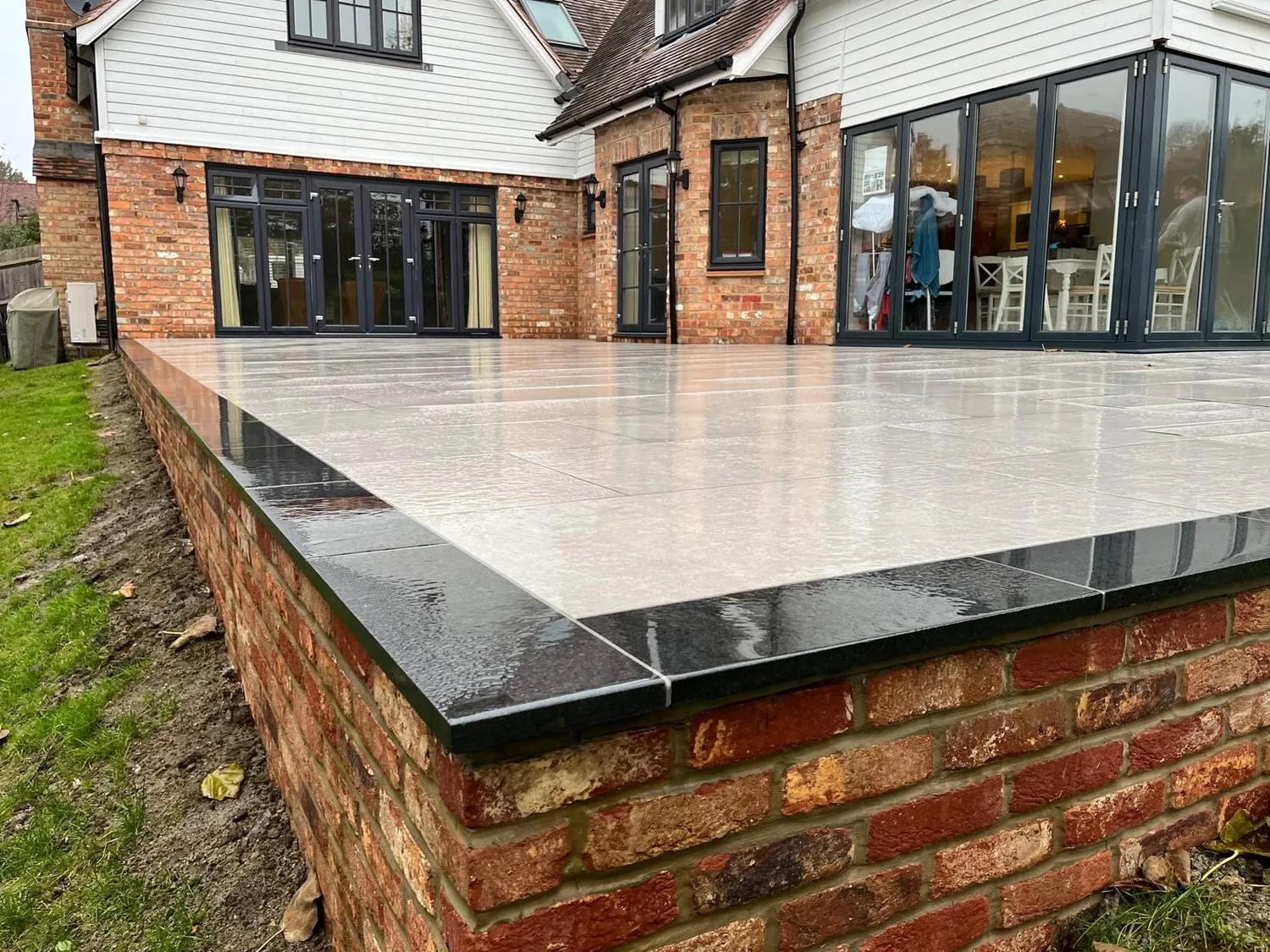
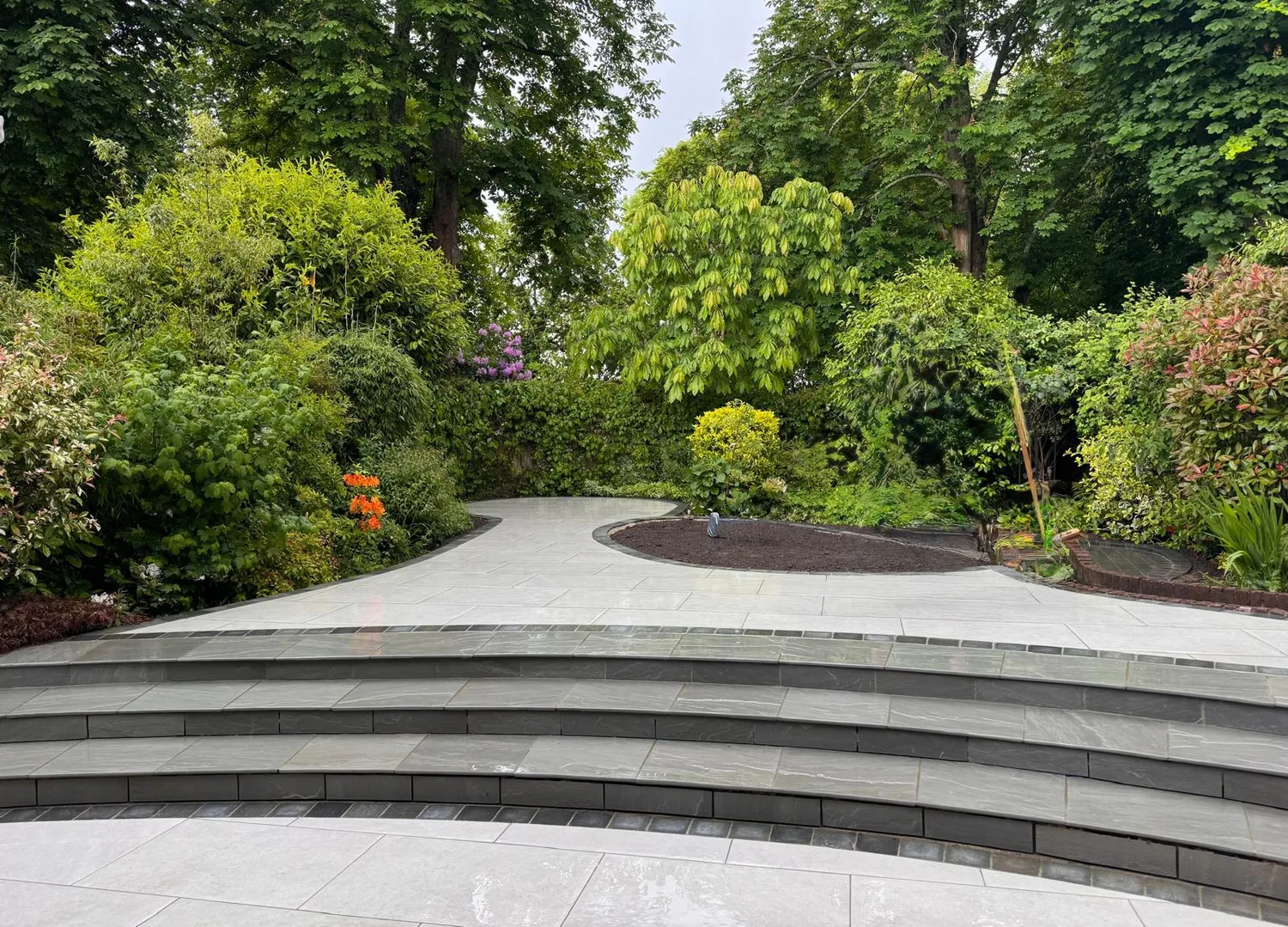
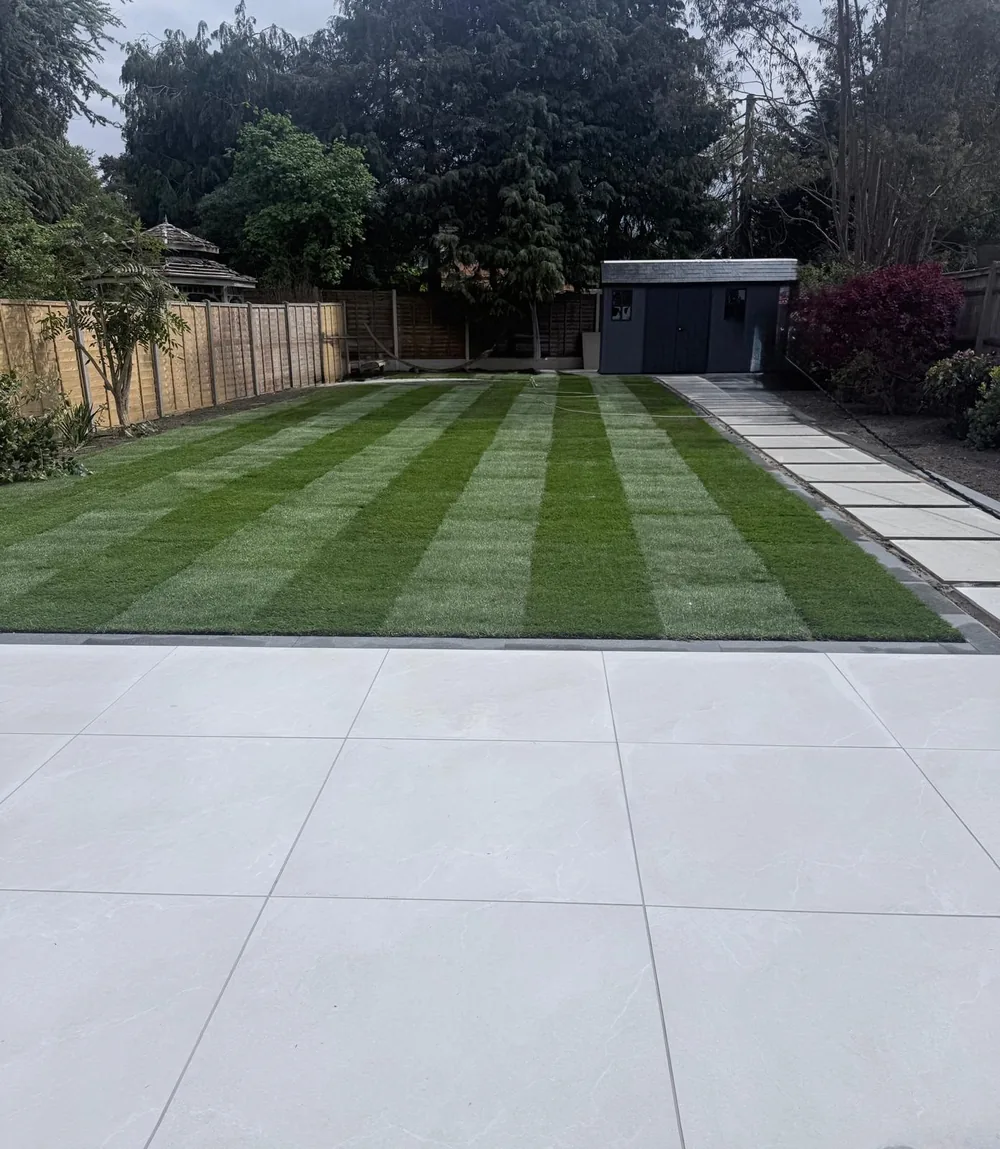
Behind the house the large interwar plots at Nork and Tadworth take whole schemes: a porcelain or sandstone terrace off the back of the house, steps down to a lawn, a garden room with a proper base and drainage, brick walls and piers, fencing, and artificial grass where a chalky, flinty lawn has been a losing battle for years. Artificial lawn on chalk still needs a stone base laid to a fall, or it holds water and sinks into the hollows. The other steady work is putting right drives laid straight onto chalk without enough stone.
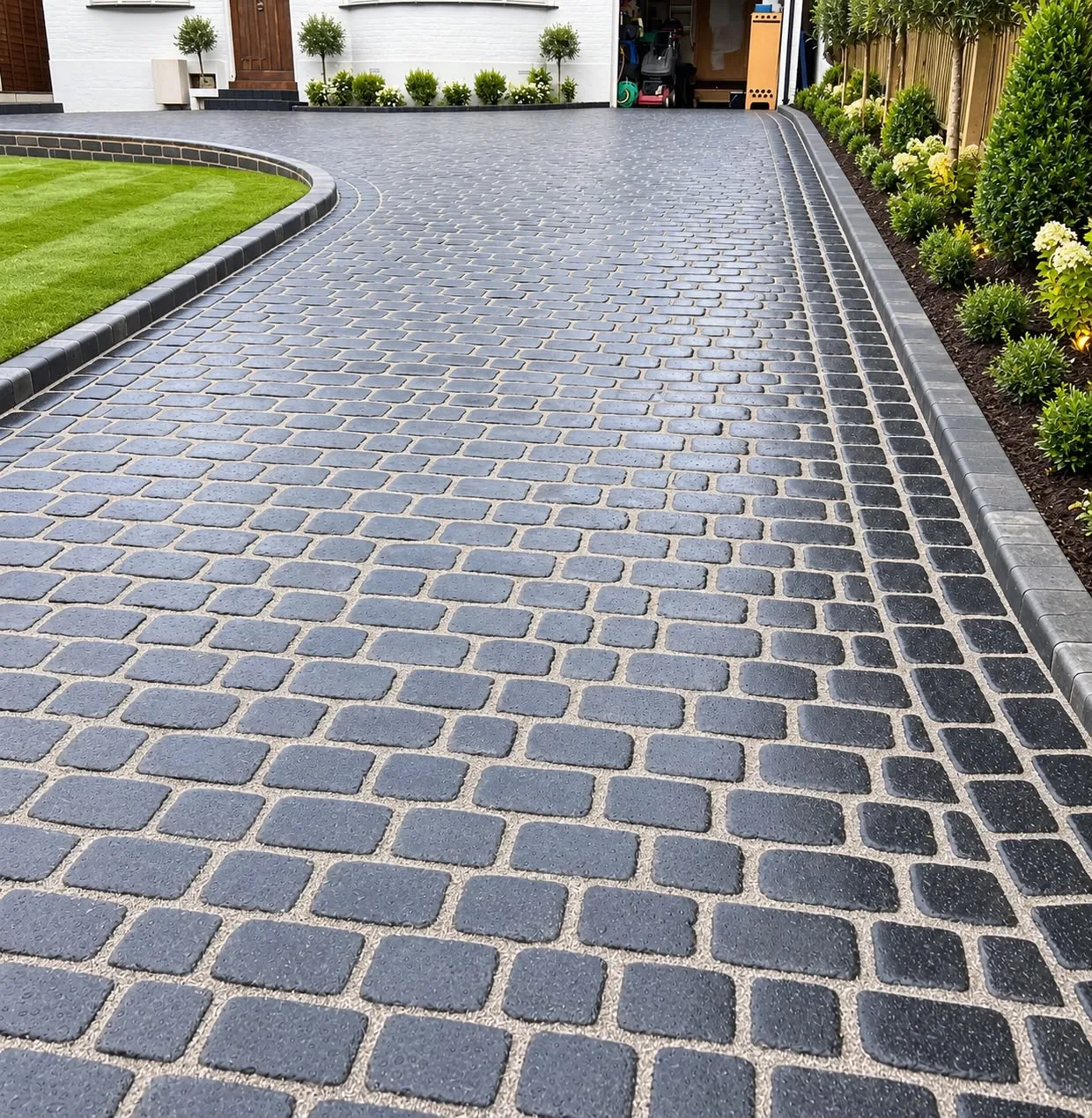
- Block paving and gravel driveways with a properly built crossover across a verge, root protection included.
- Porcelain and sandstone terraces, steps and level platforms on the gently sloping interwar plots.
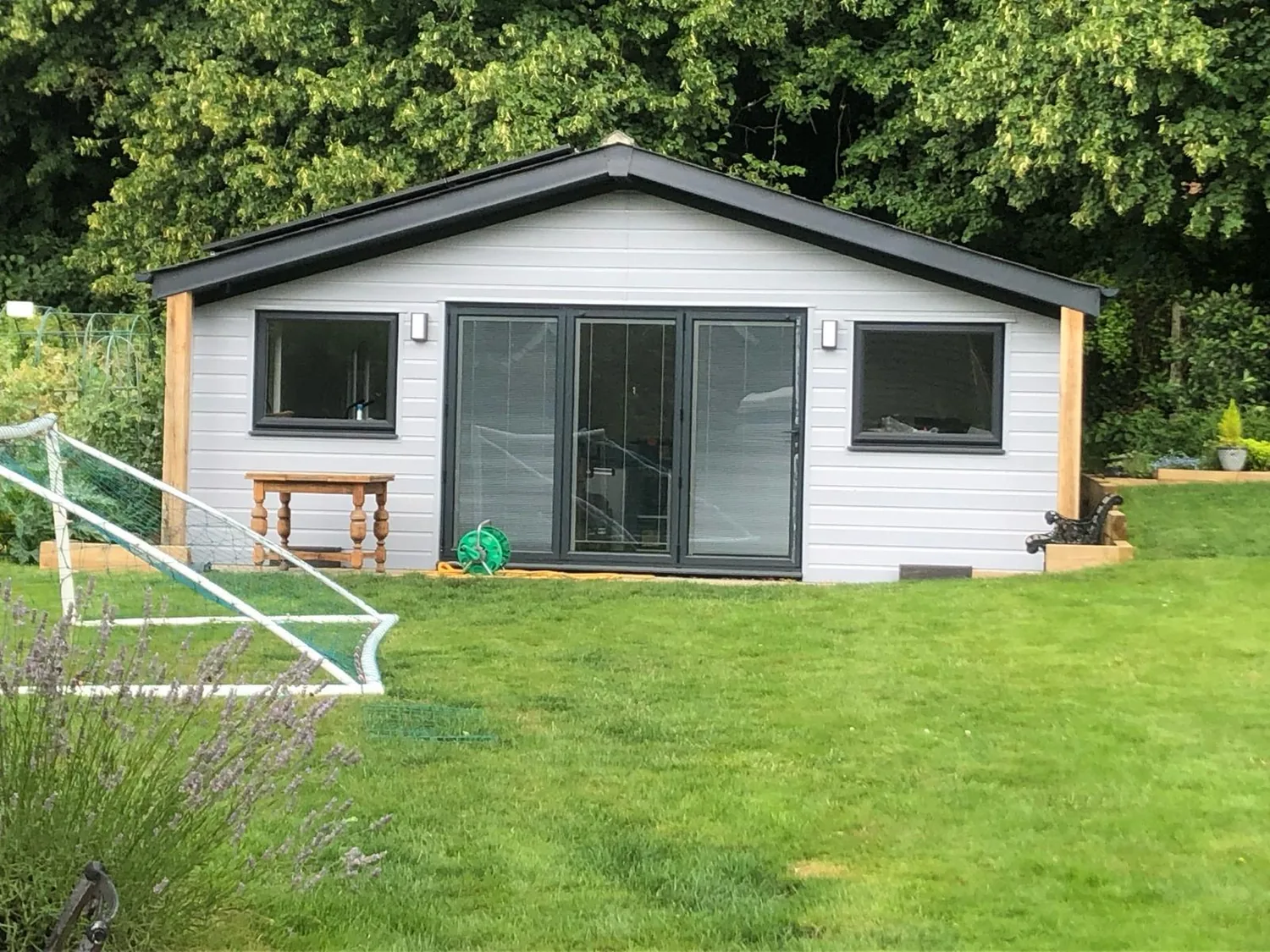
- Garden room bases with drainage, in the large gardens at Nork, Tadworth and Woodmansterne.
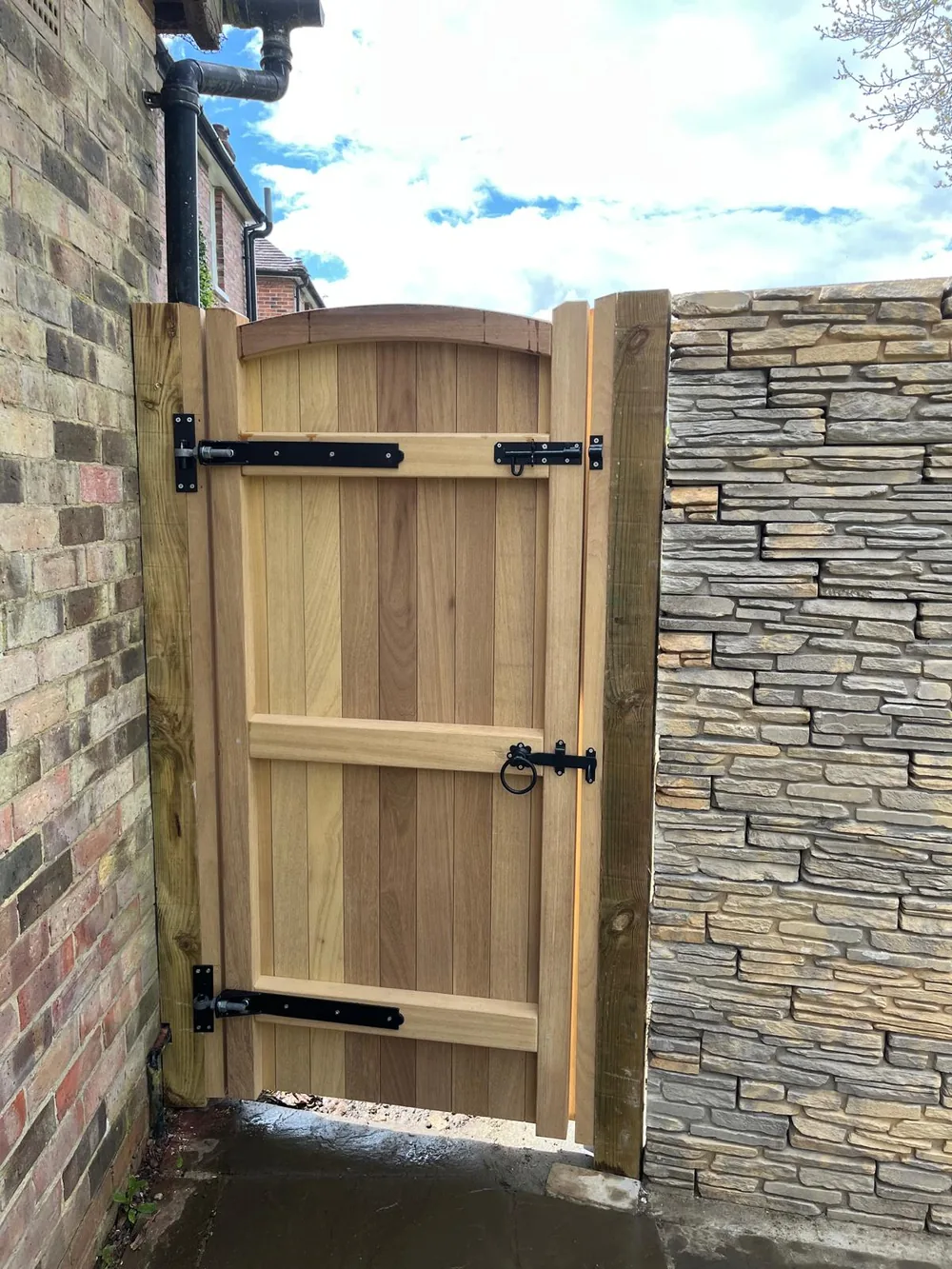
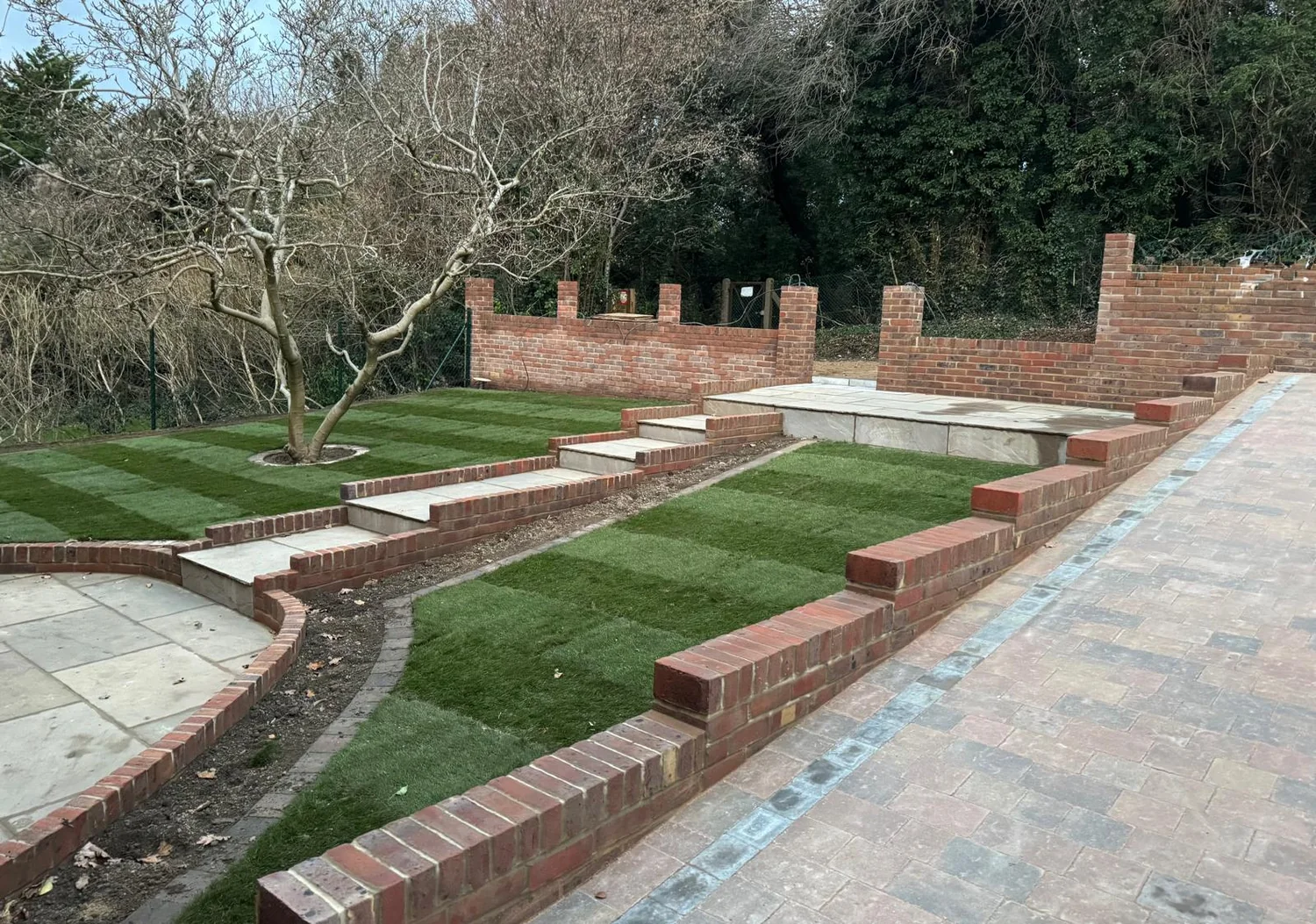
- Brick piers, gates and garden walls, plus fencing and artificial lawn on a stone base laid to a fall.
- Driveway repairs and full relays where the original was laid too thin on chalk.
Access, levels and permissions
The Verge Is the Hard Part, Not the Slope.
Banstead is high but not steep. The built up area runs at roughly 125 metres falling to about 100 metres, so most frontages are gently sloping rather than terraced, and the sharpest level change through the town is artificial: the railway running in a relatively deep cutting. The ground falls away more decisively off the edges of the town, north across Banstead Downs and south east into the Chipstead valley. Access for a grab lorry is generally good, with the A217 bypassing the town to the west and the A2022 running north of the centre.
The crossover itself is a Surrey County Council licence, and only a contractor on the county's approved list is allowed to build it. Surrey wants either an approved planning application or written confirmation from Reigate and Banstead that permission is not needed. The county charges a non refundable 383 pounds at stage one, puts average build costs at around 1,800 pounds, and issues the licence for six months. In Nork and much of interwar Banstead that crossover has to cross a grass verge with street trees, so verge reinstatement and root protection are part of the job rather than an afterthought.
- Surfacing: the national guidance leaves a permeable drive alone at any size, and brings permission into it for an impermeable one over five square metres that sheds straight onto the road.
- Conservation area: Park Road and Mint Road, Banstead, where Article 4 controls on external changes are likely to apply.
- Banstead Downs, a Site of Special Scientific Interest of about 430 acres, sits off the northern edge, with Metropolitan Green Belt wrapping the rest of the built up area.
Villages and neighbourhoods
Where We Work Around Banstead
We cover SM7 and the villages and estates around it, from Nork and Woodmansterne to Burgh Heath, Tadworth, Kingswood and Lower Kingswood.
Our work
Drives, Gardens and Garden Rooms
Questions
Banstead Questions We Get Asked
Why does the digging cost more in Banstead than down in the valley?
Because of what comes out of the hole. Under the topsoil most of Banstead is flint and chalk, and the flint arrives cobble sized, hard and abrasive. It slows the machine, wears the teeth and has to be carted away rather than used as fill. The quote should say so up front.
Can you lay a driveway in winter on chalk?
Yes, with the right method. Chalk is good bearing ground while it is dry and intact, but worked wet or trafficked in the rain it goes to slurry for good. So we open the ground in manageable lengths, keep plant off the formation, and get the capping stone in the same day.
We have a grass verge and a street tree outside. Can we still get a dropped kerb?
Usually yes, and it is common in Nork. The licence comes from Surrey County Council and only their approved contractors may work in the highway. The verge crossing has to carry a car without rutting, and tree roots have to be protected, which sometimes means hand digging rather than cutting.
Will a soakaway work on my plot?
It depends whether the clay with flints cap sits over the chalk under your garden. Where it does, the ground behaves like clay and infiltration can fail even though a plot two doors down drains freely. The cap does not follow street boundaries, so we dig a test pit and see.
Our Nork garden is huge. What is the base for a garden room like?
The same principles as a drive, worked to a building's tolerances. We dig out, sort the drainage so nothing sits against the structure, build a compacted stone base and lay a level slab to it. On clay with flints ground the drainage matters more than the concrete.
Do I need planning permission for a new front driveway in Banstead?
Usually not, provided it drains sensibly. The national guidance on paving a front garden treats gravel, permeable block paving and any surface that sends rainwater to a lawn or border as needing no permission at any size. Permission comes into it for an impermeable drive over five square metres that sheds straight onto the road.
Is artificial grass a good idea on chalky ground?
It works well here, because a thin, flinty lawn over chalk is hard to keep looking good through a dry summer. It has to be built like a paving job though: dig out, a compacted stone base laid to a fall, a membrane, and edges fixed so it cannot creep.
Get a quote
Planning an Outdoor Project in Banstead?
We will dig a test pit if the ground is in question, look at the verge and the levels, and give you a free written quote with the whole build up in it.
- Free, no-obligation quotationsIn writing, with the build-up and the drainage set out.
- 27 years in the tradeMarshalls Register accredited, Bradstone Assured.
- Fully insuredDomestic and commercial work across Surrey.
Arrange a free site visit
Tell us a little about the project and we will come out, look at the ground and put a written quotation together.
Where we work
Paving, Landscaping & Outdoor Construction Across Surrey
Based in Caterham, we undertake projects throughout Surrey and selected areas of Kent and West Sussex. For larger or more comprehensive projects, we are happy to consider work further afield.