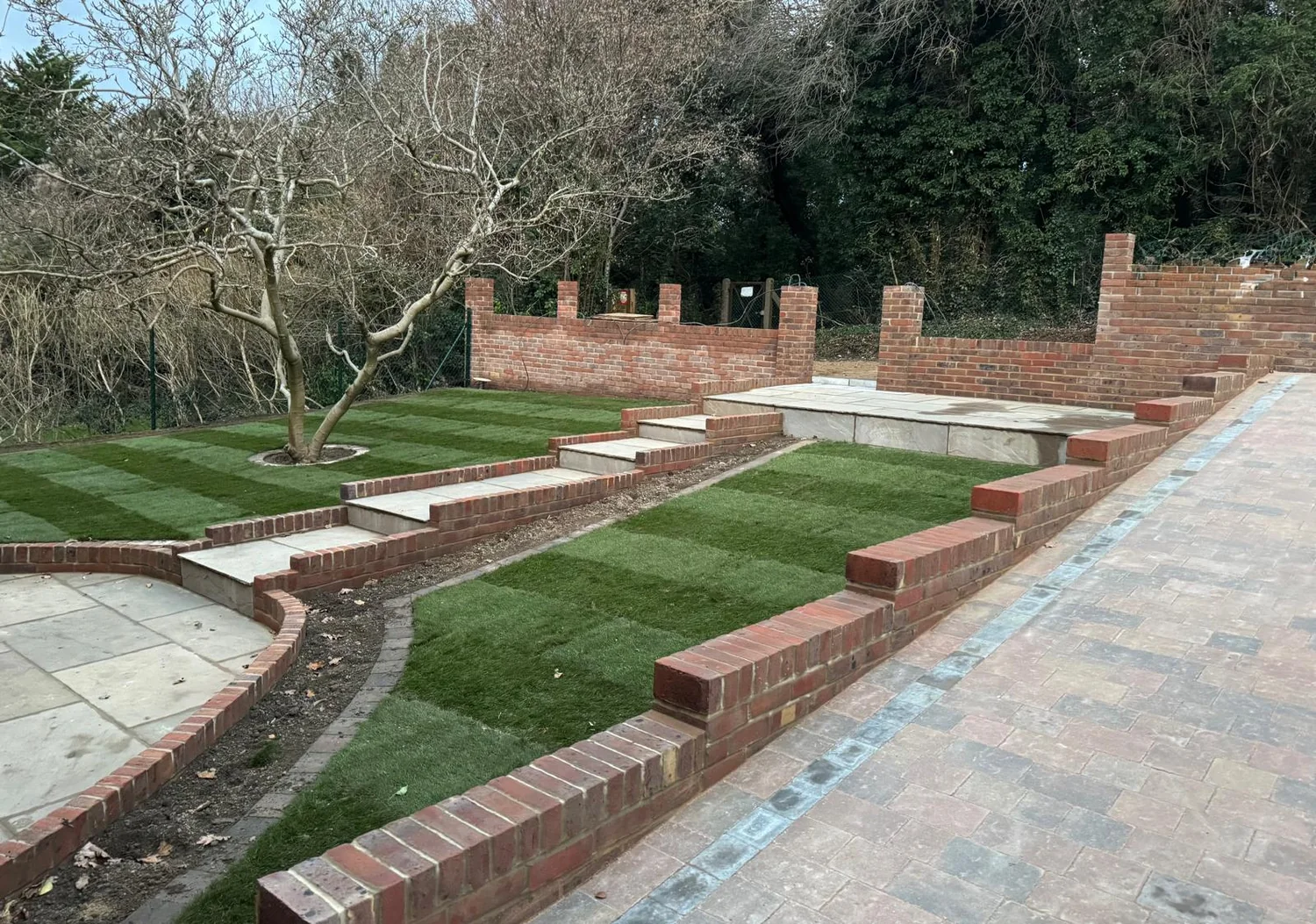
Marshalls Drivesett Tegula
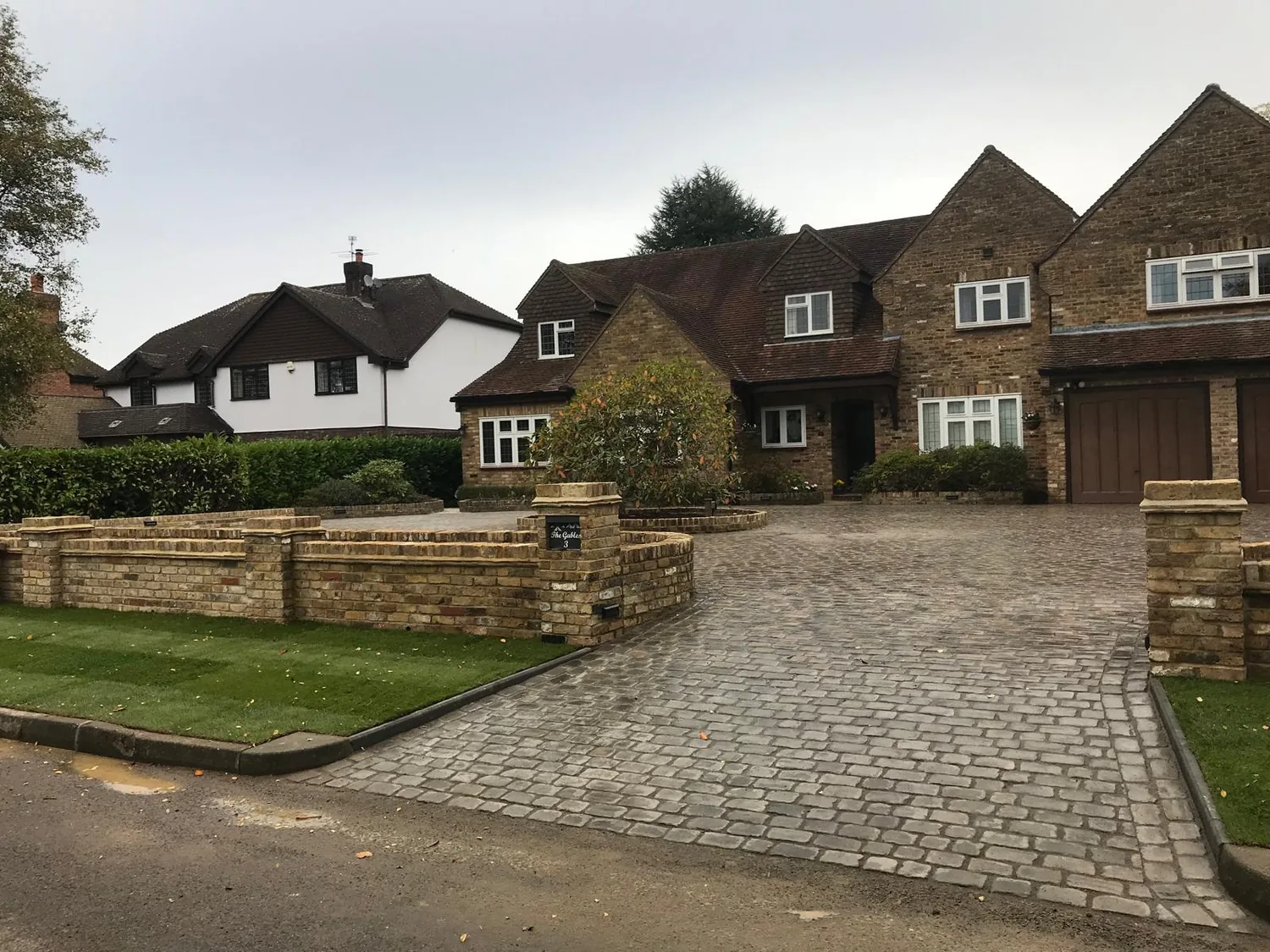
Tumbled concrete blocks with a worn look and a soft edge. The one most people picture when they think of a traditional drive, and it sits well against older brick and flint houses around Caterham and the North Downs.

 CROCKETT & CROCKETTPAVING LTD
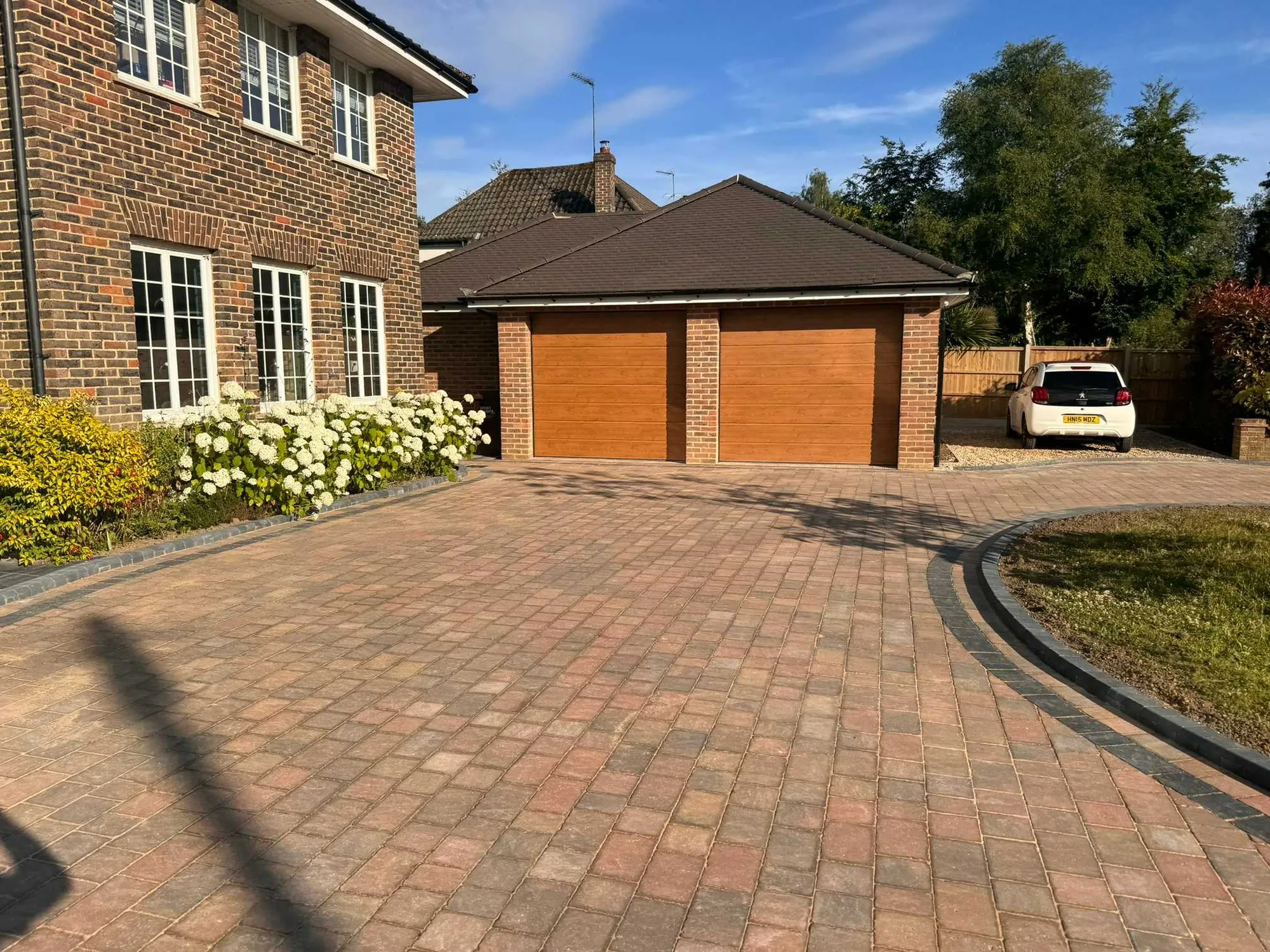
Block paving driveways
Block paving offers exceptional flexibility in colour, texture, pattern and design, making it suitable for both traditional and contemporary properties.
Our approach
We install carefully selected paving from established manufacturers, creating driveways that complement the property while providing the strength and durability required for everyday use.
A successful block paved driveway relies on the construction beneath it. From excavation and compaction to edge restraints, laying course, levels and drainage, each stage is completed with long-term performance in mind.
Construction depths and specifications are determined by the individual site, ground conditions, intended loading, drainage requirements and chosen paving system.
Laying patterns
Scroll, and the drive re-lays itself a pattern at a time. Or press one.
Herringbone 45°The strongest pattern there is for a drive. Every block is locked on four sides by its neighbours, so a turning wheel cannot walk a block out of line.
Herringbone 90°The same interlock, squared up to the house. Slightly easier on the cutting at the edges, and it reads calmer on a straight frontage.
Stretcher bondBlocks laid in offset rows like a brick wall. Quick to lay and quiet to look at. Fine for a path or a patio; on a drive we only use it with a firm edge restraint on every side.
BasketweavePairs of blocks turned against each other. A traditional look that suits a period house, and best kept to areas that do not take a turning car.
The base
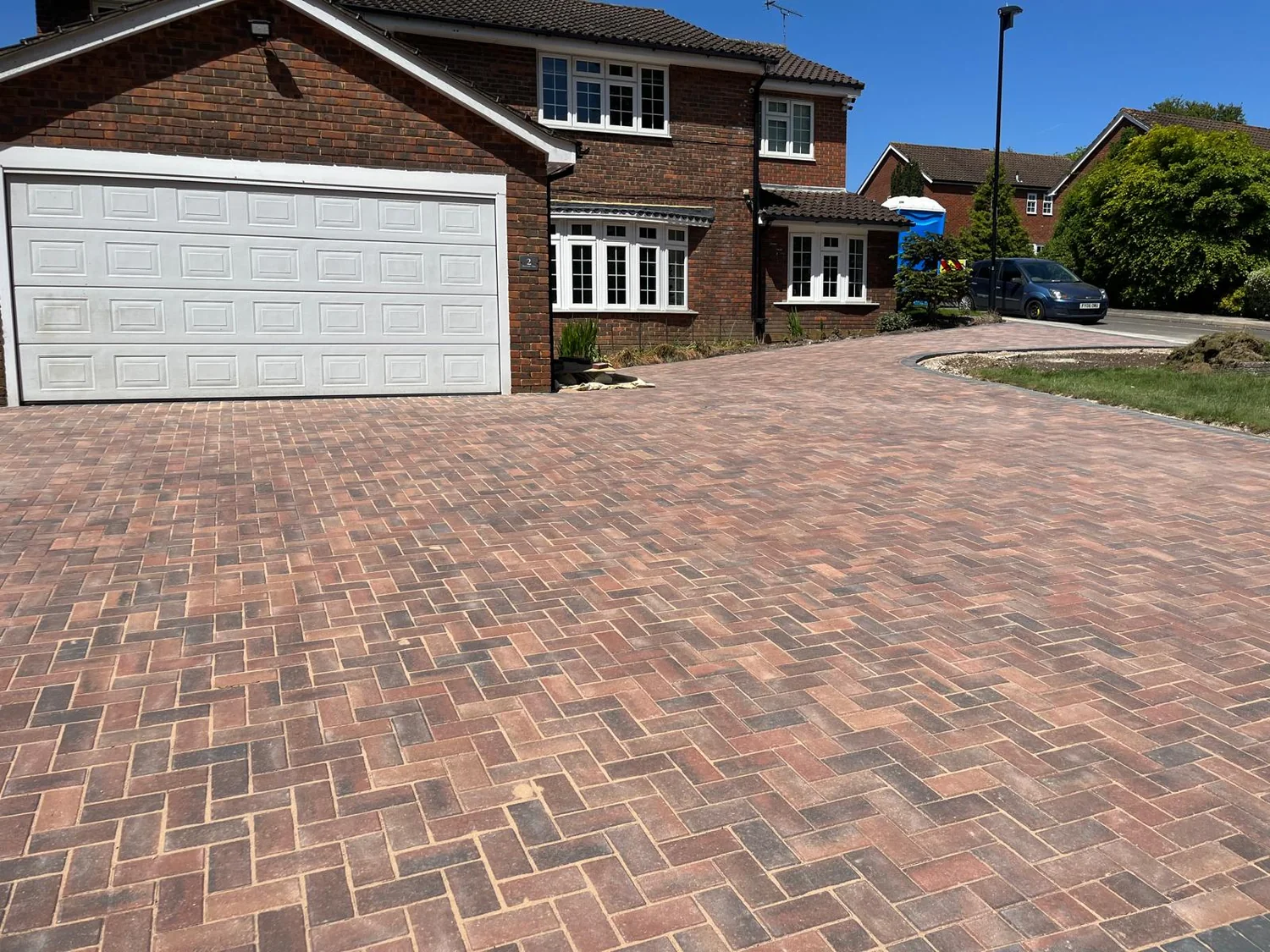
Under the blocks sits a 50mm laying course of sharp sand, and under that the sub-base of compacted MOT Type 1. On sound ground carrying nothing heavier than a family car, 150mm of compacted Type 1 is the usual figure. Add clay, a slope, or a van that parks on it every night, and we build to 200mm or more, in layers of around 75mm with each one rolled.
The difference is not simply 50mm of stone. It is how the load spreads. A wheel pushes its weight through the blocks into the base, and the thicker and better compacted that base is, the wider the load has spread by the time it reaches soft ground below. A thin base concentrates it, the ground gives, and you get the dip in the wheel track. Construction depths and specifications are determined by the individual site, ground conditions, intended loading, drainage requirements and chosen paving system.
Laying patterns
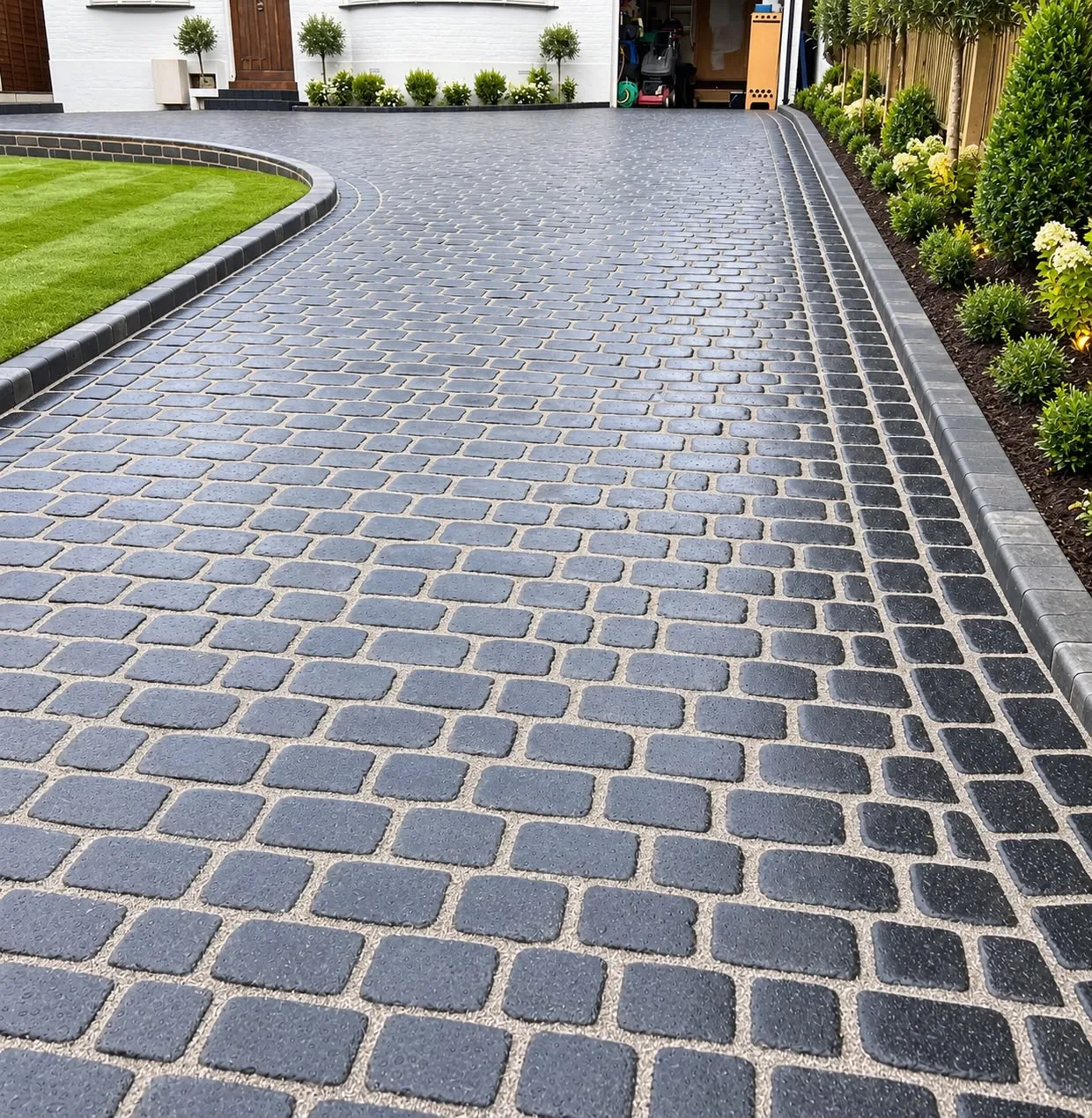
Herringbone is the strongest pattern under a car because no joint runs continuously in the direction of travel. Every block is keyed into its neighbours, so braking and turning forces get shared across the blocks either side instead of shoving a whole line along. Laid at 45 degrees to the traffic it is stronger again, and the diagonal cuts along the edges are what a properly laid drive looks like.
Herringbone at 90 degrees is the straight version, sensible on narrow drives and simple shapes. Stretcher bond, blocks laid like brickwork, suits paths and borders, but its continuous joints make it weak under a wheel. Basketweave is a courtyard and patio pattern, handsome in a small area, not one to put under a car turning on full lock.
Round the perimeter, and around manholes and steps, we run a soldier course, a single row of blocks laid on edge. It frames the drive, it gives the diagonal cuts something clean to die into, and it takes the wear at the entrance.
Edges and joints
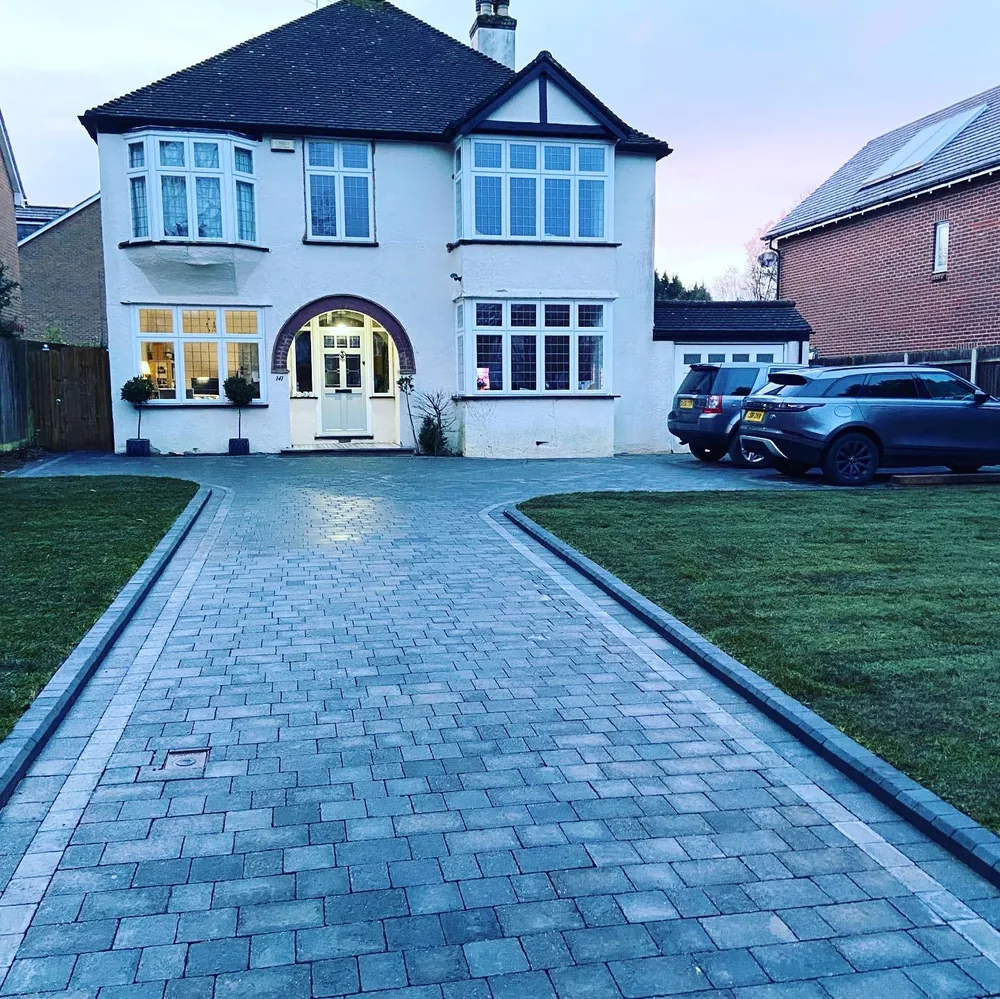
Every block drive pushes outwards. Cars turn, blocks lean on the blocks beside them, and all of that force ends up at the perimeter. The edging has to hold it, so we bed it on a concrete foundation and then haunch it, running concrete up the back of the edging to around two thirds of its height. Skip the haunching and the edge tips out over a winter or two, and then the whole drive has somewhere to go.
The last job is the sand. Kiln dried sand is brushed into every joint and vibrated in with a plate over a rubber mat, then topped up and vibrated again, because the first pass always drops. It settles further over the first year, so brush more in when the joints look low. Full joints keep the interlock working, and empty ones are how blocks start to rock.
Ranges we lay
Tumbled concrete blocks with a worn look and a soft edge. The one most people picture when they think of a traditional drive, and it sits well against older brick and flint houses around Caterham and the North Downs.
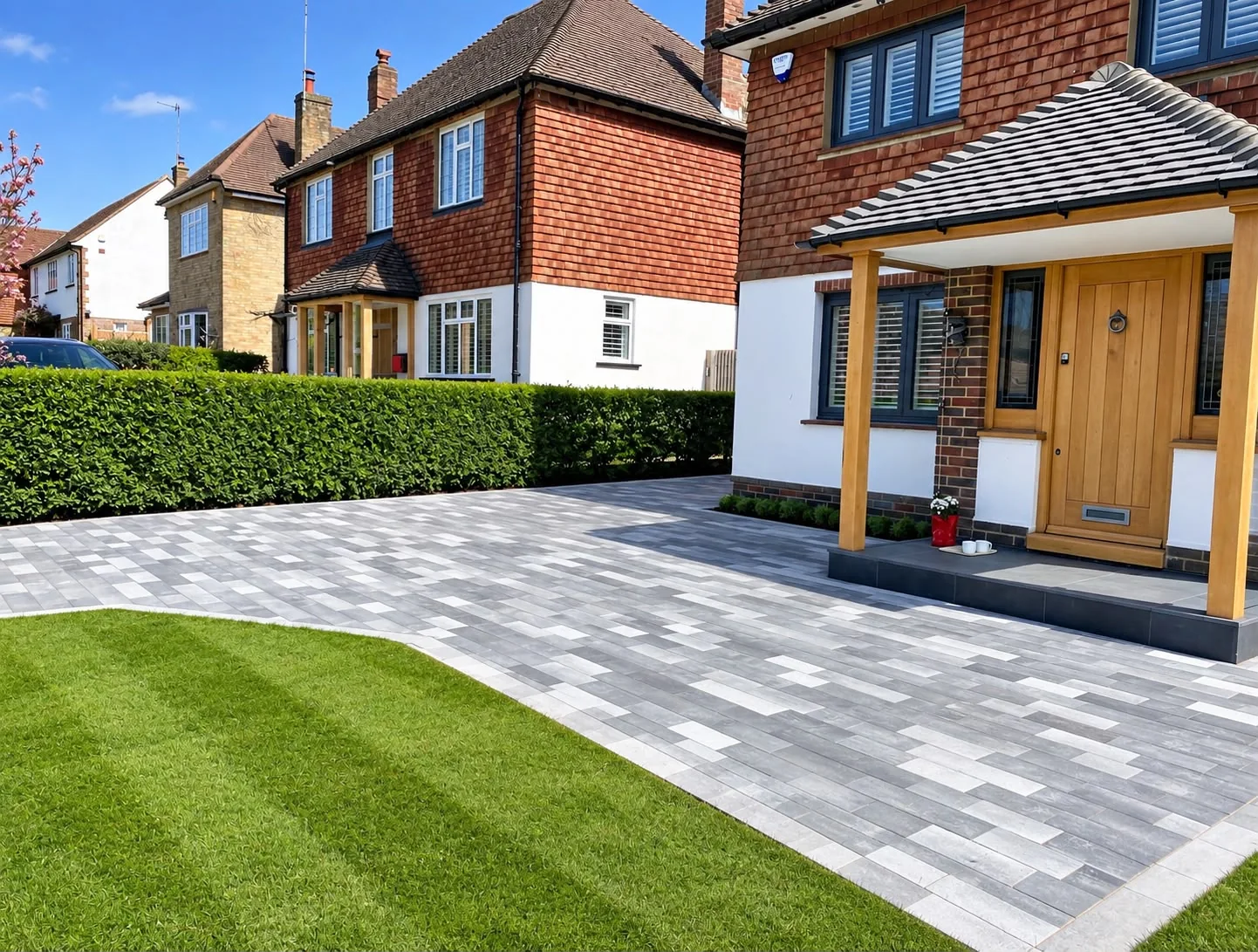
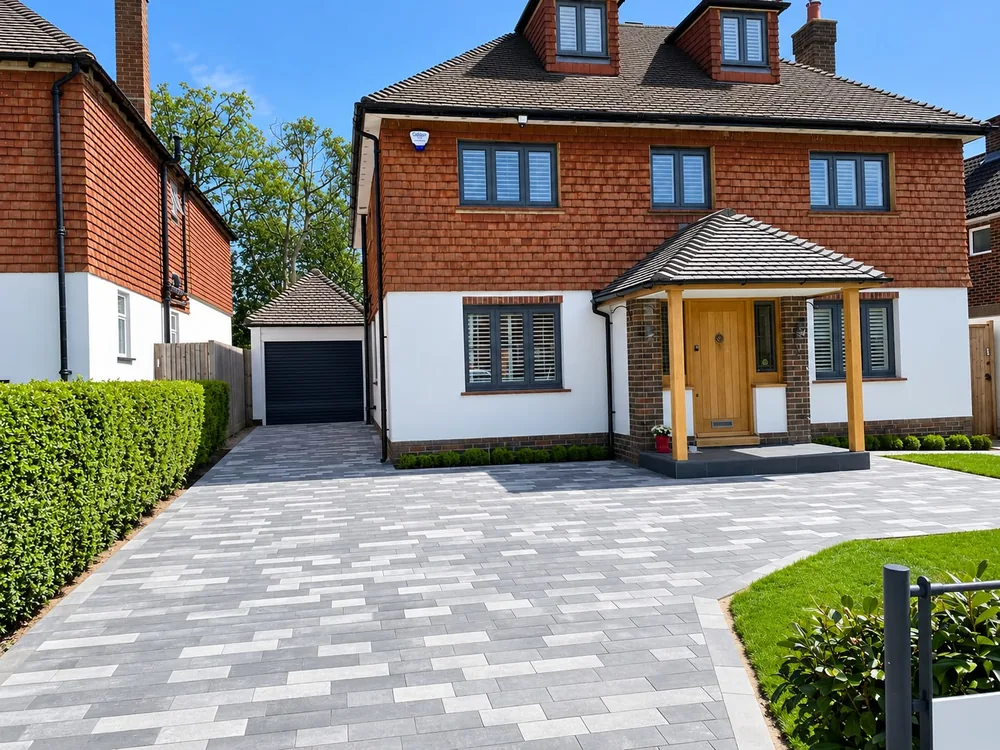
A clean, sharp edged block in light and dark greys with a granite texture. Suits newer houses and rendered elevations, and looks best laid in mixed sizes with a contrasting soldier course to frame it.
Large format and sawn edged, made for wider drives. Fewer joints across a big area gives a calmer surface, and it pairs with matching paving so the drive and the patio read as one piece of work.
Bradstone's tumbled block, rounded at the edges and sold in blends that weather in well. A good answer where a new drive has to run into existing paving or an older courtyard and not look new.
Small format setts for fans, circles, borders and the tight curves full size blocks cannot follow. We use them for detail work and thresholds as often as we lay them across a whole drive.
Blocks laid with wider joints filled with grit over an open graded stone base, so rain drains through the drive itself. The usual answer where there is no soakaway and nowhere obvious to send the run off.
Our work
Questions
150mm of compacted MOT Type 1 is the normal minimum for a car on sound ground, with a 50mm sharp sand laying course over it. On clay, on a slope, or where a van, motorhome or trailer parks, we build to 200mm or more. How it is compacted counts as much as the depth. Stone tipped in one lift and rolled once never reaches the strength of the same stone laid in layers. Construction depths and specifications are determined by the individual site, ground conditions, intended loading, drainage requirements and chosen paving system.
Herringbone, laid at 45 degrees to the direction cars travel. No joint runs the length of the drive, so braking and turning forces spread into the blocks either side rather than pushing a whole row along. Herringbone at 90 degrees is close behind and suits narrow drives. Stretcher bond and basketweave are fine for paths and patios, but their continuous joints make them a poor choice under wheels.
Kiln dried sand settles as a new drive beds in, and heavy rain, pressure washing and brushing all take some out. It is normal in the first year and worth topping up once or twice. Empty joints are not just cosmetic. The sand carries load from one block to the next, so once the joints run low the blocks work loose and the interlock goes.
No, it is optional. A sealer makes oil and leaf stains easier to lift, helps hold the joint sand and deepens the colour, and it needs redoing every few years. An unsealed drive is perfectly sound, it just weathers more openly. If you do seal it, the drive has to be clean, dry and fully re-sanded first.
Usually yes, and it is the main advantage block paving has over a poured surface. We lift the affected blocks, dig down to find why it dropped, put the base and laying course right, then relay the same blocks. Because nothing is glued down, a good repair does not show. If the same dip keeps coming back, the base under that whole area is the problem.
A drive on a properly dug and compacted base, with haunched edges and full joints, should still be sitting flat decades later with nothing more than sweeping, the odd wash and topping the sand up. What shortens that life is almost never the blocks themselves. It is a shallow base, an edge that was never haunched, or water with nowhere to go.
Not from underneath, if it was built properly. The membrane and the compacted stone below leave nothing for a root to get into. What you get instead is windblown seed germinating in the joint sand, which is why weeds turn up along edges and in corners where leaves and grit collect. Keep the joints full and sweep it.
Get a quote
Get the base, the edges and the joints right and a block drive stays tight for decades. Get any one of the three wrong and no block on the market will save it.
Arrange a free site visit
Tell us a little about the project and we will come out, look at the ground and put a written quotation together.
Where we work
Based in Caterham, we undertake projects throughout Surrey and selected areas of Kent and West Sussex. For larger or more comprehensive projects, we are happy to consider work further afield.