

East Grinstead, RH19
Driveways and Patios in East GrinsteadBuilt for the Bed of Rock the Front Garden Sits On
The old town runs along a ridge of hard sandstone. Step off that ridge and the ground turns to mudstone that holds water all winter. We dig accordingly.
Working across RH19
East Grinstead Is Not One Job, It Is Four and the Difference Is Under the Surface, Not on the Drawing
Two houses on opposite sides of London Road can need a different build under the same block paving. The town sits on the Hastings Beds and the bedrock changes over very short distances, so the depth of the dig, the thickness of the sub-base and where the water ends up all move with it.
We are a family-run company based at Caterham with 27 years in the trade, with our own team. The dig, the drainage, the base, the edging and the laying are all delivered and managed by Crockett & Crockett, and every member of the team is trained in health and safety.
Most of our work here is in the streets that grew out from the medieval core: the Victorian frontages near Portland Road and Cantelupe Road, the 1930s stretch of London Road, and the later housing on the slopes at Sunnyside, Imberhorne, Baldwins Hill and Estcots. We go out to Ashurst Wood, Saint Hill Green, Felcourt and Dormans Park as well.
Domestic and commercial. Fully insured, insurance work undertaken, free written quotes, and 10 out of 10 on Checkatrade.
The ground
Hastings Beds, and They Change Street by Street Sandstone on the Ridge, Mudstone on Either Side of It
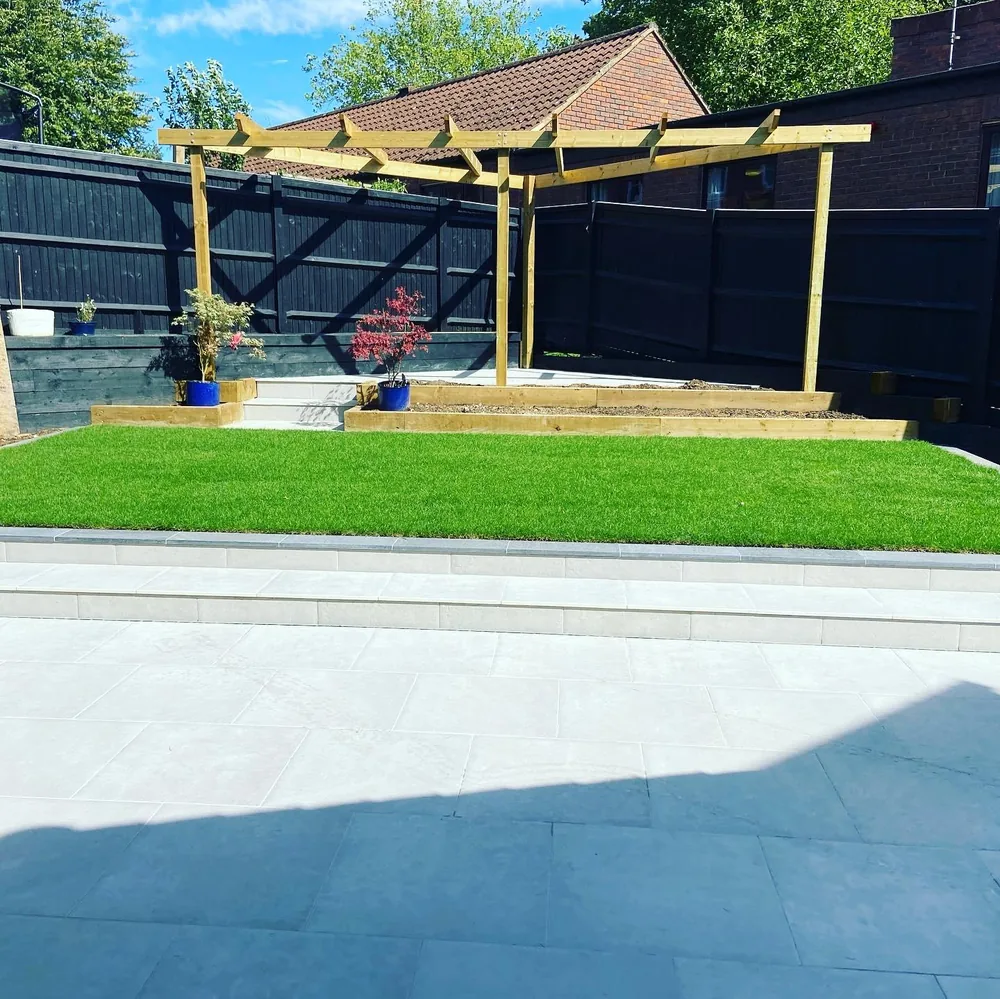
British Geological Survey mapping puts hard Ardingly Sandstone under the High Street, Grinstead Clay mudstone immediately north along London Road, Upper Tunbridge Wells Sand out towards Imberhorne Lane, and Wadhurst Clay mudstone under Sunnyside and the Dunnings Road side. Mid Sussex District Council's conservation area appraisal has the historic core on a wide band of Ardingly sandstone above 130m, which is exactly what the mapping shows.
On the sandstone we can meet rock in the dig. That slows the excavation, but the reward is a firm formation and water that moves away on its own. On the mudstones it is the other way round: the ground holds water, softens through winter and moves with the seasons, so we dig deeper, keep the open formation off standing water, and take the drainage to a positive outlet rather than trusting a soakaway.
Because the beds are stacked in bands rather than scattered about, the change from one to the next can happen inside a single frontage. That is why we open a trial hole on anything we are not certain of. Half an hour with a spade tells us whether we are pricing rock, breaking out and muck away, or extra depth, a membrane and a drainage run. It is the difference between a written quote that holds and one that grows once the machine is on site.
No superficial deposits are mapped across the built up area, so at spade depth you meet weathered bedrock rather than river silt or made ground. That is worth knowing before anyone promises you a soakaway. Once we have established which bed your frontage sits on, the rest of the job becomes predictable.
- A trial hole before we price anything we are not certain of, because the bed can change within one frontage
- Deeper excavation, a separation membrane and a thicker sub-base on the Wadhurst and Grinstead mudstone streets
- Drainage taken to a positive outlet where a soakaway would only sit full from November onwards
- Rock in the dig on the sandstone allowed for in the written quote, not sprung on you in week two
The houses
A Medieval Core, Victorian Edges and Post-War Slopes Three Completely Different Frontage Problems in One Town
The High Street core is medieval and timber framed, built right up to the back of the pavement with no front boundary at all. Work in the centre is walls, courtyards, steps and rear service yards, because there is no frontage to park on and there never was.
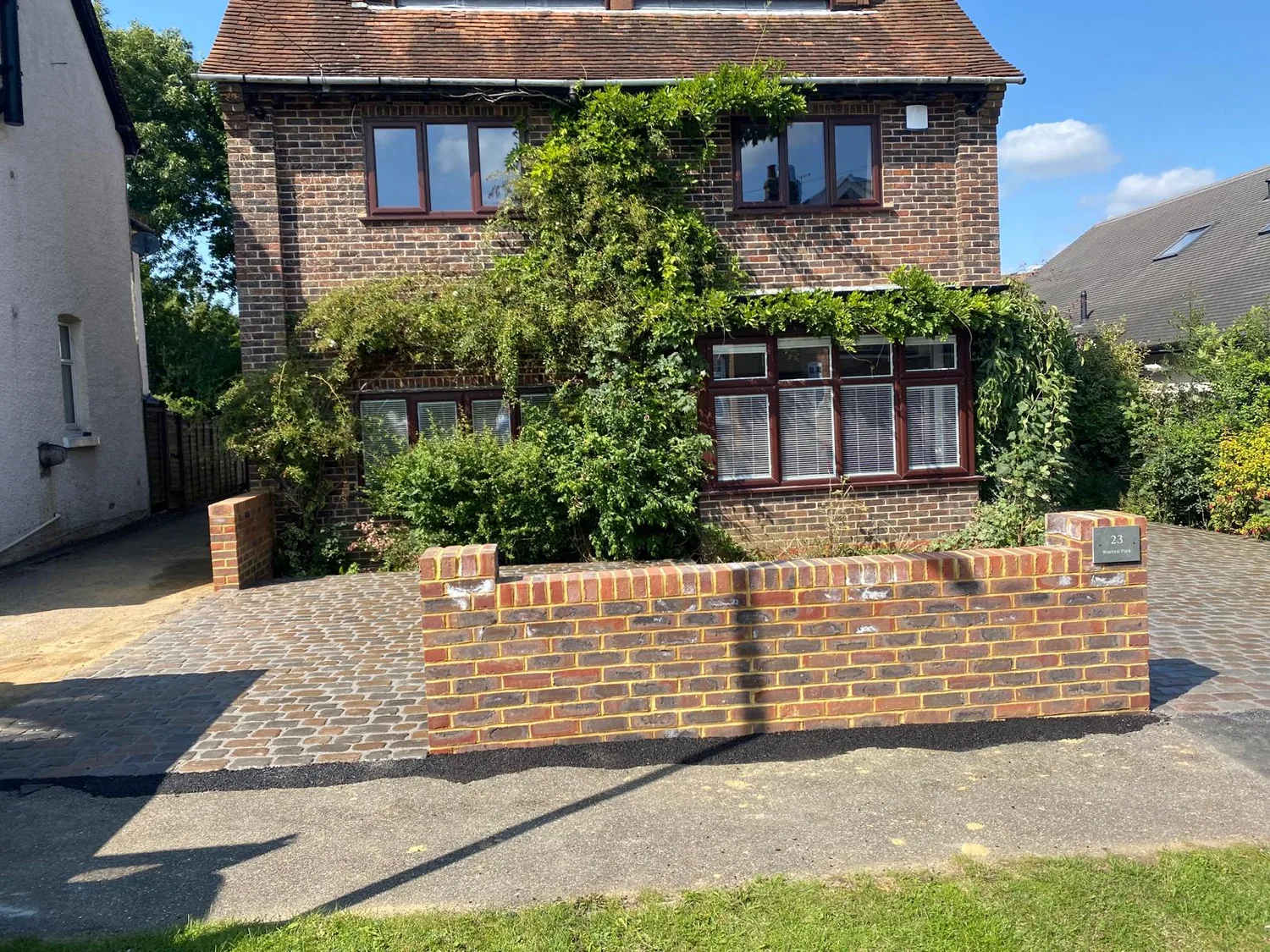
The railway arrived in 1855 and brought Victorian terraces and villas for London commuters around the edge of the old town. Portland Road, the lower part of Ship Street and Cantelupe Road did not exist before the 19th century, and those frontages are narrow with real on-street parking pressure. Getting one car off the road cleanly, squarely and without losing the front wall is often the whole brief.
London Road picked up 1930s building, the art deco Whitehall of 1936 among it. Local authority housing followed both wars, including the Orchard Way development of the late 1960s, and the population more than doubled in the second half of the 20th century, spreading predominantly low rise estates over the slopes surrounding the old town. Those outer plots around Blackwell, Herontye, Ashplats and Estcots are the ones with genuine room: a turning space, an in and out sweep, a garden room at the far end.
So the brief changes with the address. In the centre nobody is parking on a frontage that does not exist. Half a mile out, the question is how to get two cars off a road that was never laid out for them without turning the whole front garden into one flat sheet of paving.
- Narrow Victorian frontages near the centre where every 100mm of usable width counts
- Interwar and later plots on the outer slopes with room to turn a car round
- No front boundary at all in the historic core, so the work there is walling and courtyards
- Low density plots in woodland at Dormans Park and Felcourt, over the county line in Surrey
What we do here
The Jobs That Come up Most in East Grinstead and How the Ground and the Frontage Decide the Build
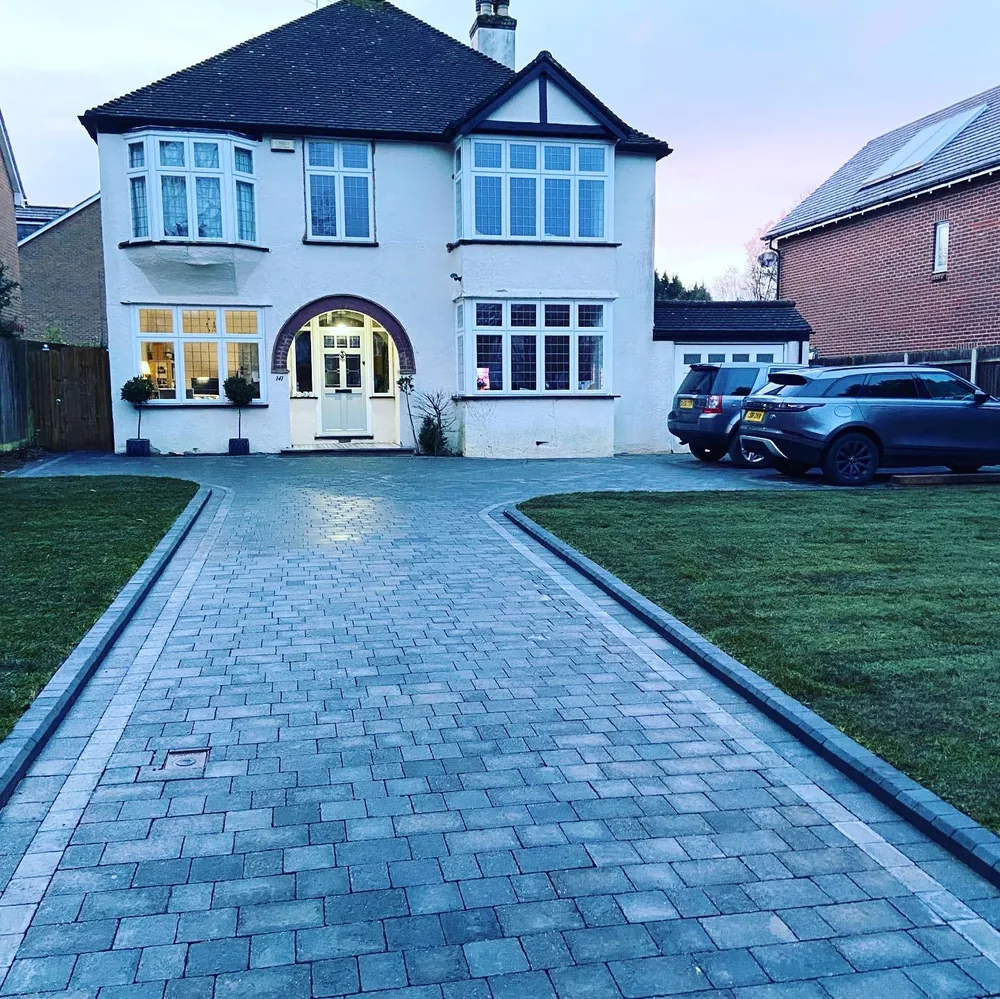
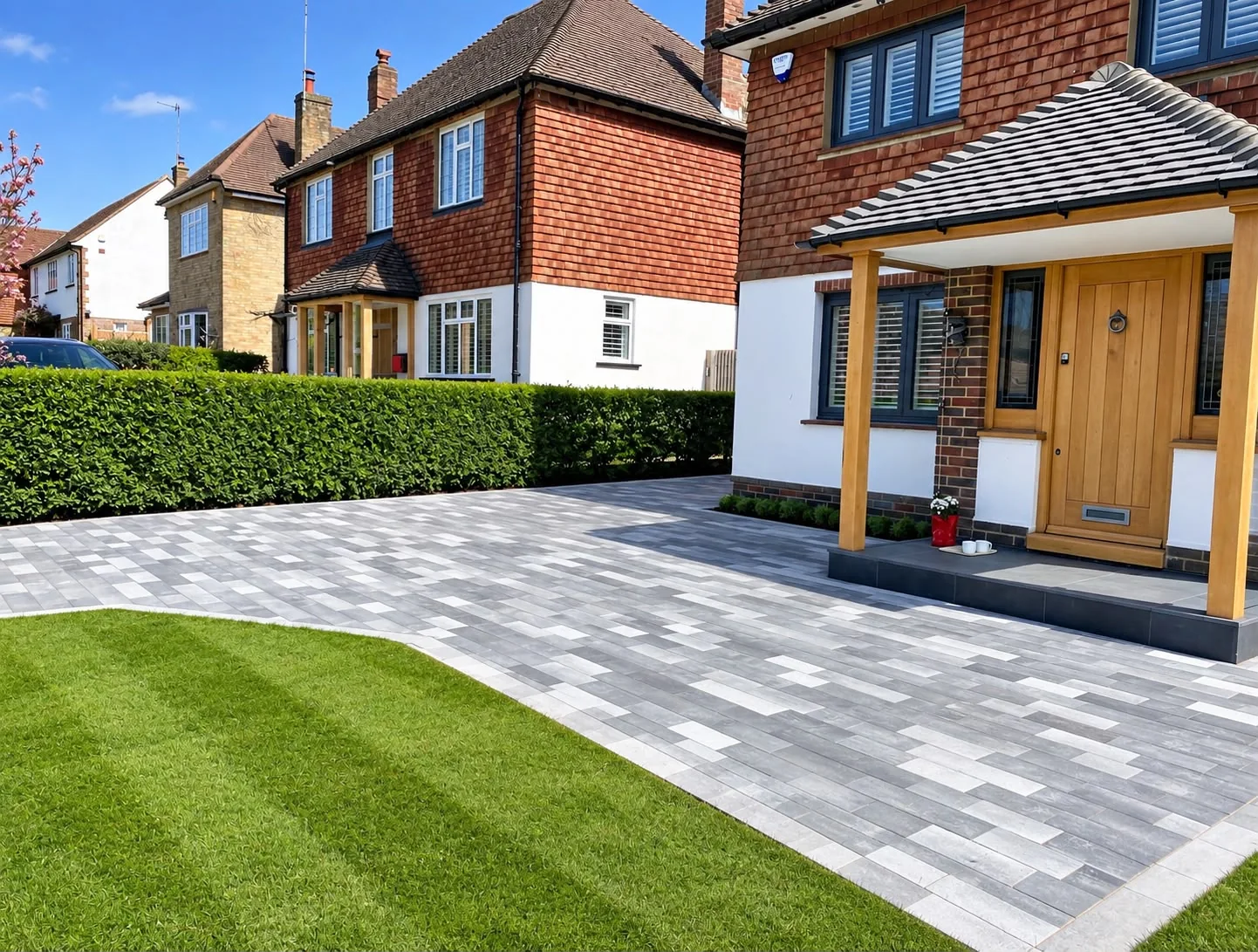
Block paving is the bulk of it. On the mudstone side of town that means a deeper excavation, a sub-base compacted in layers and a drainage run that goes somewhere, because a block drive built over soft wet formation settles into wheel tracks. On the sandstone we are fighting the dig instead, and the money moves from drainage to breaking out and carting away.
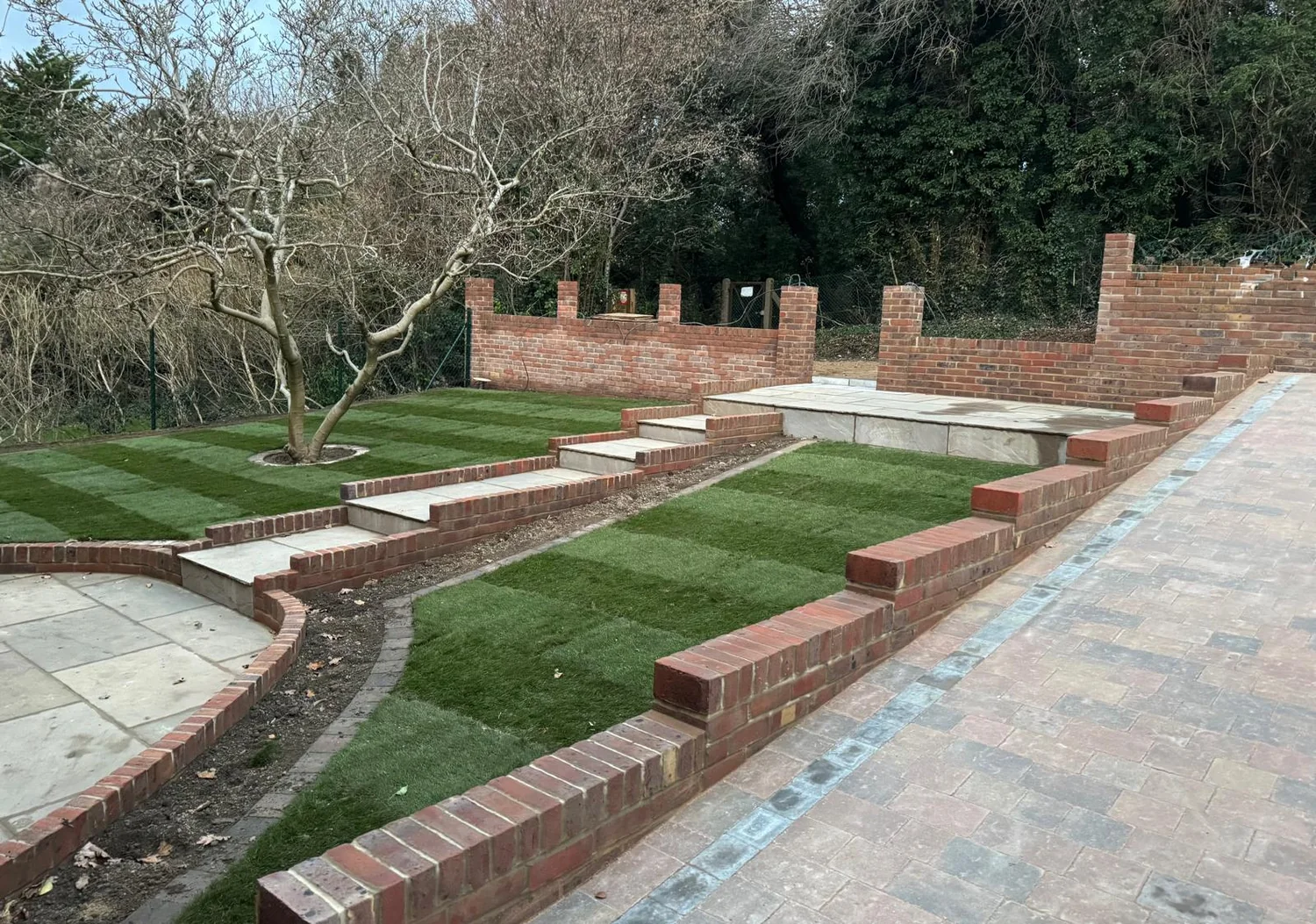
Patios come second, and on a plot that falls away the levels matter more than the slab. We set the falls away from the house, hold the edges properly and step the terrace down where the garden wants to drop rather than piling up a single raised platform.
Garden rooms suit the deeper plots on the outer estates, where there is length behind the house to put one at the far end. We build the base, drain around it and put in the ground work for the power run, so the room lands on something square and dry and the path to it does not turn into a puddle in January.
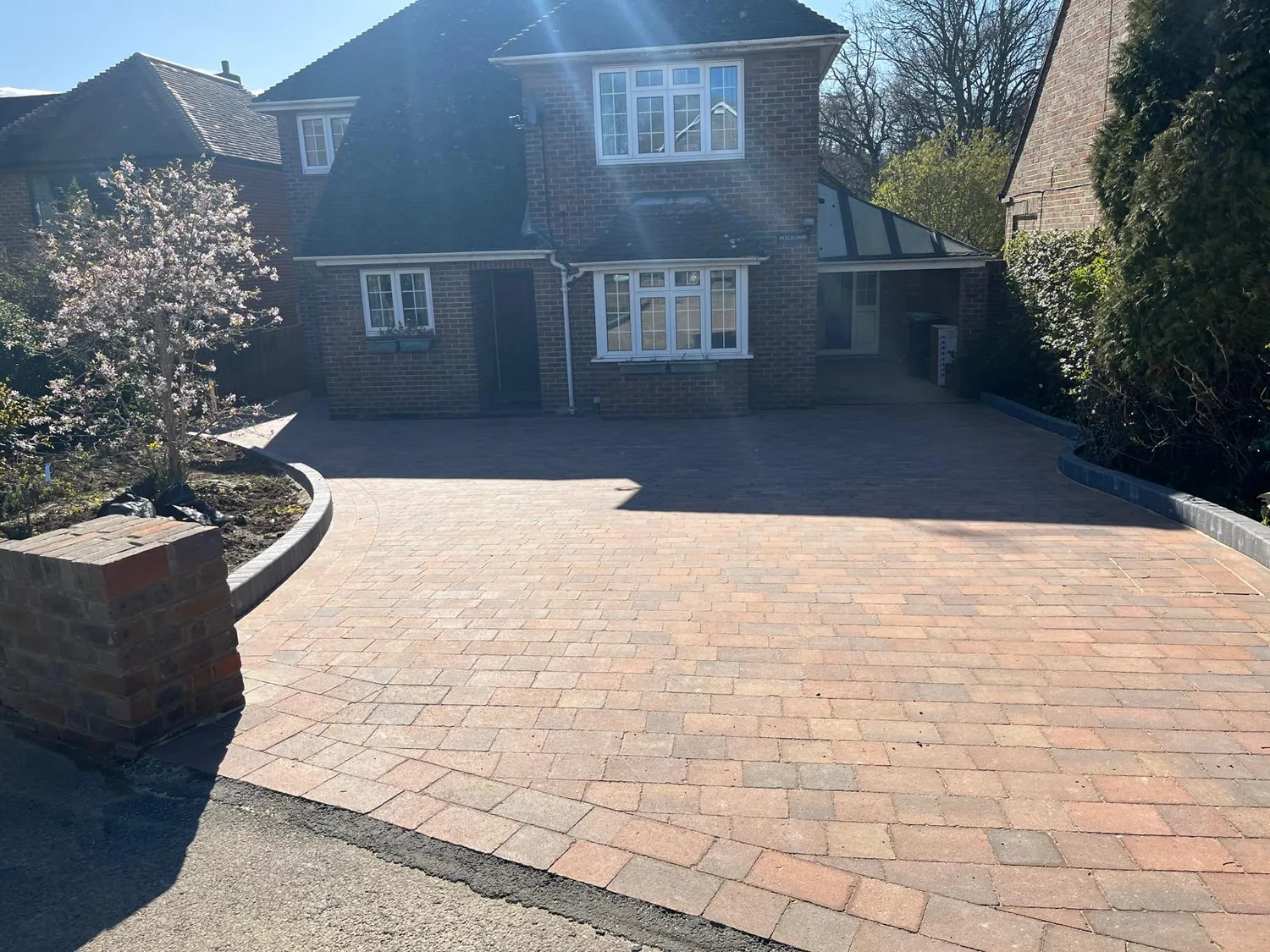
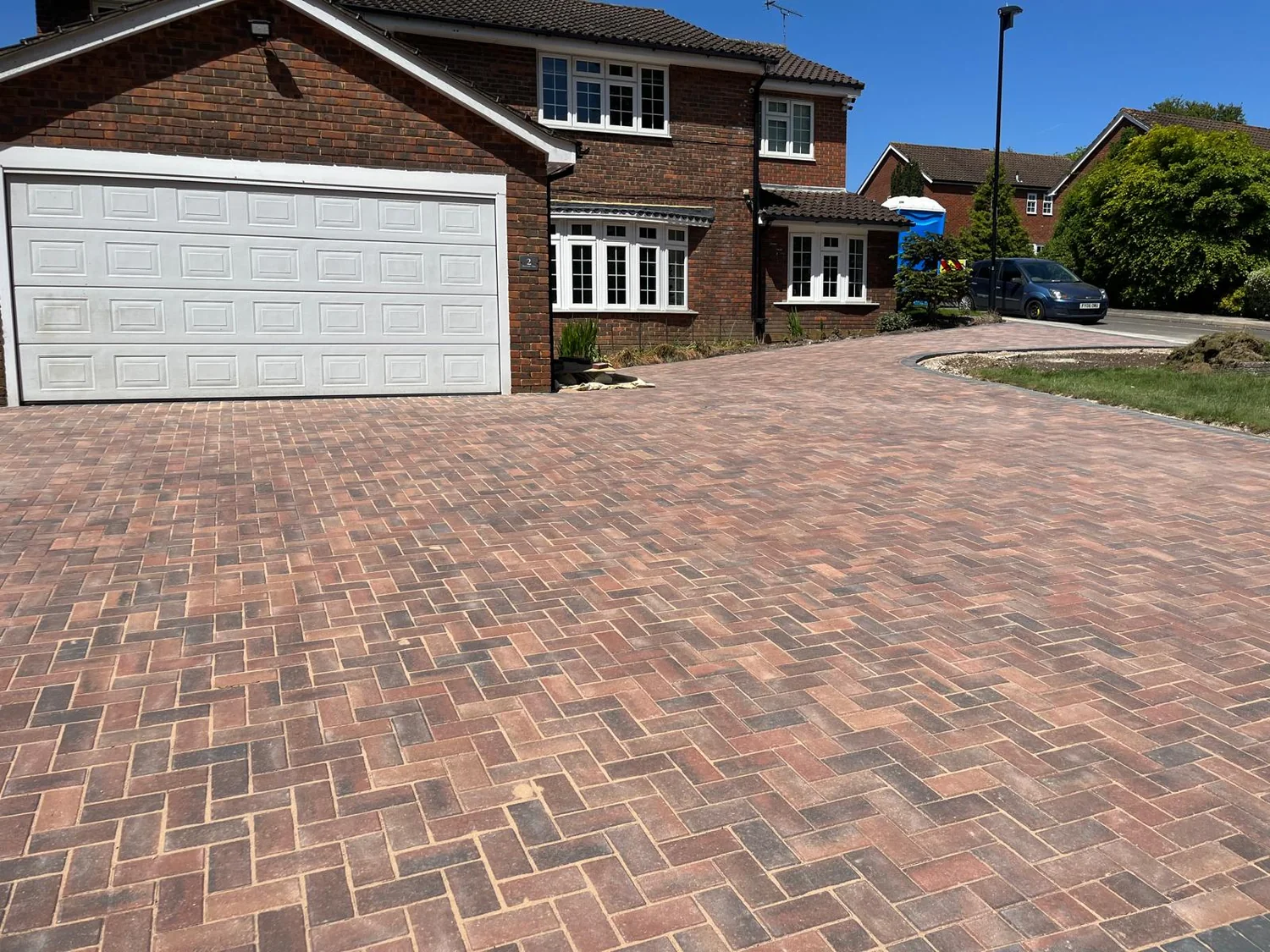
- Block paving driveways, dug, drained, based, edged and laid by our own team
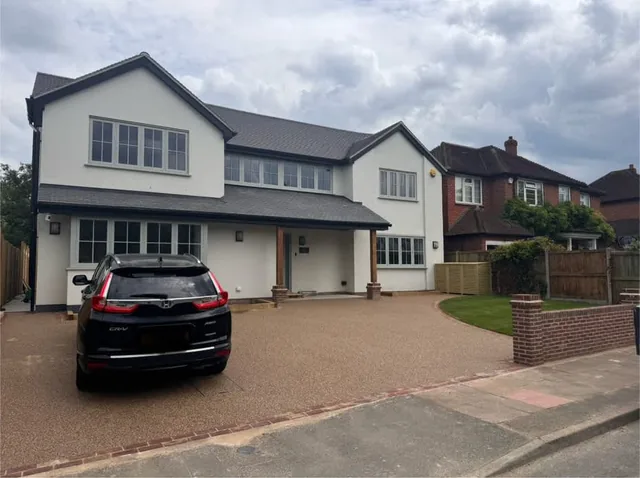
- Resin-bound, concrete and shingle drives where a free draining finish suits the frontage
- Porcelain and natural stone patios, with the levels set to move water away from the house
- Garden room bases, drainage and the ground work for the power run
- Retaining walls, steps and brick piers on the sloping plots off Portland Road
Levels, access and permissions
Mid Sussex for the Planning, West Sussex for the Kerb and a Ridge That Drops Away Behind the High Street
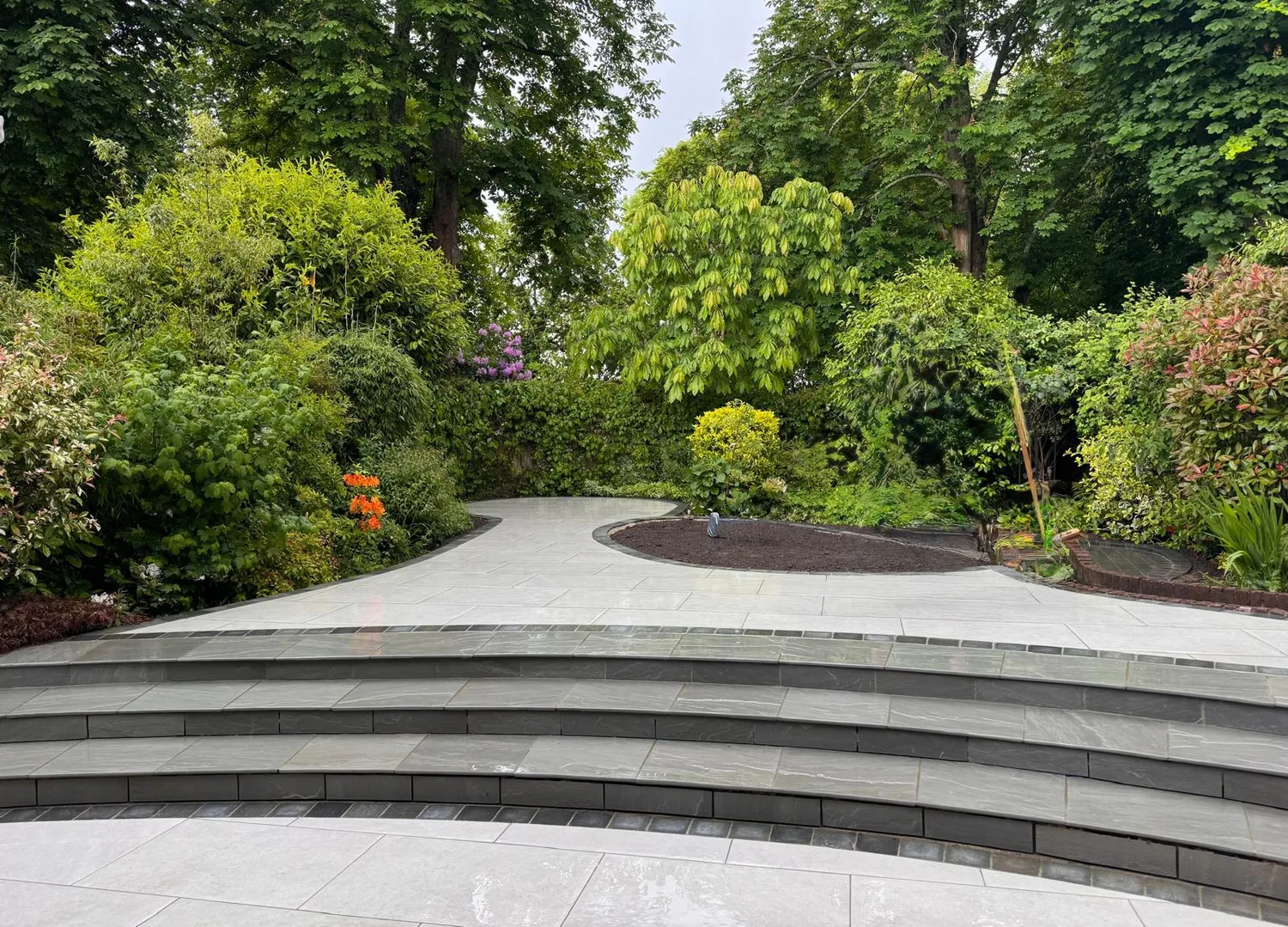
The early town was laid out on a flat topped ridge running from Ashurst Wood in the south east to Imberhorne Lane in the west, with the churchyard and Sackville College on the crown of the hill. The core is comparatively level, but on the south side of the High Street the land falls away steeply east of Portland Road, and the later suburbs cover the slopes all round. On those frontages the questions are retaining, steps, where the spoil goes and a gradient still usable in ice.
Mid Sussex District Council is the planning authority and West Sussex County Council is the highway authority. West Sussex says it is the applicant's responsibility to consult the planning authority about whether approval is needed, and that the chosen contractor applies to the county for the licence to construct the crossover, gives notice of the start date and has a highway officer inspect during and after construction. We handle that part.
On hard surfacing, the Planning Portal position is that permission is not needed for a new or replacement driveway of any size in permeable or porous surfacing, or where rainwater is directed to a lawn or border to drain naturally. It says permission will be needed for traditional impermeable surfaces over five square metres that do not provide for water to run to a permeable area. Those rights apply to houses rather than flats or maisonettes, and can be removed by a planning condition or an Article 4 Direction, so it is worth a call to the council before you order anything.
The East Grinstead Conservation Area was appraised in 2019, with boundary changes confirmed on 1 November 2019. The council records sandstone paviours where the pavement widens by the western end of Middle Row and outside the Dorset Arms, and notes Horsham Stone, a flaggy fine grained sandstone from the Weald Clay, as the historic local material used for roofing and sometimes for paving.
- Mid Sussex District Council for planning, West Sussex County Council for the dropped kerb
- We apply for the crossover licence as your contractor and book the highway inspections
- Steep frontages east of Portland Road: retaining, steps and a gradient that works in frost
- Access checked before we start, so the grab lorry and the machine can get in and out
Villages and neighbourhoods
Around East Grinstead
We are out in RH19 most weeks. These are the parts of the town and the villages around it that we work in regularly, and Felcourt and Dormans Park sit over the county line in Surrey.
Our work
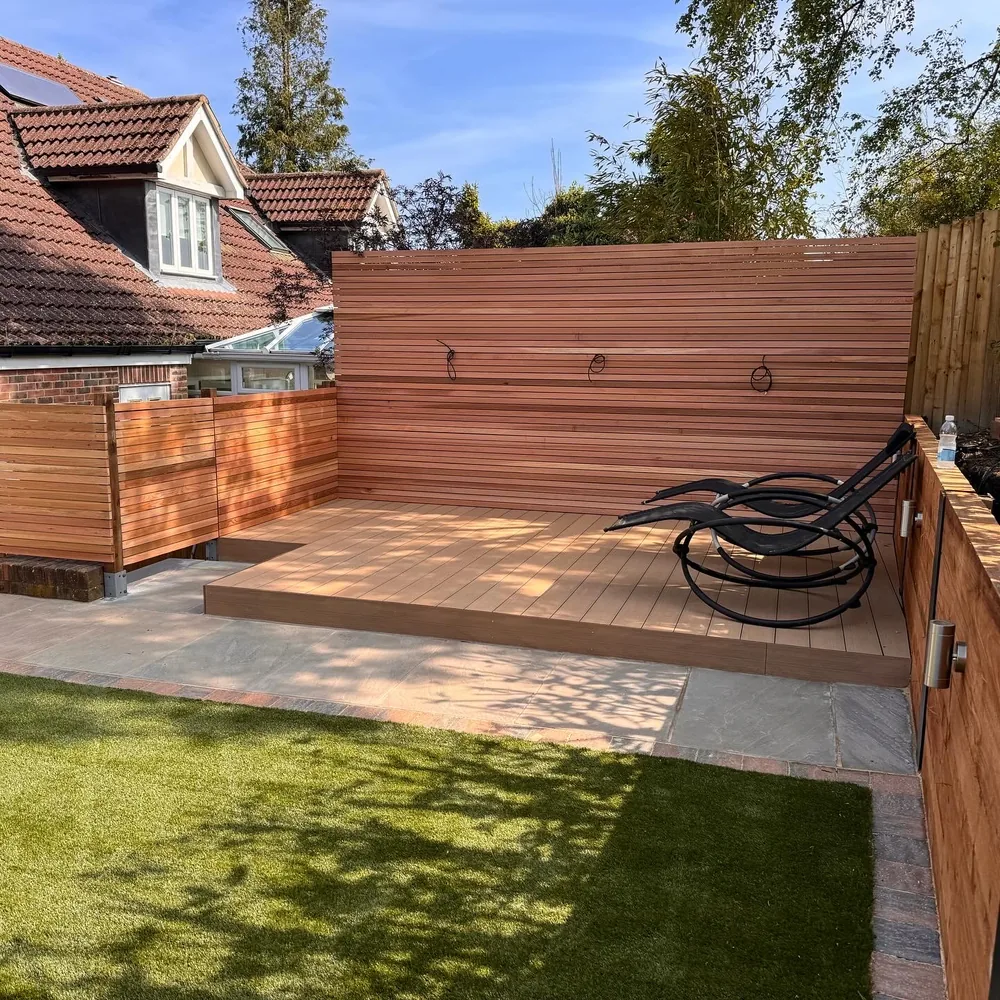
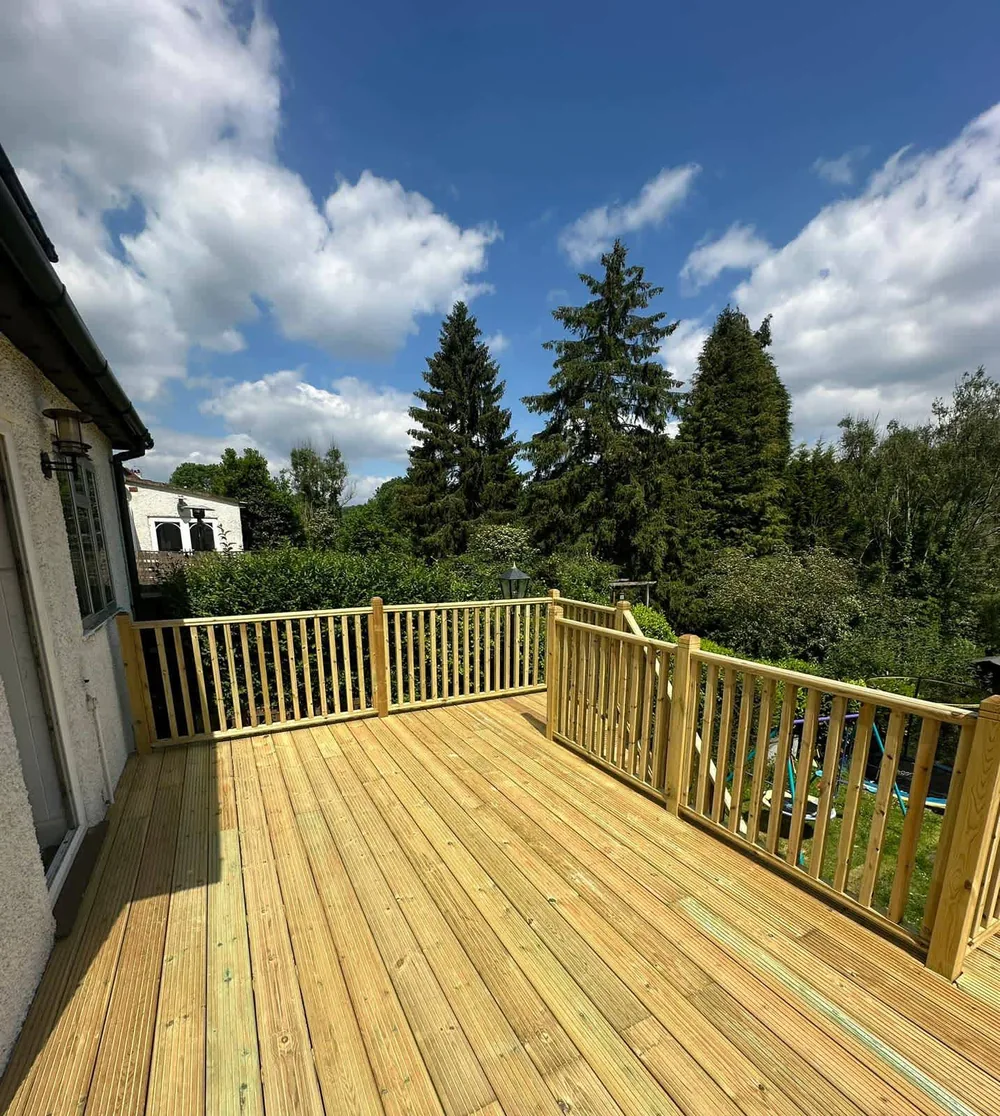
Recent Work of This Kind
Questions
East Grinstead Questions We Get Asked
Do I need planning permission for a driveway in East Grinstead?
Often not. The Planning Portal position is that no permission is needed for a new or replacement driveway of any size laid in permeable or porous surfacing, or where the rainwater runs off to a lawn or border to soak away naturally. It says permission will be needed for traditional impermeable surfaces over five square metres that do not drain to a permeable area. Mid Sussex District Council is the planning authority, and West Sussex says checking with them is the applicant's responsibility.
Who applies for the dropped kerb, me or you?
We do. West Sussex County Council is the highway authority for RH19, and its process is that the chosen contractor applies to the county for the licence to construct the crossover, notifies the county when the work will start, and has a highway officer inspect during and after construction. You are responsible for checking the planning side with Mid Sussex first. We will tell you what the county wants before you commit to anything.
Why does the ground vary so much across the town?
East Grinstead sits on the Hastings Beds, where hard sandstone and soft mudstone are stacked in bands and the town is built across all of them. Geological mapping shows Ardingly Sandstone under the High Street, Grinstead Clay north along London Road, Upper Tunbridge Wells Sand towards Imberhorne Lane and Wadhurst Clay under Sunnyside. Within a mile you can go from meeting rock in the dig to digging ground that turns to slurry if it is worked wet.
My house is on the Wadhurst Clay at Sunnyside. What do you do differently?
Three things. We dig deeper, because the sub-base has to carry the load rather than lean on a formation that softens every winter. We keep the open formation off standing water and lay a separation membrane so the sub-base does not work its way down into the clay. And we take the surface water to a positive outlet instead of a soakaway, because the clay will not move it away quickly enough through the wet months.
My front garden falls away steeply. What does that add?
On the slopes east of Portland Road and around the outer estates, the level work usually costs more than the surface. It means retaining where the ground steps down, steps set at a rise you can carry shopping up, a gradient gentle enough to stay usable in frost, and somewhere for the spoil to go when a lorry cannot get close to the house. We survey all of that before we price, not after.
Can you work in the conservation area?
Yes, and we keep it quiet and simple. The council's appraisal records sandstone paviours where the pavement widens by the western end of Middle Row and outside the Dorset Arms, and notes Horsham Stone as the historic local material. In the medieval core there is usually no front boundary and no room for a car anyway, so the work is walls, steps, courtyards and rear yards. Talk to Mid Sussex before ordering materials for a frontage inside the boundary.
Do you cover Ashurst Wood, Felcourt and Dormans Park?
Yes. Ashurst Wood is a separate civil parish south east of the town, on Lower Tunbridge Wells Sand. Felcourt and Dormans Park sit north of East Grinstead but over the county line in Surrey, in Tandridge district, with Dormans Park in the Green Belt. The planning authority and the highway authority both change even though the postcode is still RH19. We flag that at quotation stage rather than after you have applied to the wrong council.
Get a quote
Planning an Outdoor Project in East Grinstead?
Tell us the road and we will tell you what we expect to find under it. Free written quotes across East Grinstead, Ashurst Wood, Felcourt and Dormans Park.
- Free, no-obligation quotationsIn writing, with the build-up and the drainage set out.
- 27 years in the tradeMarshalls Register accredited, Bradstone Assured.
- Fully insuredDomestic and commercial work across Surrey.
Arrange a free site visit
Tell us a little about the project and we will come out, look at the ground and put a written quotation together.
Where we work
Paving, Landscaping & Outdoor Construction Across Surrey
Based in Caterham, we undertake projects throughout Surrey and selected areas of Kent and West Sussex. For larger or more comprehensive projects, we are happy to consider work further afield.