

Limpsfield, RH8
Driveways, Patios and Walls in LimpsfieldSand, Ironstone and a Village Built on a Slope
Limpsfield sits on Folkestone Formation sand and ironstone, and the ground drops hard to the north. Both of those decide how a drive or a terrace has to be built.
Working in Limpsfield and the Chart
A Village Where the Materials Are Already Decided by the Ground and by the Buildings
We are based on Stafford Road in Caterham, so Limpsfield is a few minutes down the A25. Crockett & Crockett is a family-run company led by Oli Crockett, 27 years in the trade, with our own experienced team. The whole team is trained in health and safety, and there is clear responsibility for your job from start to finish.
This is not a village where you arrive with a pallet of whatever is on offer. The council's own appraisal is specific about what the ground and the buildings are made of: sands, weakly cemented sandstone and ironstone, with ironstone used here for both buildings and paving. Choose the wrong material and the work looks imported.
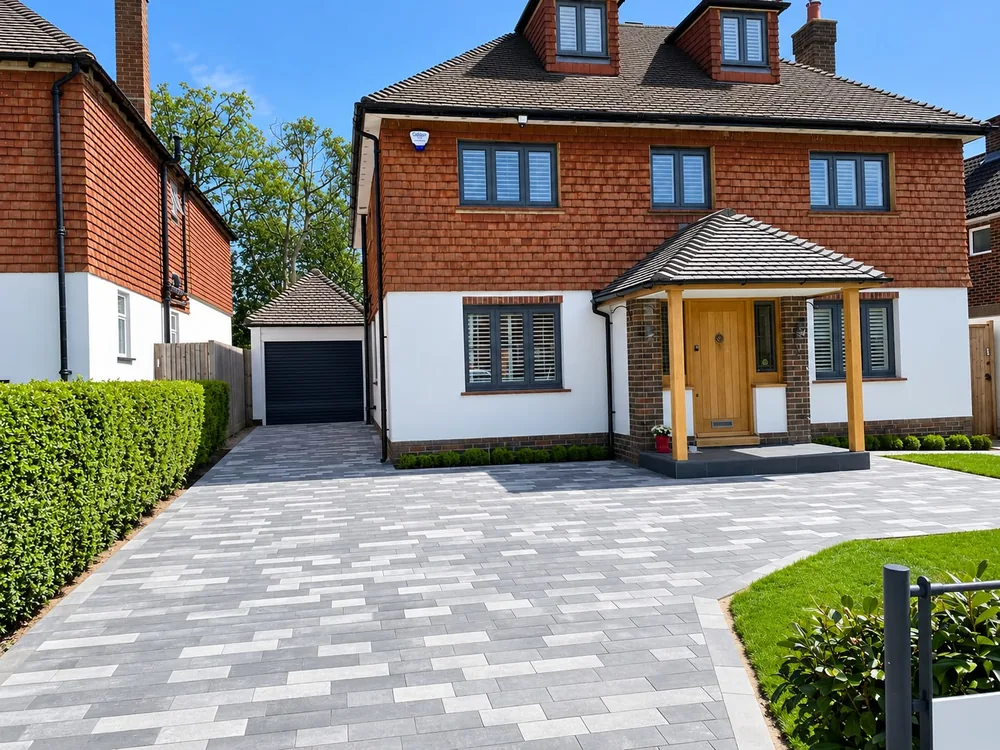
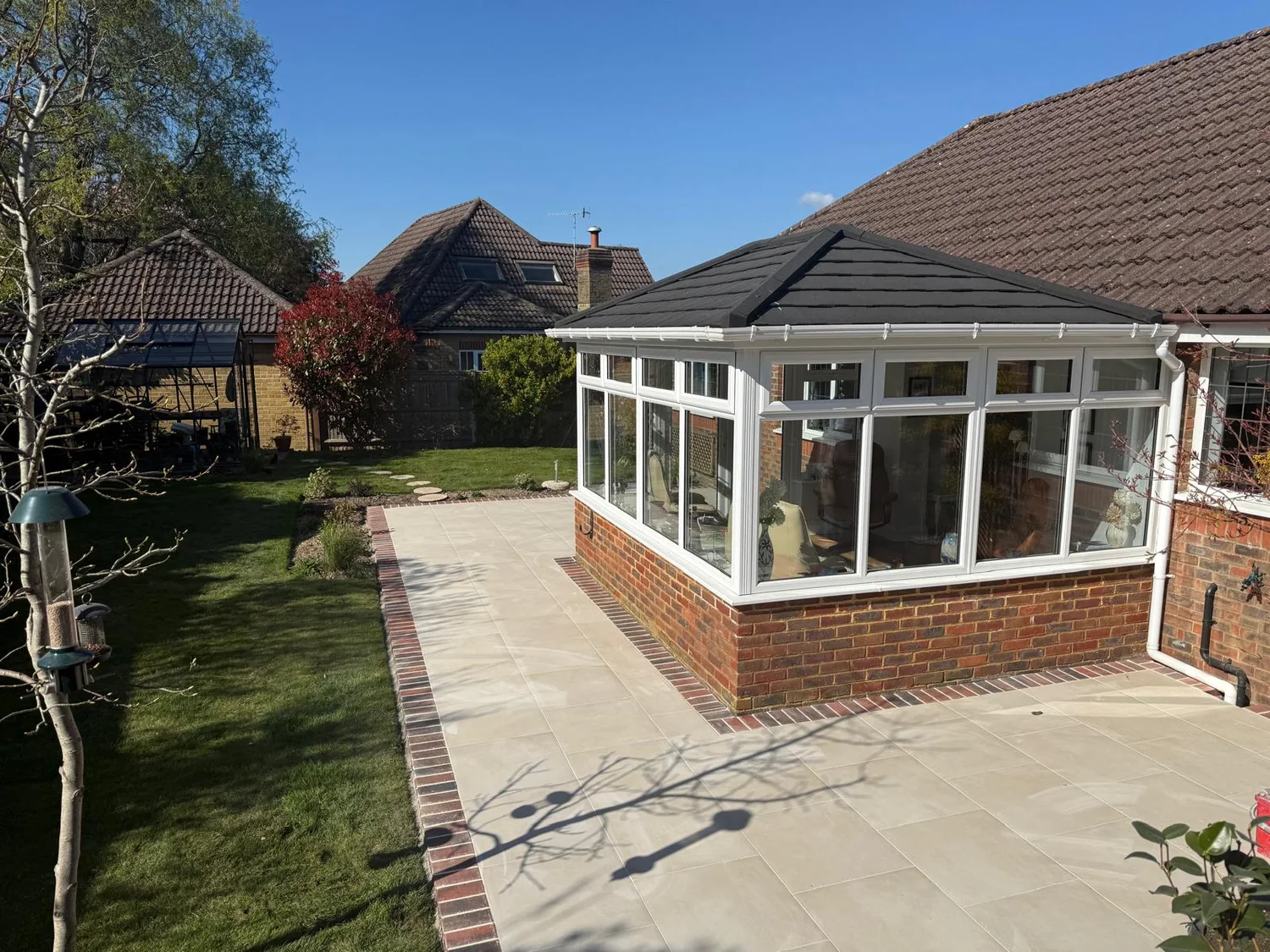
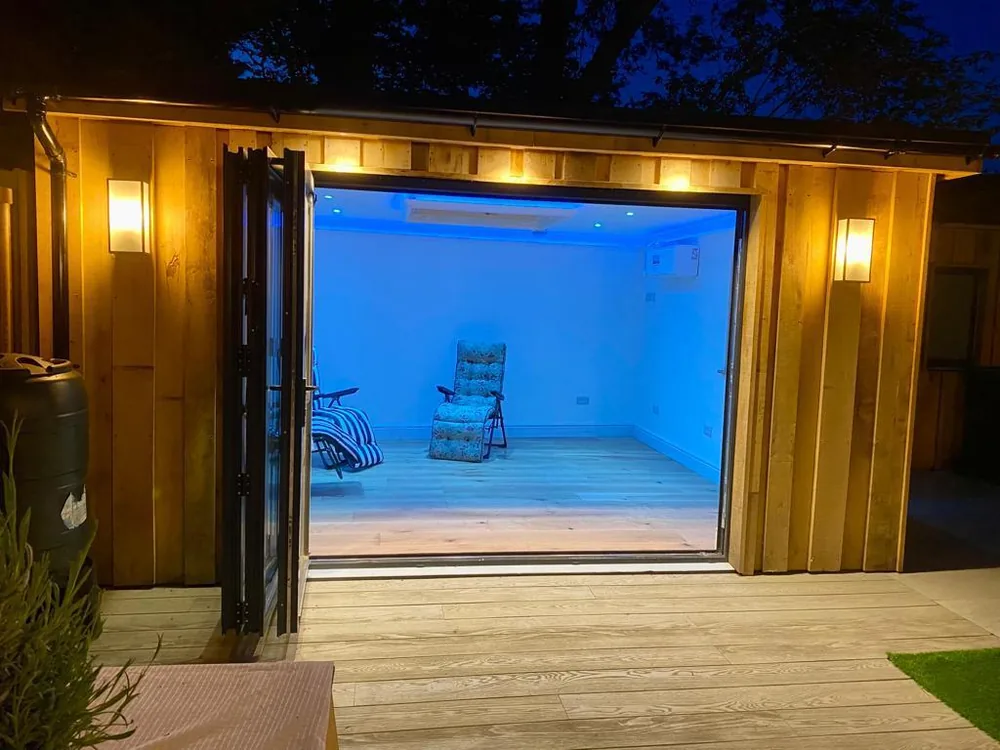
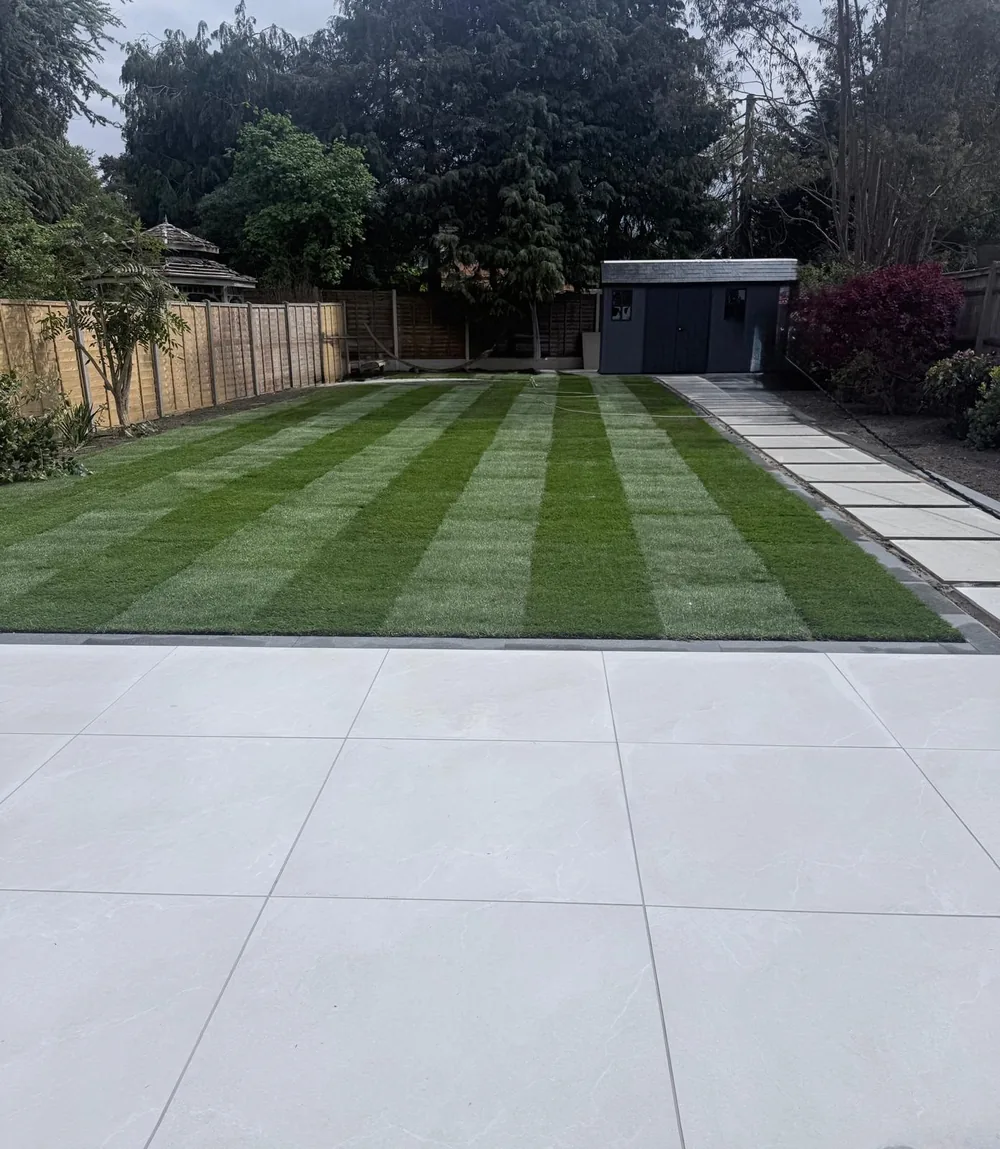
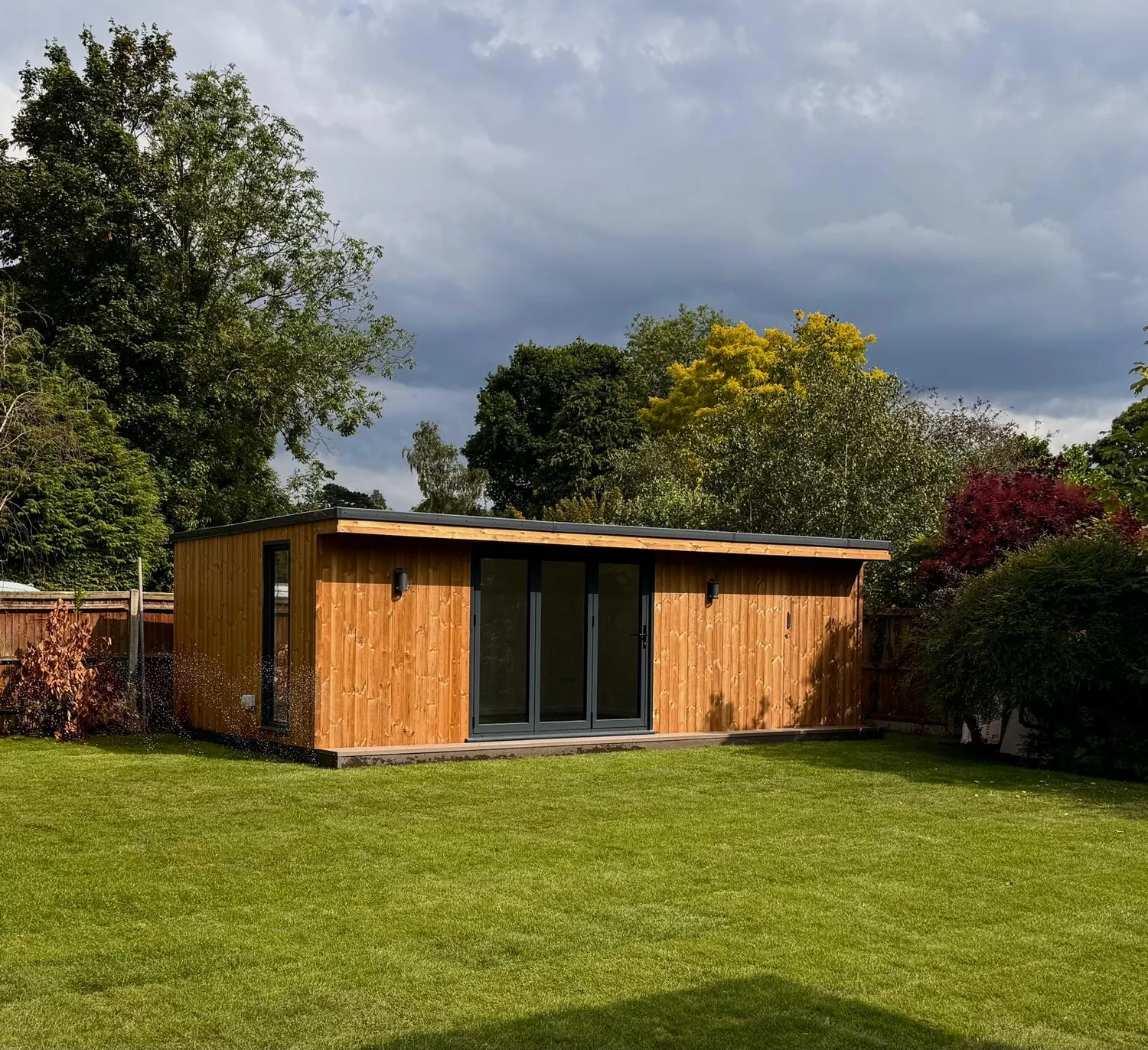
Most of what we do here is steps and terraces, driveways, and walling: garden walls, piers and retaining walls in brick and stone. We also build garden rooms, lay turf and artificial grass, and take on groundworks and drainage. Free written quotes that set out the depths, not just the square metres. Our accreditations are the Marshalls Register of Accredited Landscape Contractors and Driveway Installers, London Stone registered installer and Bradstone assured installer, and we sit at 10 out of 10 on Checkatrade.
The ground
Sand That Digs Easily and Holds Nothing and Harder Stone as You Go out to the Chart
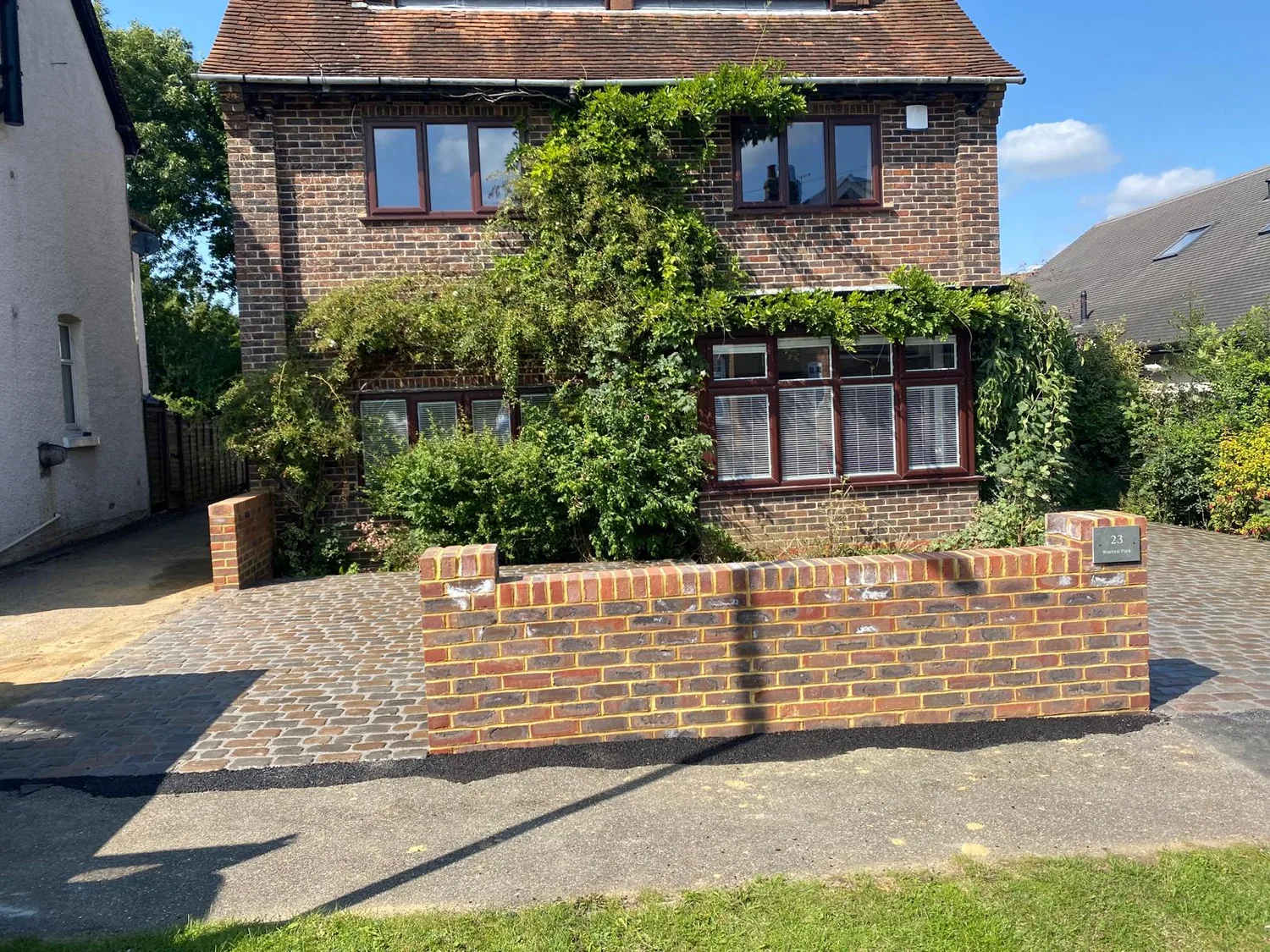
Tandridge's conservation area appraisal says Limpsfield lies on Folkestone Formation geology, which predominantly consists of sands, weakly cemented sandstone and ironstone. That is easy digging and it drains. The difficulty is that sand will not hold a face and will not hold a level unless somebody makes it. Trench sides slump, and loose material under a sub-base finds its own level a winter later.
So we build for it. The formation is dug to firm ground rather than to a tape measure, spoil goes off site instead of back in the hole, the sub-base is laid in layers and compacted at each one, and every edge restraint is haunched in concrete. On sand, the edges fail first if nothing holds them.
South and east towards the Chart the bedrock becomes Hythe Formation sandstone and limestone, which is harder going and can need breaking out rather than digging. The appraisal also records that drainage on the High Street has historically been an issue owing to the topography of the local area. Water here runs, and it arrives at the bottom of somebody's garden.
- Folkestone Formation sand: quick digging, good drainage, nothing stands on its own
- Sub-base compacted in layers and every edging haunched, or the edges creep
- Hythe Formation at Limpsfield Chart, harder ground that may need breaking out
- Falls and run-off worked out first, because water on this hill travels
The houses
Ironstone, Galletting and Boundary Walls That Stay a Conservation Area With Rules About Its Own Stone
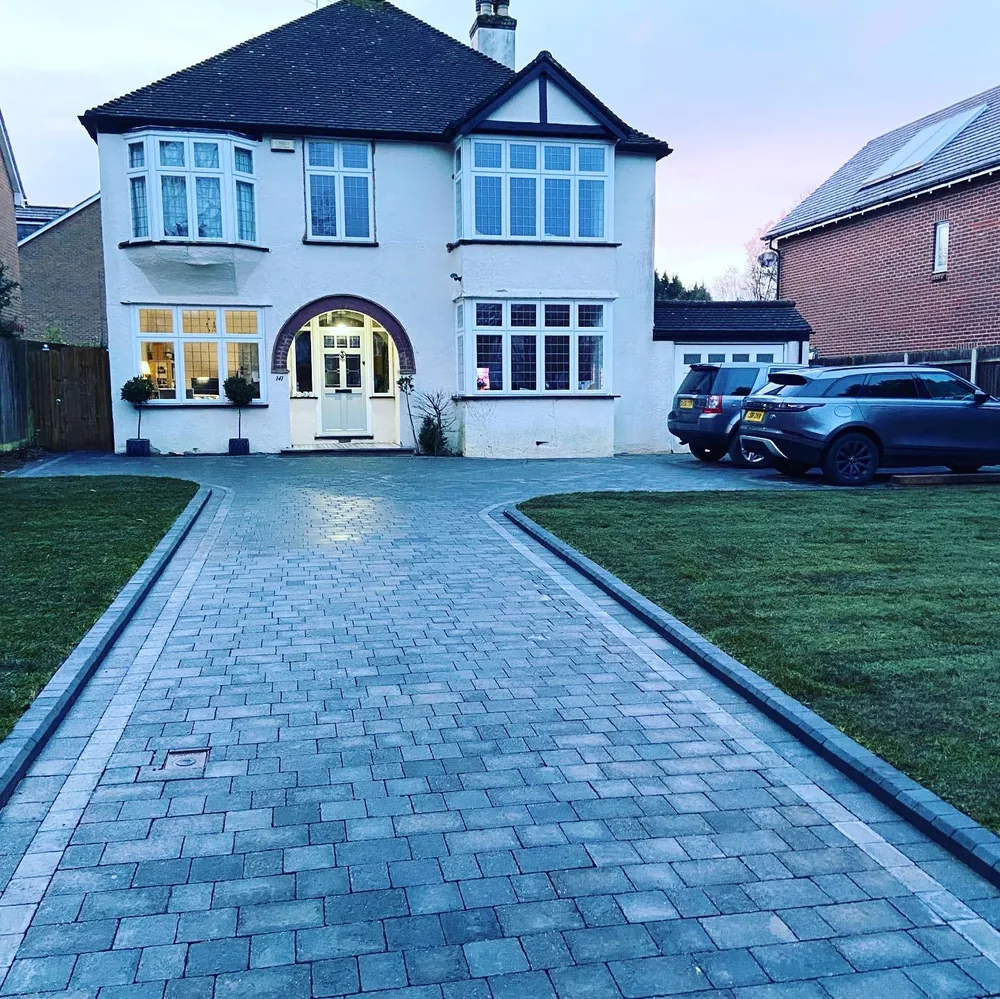
Limpsfield Village is a conservation area and the historic fabric is timber frame, Lower Greensand stone and ironstone. The appraisal picks out galletting, where small pieces of stone are pressed into wet mortar joints, and Horsham stone on some roofs. A lighter honey coloured stone appears on nineteenth century work such as The Old Bakery, and Arts and Crafts houses including Berry House and Burstow revived those techniques.
Development along the High Street follows the contours of the land, and much of it sits behind historic boundary walls. The appraisal says there should be a presumption in favour of retaining them, and that in most cases metal railings or vehicular gates will be inappropriate because they are not in keeping with the local vernacular. So a drive here is designed around an opening that already exists.
The 2011 census recorded 3,569 people in 1,430 households in the parish, of which 841 were detached houses. Those detached plots are where the bigger work happens: a rear terrace, steps down a sloping garden, a garden room, a drive with room to turn. Around Pains Hill the lanes are sunken with exposed roadside banks, so frontages already sit above or below the road.
- Historic stone boundary walls repaired and kept, not knocked through for an opening
- Ironstone, Lower Greensand and honey coloured stone as the local reference points
- Detached plots outside the core: terraces, steps, garden rooms and turning space
- Sunken lanes at Pains Hill, where the frontage already sits off the road level
What we do most here
Steps, Terracing and Walling Because Almost Nothing in Limpsfield Is Flat
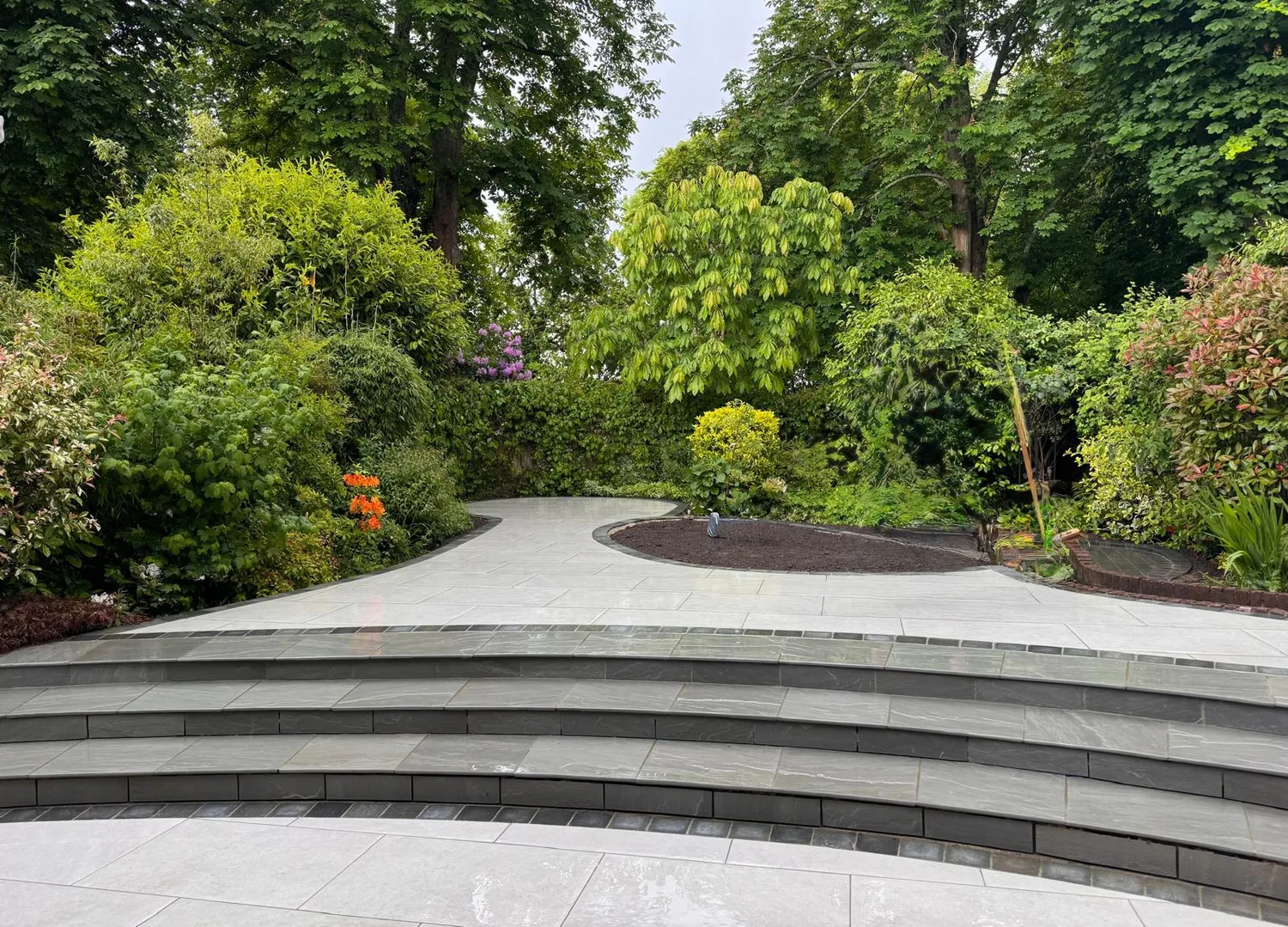
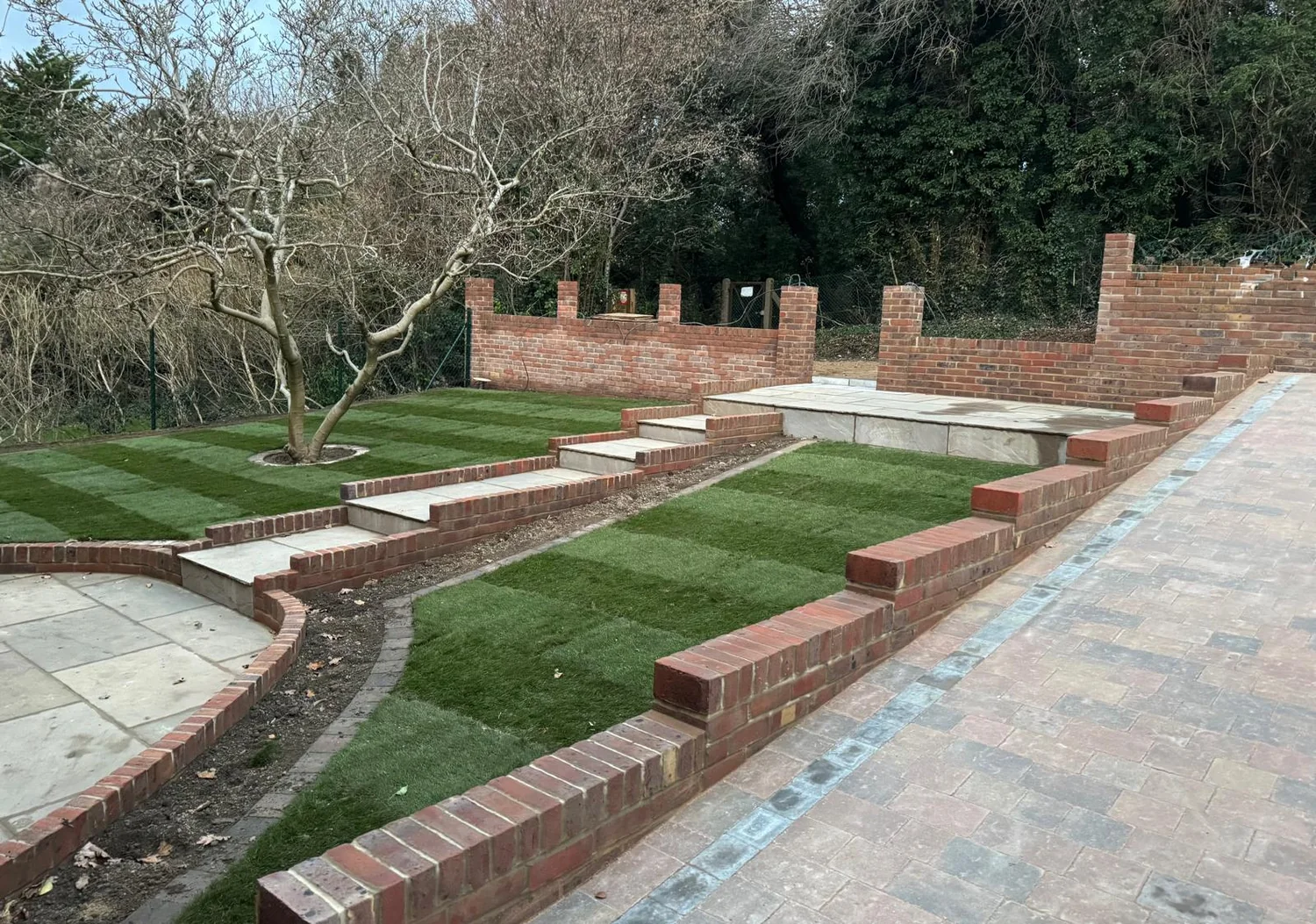
Steps are the job we do most often in this village. A garden that drops away from the back of the house needs the terrace held at one level and the rest taken down in risers you can use with a tray in your hands. We build them in porcelain, sandstone and brick, on concrete, with the falls run so water leaves the treads.
Alongside that: brickwork and stone walling, retaining walls where a level has to be held, patios and porcelain terraces, gravel and block paving drives, decking, pergolas, fencing, turfing and artificial grass. Where a job needs the ground opening up and draining first, we do that ourselves.
Walling is the other constant. New walls here are expected to sit alongside the old ones, so the appraisal asks that they are built in traditional materials reflecting the design, height and positioning of other walls nearby. That decides the stone, the coping and how high a retaining wall can reasonably go before it starts arguing with the street.
- Steps and terracing on falling gardens, laid on concrete with falls off the treads
- Retaining walls, garden walls and piers in brick and stone
- Porcelain and sandstone terraces, gravel and block paving driveways
- Decking, pergolas, fencing, turf and artificial grass
- Groundworks and drainage managed as part of the same project, not a separate trade
Levels, access and planning
Up to Pebble Hill, Then Down Hard to the Eden and an Appraisal With Real Detail on Hard Surfaces
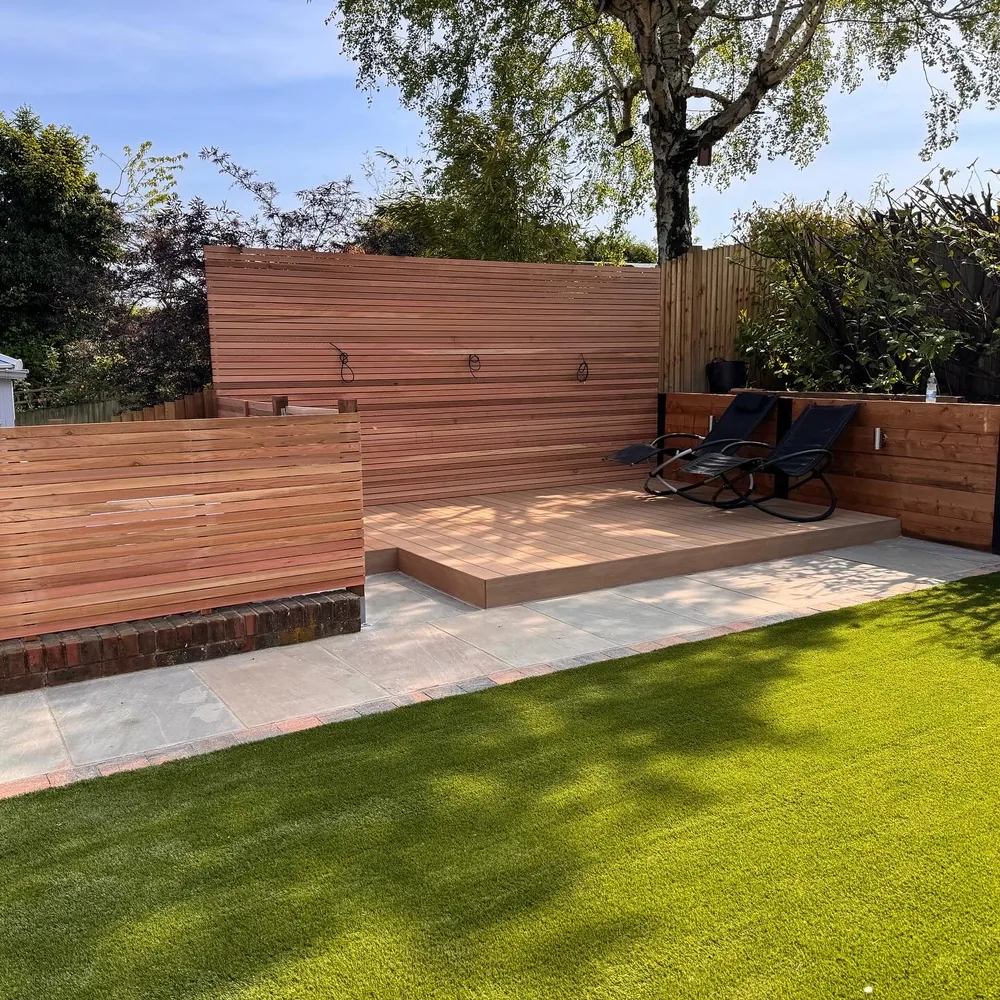
The appraisal describes the ground rising steadily from the south west along Wolf's Row and Westerham Road to form the summit at Pebble Hill, then declining steeply to the north west until it reaches the River Eden. Across the parish the ground runs from about 62 metres at Staffhurst Wood to about 163 metres east of the village centre at Grubstreet Copse.
Steep ground changes the working method as much as the design. Spoil has to come uphill or be dropped safely, plant has to stand where it is put, and the finished gradient has to work in ice rather than only in June. On the tighter lanes we bring smaller machines and barrow out to a loading point.
Tandridge District Council is the planning authority, and the made Limpsfield Neighbourhood Plan of 2019 applies as well. That plan sets a built-up area boundary: inside it development is normally acceptable if it accords with the development plan, and all land outside it is treated as open countryside within the Green Belt. Tandridge found insufficient justification to serve an Article 4 Direction over the conservation area, so ordinary conservation area controls apply.
The appraisal is specific on hard surfaces. Existing ironstone and brick paving should be retained. Ironstone paving was traditionally laid in just sharp sand with no cement and should not be repointed in mortar or cement. Historic kerbstones should be kept where possible, and replacing sandstone kerbs with cement or granite should not be supported.
- Pebble Hill at the summit, then a steep fall north west towards the River Eden
- Ironstone paving relaid in sharp sand, never repointed in mortar or cement
- Historic kerbstones and stone boundary walls retained wherever they can be
- Tandridge for planning, the 2019 Neighbourhood Plan on top, Surrey County Council for crossovers
Villages and neighbourhoods
Where We Work Across Limpsfield Parish
The parish runs a long way south from the A25 and the ground changes as you go, from village sand to harder stone on the Chart. These are the parts of it we are called to most.
Our work
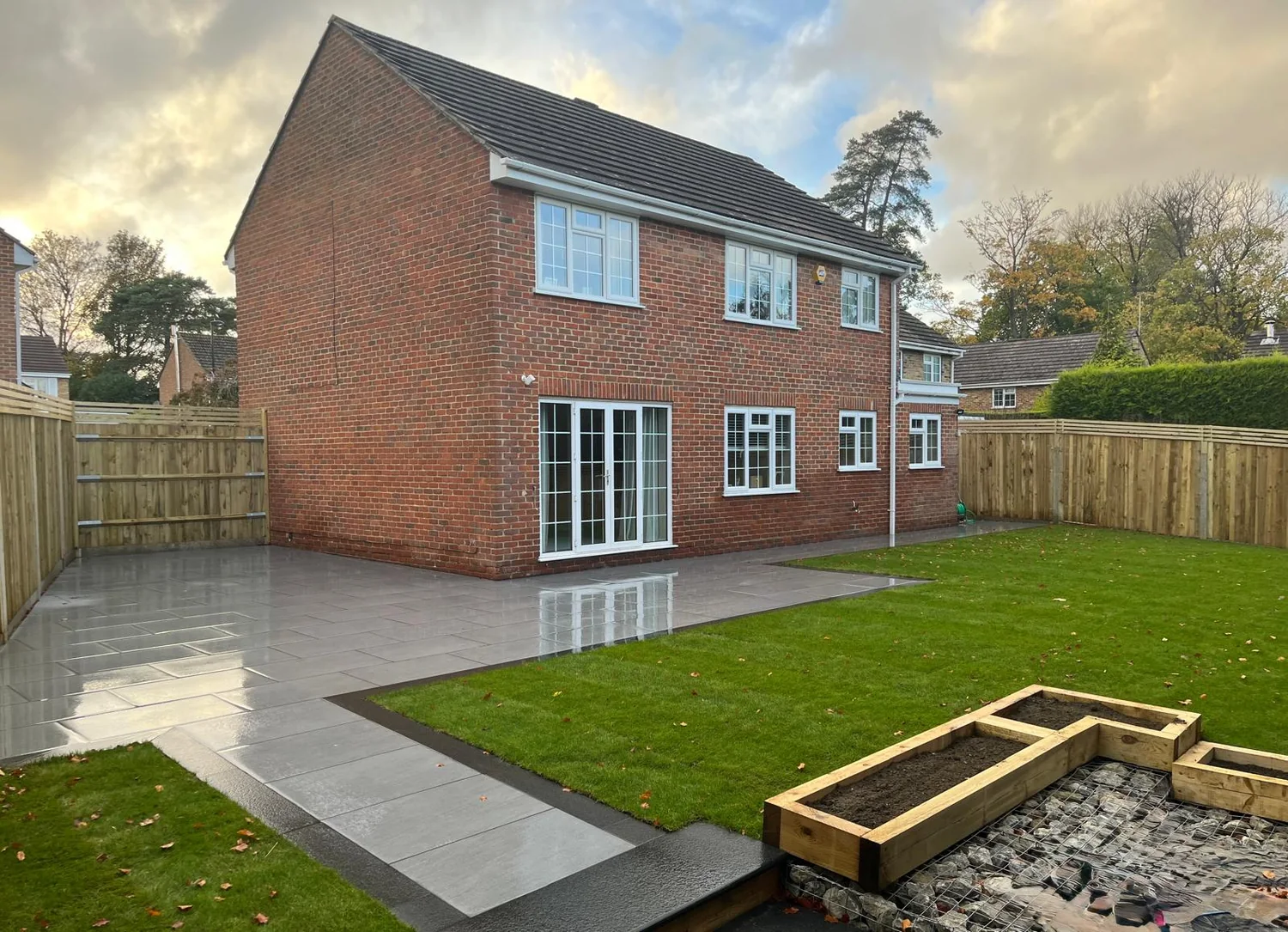
Walls, Steps and Terraces
Questions
Limpsfield Questions We Get Asked
Can my old ironstone path be repointed in cement?
It should not be. Tandridge's conservation area appraisal records that ironstone paving in Limpsfield was traditionally laid in just sharp sand with no cement, and says it should not be repointed in mortar or cement. Where a path has lifted we take it up, keep the stone, rebuild the bedding and relay it in sharp sand.
Why is a driveway at Limpsfield Chart harder work than one in the village?
The bedrock changes. The village sits on Folkestone Formation sands and weakly cemented sandstone, which digs easily. South and east towards the Chart it becomes Hythe Formation sandstone and limestone, which is harder and can need breaking out rather than digging. That means different plant, more time on site and a different price.
Can I put gates across my driveway in Limpsfield?
Inside the conservation area it is unlikely to be welcomed. The appraisal says that in most cases metal railings or vehicular gates will be inappropriate because they are not in keeping with the local vernacular, and that there should be a presumption in favour of retaining historic boundary walls. Ask Tandridge about your own frontage first.
My garden falls away steeply. Can you still build a level terrace?
Yes, and it is most of what we do here. A level terrace on falling ground means retaining first: a brick or stone wall, or sleepers, holding the change in height, with the paving laid on a base built up behind it. Steps take the rest of the drop, and a drainage line goes in at the bottom of the fall.
Is my land in the Green Belt?
The Limpsfield Neighbourhood Plan of 2019 sets a built-up area boundary for the village. Inside it, development is normally acceptable if it accords with the development plan. All land outside that boundary is treated as open countryside within the Metropolitan Green Belt. Which side of the line your plot sits on is a question for Tandridge District Council.
Is Limpsfield Common inside the Surrey Hills National Landscape?
Not at present. Limpsfield Common, Limpsfield Chart Common, Tenchleys and Trevereux, Pains Hill and Itchingwood sit outside the current boundary, while Limpsfield Chart Woods, Titsey and the south facing slopes from Park Road towards Woldingham are inside it. A proposed variation would add roughly 129 square kilometres, but the draft order is unsigned and the existing boundary stands.
What do you have to do differently on a new garden wall here?
Match it to its neighbours. The appraisal says new boundary walls should be built in traditional materials reflecting the design, height and positioning of other walls nearby, and this is a village of ironstone and Lower Greensand with galletting in the joints. We agree the stone, the bond and the coping before anything is ordered.
Will you damage the boundary wall getting a machine in?
No, and we plan the access to avoid it. Where the opening is narrow or the wall is old we use smaller plant, protect the stonework, and barrow spoil out to a loading point rather than swinging a machine past it. If a wall genuinely has to come down and be rebuilt, we say so in the quote.
Get a quote
Planning an Outdoor Project in Limpsfield?
Call 01883 340429 or email info@crockettpaving.co.uk. We will come to Limpsfield, look at the fall, the walls and the access, and write a quote covering what goes under the paving as well as on top.
- Free, no-obligation quotationsIn writing, with the build-up and the drainage set out.
- 27 years in the tradeMarshalls Register accredited, Bradstone Assured.
- Fully insuredDomestic and commercial work across Surrey.
Arrange a free site visit
Tell us a little about the project and we will come out, look at the ground and put a written quotation together.
Where we work
Paving, Landscaping & Outdoor Construction Across Surrey
Based in Caterham, we undertake projects throughout Surrey and selected areas of Kent and West Sussex. For larger or more comprehensive projects, we are happy to consider work further afield.