

Chipstead, CR5
Paving and Driveways in ChipsteadLong Approaches, Chalk Valley Sides and Unlit Country Lanes
Chipstead is chalk downland cut by a dry valley, with most of the houses on the slopes above Chipstead Bottom. Large detached plots, long private approaches, hedges instead of walls, and a valley floor that takes the water off both sides in heavy rain.
Working in CR5
A Dry Valley in the Chalk, and Houses Spread Along the Lanes Above It.
The housing and open space here span the east slopes of a narrow valley known as Chipstead Valley or Chipstead Bottom, a dry valley with the subterranean flows common in the chalk hills of the North Downs. The borough's design guidance notes that the dip slope is dissected by a pattern of dry valleys. The downland around the village is underlain by the Lewes Nodular, Seaford and Newhaven Chalk Formations, and the higher ground carries a cap of clay with flints, which the same guidance describes as spread extensively over the chalk plateau and producing non calcareous soils.
For a drive or a terrace that sets the rules. Hard flinty chalk digging on the ridges and shoulders. Ground that behaves like clay wherever the cap sits over the chalk, so infiltration can fail on one plot and work on the next. And a valley floor that carries surface water off the slopes in heavy rain even though there is no permanent stream in it. Chalk punishes wet working, so the formation gets protected, traffic kept off it, and a sealed capping laid the same day it is dug out.
Crockett & Crockett Paving is a family business, run by Oli Crockett from 393 Stafford Road, Caterham. Our own team is all trained in health and safety, and we do the digging, the drainage, the base, the edging and the laying between us. 27 years in the trade. We hold accreditation on the Marshalls Register of Accredited Landscape Contractors and Driveway Installers, work as a London Stone registered installer and a Bradstone assured installer, and score 10 out of 10 on Checkatrade.
What is under the drive
Chalk, Flint, and a Clay Cap That Moves the Goalposts.
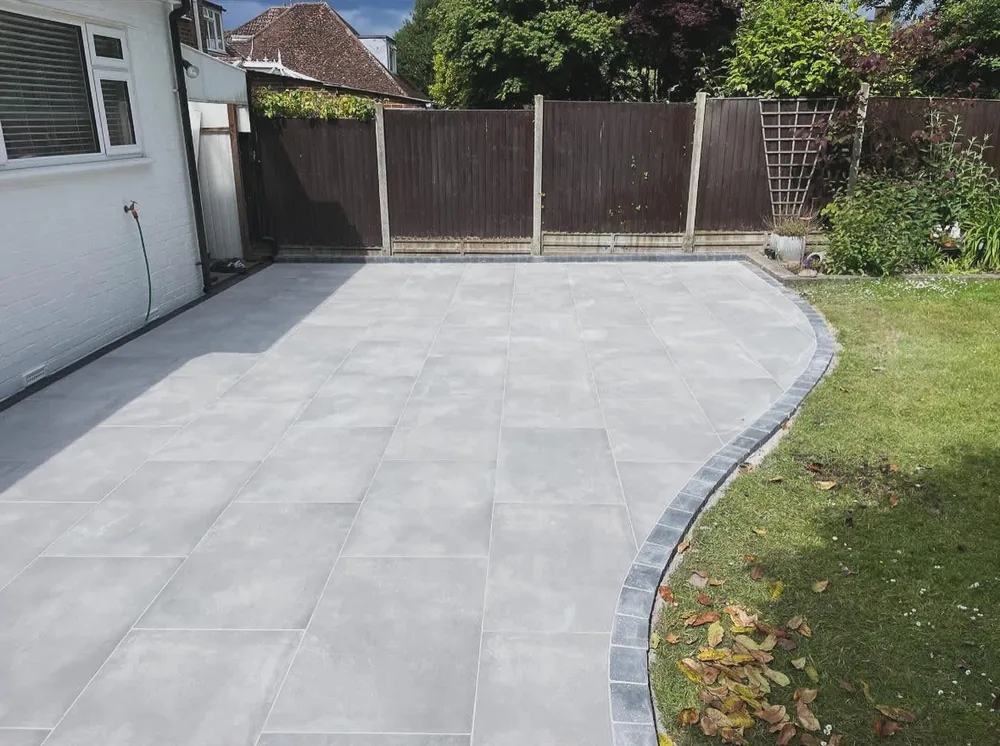
On the ridges and shoulders around the village the digging is hard and flinty. Chalk with flint bands is slow to excavate, it wears plant, and the flint comes out in cobbles that have to be carted rather than pushed back in as fill. Chalk carries a driveway well as long as it stays dry and undisturbed. Open it in the wet, or run a machine over the formation after rain, and it turns to slurry, at which point the only proper fix is to dig deeper and replace it with stone.
Where the clay with flints sits over the chalk, and on the higher plateau ground it often does, the plot behaves like clay instead: water sits on the formation and a soakaway the neighbour swears by simply will not take. The cap does not respect boundaries, so we dig a test pit rather than price a drainage design off a map. Lower down, the valley is dry but it is a watercourse in all but name when it rains hard, so we look at where run off arrives from as well as where it leaves.
- Ridge and shoulder plots: hard flinty chalk digging, plant wear and real muck away, priced honestly.
- The chalk formation gets covered before it can take a soaking, and plant stays off it until the capping stone is in.
- Clay with flints on the plateau ground: a soakaway that works next door can refuse to take on your plot, so we test yours.
- Chipstead Bottom: no permanent stream, but it takes water off both slopes, so falls and outfalls are sized for heavy rain.
The houses
Detached, Spread Out, and Reached Down a Lane Rather Than off a Kerb.
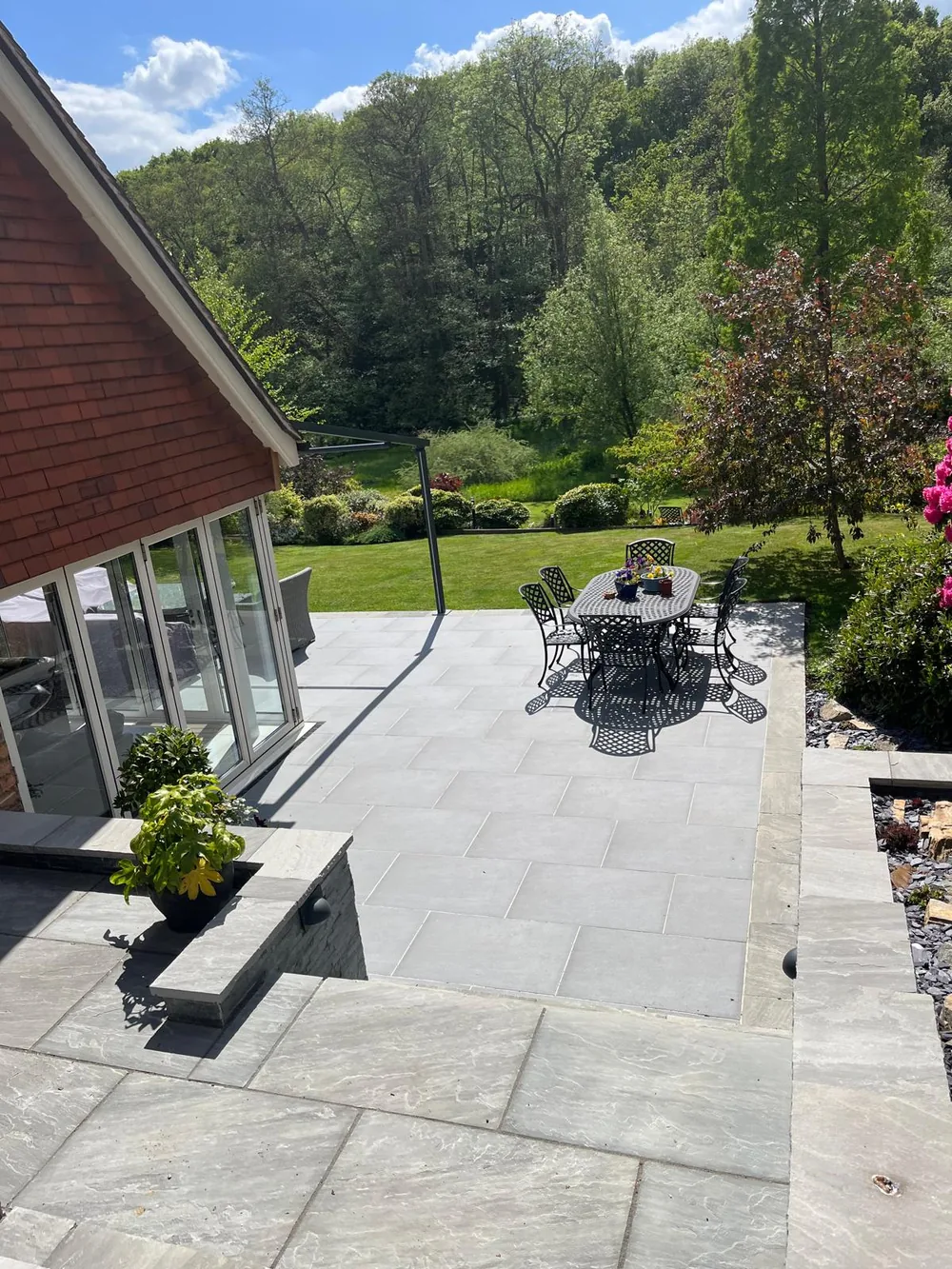
Chipstead is far more detached than the borough as a whole. The 2011 census recorded 1,212 dwellings and a population of 3,136, and 66 per cent of those dwellings were detached against a borough average of 28 per cent. The forty years from the opening of Chipstead station in 1899 set the character of the place. The Jolliffe and Walpole families, who owned most of the land sold for development, stipulated that construction costs should not be less than 500 pounds, which produced houses of substantial character on relatively large gardens. The numbers stayed small for a long while though, 392 homes in 1931 and 433 in 1951, so a fair proportion of what stands today went in later.
Not all of it followed that pattern. Costain bought land along the Chipstead valley from the viaduct at the bottom of How Lane through to Kingswood and built a denser ribbon development along it. Before any of that, Chipstead was a scattering of pre Victorian farmsteads and cottages on lanes following former drove roads, with narrow country roads and a building line close to the back of the footway in the old core. For us that means long private approaches, turning circles, gravel rather than kerbed block, and hedge boundaries instead of walls.
- Substantial detached houses on large plots, so whole schemes rather than single items.
- Long private approaches and turning areas, because the lanes are narrow and reversing out is not an option.
- The old core along High Road, where the building line sits close to the back of the footway.
- Denser ribbon housing along the valley from the How Lane viaduct towards Kingswood.
What we do most in Chipstead
Terraces Cut Into the Slope, and Approaches That Stay Usable in Ice.
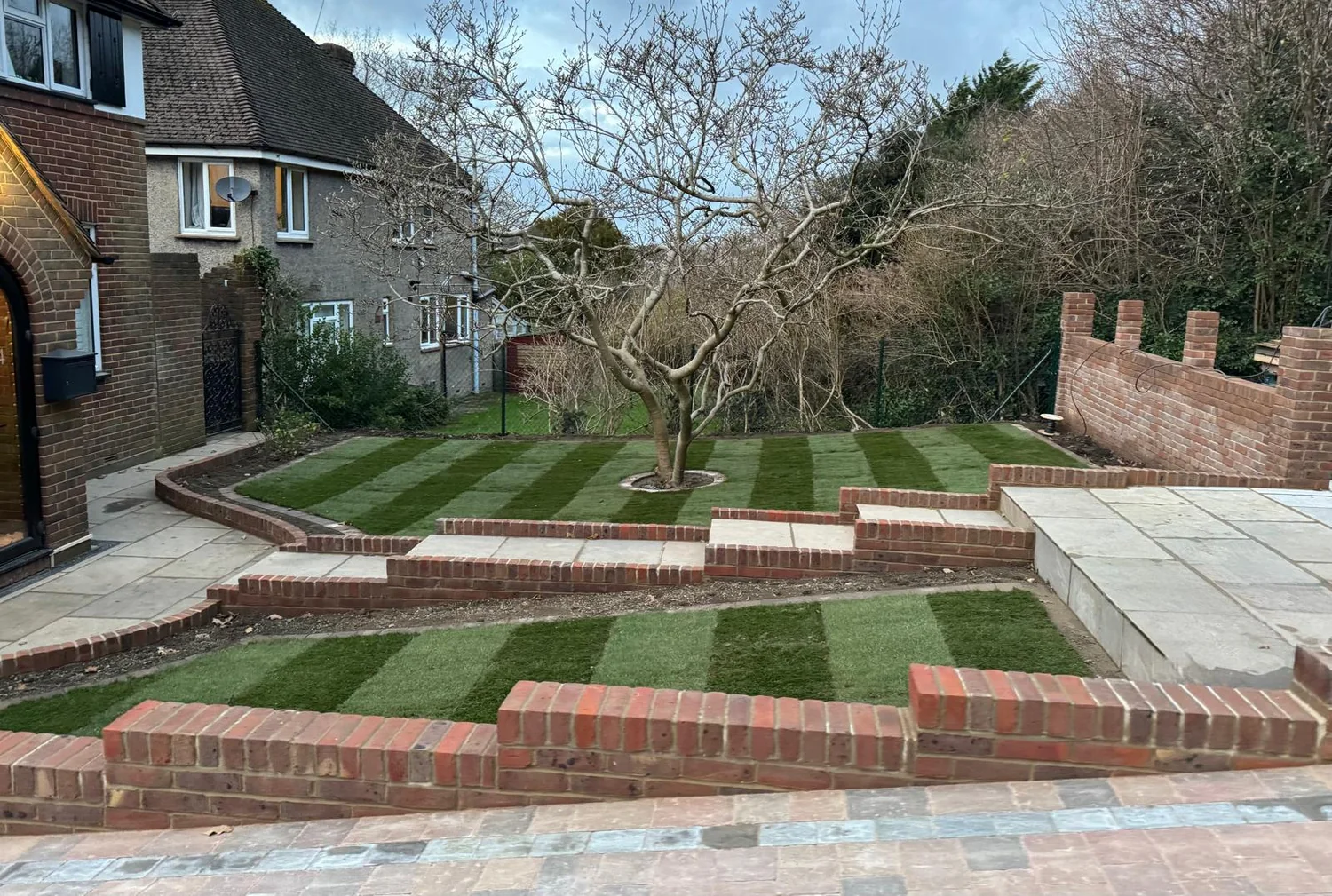
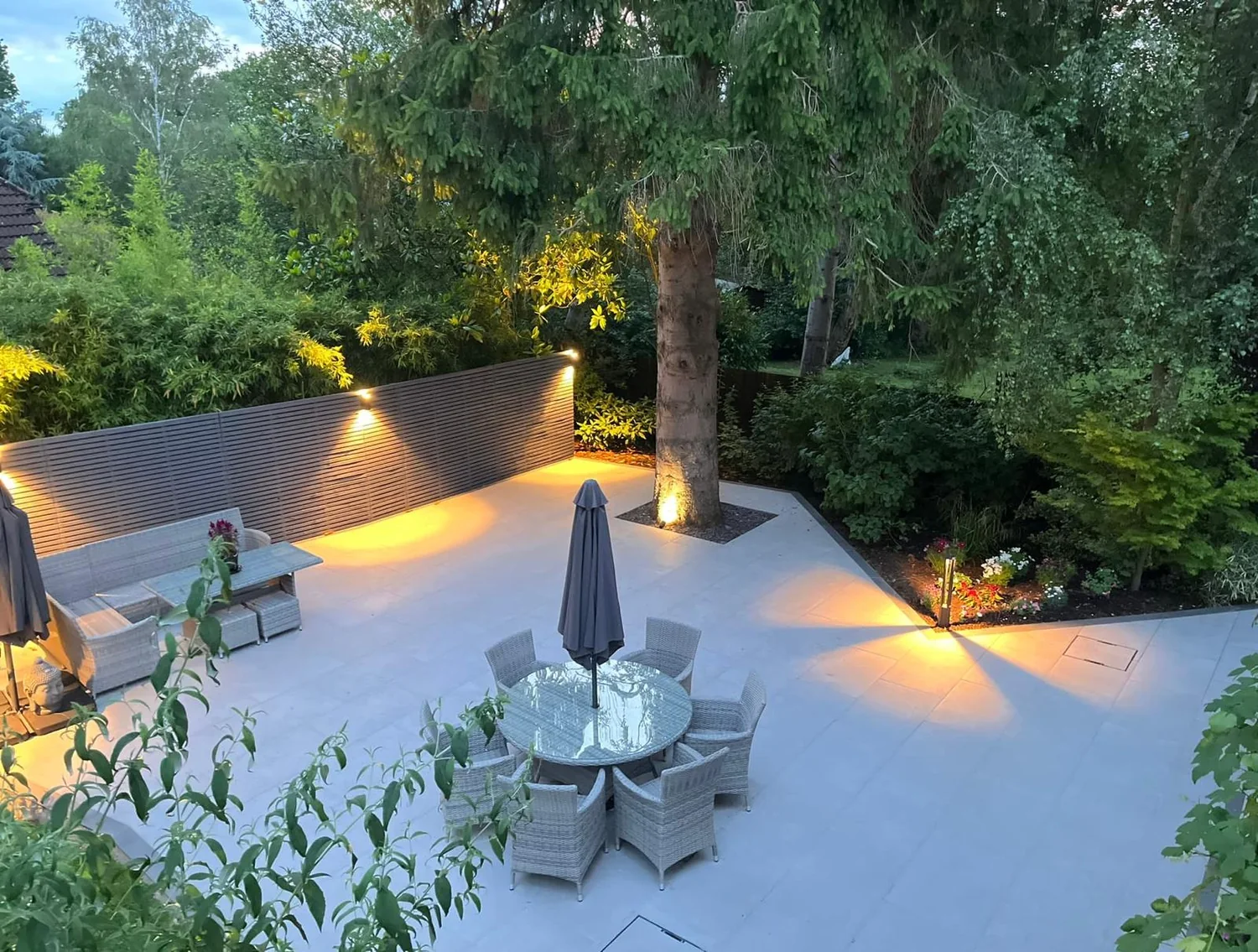
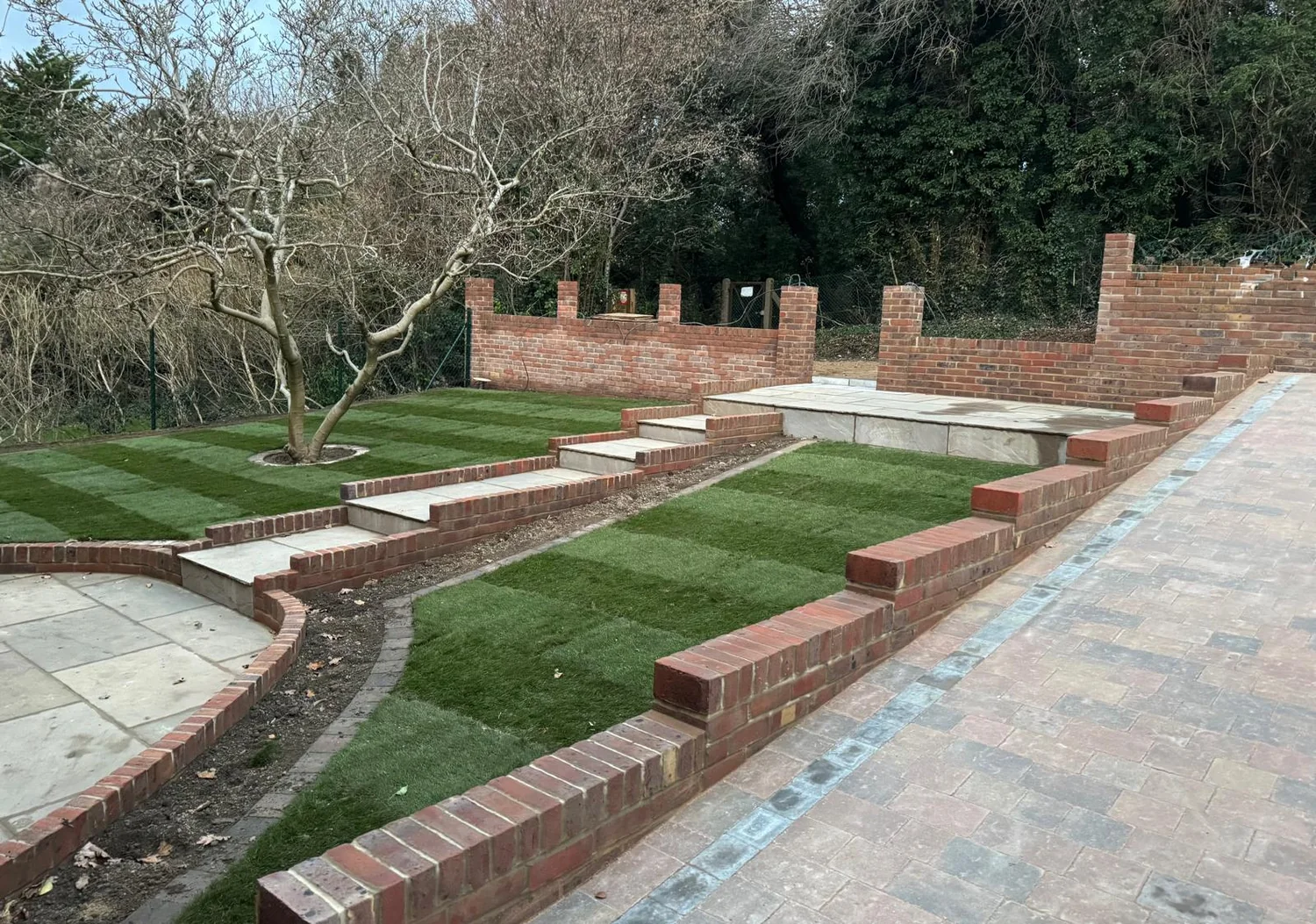
The valley sides are why most Chipstead jobs start with levels. Frontages fall away sharply, so a drive usually needs a platform cut into the slope, a retaining wall to hold it, and steps with a comfortable going rather than a scramble. Gradient matters more here than almost anywhere we work, because an approach that is fine in August is a problem in a frost. In the garden it is terraces and stone: a sandstone or porcelain terrace built off the back of the house on a level platform, with a retaining wall and planted bank below it and steps down to the lawn.
The finish is where Chipstead differs most. The design guide warns specifically about the loss of country lane character through extra accesses, the replacement of hedgerows with brick walls and the introduction of kerbs, and it uses High Road, Chipstead as its illustration of Surrey vernacular within a strong landscape framework. So gravel, hedges and unkerbed verges are the expected finish. Where loose gravel will not stay put on a slope, resin-bound gravel gives the same look and still lets water through.
- Level platforms, retaining walls and steps on the valley side frontages.
- Gravel and resin-bound gravel approaches and turning areas, in keeping with the lanes.
- Sandstone and porcelain terraces on a full bed, built off the house on a properly formed platform.
- Drainage designed for run off coming down the slope, not just off the paving itself.
Access, levels and permissions
Narrow Lanes, No Street Lights, and a Landscape Framework to Work Inside.
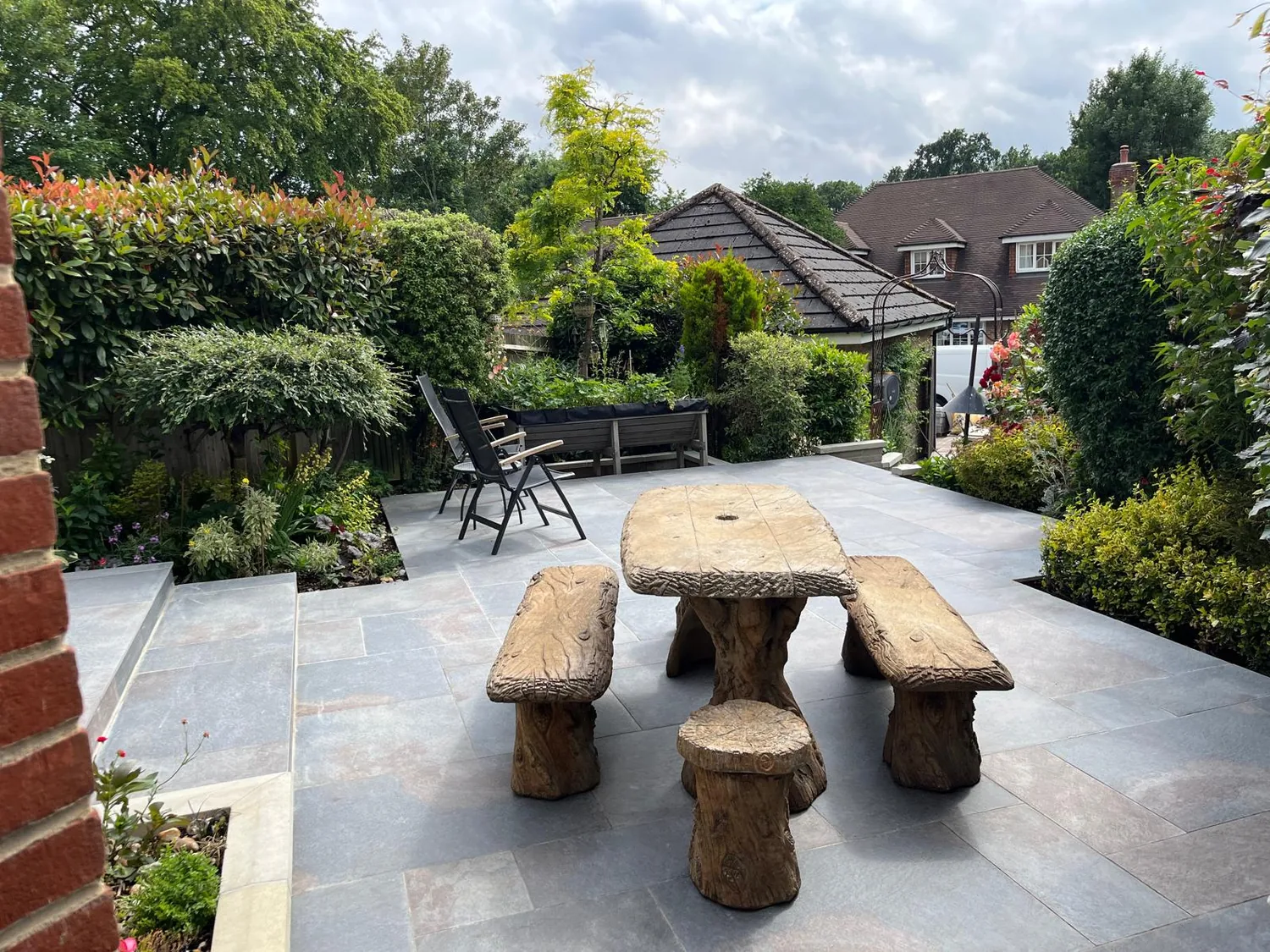
Access is planned rather than assumed here. The lanes are narrow with limited traffic capacity and parking, so a grab lorry or a machine needs somewhere to stand that does not block the road, and deliveries get staged rather than dumped. One local quirk affects site work directly: residents have prevented the installation of street lighting, so the lanes are unlit. That shortens the working day in winter, and it is a good argument for defining the edge of a drive or a flight of steps so you can pick it out after dark.
Reigate and Banstead Borough Council is the planning authority and Surrey County Council is the highway authority, which licenses crossovers and allows only its approved contractors to do that work. Green Belt covers roughly 70 per cent of the borough, Chipstead Downs is a Site of Special Scientific Interest, and parts of the village are in or adjoin the Surrey Hills National Landscape, the former AONB, renamed on 22 November 2023 with its legal protections unchanged. Chipstead is also named in Natural England's proposed variation of that boundary.
- Conservation areas: High Road, Chipstead and Elmore Road, Chipstead, with Netherne-on-the-Hill adjoining. Article 4 covers most of the borough's conservation areas.
- Surfacing: a permeable drive of any size needs no permission under national guidance, while an impermeable one over five square metres draining to the road does.
- Unlit lanes and narrow access, so deliveries, standing space and winter working hours are planned in advance.
Villages and neighbourhoods
Where We Work Around Chipstead
We cover CR5 and the hamlets and villages spread around the valley, from Hooley and Netherne-on-the-Hill in the north east to Mugswell, Woodmansterne and Lower Kingswood.
Our work
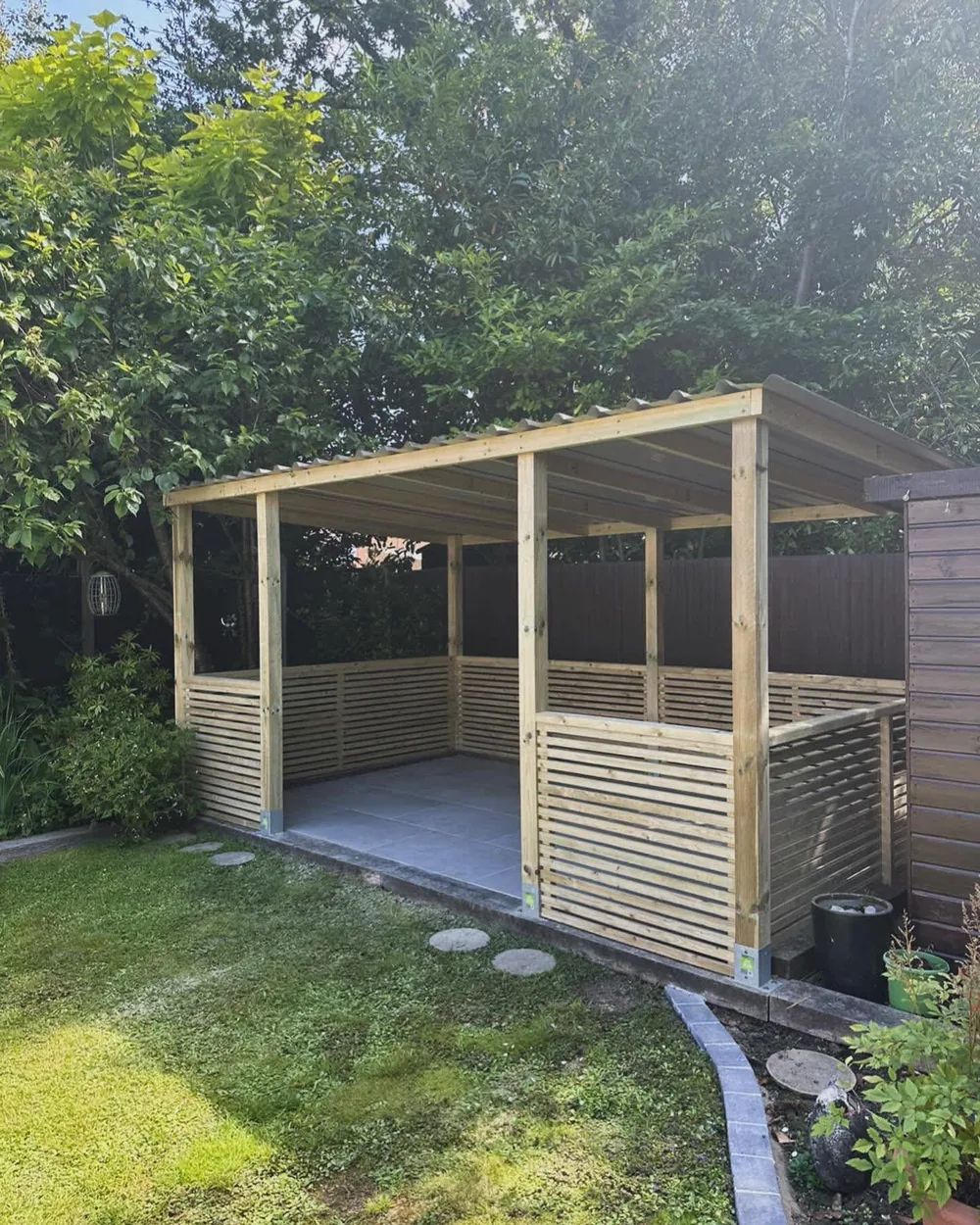
Terraces and Gardens of This Kind
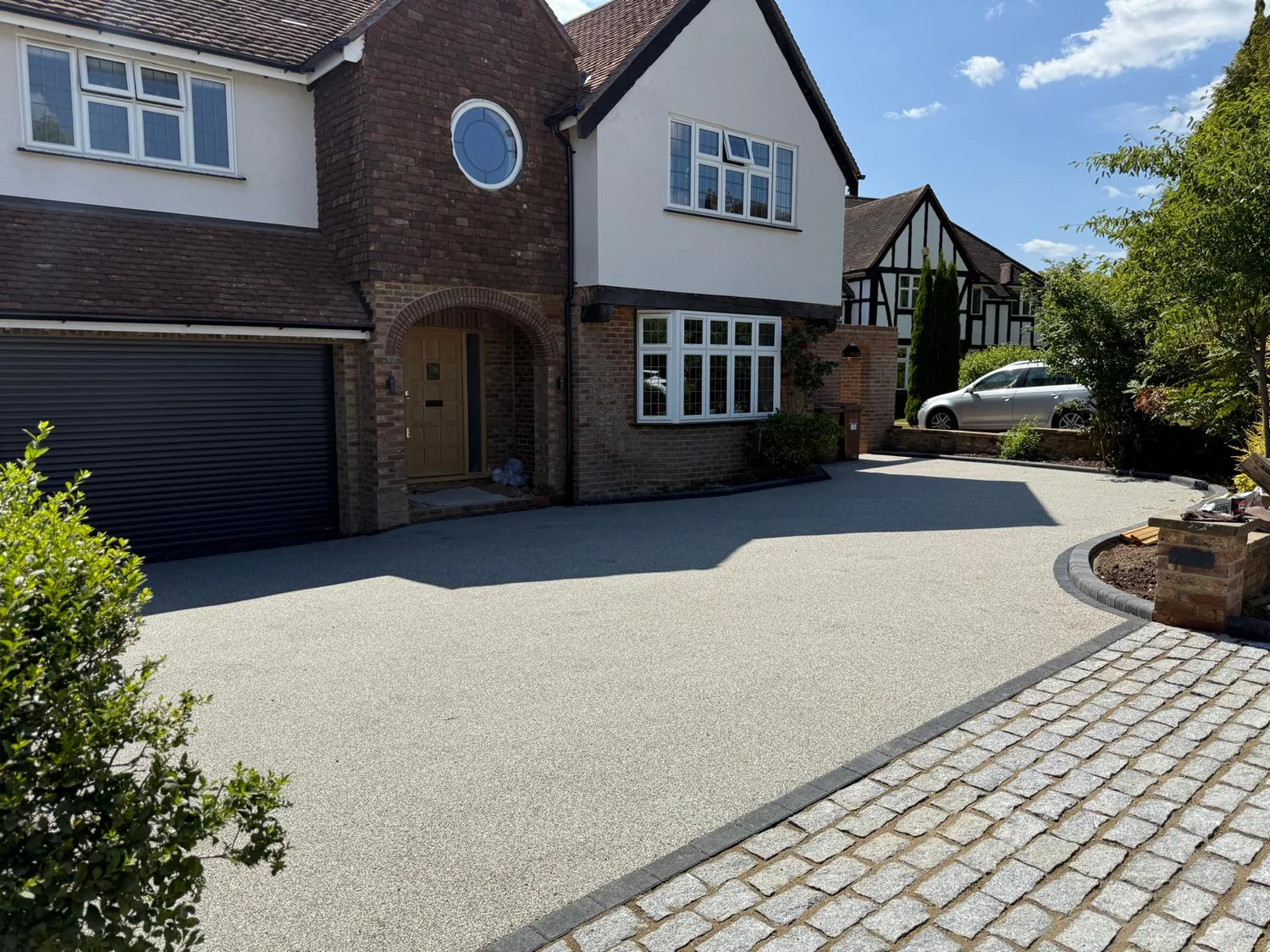
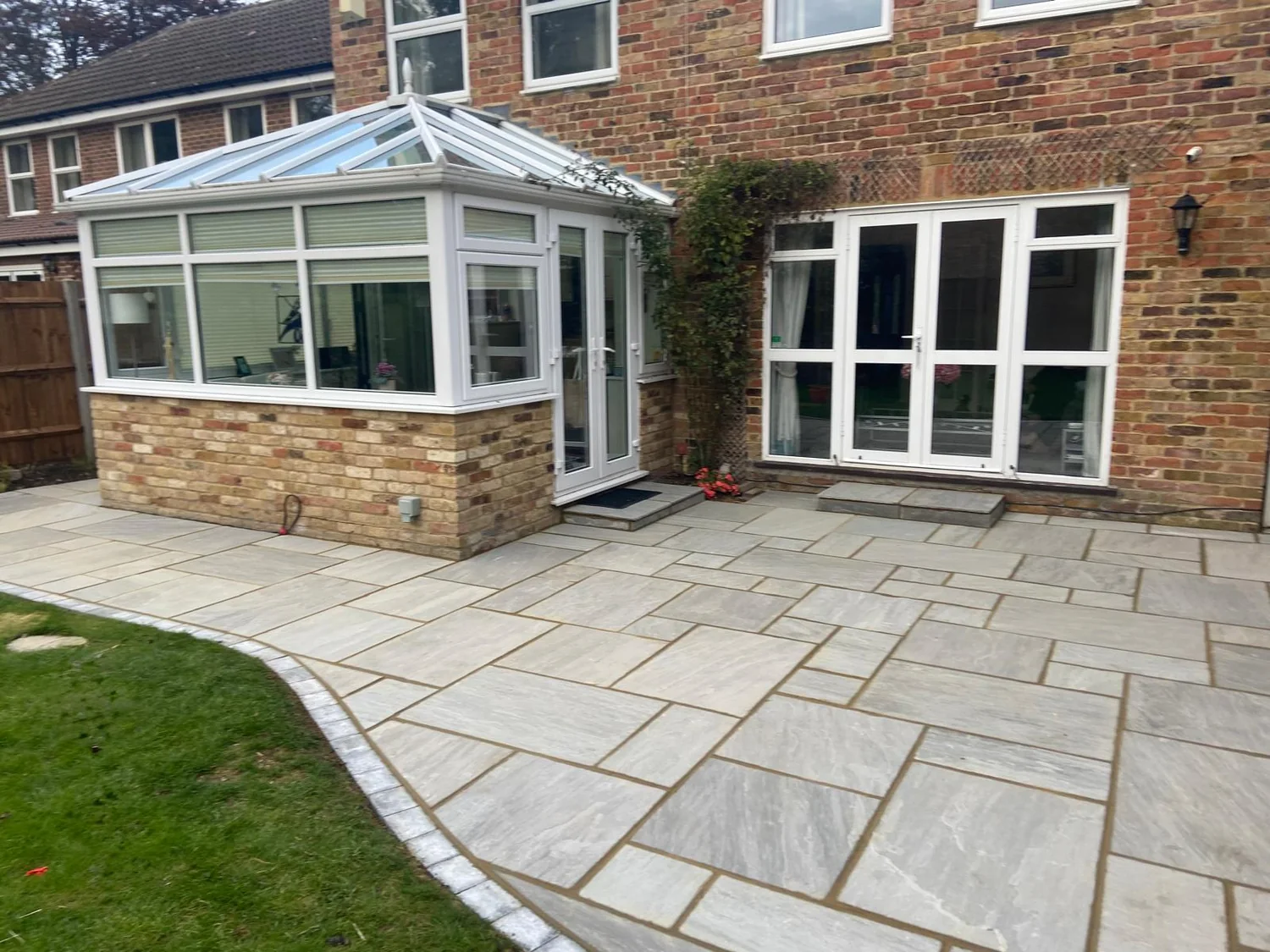
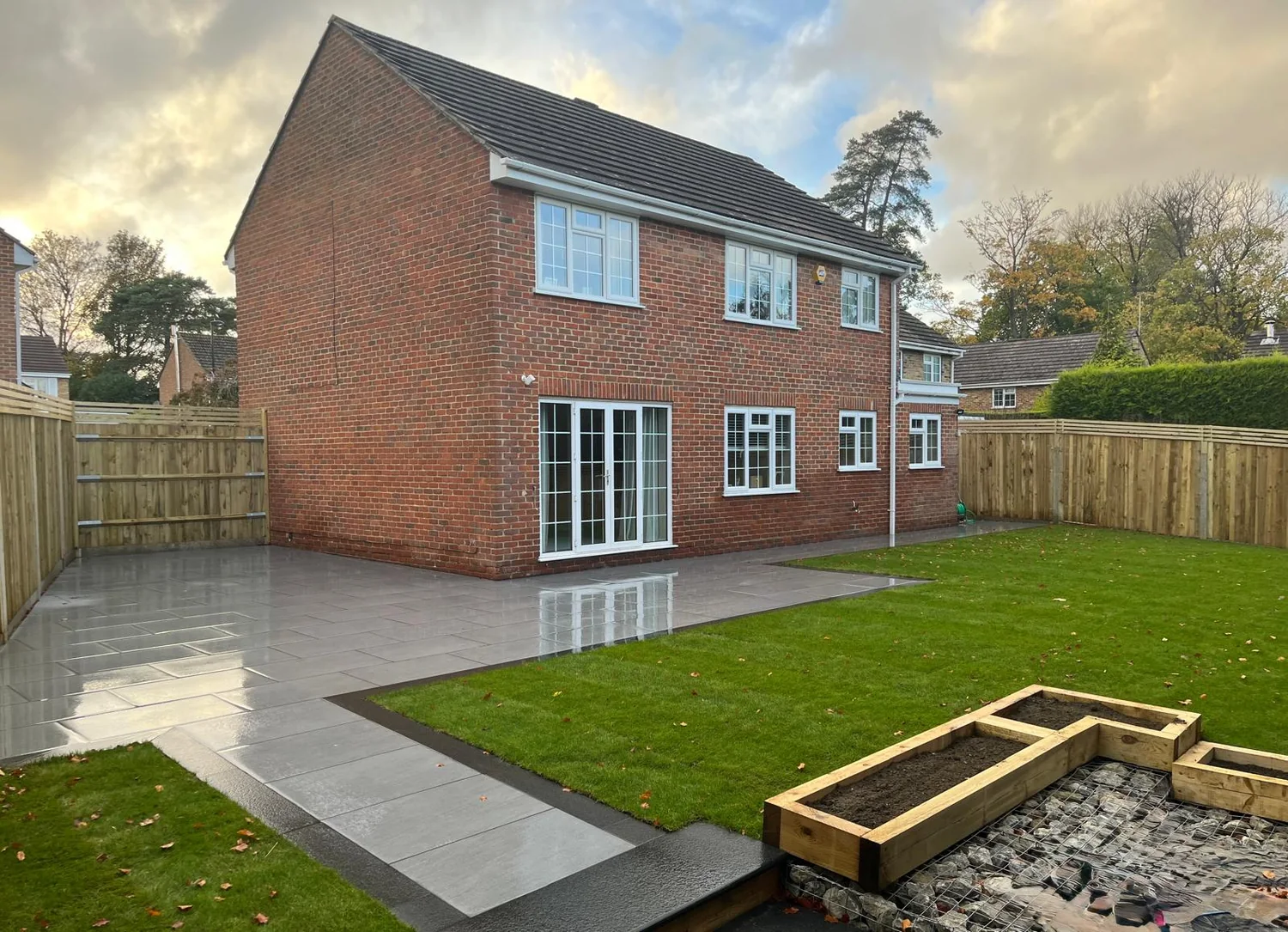
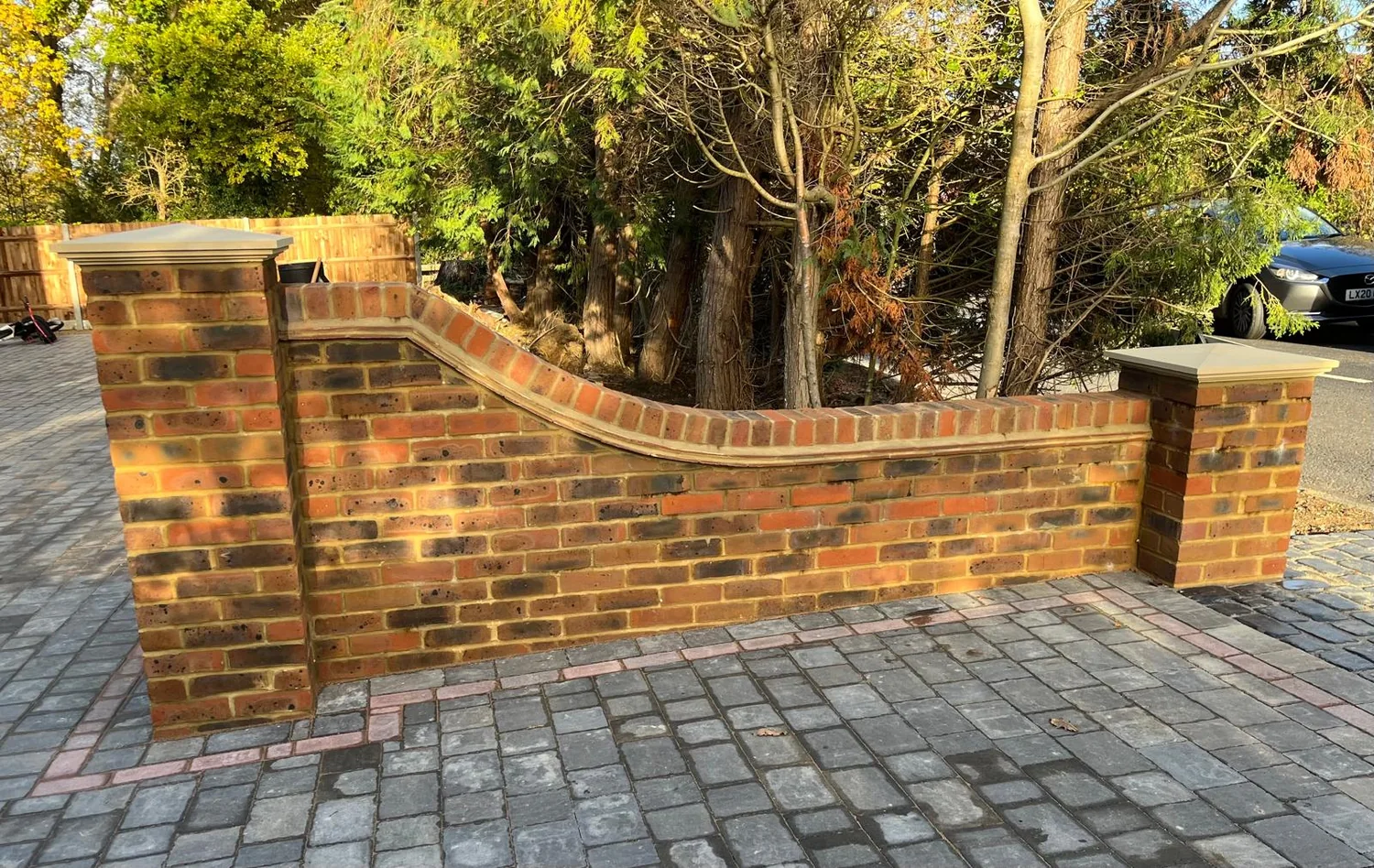
Questions
Chipstead Questions We Get Asked
Our drive falls straight down the valley side. What can be done with it?
It becomes a levels job first and a paving job second: a platform cut into the slope for parking and turning, a retaining wall with drainage behind it to hold the cut, and steps with a comfortable going up to the house. We set the gradient so it is still usable in frost.
Can we keep a gravel drive, or should we go to block paving?
Gravel is the right look here and the borough agrees. Its design guide warns about the loss of country lane character through kerbs and brick walls, and uses High Road, Chipstead as an example of Surrey vernacular. Gravel is permeable too, and resin-bound gravel keeps the look on a slope.
Will a soakaway work in Chipstead?
Sometimes, and it needs testing on your own plot. Chalk drains well, but much of the higher ground is capped with clay with flints, which behaves like clay and can refuse infiltration altogether. A neighbour's working soakaway proves nothing about yours, so we dig a test pit first.
There is no stream in the valley, so why does drainage matter?
Because Chipstead Bottom is a dry valley, not a dry place. It collects surface water off the slopes on both sides in heavy rain, and the chalk carries subterranean flows underneath. On the lower ground we size gullies, channels and outfalls for a storm rather than ordinary rainfall.
Do we need permission for a new driveway or a second access?
The surfacing and the access are separate questions. A permeable drive of any size, or one draining to a lawn or border, generally needs no permission under national guidance. A new access is different: the borough's design guide warns about extra accesses eroding country lane character, so ask them first.
The lanes are unlit. Does that affect the work?
It affects two things. Site work in winter is limited by daylight, so deliveries get planned round it rather than working on into the dark. And it is an argument for designing the drive so its edges read at night: a contrasting edging, and a step nosing you can pick out.
Can you get a lorry and a machine down our lane?
Usually, with planning. The roads through the village are narrow, with limited traffic capacity and parking, so we work out where plant can stand, stage deliveries instead of taking everything at once, and keep the lane passable. Where access is tight we use smaller plant and barrow more.
Get a quote
Planning an Outdoor Project in Chipstead?
We will walk the plot with you, look at the levels, the access and the ground, and give you a free written quote with the retaining and the drainage priced in.
- Free, no-obligation quotationsIn writing, with the build-up and the drainage set out.
- 27 years in the tradeMarshalls Register accredited, Bradstone Assured.
- Fully insuredDomestic and commercial work across Surrey.
Arrange a free site visit
Tell us a little about the project and we will come out, look at the ground and put a written quotation together.
Where we work
Paving, Landscaping & Outdoor Construction Across Surrey
Based in Caterham, we undertake projects throughout Surrey and selected areas of Kent and West Sussex. For larger or more comprehensive projects, we are happy to consider work further afield.