

Purley, CR8
Driveways and Landscaping in PurleyWhere the Chalk Is Close and the Water Is the Problem
In Purley the chalk is close to the surface and the water is the difficulty, not the digging. Falls, edges and drainage get designed first, from Purley Cross up to the Webb Estate and Riddlesdown.
Purley, CR8
Digging Is the Easy Part Here Deciding Where the Water Goes Is Not
Purley is chalk, and mostly bare chalk. On many frontages the excavator is into weathered chalk within a spade's depth of the topsoil, which sounds like good news and largely is. The catch is not bearing capacity. It is water.
That changes the order we design a job in. On most drives you start with the build up and finish with the drainage. Here we start with where the water is going on a wet January morning, set the falls and the edge detail around that answer, and let the surface follow.
Oli Crockett leads the company and our own team. The excavation, drainage, base, edging and laying are delivered and managed by Crockett & Crockett, so responsibility for your drive stays clear from start to finish. 27 years of doing it that way, from Caterham, with the whole team trained in health and safety.
Marshalls Register of Accredited Landscape Contractors and Driveway Installers, London Stone registered installer, Bradstone assured installer, 10 out of 10 on Checkatrade, fully insured, domestic and commercial, insurance work undertaken. Quotes are written down with the specification next to the price.
Under the front garden
Straight Into Weathered Chalk, and Straight Into a Water Question With a Band of River Gravel at the Purley Oaks End
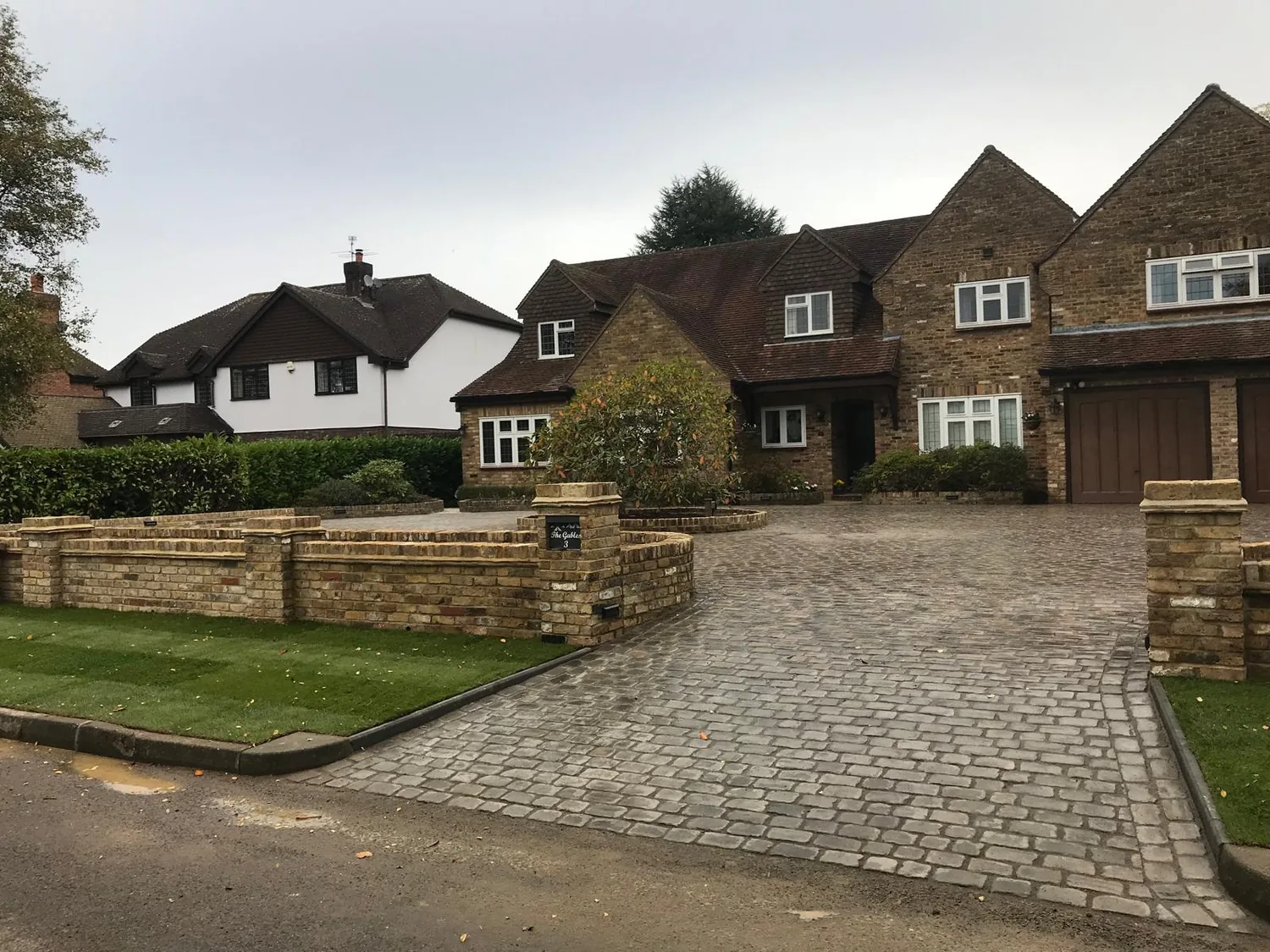
BGS 1:50,000 mapping returns the Lewes Nodular, Seaford and Newhaven Chalk formations, undifferentiated, as the bedrock at Purley Cross, Foxley Lane, Russell Hill, Woodcote Valley Road, Reedham, the Webb Estate and Riddlesdown, with no superficial cover mapped over most of it. The exception is the northern end of Brighton Road towards Purley Oaks, where the Hackney Gravel Member, a sand and gravel river terrace, gives a loose but free draining dig.
Chalk drains, which is why a thin build on a Purley frontage can look fine for a few years before it starts to dip. Chalk also softens and pumps if it is trafficked wet, so the formation gets protected as soon as it is exposed and the sub-base is compacted in layers rather than tipped in one lift. The gravel at the Purley Oaks end asks for the opposite discipline: it is easy to dig and easy to over dig, and it needs its edges restrained properly or the build creeps outwards.
The real Purley issue is surface water. Croydon's Local Flood Risk Management Strategy names Brighton Road and Purley among the areas most susceptible to surface water flooding, records 56 mm at the Purley Cross rain gauge on 24 August 2015, and says that in the south of the borough the chalk geology increases groundwater flooding vulnerability through the valley routes at Kenley, Purley and Coulsdon. Falls, edge detail and where the water ends up matter more here than an extra fifty millimetres of stone.
- Falls set to move water away from the house before anything else is decided
- Chalk formation protected the moment it is exposed, and never trafficked wet
- Permeable builds with a stone reservoir where the ground below will take the water
- Linear drainage across the threshold on the frontages that run towards a door
The houses
A Garden Suburb on One Hill and a Shopping Corridor in the Valley and Two Completely Different Sets of Expectations
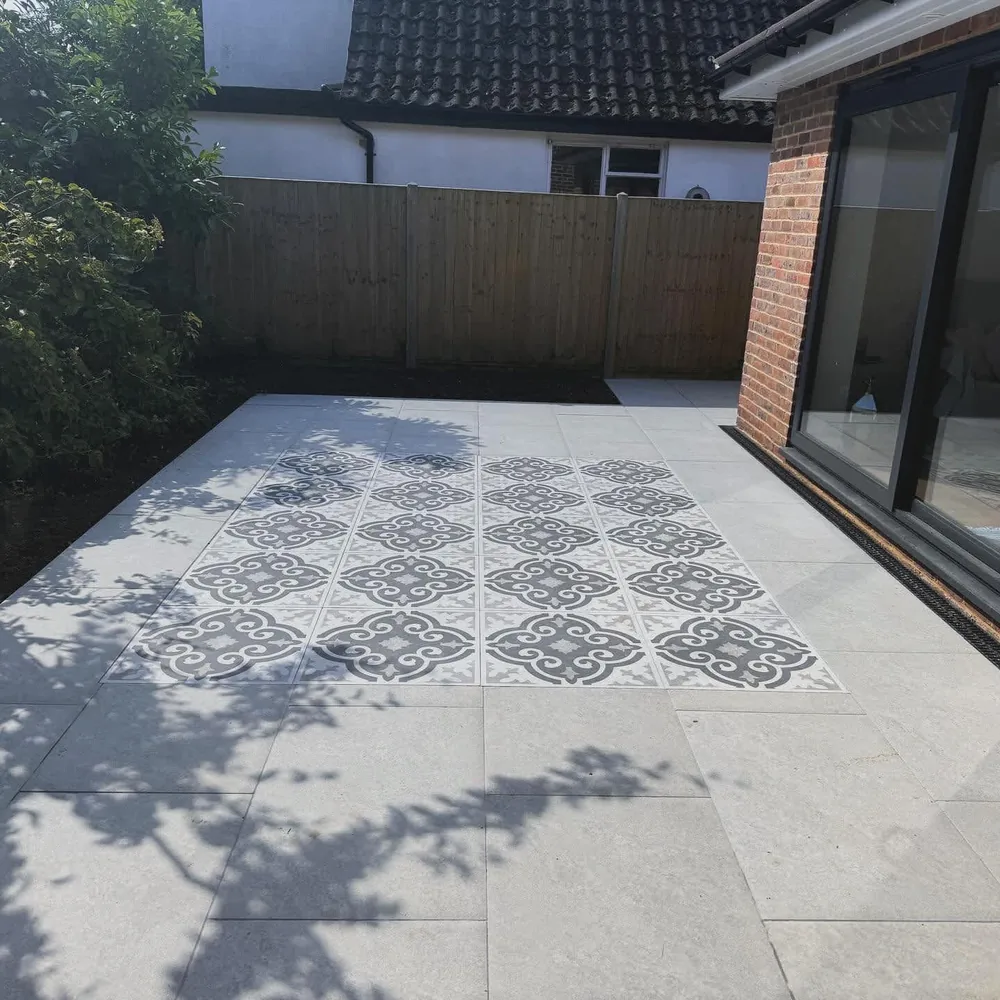
The Local Plan describes Purley as a suburban market town on wooded hillsides and in the valley, organised along the Brighton Road and Godstone Road corridor. Along that corridor you get shopping parades, terraces, compact houses on small plots and medium rise blocks. Step off Brighton Road and the character is large detached houses on relatively large plots with minimal public realm in front of them.
The set piece is the Webb Estate and Upper Woodcote Village, an Edwardian garden suburb laid out by William Webb from 1888, with Upper Woodcote Village founded in 1903 around a green and the first phase largely complete by 1925. The original covenants required that no building be erected within 60 feet of the road or 10 feet of the side boundaries, and banned fences other than wire or live hedges. Open frontages are the whole point of the place, and the Woodcote Estate and Woodcote Valley Road carry the same garden suburb layout on the southern side of it.
Box Ridge Avenue, Purley Rise and Hill Road were set out from 1906 by the developer Joseph Pulley Oldaker: detached houses on large plots along a ridge, with undulating road levels, junctions defined by landscaped mounds or a mix of retaining wall and soft landscaping, and houses sitting above the road. Foxley Lane, Plough Lane and Smitham Bottom Lane are large plots screened by hedges and trees that have taken heavy infill from the 1970s onward, so plot widths and side access vary along a single road. Peaks Hill is generously sized streets with narrow footways, which changes where a lorry can stand.
- Open, planted frontages kept open on the Webb Estate and Upper Woodcote Village
- Steps and low retaining where the house sits above the road on Box Ridge Avenue and Purley Rise
- Side access measured before quoting on the infilled plots along Foxley Lane and Plough Lane
- Compact corridor frontages off Brighton Road worked without blocking the parade
What we do most in Purley
Gravel and Resin at the Top of the Hill, Permeable Block Below It and Drainage on Almost Every Job
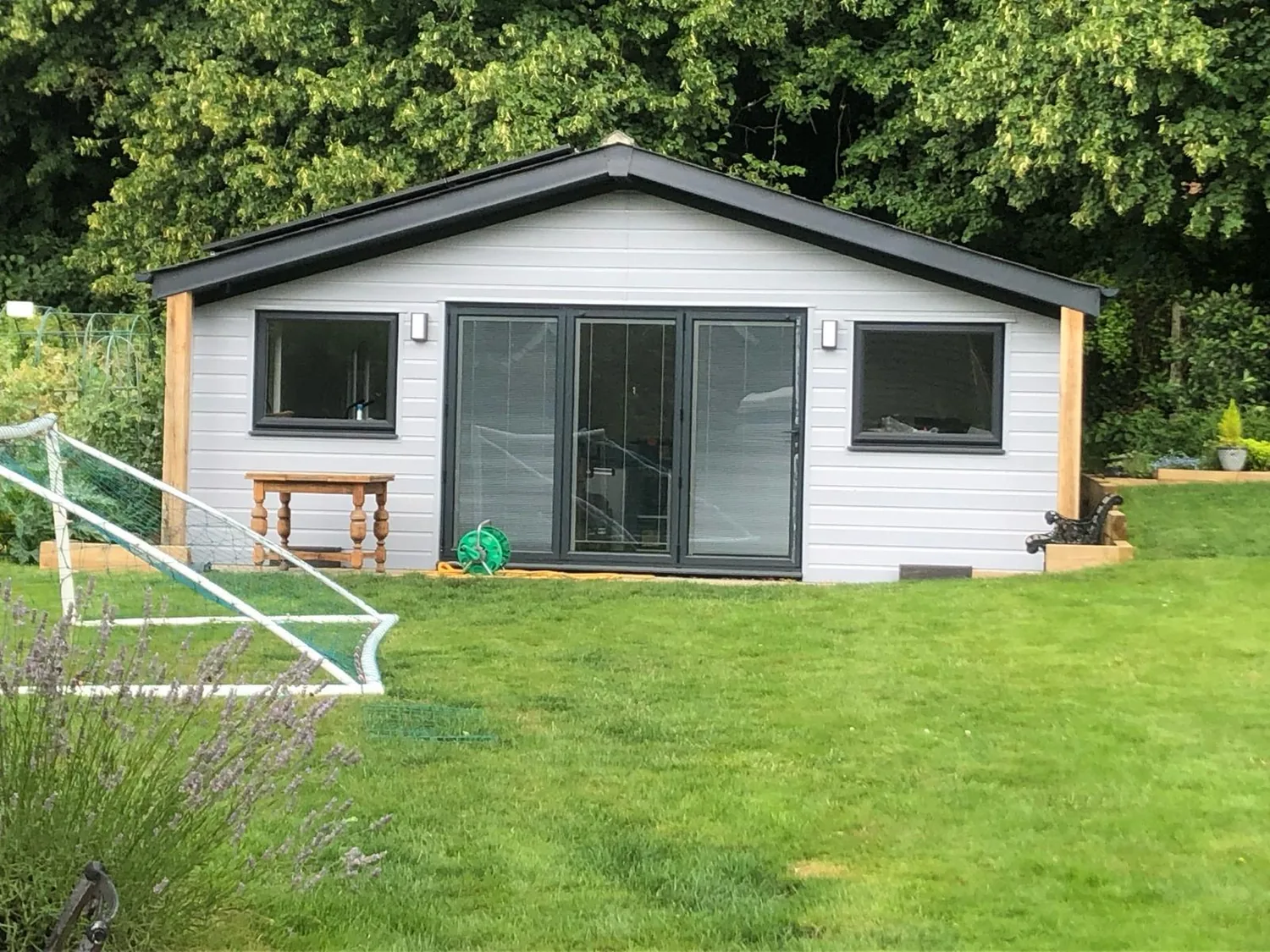
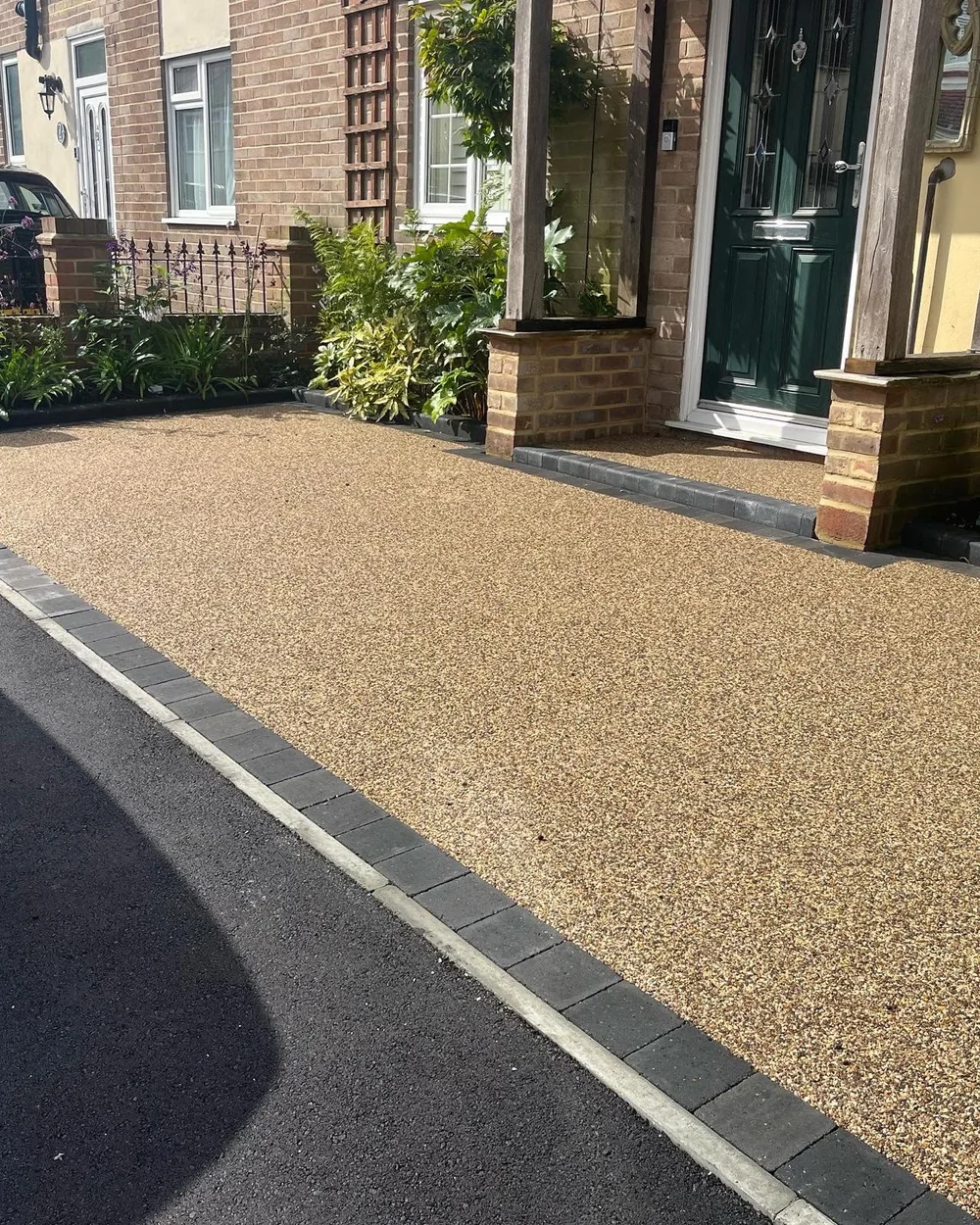
In and around the conservation area the surface conversation starts with gravel and resin-bound gravel, because that is what the council's guidance names as appropriate there, with hoggin, York stone, brick or stone cobbles also possible. Resin-bound gravel gives the look of loose gravel without it ending up on the pavement, and it is laid as a porous surface, though whether the drive drains through depends on the base under it.
Off the hill, on the corridor frontages and the infilled plots, permeable block paving does most of the work: a stone reservoir under the blocks, jointing grit that stays open, and a drainage line where the fall runs towards the house. Where there is nowhere for water to soak away we take it to a lawn or a border instead.
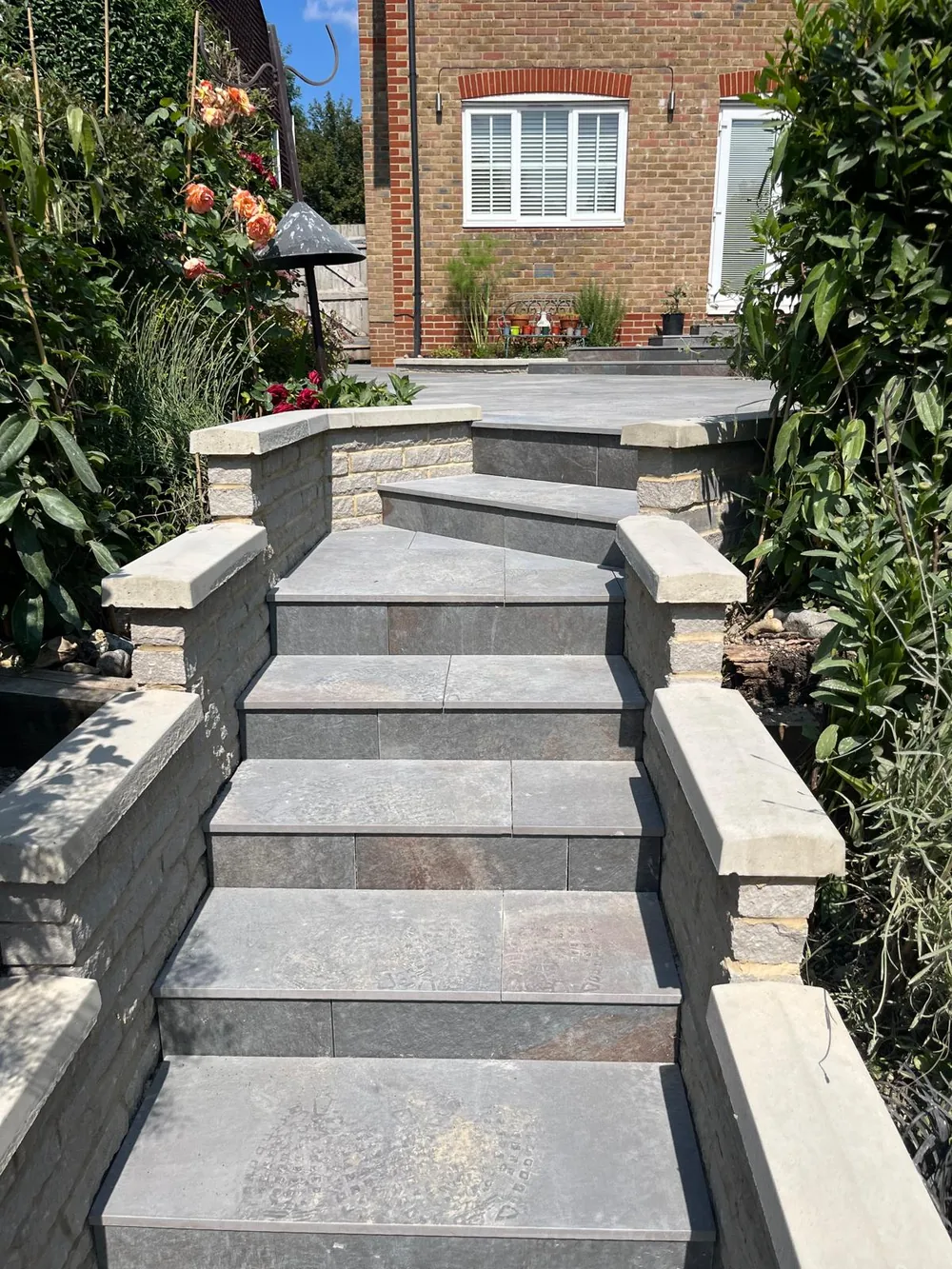
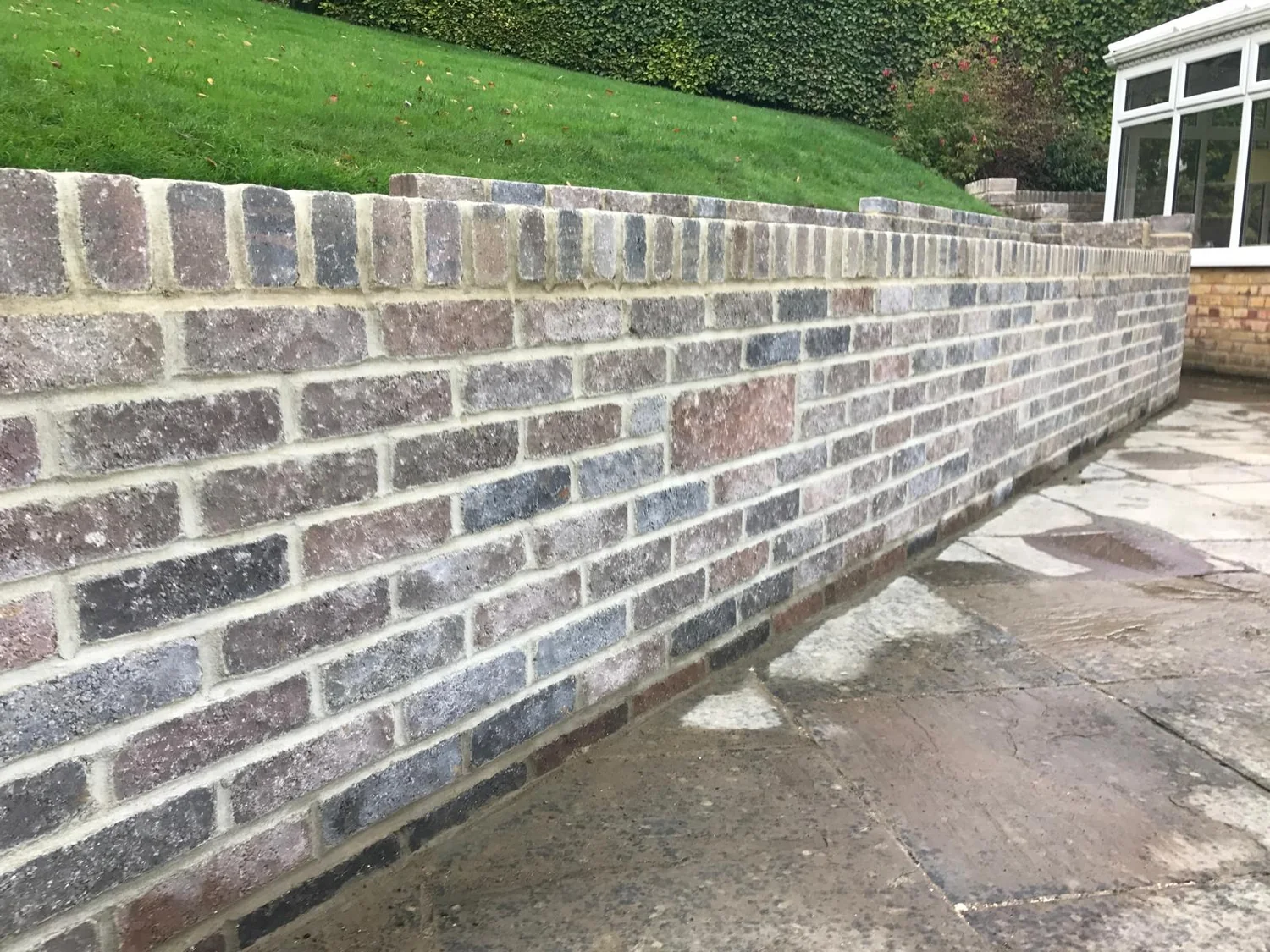
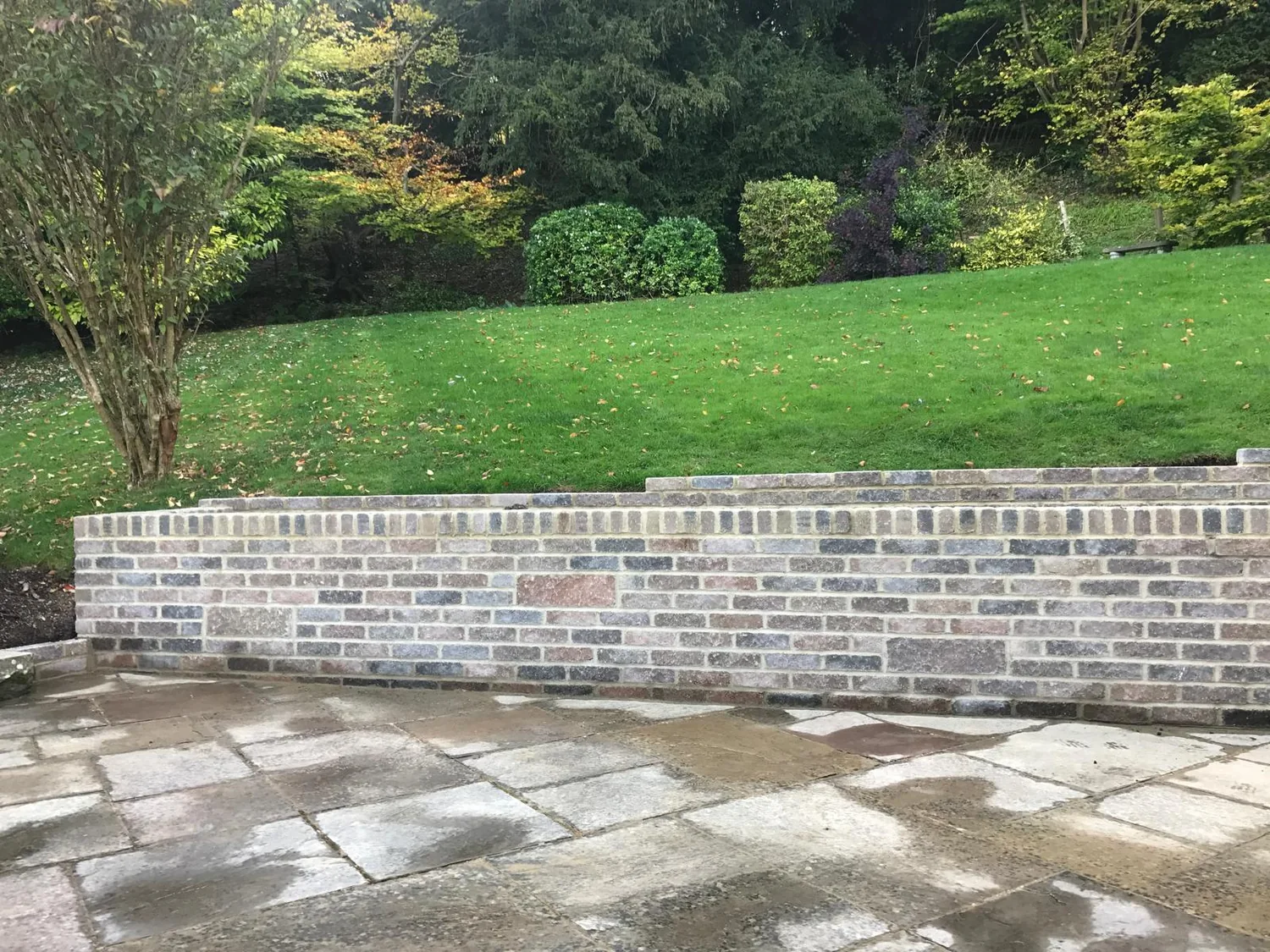
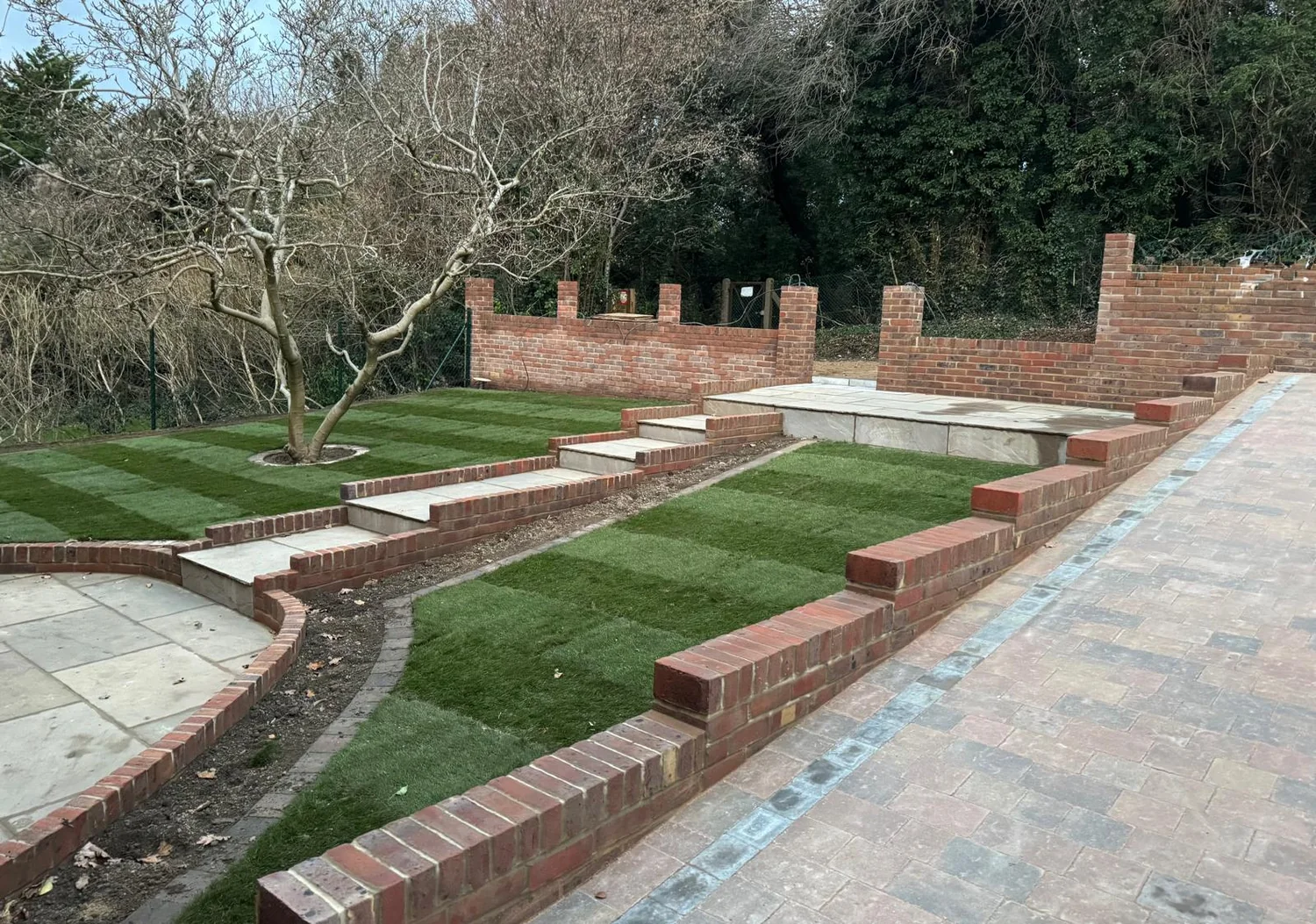
Then there is the level work. Purley houses sit above their roads more often than not, so steps, low retaining walls, brick piers and terraces are a regular part of the job rather than an extra at the end.
- Resin-bound gravel drives on the hillside streets where a heavy paved look would jar
- Permeable block paving with a stone reservoir and open joints
- Steps, piers and low retaining where the house sits above the road
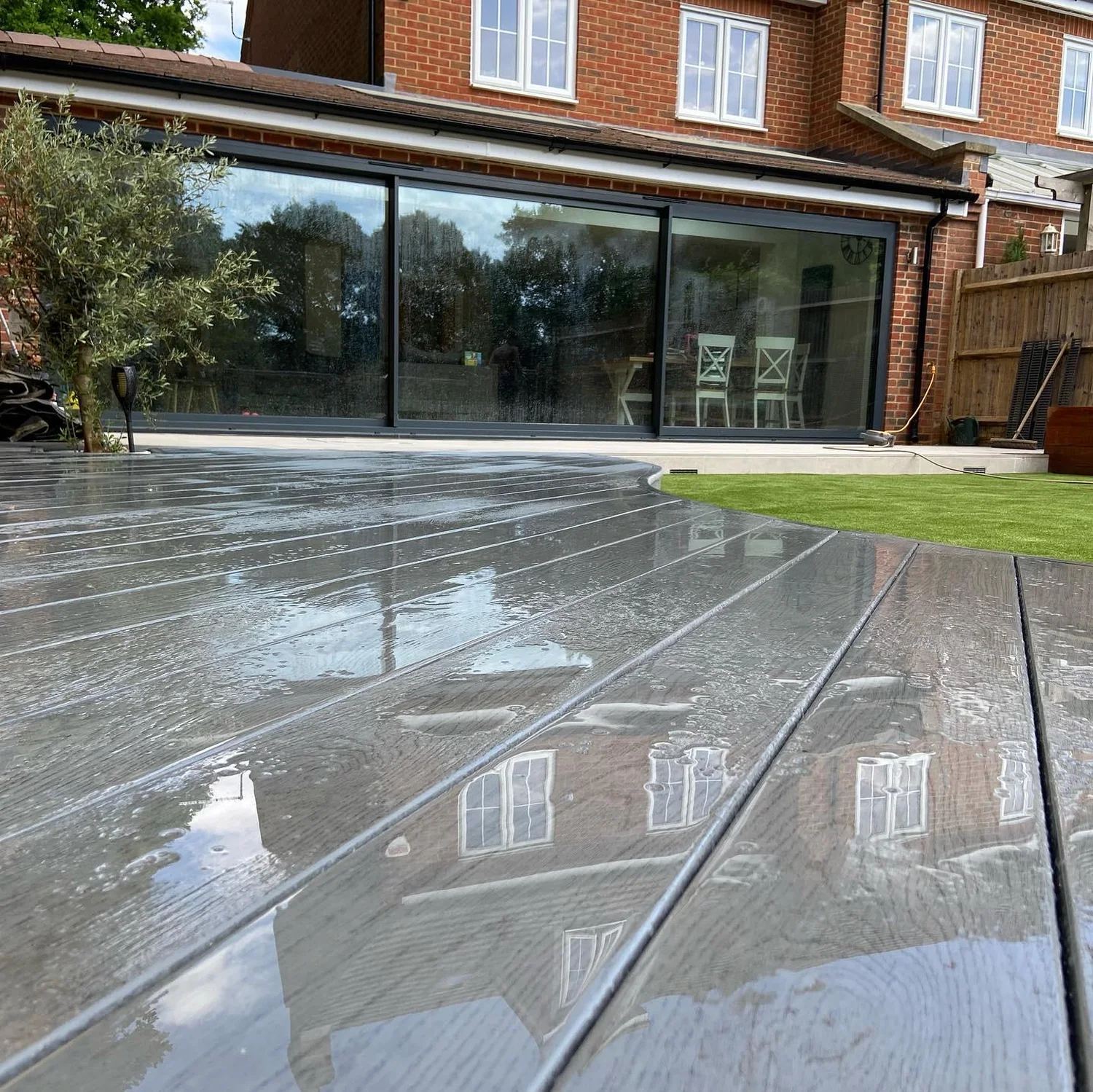
- Porcelain terraces and garden room bases laid level on a sloping back garden
- Existing drives repaired and re-laid where the base is sound and the surface is not
Levels, access and permission
Purley Cross at 74 Metres, and It Climbs From There in Every Direction Webb Estate 100, Russell Hill 108, Riddlesdown 113
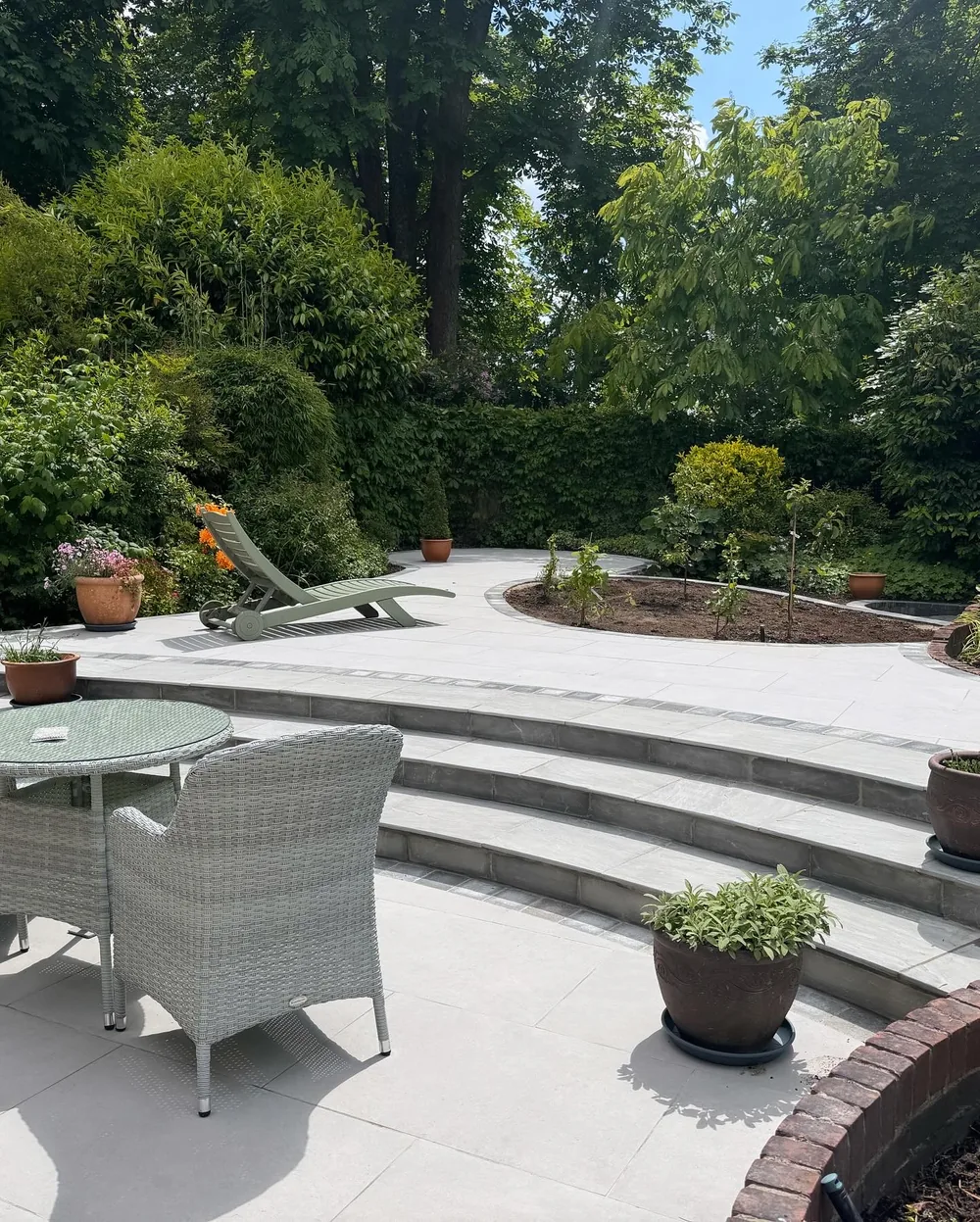
Purley Cross is the low point at about 74 m and the ground rises away from it on all sides. The Webb Estate is around 100 m, Russell Hill about 108 m and Riddlesdown about 113 m, while Foxley Lane at roughly 82 m is comparatively gentle. The council's own Webb Estate appraisal puts local valley floors at about 200 feet and peaks at about 400 feet, which is why most residential work here is on a slope rather than a flat frontage.
The planning authority is the London Borough of Croydon, and the conservation area is the Webb Estate and Upper Woodcote Village, about 260 acres built between 1903 and 1925. The council's updated appraisal and management plan was approved by Cabinet in June 2026. It introduces no new planning controls but it does set clearer guidance, and that guidance matters for paving. It treats the open green character of front gardens as a defining feature, generally does not support substantial loss of garden for parking, names gravel and resin-bound gravel as appropriate, and names asphalt, poured concrete, concrete block or slab paving and large areas of stone paving as inappropriate. It also asks that the drive starts behind the boundary line so the pavement runs unbroken across the frontage, supports permeable paving as a drainage measure, and does not allow close boarded or opaque fencing.
Croydon requires planning permission as well as crossover approval where a crossover is formed on a classified road or inside a conservation area, which in Purley takes in Brighton Road, Foxley Lane, Russell Hill Road, Banstead Road and Godstone Road, all red routes. The dropped kerb application itself goes to Croydon Council. Nationally, the Planning Portal guidance is that a driveway of any size is permitted development if it is permeable or drains to a lawn or border. Purley also has land in Flood Zones 2 and 3a.
- Red route frontages worked with the vehicle off the carriageway and the parade kept clear
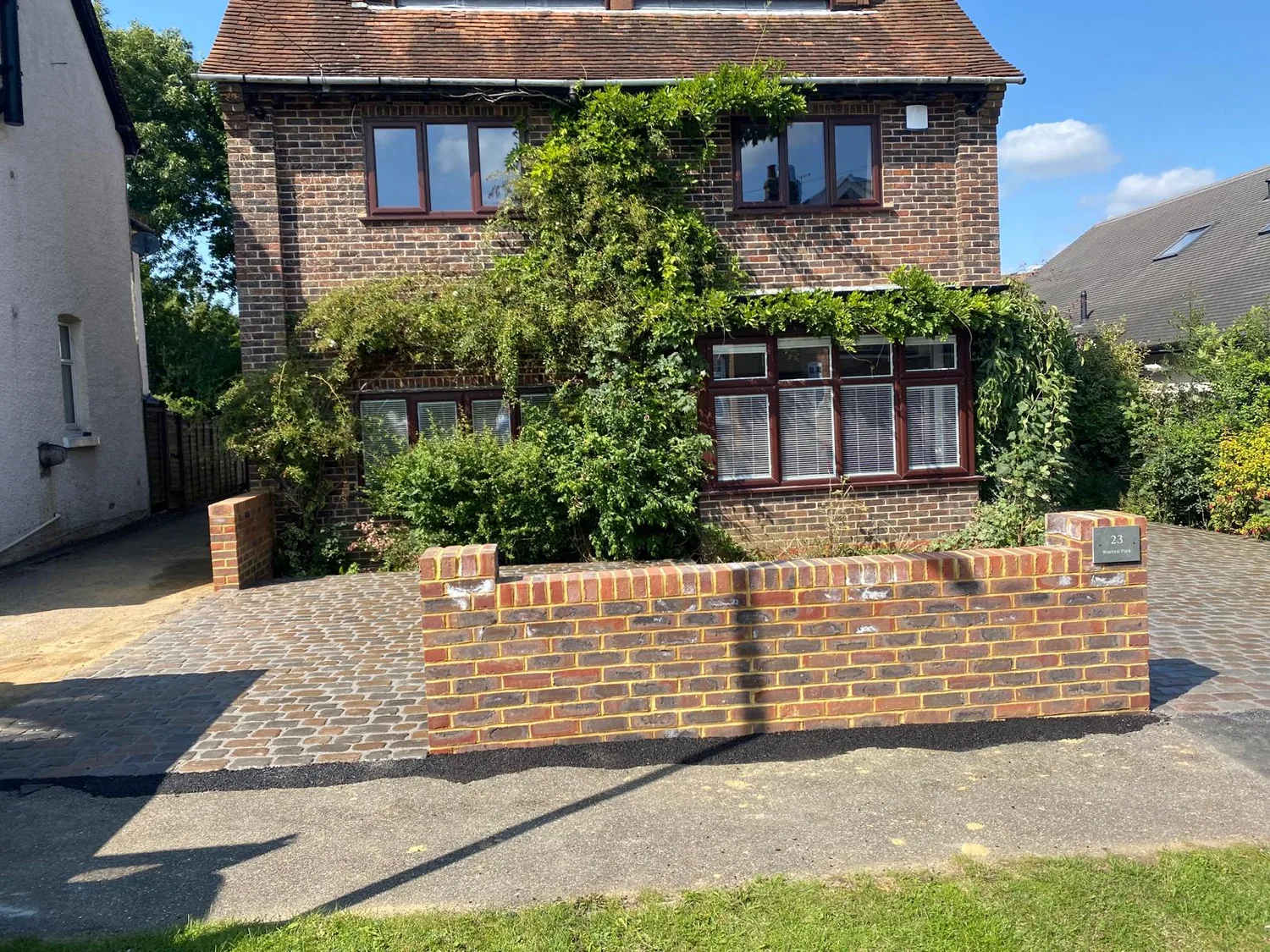
- Drive built to start behind the boundary line where the conservation area guidance asks for it
- Spoil away by grab where a lorry can stand, by barrow and van where it cannot
- Dropped kerb applications go to Croydon Council, with planning permission on top for classified roads
Villages and neighbourhoods
Where We Work Around Purley
We work right across CR8, from the corridor at Purley Cross out to the hillside streets and the edges towards Coulsdon and Sanderstead. Several of these areas sit on very different ground to one another.
Our work
Work of This Kind
Questions
Purley Questions We Get Asked
Can I have a block paved drive on the Webb Estate?
The council's conservation area guidance names concrete block or slab paving, poured concrete, asphalt and large areas of stone paving as inappropriate on the Webb Estate and Upper Woodcote Village, and names gravel and resin-bound gravel as appropriate, with hoggin, York stone, brick or stone cobbles possible. It introduces no new planning controls, but it is what a scheme gets judged against.
Why does water sit on my Purley drive?
Usually because the fall is wrong or the drive has nowhere to send water once it arrives. Croydon's flood strategy names Brighton Road and Purley among the areas most susceptible to surface water flooding and recorded 56 mm at the Purley Cross rain gauge on 24 August 2015. On chalk the fix is a corrected fall plus a permeable build or a drainage line.
Do I need planning permission for a dropped kerb on Foxley Lane?
Foxley Lane is a classified road and a Transport for London red route, and Croydon states that planning permission is required as well as crossover approval where a crossover is formed within a classified road or a conservation area. The same applies on Brighton Road, Russell Hill Road, Banstead Road and Godstone Road. The crossover application itself still goes to Croydon Council.
Will my dig go straight into chalk?
On most Purley frontages, yes. The mapping shows chalk bedrock with no superficial cover at Purley Cross, Foxley Lane, Russell Hill, Woodcote Valley Road, Reedham, the Webb Estate and Riddlesdown. The exception is the northern end of Brighton Road towards Purley Oaks, where a sand and gravel river terrace deposit sits over the chalk and gives a looser, free draining dig that needs its edges restrained properly.
My house sits above the road. What does that mean for a driveway?
It means the drive is a levels job before it is a surfacing job. On streets like Box Ridge Avenue, Purley Rise and Hill Road the road levels undulate and the houses sit up, with junctions defined by landscaped mounds or retaining walls. We work out the gradient first, then decide whether it is steps, a stepped drive, a retaining wall or a combination.
What about the fence or the hedge along the front?
On the Webb Estate the boundary is part of the character. The original covenants banned fences other than wire or live hedges, and the current guidance does not allow close boarded or opaque fencing there. So a frontage is usually hedge, planting and a low open boundary rather than a fence panel, and we set the drive edge and any piers to suit that rather than fighting it.
Is resin-bound gravel permeable?
Resin-bound gravel is laid as a porous surface, so water can pass through the wearing course. Whether the finished drive drains through depends on what is underneath it. Laid over a sealed or badly built base the water has nowhere to go and it will sit. We build the base as part of the drainage design.
Get a quote
Planning an Outdoor Project in Purley?
Send us a photo of the frontage, say roughly how big it is and where the water currently goes, and we will tell you what it needs. Free written quote with the specification alongside the figure.
- Free, no-obligation quotationsIn writing, with the build-up and the drainage set out.
- 27 years in the tradeMarshalls Register accredited, Bradstone Assured.
- Fully insuredDomestic and commercial work across Surrey.
Arrange a free site visit
Tell us a little about the project and we will come out, look at the ground and put a written quotation together.
Where we work
Paving, Landscaping & Outdoor Construction Across Surrey
Based in Caterham, we undertake projects throughout Surrey and selected areas of Kent and West Sussex. For larger or more comprehensive projects, we are happy to consider work further afield.